Can a world-action model learn to predict touch without any tactile pretraining?
We introduce VTAM, an efficient visuo-tactile world-action model. With ~100 demos per task and no tactile or action pretraining, it is comparable to tactile models pretrained on 30K+ hours of visuo-tactile robot data, and is 6× faster at inference. 🧵
📄Paper: https://t.co/99DkVVGBJD
🌐Web: https://t.co/6drcq3y0oI
Code and data are open source!
💻 Code: https://t.co/McHqMi4DAc
🤗 Data (xArm + GelSight, 3 tasks): https://t.co/kuPR4BeQQ8
🤔Simulators can generate endless robot training scenes. Which ones help the policy learn?
🤖 Meet CoDA: the data engine and the policy evolve together, driven by the policy's own failures. 🔗
📈 π0.5 on LIBERO-Pro
CoDA generates variants of the source tasks and trains π0.5 on them. After 15 rounds:
25% → 84% (position shifts)
1% → 76% (instruction changes)
+7 and +9 pts over ASPIRE after 15 rounds.
🧵👇 1/7
Excited to share EditVid, our training-free approach for temporally consistent video editing!
EditVid enables instruction-guided and subject-guided video editing while preserving subject identity, scene structure, and temporal consistency—without video-specific training.
🚀 Excited that our #CVPR2026 work 𝐏𝐇𝐀𝐍𝐓𝐎𝐌 will be featured in the Voxel51 𝐁𝐞𝐬𝐭 𝐨𝐟 𝐂𝐕𝐏𝐑 𝐬𝐞𝐫𝐢𝐞𝐬 on July 9!
𝐏𝐇𝐀𝐍𝐓𝐎𝐌: Physics-Infused Video Generation via Joint Modeling of Visual and Latent Physical Dynamics
https://t.co/IGWbvsEoqO
Great work by @YingShen_ys and collaborators!
Happy to share a project I've been working on: Tiny but Trusted: Efficient Vision-Language Reasoning for Time-Series Anomaly Detection.
We develop a new benchmark and a compact VLM for anomaly localization and grounded reasoning from time-series plots.
🚨 Can small VLMs reason about time-series anomaly detection?
In 𝗧𝗶𝗻𝘆 𝗯𝘂𝘁 𝗧𝗿𝘂𝘀𝘁𝗲𝗱, we introduce:
✅VisAnomBench the first explanation-augmented benchmark for time-series anomaly reasoning
☑️VisAnomReasoner, a compact VLM that localizes anomalies📈 and its prediction with grounded reasoning 💬
Efficient, accurate, and interpretable. ⚡
HF 🤗https://t.co/KFH7ZNt4Cp
Project page 🧊 https://t.co/AdCKsGM4xY
👏🏽👏👏🏼Work led by @xiaonaz2 in collaboration with Sandia National Labs
#TimeSeries #AnomalyDetection #VLMs #ExplainableAI
@CVPR scheduling can be chaotic, so we made … a PLAN. 😄🗺️
✨𝗣𝗟𝗔𝗡 𝗟𝗮𝗯 is heading to Denver with 7 papers at CVPR 2026, and we put everything in one place so you can browse the work, watch the videos, find the posters, and add sessions to your calendar.📌
Explore our #CVPR2026 hub and come meet us in person 😊
Click on the banner https://t.co/xAFAe248Op
Direct link https://t.co/T9FAGeCagY
See you in Denver!🏔️
#CVPR2026 #CVPR26 #ComputerVision #MultimodalAI #GenerativeAI #EmbodiedAI
🚀🚀My new work: 𝐃𝐫𝐞𝐚𝐦𝐏𝐚𝐫𝐭𝐆𝐞𝐧 is out!
A semantically grounded framework for part-level text-to-3D generation that jointly models part geometry, appearance, and inter-part relations through collaborative latent denoising.
⭐️Synchronized relational + geometric latents for part-aware reasoning
⭐️PartRel3D: 300K relational triplets across 175 object categories
⭐️More coherent, controllable, and interpretable 3D generation from language
⭐️Enables fine-grained part editing, articulated object generation, and mini-scene synthesis
🌐 https://t.co/f7jGBustl6
🤗 https://t.co/4qieIKOlUb
#3DGen #TextTo3D #ComputerVision #AIResearch
🚀🚀Reasoning Meets 3D! CoRe3D is now released! 🤩🤩A collaborative reasoning 3D framework that unifies understanding, generation, and editing 💯
It can synthesize from complex or indirect prompts.😮⬇️
📄https://t.co/QLZn7pbN9I
🌐https://t.co/xeNh1czg62
SpatialReasoner-R1 is now released! 🚀
Can Large Language Models truly understand and navigate the physical world? While LLMs have mastered logic and coding, complex spatial reasoning—interpreting 3D structures, relative orientations, and navigation—remains a bottleneck.
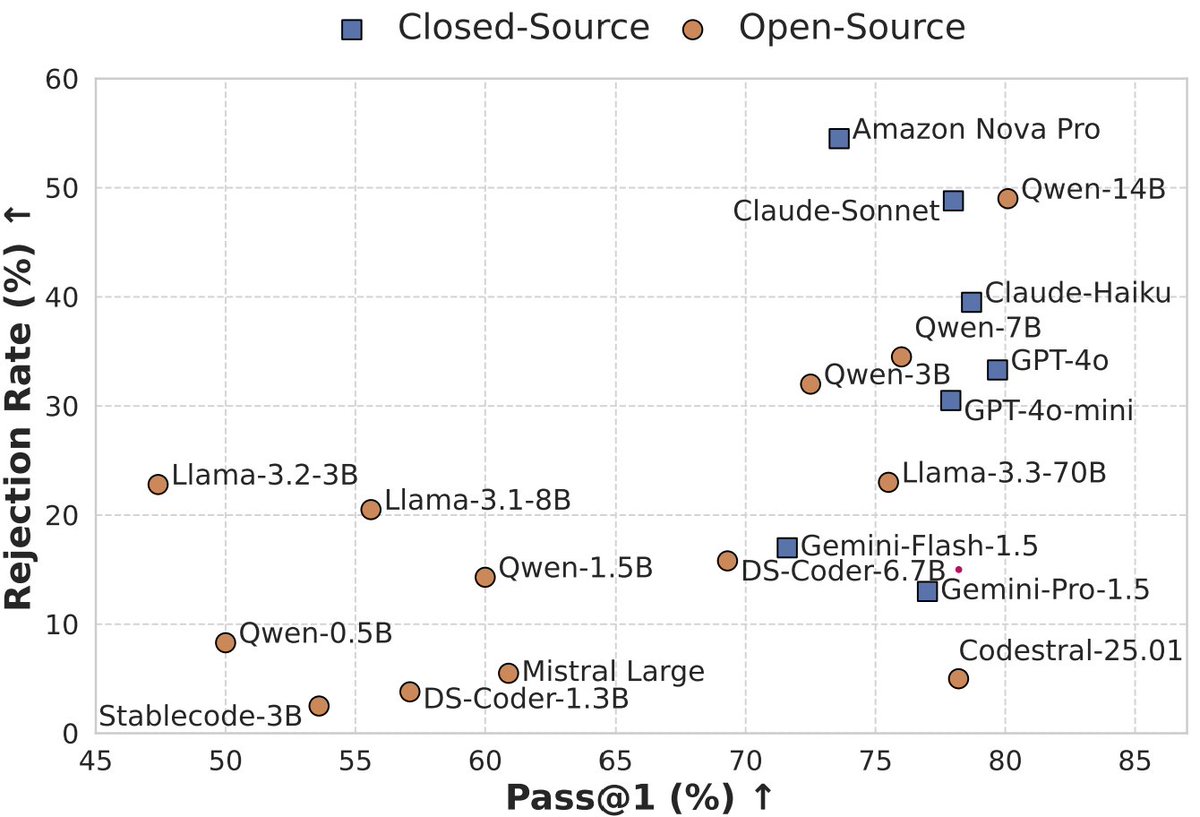
🚨 MOCHA is now released. ☕️️
A new benchmark for evaluating code LLM safety under multi-turn attacks.
Can your model resist malware requests when the intent is hidden across seemingly harmless steps? 🧵⬇️
Congrats to PLAN Lab on the refresh! 🎉 Fun working on the website as part of the rollout.
Also, I’m seeking GenAI internships focused on image/video generation & editing.
I currently have 4 co-authored CVPR submissions (LVLMs + vision gen) + more projects in progress. DMs open!
🚀 PLAN Lab refresh! new website + new logo are here! 🌐 https://t.co/xAFAe248Op
👩💻 Hiring interns? Check our member profiles + projects https://t.co/7juuFb4oQo
🔥Interested in collaborating with PLAN Lab? We are actively pursuing industry collaborations in multimodal AI (VLMs, 3D, generative, reasoning) and are recruiting students to join us!
📷 Paper + Code Links
🌐 Project page: https://t.co/OkqKPlel9X
📷 Paper: https://t.co/l1is7TzDaz
💻 GitHub repo: https://t.co/95Vsm9RCI9
Grateful to my co-authors and looking forward to sharing more at AAAI 2026!
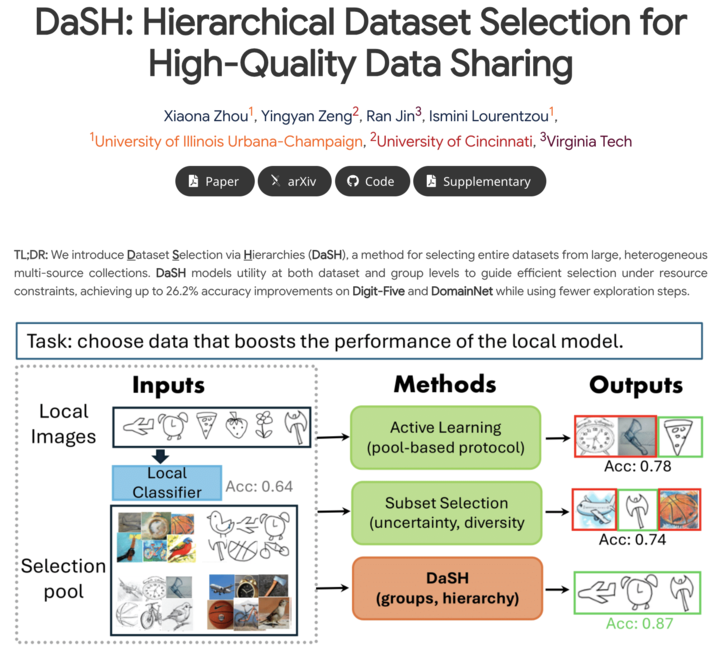
Excited to share our #AAAI2026 Oral paper Hierarchical Dataset Selection for High-Quality Data Sharing!
🤔 How do you decide which datasets to train on when data comes from many noisy, heterogeneous sources? 🧵
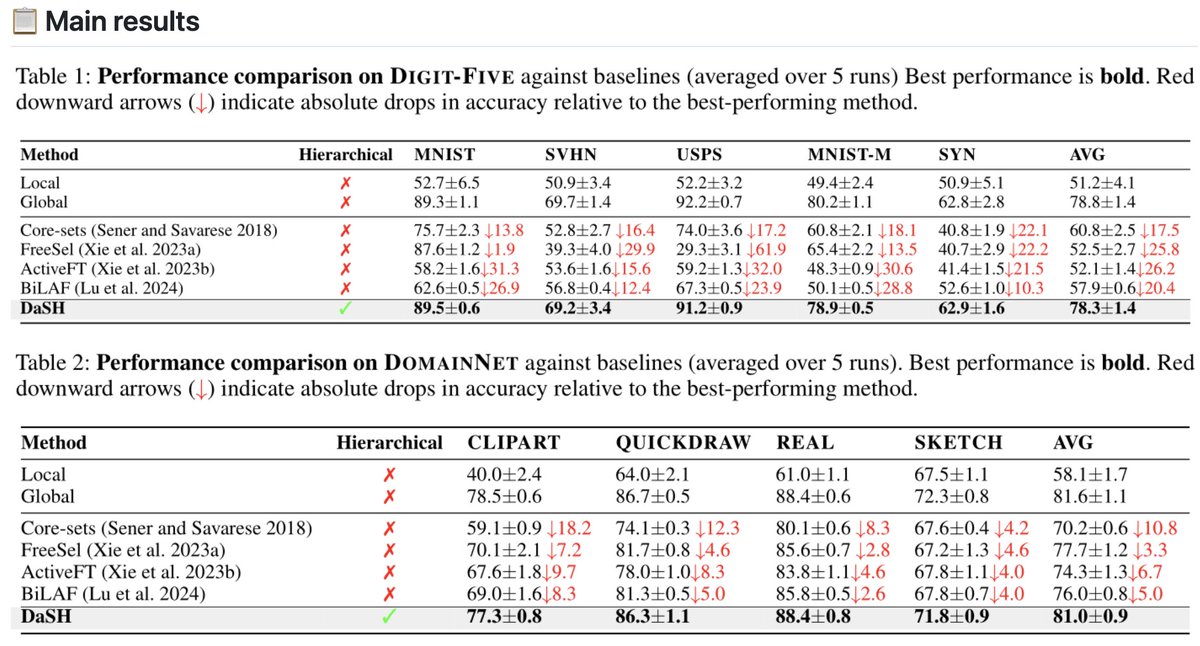
📷 How does DaSH perform?
► Digit-Five: +26.2% accuracy
► DomainNet: +10.8% accuracy
✅ Requires far fewer exploration steps
✅ Robust even when group assignments are noisy