Por qué el segundo cerebro de Karpathy, el padrino de la IA moderna, no usa Notion ni Obsidian en absoluto.
Porque construyó para sí mismo, y desde cero, una galaxia de conocimiento en 3D capaz de pensar.
Alguien replicó por completo este sistema, introdujo solo 378 notas, y el sistema generó automáticamente 1854 nodos y 3856 conexiones.
No es un simple archivador inerte: puede descubrir activamente conexiones ocultas y darte un feedback revelador como si fuera un segundo sistema neuronal.
Creo que este es el verdadero golpe letal (un ataque de reducción de dimensionalidad) para todas las herramientas tradicionales de toma de notas:
Si usas Notion, estás construyendo un archivador.
Si usas Roam, estás construyendo una hoja de cálculo.
Si usas Obsidian, estás construyendo un cementerio.
Los mejores expertos en IA están construyendo galaxias.
La experiencia que se ve en el video cambia por completo la forma en que todos entendemos la toma de notas:
Contra un fondo de espacio profundo, innumerables orbes brillantes y líneas de conexión forman un universo completo.
Haz clic en cualquier nodo y la IA desenterrará al instante todas esas conexiones ocultas que habías olvidado hace tiempo.
Aleja el zoom para ver el panorama completo de tu pensamiento, acércalo para ver cómo dos ideas aparentemente inconexas están vinculadas entre sí.
De forma proactiva, te dice dónde faltan enlaces y dónde hay ideas transversales de las que no te habías percatado.
Miau, miau, miau, esto es prácticamente una revolución en la forma de pensar. En el pasado, tomar notas consistía en introducir, organizar y buscar.
Al final, todo se queda en el disco duro acumulando polvo; nunca lo vuelves a mirar.
El segundo cerebro de hoy es una red neuronal dinámica y en crecimiento.
Lo alimentas con tus ideas y te ayuda a capitalizar, conectar y generar cosas nuevas.
Te entiende mejor que tú mismo, recuerda todas tus trayectorias de pensamiento e incluso puede darte inspiración cuando estás atascado.
La parte más impactante es la última frase de la publicación: La brecha en el interés compuesto del conocimiento nunca ha tenido que ver con el talento, se trata de arquitectura.
Quienes empiecen con este sistema 6 meses antes, siempre llevarán a los demás una ventaja de 6 meses de interés compuesto de pensamiento.
Porque tu segundo cerebro pensará por ti 24/7 sin parar, mientras que las notas de los demás simplemente se quedarán ahí pudriéndose.
Por supuesto, la gente común no necesita empezar desde cero a escribir código para construir una galaxia 3D.
Empieza con una configuración automatizada de Obsidian + Claude: deja que la IA extraiga contenido automáticamente, encuentre conexiones y te genere informes diarios.
Pero la dirección a seguir ya está muy clara: el futuro de la gestión del conocimiento no consiste en almacenar cosas, consiste en criar a una IA pensante que sea exclusiva para ti.
// Agentic Harness Engineering //
Pay attention to this one, AI devs.
(bookmark it)
Most coding-agent harnesses are still tuned by hand or brittle trial-and-error self-evolution.
This new work introduces Agentic Harness Engineering, a framework that makes harness evolution observable. They do this through three layers: components as revertible files, experience as condensed evidence from millions of trajectory tokens, and decisions as falsifiable predictions checked against task outcomes.
Each edit becomes a contract you can verify or revert.
Results: pass@1 on Terminal-Bench 2 climbs from 69.7% to 77.0% in ten iterations, beating human-designed Codex-CLI (71.9%) and self-evolving baselines like ACE and TF-GRPO.
The evolved harness also transfers across model families with +5.1 to +10.1 point gains, while using 12% fewer tokens than the seed on SWE-bench-verified.
Harness work is the biggest hidden cost in most agent systems. This is the first credible recipe for letting the harness improve itself without drifting into noise.
Paper: https://t.co/9fEgqwlTSf
Learn to build effective AI agents in our academy: https://t.co/1e8RZKs4uX
Here’s how we use Codex to:
> understand large codebases
> review PRs faster
> build macOS apps
> turn Figma into code
> automate bug triage
> create a CLI as agent tools
> analyze datasets
> generate slide decks
> coordinate new-hire onboarding
> learn a new concept
…and more.
https://t.co/9vCkSNjfjB
@kagigz , @Dimillian , @nickbaumann_ and team pulled together a great collection of Codex use cases, and based on how engineering *AND* non-engineering teams build with Codex daily at OpenAI.
What else should we cover?
Karpathy's AutoResearch is changing how campaigns get optimized and most marketers haven´t heard of it yet.
Ole Lehmann tested it on landing page copy, 56% → 92% pass rate overnight.
here´s how it works for marketing / skills 🧵
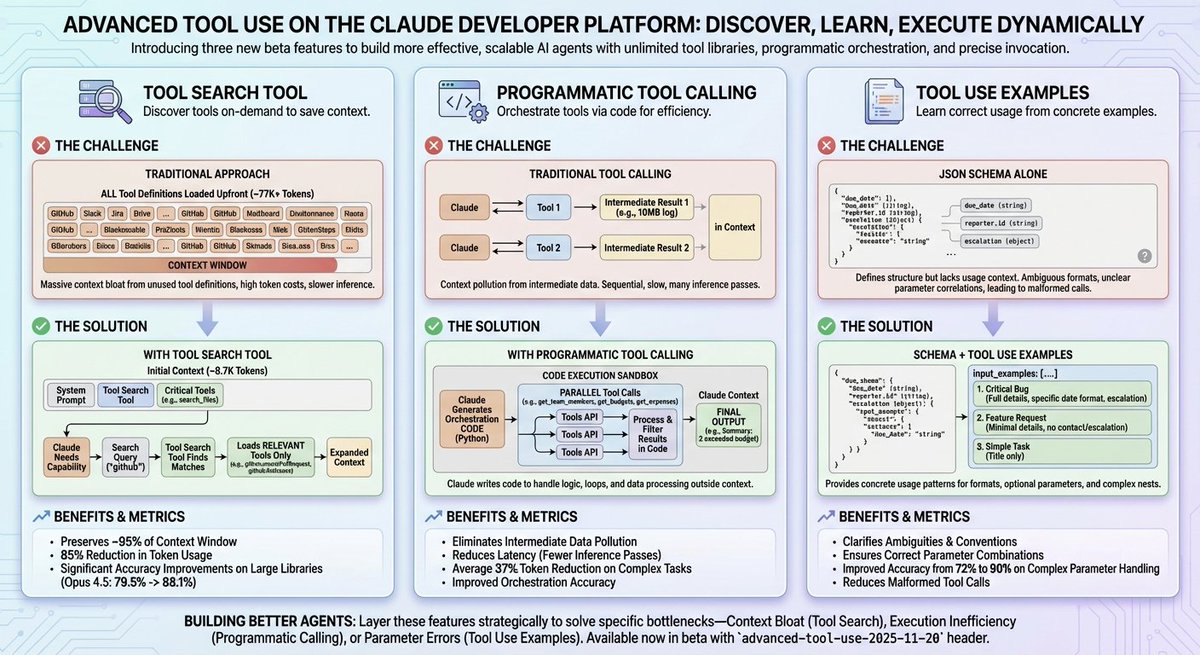
Here's a visual summary of the new guide by Anthropic.
It's on how to improve tool use for AI agents.
3 core ideas:
- Tool Search tool to discover tools on-demand to save context
- Programmatic tool calling to orchestrate tools via code
- Tool schema + usage
bookmark it
How do you build effective AI Agents?
This is a problem I think deeply about with other AI devs and students.
Simplicity works well here.
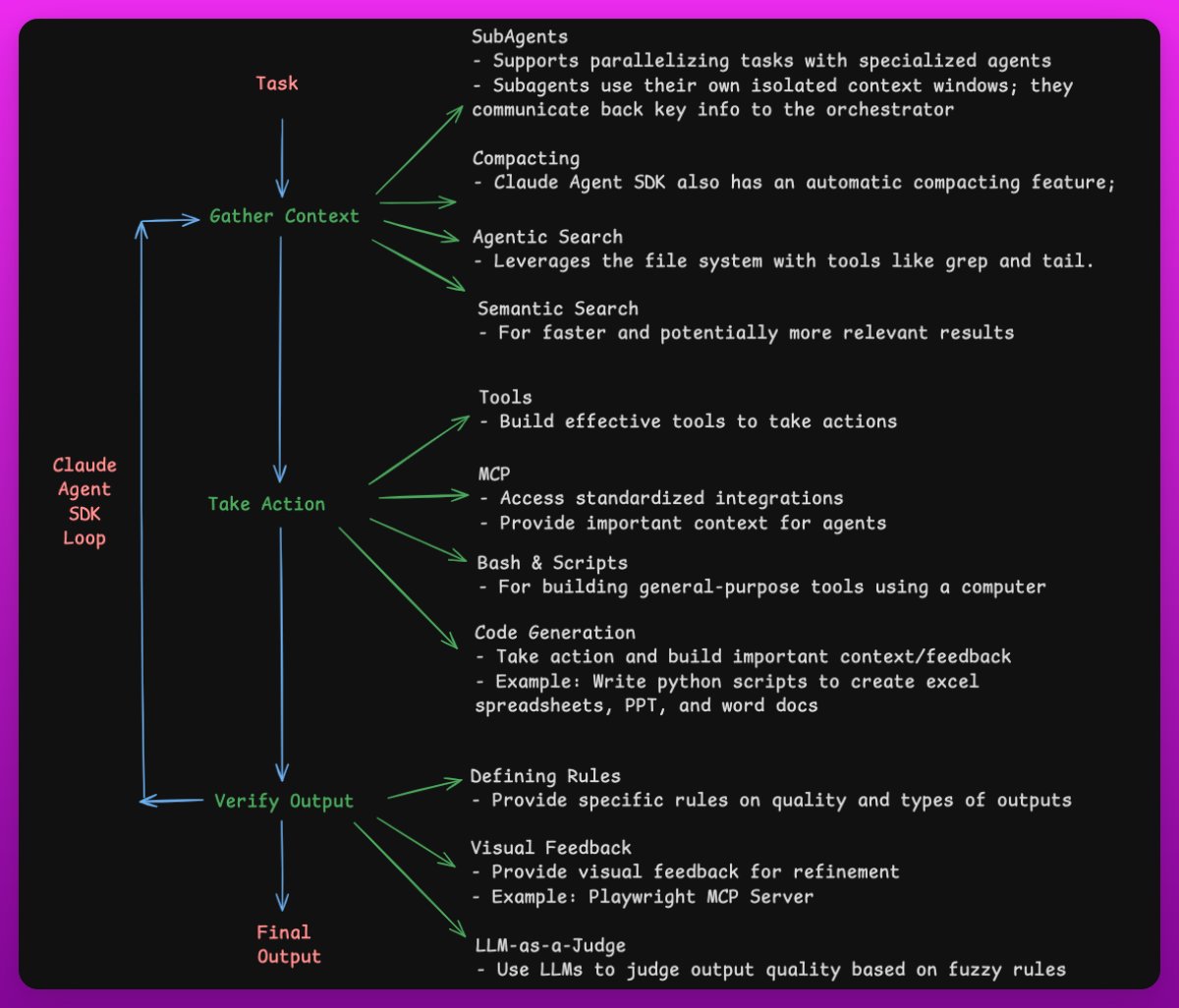
I think we can all learn a lot from how Claude Code works. The Claude Agent SDK Loop generalizes the approach to build all kinds of AI agents.
I wrote a few notes from Anthropic's recent guide.
The loop involves three steps:
Gathering Context: Use subagents (parallelize them for task efficiency), compact/maintain context, and leverage agentic/semantic search for retrieving relevant context for the AI agent.
Taking Action: Leverage tools, prebuilt MCP servers, bash/scripts, and generate code to take action and retrieve important feedback/context for the AI agent.
Verifying Output: You can define rules to verify outputs, enable visual feedback (this becomes increasingly important in multimodal problems), and consider LLM-as-a-Judge to verify quality based on fuzzy rules.
I believe this is a really clean and solid framework for how to build and work with AI agents in all kinds of domains.
It doesn't matter what tools you use for AI Agents.
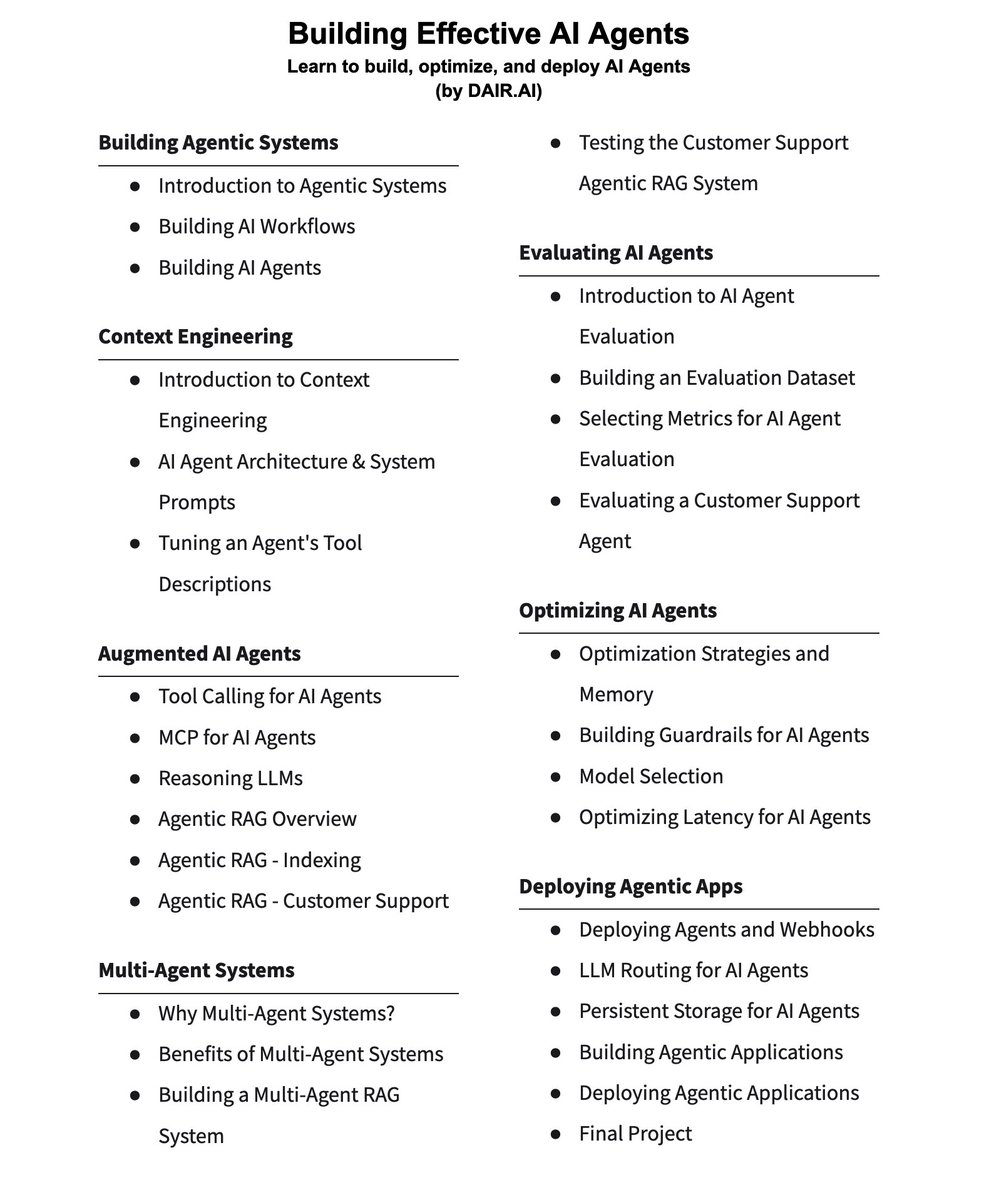
I've put together the ultimate curriculum to learn how to build AI agents.
(bookmark it)
From context engineering to evaluating, optimizing, and shipping agentic applications.
As usual, Anthropic just published another banger.
This one is on context engineering.
Great section on how it is different from prompt engineering.
A must-read for AI devs.
The fastest serving engine for LLMs is here (open-source)!
LMCache is an LLM serving engine designed to reduce time-to-first-token and increase throughput, especially under long-context scenarios.
It boosts vLLM with 7x faster access to 100x more KV caches.
100% open-source!
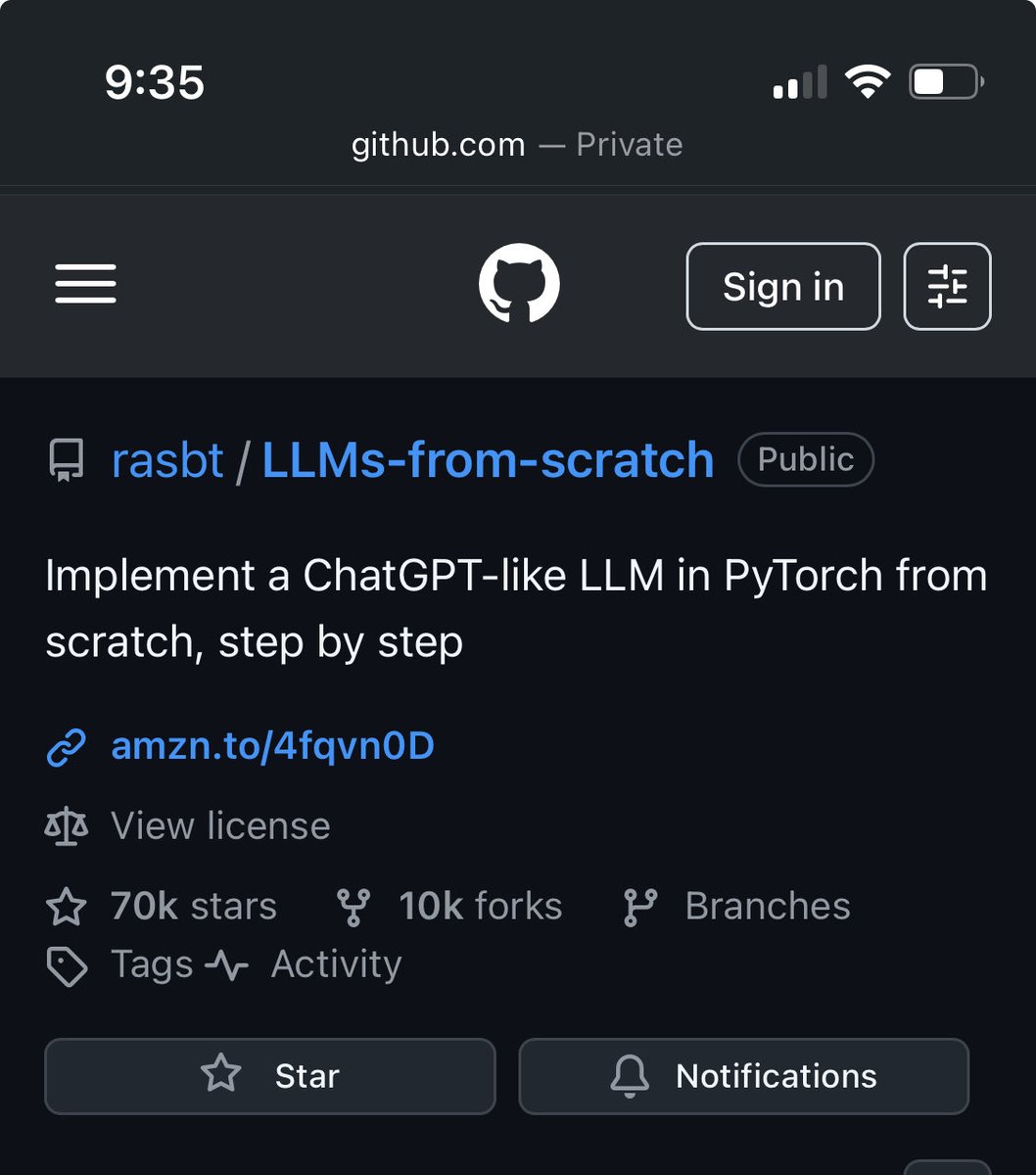
When I started LLMs-from-scratch I just hoped it might help a few people learn.
Just saw the GitHub the repo has now been forked 10k times!
More than the stars, the best part is seeing thousands of people actually use and build on the code ☺️