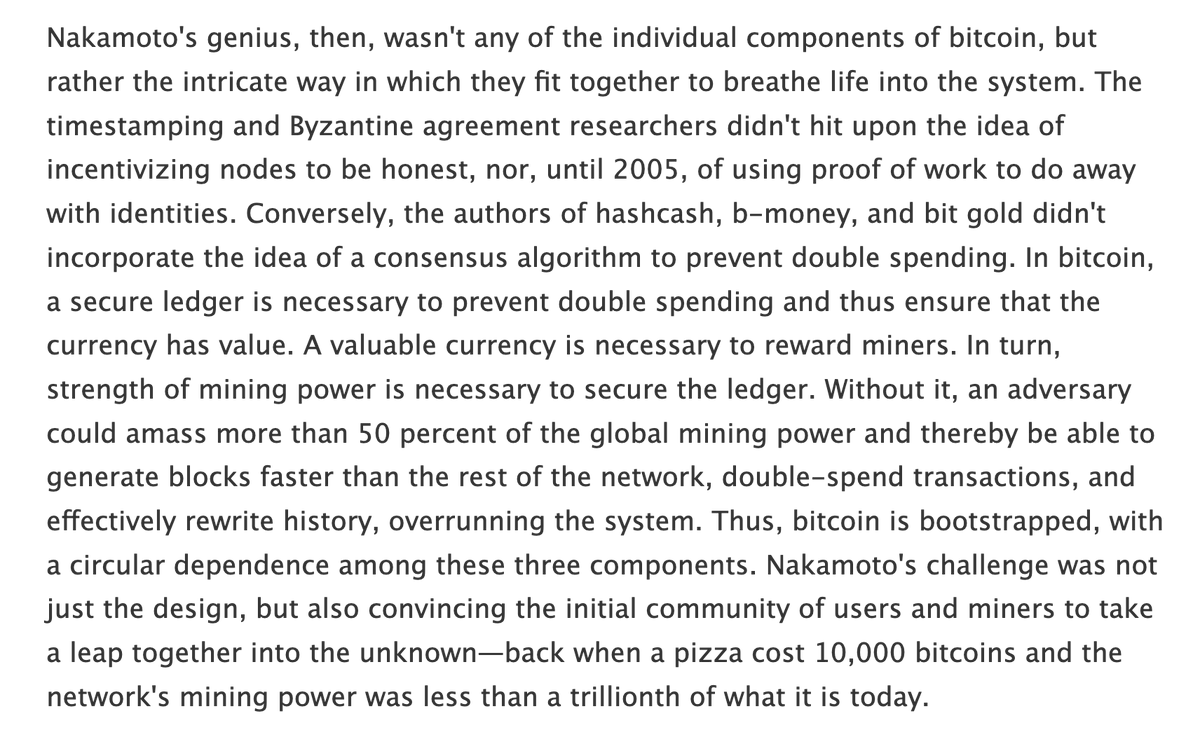
Highly recommend the crypto book "Pragmatic MPC" which has clear explanations with minimal formality and is short enough (~150 pages) that you don't get bogged down in the middle. Wish we had more "pragmatic" books for other areas of crypto. https://t.co/lWoE0lv6uc
As long as AI systems are trained to reproduce human-generated data (e.g. text) and have no search/planning/reasoning capability, performance will saturate below or around human level.
Furthermore, the amount of trials needed to reach that level will be far larger than the amount of trials needed to train humans.
LLMs are trained with 200,000 years worth of reading material and are still pretty dumb.
Their usefulness resides in their vast accumulated knowledge and language fluency. But they are still pretty dumb.
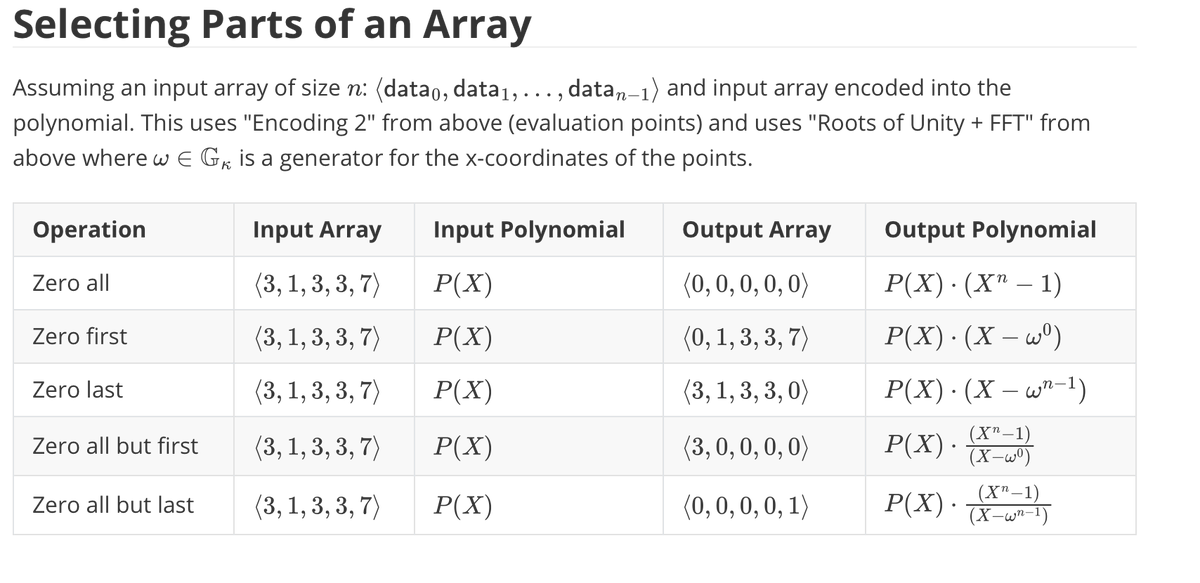
Here is a cheatsheet for simple manipulations of arrays in a Poly-IOP system. It is the kind of thing that is obvious once you understand it but if you are learning for the first time, a chart like this is helpful hopefully.
How to raise tech funding in 2024. Pick one of:
Quantum-powered AI blockchain
AI-powered quantum blockchain
Blockchain-secured quantum AI
You're welcome 😁
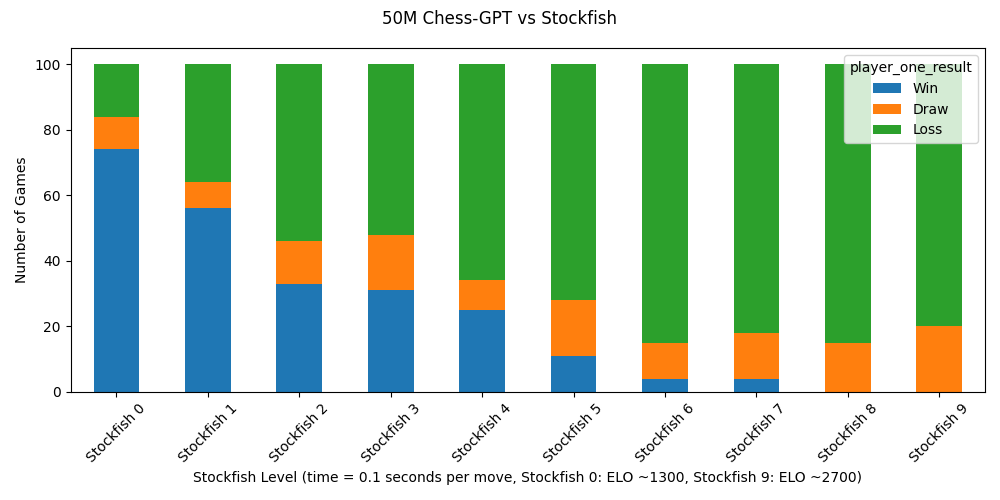
I trained Chess-GPT, a 50M parameter LLM, to play at 1500 ELO. We can visualize its internal state of the board. In addition, to better predict the next character it estimates the ELO of the players involved. 🧵
Die Kinder (17 Jahre) von #NargesMohammadi nehmen in Oslo den #Friedensnobelpreis stellv für ihre inhaftierte Mutter an.Seit 8 Jahren haben sie sie nicht gesehen. Die Journalistin/Menschenrechtsaktivistin ist heute im #Evin Gefängnis in den Hungerstreik getreten
Standing Ovation
💯
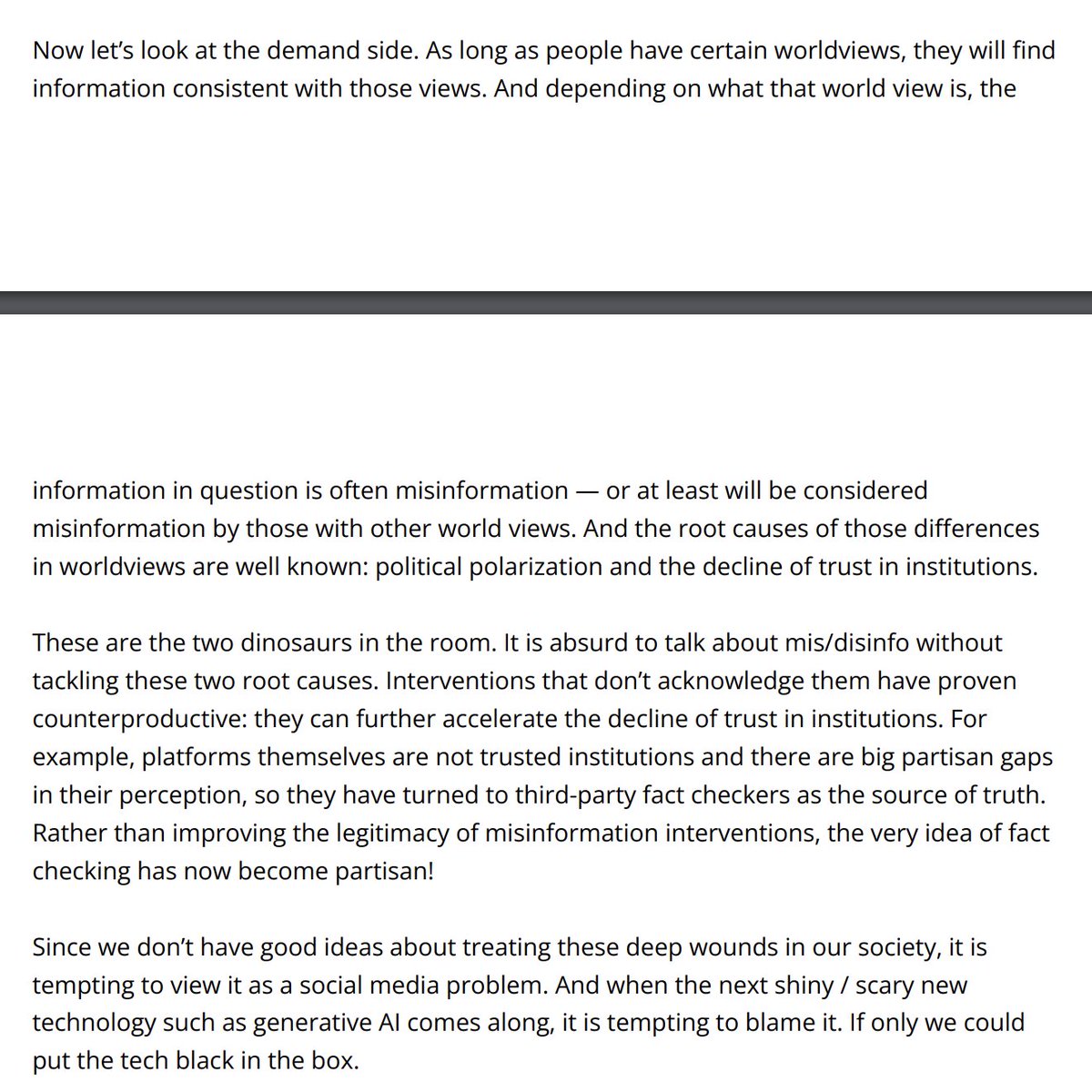
In a recent short talk (starts at 41:25) I argued that the panic about generative AI and misinfo arises from experts' denial about the fact that people know what they're doing and that our epistemic institutions have failed.
https://t.co/Vzc8TIlktv
https://t.co/qWSdracEEt
This iconic photograph is still considered one of the most-terrifying space photographs to date. Astronaut Bruce McCandless II became the first human being to do a spacewalk without a safety tether linked to a spacecraft.
Let’s start at the beginning. 📖
1979 - David Chaum describes the fundamental mix net design
1981 - He publishes it in a paper edited by Ron Rivest (the “R” in RSA encryption)
https://t.co/OCZkuErv5Z
#mixnet#crypto#privacy.
Our paper with extra experiments on the causes and extent of data leakage: https://t.co/1s3ZE1r2n7
Thanks to the incredible work of Milad Nasr, Nicholas Carlini, Jon Hayase, Matthew Jagielski, @afedercooper, @daphneipp, @chris_choquette, @Eric_Wallace_, @florian_tramer
I am in Copenhagen at @acm_ccs this week and will be presenting our work on the new learning-based tool “Lanturn” in the Smart Contract Security session. Come say hi if you are around!
Paper : https://t.co/b9diCJuG4B
Code : https://t.co/KUvtO2NdUl
Popping this up: a response to a question about what I consider reasoning & planning, why current Auto-Regressive LLMs can't do it, why that would require AI systems with world models, and why we still have a lot of progress to do towards AI systems that can learn and reason.
LLMs obviously have *some* understanding of what they read and generate.
But this understanding is very limited and superficial. Otherwise, they wouldn't confabulate so much and wouldn't make mistakes that are contrary to common sense.
I have argued, since at least 2016, that AI systems need to have internal models of the world that would allow them to predict the consequences of their actions, and thereby allow them to reason and plan.
Current Auto-Regressive LLMs do not have this ability, nor anything close to it, and hence are nowhere near reaching human-level intelligence.
In fact, their complete lack of understanding of the physical world and lack of planning abilities puts them way below cat-level intelligence, never mind human-level.
AR-LLMs can accumulate large amounts of textual knowledge (if only approximately) and can retrieve it with appropriate context (if only approximately). More than a cat, certainly.
But how is that any 10 year-old can learn to clear up the dinner table and fill up the dishwasher in one shot, whereas we are nowhere near having robots capable of learning this in any amount of time.
Obviously, we are still missing something really big to reach human-level AI.
I have written where I think AI research should go over the next decade or two to bridge that gap:
https://t.co/yqWEubV9id
All my talks of the last couple of years have been on "objective driven AI architectures" which are an attempt to bridge that gap while making AI systems controlable, safe, and subservient to humanity. E.g. this one:
https://t.co/2QTDpXWjzy
But seriously folks, this a short and juicy tirade in which I say:
(0) there will be superhuman AI in the future
(1) they will be under our control
(2) they will not dominate us nor kill us
(3) they will mediate all of our interactions with the digital world
(4) hence, they will need to be open platforms so that everyone can contribute to training and tuning them.
Ever wondered how to measure the true extent of decentralisation in #DAOs and blockchain networks? 🤔
Discover the intricate world of the Gini Coefficient, Nakamoto Coefficient, Entropy, and VBE in this deep dive by @xoredtwice 🌐
https://t.co/jrJ9BgZeIL