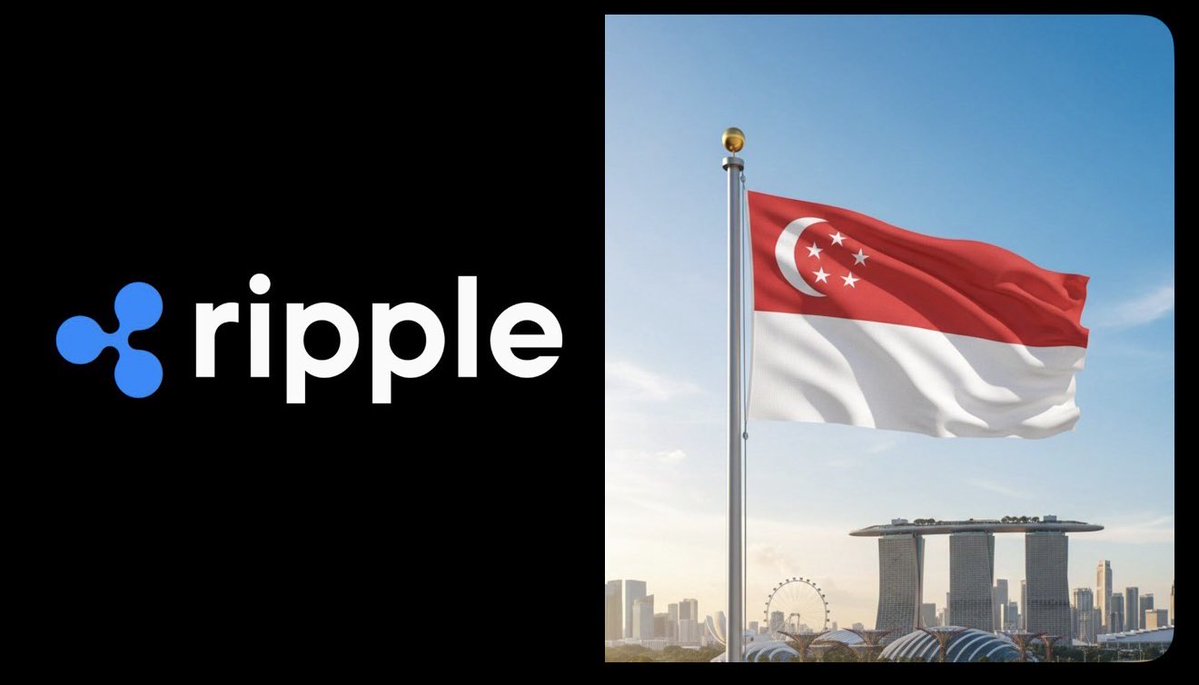
Nobody understands how big this Singapore move really is for XRP. 🇸🇬
Everyone reads “license expansion” and scrolls.
In reality, this is the kind of structural shift you need if you ever want to talk about four and five digit XRP in a straight face macro model.
Here is the logic.
Ripple just received expanded approval from the Monetary Authority of Singapore, upgrading its Major Payment Institution license so it can run full end to end digital token payment flows in Singapore. That includes fund collection, custody and holding, token swaps, and payouts for institutional clients, using assets like XRP and RLUSD.
Singapore is not just another market, it is Ripple’s APAC headquarters since 2017 and is treated internally as a pivotal global hub. MAS now recognises Ripple Markets APAC as one of the very few blockchain firms allowed to operate a regulated digital payment token stack at scale.
Put simply, Ripple can now
• onboard banks, fintechs and crypto companies in Singapore
• use XRP and RLUSD in fully regulated cross border payment flows
• handle the full lifecycle of those flows inside its own infrastructure
This is not speculative usage, this is licensed usage.
Now connect that to what is already in flight.
DBS and Franklin Templeton are issuing and trading tokenised money market funds on the XRP Ledger in Singapore, paired directly with Ripple’s RLUSD stablecoin for trading, lending and collateral. Franklin’s sgBENJI fund is issued on XRPL, listed on DBS Digital Exchange, and swappable against RLUSD in Singapore’s regulatory perimeter.
You have
• tokenised funds issued on XRPL
• a dollar stablecoin (RLUSD) on XRPL
• a bridge asset (XRP) on XRPL
• a fully licensed payment stack in Singapore that can legally connect all of these for institutions
Add to that Ripple’s other moves this year
• acquisition of Hidden Road, now Ripple Prime, a multi asset prime broker clearing 3 trillion dollars a year for more than 300 institutions
• acquisition of GTreasury, giving Ripple direct reach into global corporate treasury workflows and cash management
You are looking at a single integrated machine that can
originate flows in corporate treasuries
pipe them through Ripple Prime
settle them on XRPL
route liquidity through XRP and RLUSD
and do it from a fully regulated hub in Singapore that services the entire Asia Pacific region.
If XRP ever trades at ten thousand dollars, it will not be because of memes or charts.
It will be because
• multi trillion dollar treasuries are managing liquidity through XRPL
• tokenised funds, stablecoins and real world assets are settling on XRPL
• hubs like Singapore are clearing huge percentages of global trade, remittances and asset flows through licensed digital payment infrastructures that use XRP as a neutral bridge.
This MAS decision is one of those quiet foundation stones.
Regulators just gave Ripple permission to turn Singapore into the XRP and RLUSD liquidity switchboard for Asia.
Price will not move in a straight line, and nothing is guaranteed, but if you are building a serious path to extreme valuations, this is exactly the kind of regulatory and structural win you need on the way to an XRP that settles a meaningful slice of a 100 plus trillion dollar global value flow.
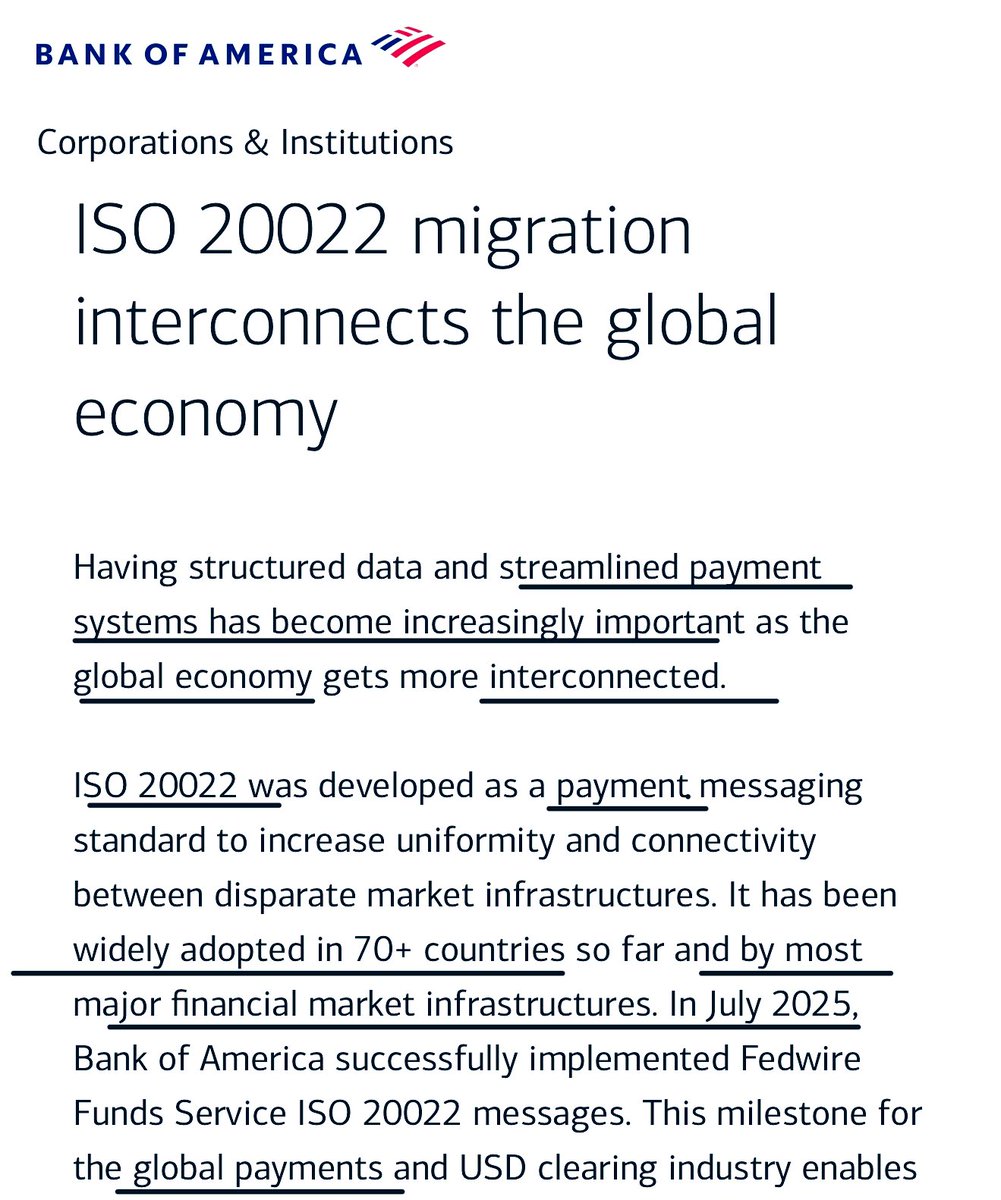
BANK OF AMERICA THEMSELVES CONFIRMS THE NEW ISO20022 DLT STANDARD IS A NEW “ PAYMENT“ MESSAGING STANDARD!!!
BUT BUT I THOUGHT FORMER RIPPLE DIRECTORS TOLD ME ITS ONLY “ MESSAGES “ NAD NOT PAYMENTS.
CASE CLOSED BUDDY BOY.
$XRP
Beginning on January 1, 2026, the full implementation of the Basel III Endgame will mark a major turning point for the global banking system, reshaping both capital regulation and liquidity standards.
Until now, banks have calculated their capital adequacy ratios using their own internal risk models. However, with the introduction of the new Standardized Approach, all banks will be required to follow a common framework for risk assessment and capital maintenance.
As a result, large banks with significant exposure to trading assets and derivatives will be forced to substantially increase their capital reserves, while mid-sized and regional banks are expected to face growing consolidation pressure.
In this changing environment, Ripple Trust Bank holds a clear institutional advantage.
The company has applied for a National Trust Bank charter under the supervision of the U.S. Office of the Comptroller of the Currency (OCC). Unlike commercial banks, Ripple Trust Bank does not engage in lending or maturity transformation, and therefore avoids traditional credit and market risk.
Instead, Ripple Trust Bank specializes in settlement, custody, and digital asset clearing, maintaining a structure with minimal risk-weighted assets (RWA).
This allows the bank to operate with significantly lower capital requirements even under the standardized Basel III framework. In other words, Ripple Trust Bank faces far less capital pressure, as it carries minimal credit and market exposure.
Furthermore, Ripple Trust Bank is expected to gain access to the Federal Reserve’s Real-Time Gross Settlement (RTGS) system through a “Skinny Master Account.”
This will enable it to perform final legal settlement directly within the central bank’s infrastructure while linking on-chain and off-chain payment systems seamlessly.
On the on-chain side, Ripple’s Interledger Protocol (ILP) connects RTGS with Distributed Ledger Technology (DLT), enabling atomic, real-time, and irreversible settlements on the XRP Ledger (XRPL).
This design minimizes both liquidity and counterparty risks, fully aligning with Basel III’s core objective of maintaining financial system stability.
At the center of this architecture is RLUSD (Ripple USD) — a fully backed, NYDFS-regulated stablecoin supported by short-term U.S. Treasuries, cash, and reverse repurchase agreements.
These backing assets qualify as High-Quality Liquid Assets (HQLA) under Basel III and are ideal for meeting the Liquidity Coverage Ratio (LCR) requirement.
Consequently, RLUSD is classified as a Group 1b asset, placing it just below central bank reserves and sovereign bonds in terms of safety and regulatory recognition.
Summary
Ripple Trust Bank represents a new category of financial intermediary — one that bridges central bank RTGS systems with on-chain settlement infrastructure.
By combining a trust bank charter, Basel III-compliant liquidity reserves, and ILP/XRPL interoperability, Ripple is building a foundation for the post-Basel era — a system that ensures regulatory stability while enabling real-time, programmable finance for the global economy.
Several years ago in London, I reviewed a confidential report circulated among senior executives from Barclays, HSBC, Standard Chartered, and Lloyds. The meeting took place in a private conference suite at The Langham, away from the usual corporate setting, with representatives and observers linked to the Bank of England’s innovation office.
The core problem was not liquidity itself but friction. Value moves across borders through a century-old architecture built for messaging, not for settlement. Each transaction passes through multiple intermediaries, creating delays, trapped capital, and compliance blind spots. Global institutions collectively lock trillions of dollars in nostro-vostro accounts just to make payments “work.”
The report quantified this inefficiency in terms of energy, cost, and velocity. It demonstrated how the current system burns more resources validating messages than it does transferring actual value. In essence, the system was never designed for a real-time, interconnected economy.
The document was technical, not speculative. It outlined in detail how the global monetary framework was failing under its own weight like correspondent delays, trapped liquidity, and the immense inefficiency of messaging-based systems like SWIFT. Trillions of dollars sit idle globally just to reconcile timing differences between ledgers that were never meant to communicate.
Then came the second half of the report i.e., the solution. It detailed a new framework for atomic settlement using distributed ledger technology. The emphasis was not on speculation but on precision: deterministic finality, compliance integration, and programmable liquidity. The platform highlighted most extensively was the XRP Ledger.
Its architecture eliminates intermediaries, operates at near-zero energy cost, and settles transactions in seconds at a fraction of a cent. More importantly, it supports the embedding of KYC and AML data layers directly into the protocol, something that traditional blockchains could not offer at the time.
Barclays and Standard Chartered examined its use in trade and treasury flows. HSBC focused on its potential to free up nostro-vostro capital across Asia and the Middle East. Lloyds viewed it through the retail payments lens, seeing efficiency gains in domestic clearing and international remittance corridors.
By the conclusion of that London session, consensus was clear. The financial system did not need to be replaced; it needed to evolve onto rails that could move value as seamlessly as data. Under NDA, each bank committed to exploratory integrations within their digital strategy teams, coordinated quietly through enterprise channels (like those of Ripple’s) and under the observation of regulators.
The public will only see the front end when the infrastructure is ready. But those of us who read that report understood what was coming: a global liquidity network where money moves with the same speed and certainty as information.
And the XRP Ledger sits precisely at the center of that design.
Shutdown is necessary to allow all banks, airlines, and businesses to upgrade their systems to accept $RLUSD and $XRP payment using the @Ripple platform.
Once they are done, they will open the government again and XRPers will laugh/enjoy their life forever.
Wenn der größte Zahlungsdienst der Welt auf Krypto umstellt, betrifft das uns alle ‼️
Ripple bringt Blockchain direkt in die Kartenzahlung: Gemeinsam mit Mastercard, WebBank und Gemini wird RLUSD auf dem XRP-Ledger genutzt, um Settlement im Hintergrund schneller, günstiger und transparenter zu machen.
Das ist kein Experiment in einer Sandbox, sondern ein echter Use Case in einem aktiven Produkt – der Gemini Credit Card. Wenn Mastercard die Abwicklung von Zahlungen auf eine öffentliche Blockchain verlagert, dann weil es Kosten spart und Prozesse effizienter macht. Genau solche Integrationen zeigen, wohin die Reise geht: Krypto wird nicht neben dem Finanzsystem existieren, sondern es im Kern modernisieren. Schritt für Schritt, Zahlung für Zahlung – bis es irgendwann einfach Standard ist.
Wie sieht Du das ? 🧐
XRP holders please listen up
it is not a confusing ticker if you understand currencies!
my friends
I hold both $XRP & $XPR without confusion!
people just need education 💯
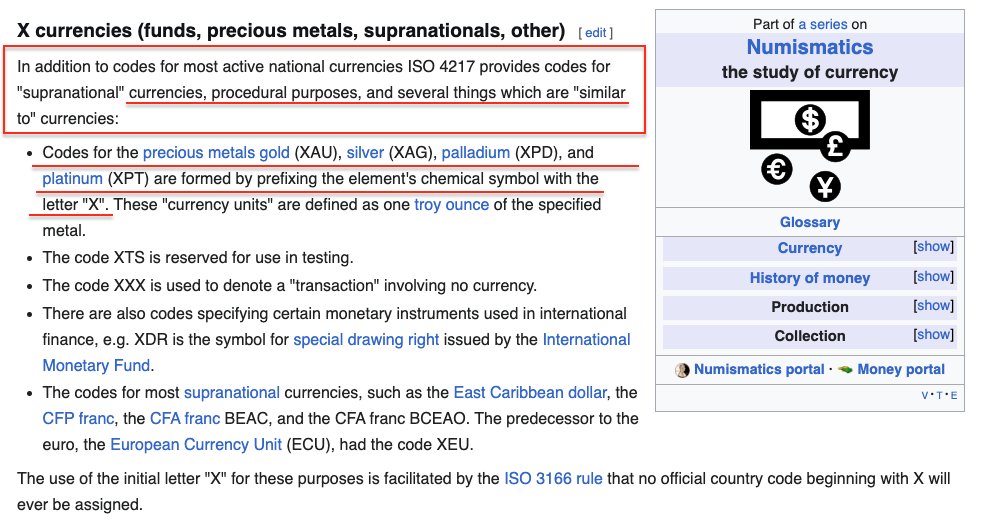
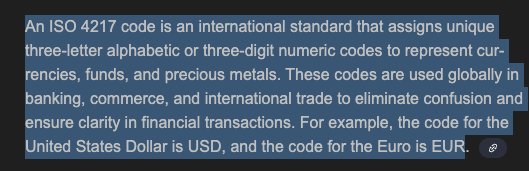
In global markets, the “X” in an ISO 4217 code usually means it’s not tied to any one country often a precious metal, commodity, or special asset.
Common examples:
XAU → Gold
XAG → Silver
XRP - X ( not tied to any country) RP (Ripple)
XPR - X ) not tied to any country) PR (Proton)
the tribalism could be solved with education
lets work as a team that stands FOR financial freedom,
NOT a bunch of heathens acting like there will be one ring to rule them all.
PS. anyone can go on @krakenfx support page and read about this
🚨RIPPLE’S ESCROW TRICK: RIPPLE BOARD-MEMBER "JOELKATZ" — How Ripple Can Monetize Locked XRP Without Releasing It 🚨
So here’s something wild that just came out — @Ripple ex-CTO and current board-member David “JoelKatz” Schwartz (@JoelKatz) confirmed that Ripple can actually sell the rights to $XRP that’s still locked in escrow.
Yep, you read that right. The $XRP itself stays locked, but @Ripple can pre-sell future claims to it — basically turning time-locked tokens into real money today. 💰
@Ripple currently has 35 billion $XRP in escrow (around $92B worth). Normally, that $XRP releases slowly over time. But this move means @Ripple can monetize future holdings now — using those future tokens for funding, investments, or even big partnerships like with @evernorthxrp.
Think of it like this: imagine pre-selling concert tickets for a show that hasn’t happened yet. The tickets (XRP) are still locked away, but Ripple gets paid upfront. Smart, right?
Schwartz explained it perfectly:
“Ripple could sell the right to receive the tokens released from escrow… but the XRP still can’t circulate until their release dates.”
So no, they’re not dumping tokens or breaking escrow — they’re just finding a clever way to use what they already have to expand faster.
It’s a financial play straight out of Wall Street’s book — and it proves Ripple isn’t just holding $XRP … they’re using it as capital. 🚀
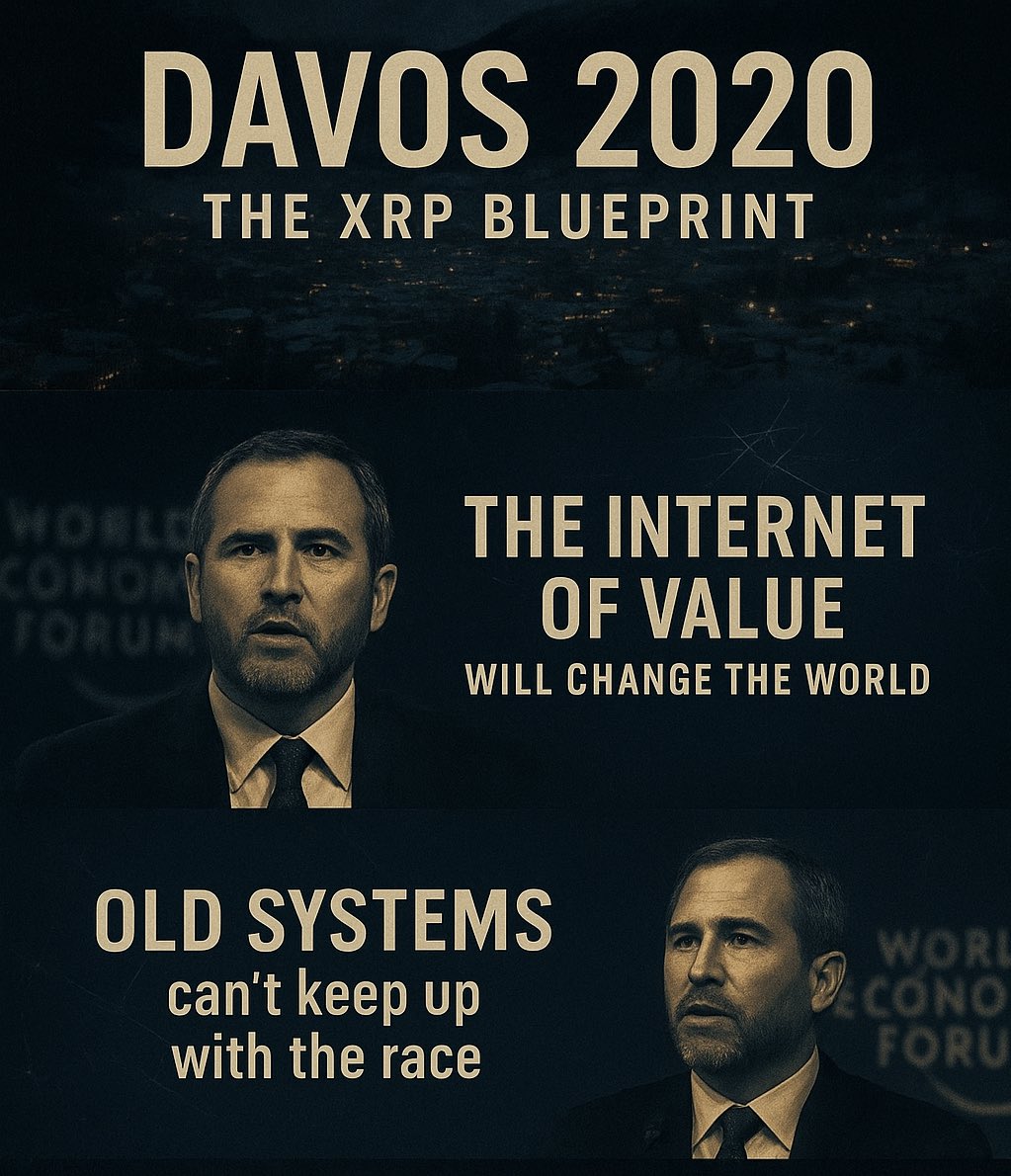
🧵THREAD: The Brad Garlinghouse Speech That Predicted $XRP ’s Future
In Jan 2020, at the World Economic Forum in Davos
Ripple’s CEO Brad Garlinghouse took the stage.
Months later, the SEC sued Ripple.
But what he said that day now reads like prophecy.
Let’s Open Thread👇🏻
Most people think the American government has been against XRP.
I’m here to tell you.. that may be the biggest misconception in this entire market.
From what I saw in top-level banker meetings back in 2012… it smells like the XRP Ledger was American-backed from day one. 🧵
🧵 Something massive just happened… and most are still asleep. $XRP is back above $2. But why? And why does it matter now more than ever?
Let’s break it down. This goes way beyond charts.
This is the setup for a new financial order. ⚔️👇
APRIL IS GOING TO BE A GREAT MONTH! $XRP
Monthly Chart shows that an inverted hammer occurs in March, which means April will be GREEN, and May will be GREEN!