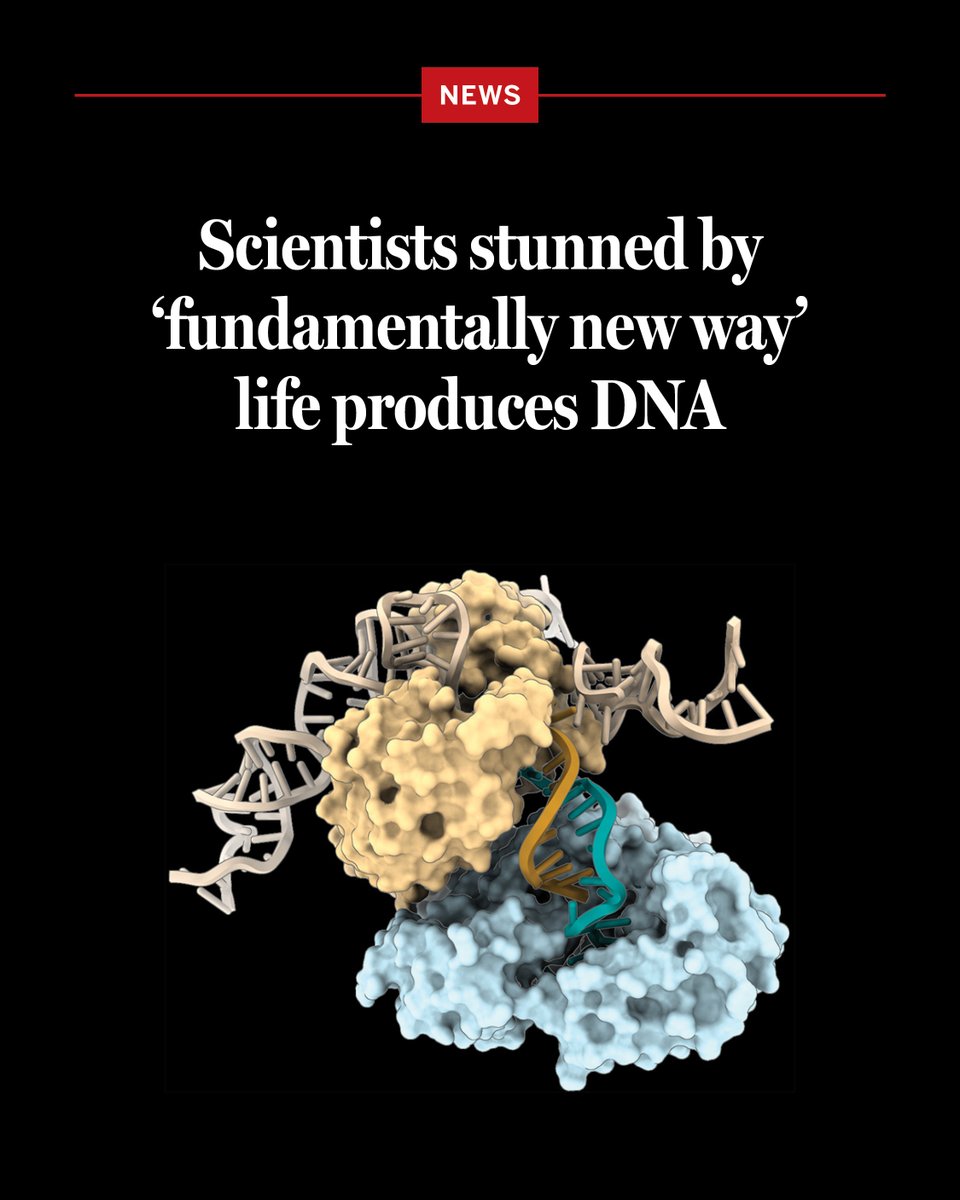
For decades, biology textbooks have enshrined a simple rule: DNA is made by copying a template. After one enzyme unzips a DNA double helix into separate strands, another called a polymerase builds a complementary sequence, base by base, for each strand. Presto: two copies of the original DNA.
But new research into how bacteria defend themselves from viruses now shows this synthesis rule isn’t absolute.
Now, a team describes a bacterial enzyme that synthesizes DNA without a nucleic acid template, using its own structure as a guide.
Learn more: https://t.co/bpVgr0KMdR
Introducing the 2025 Stanford Bio-X PhD Fellows! 🎉
Congratulations to our 20 new Bio-X Fellows, who have joined a community that extends far beyond campus! Program alumni are founders, faculty, and successful scientists all over the world.
https://t.co/m8qAxwQJMG
Congrats on everyone receiving a GRFP this year! If you'd like to pay it forward, please consider contributing your GRFP application to this github repo so other folks can see what successful applications look like. https://t.co/knZ48pxR39
Hey Bay Area RNA enthusiasts!
Super excited to announce the new date of Bay Area RNA Club @RNA_BARC meeting!
#SaveTheDate for Dec 13th 2023 for a conference about all things RNA. #inperson and #virtual, at UCSF! #BARC2023#RNA#free
Submit an abstract before Nov 15th