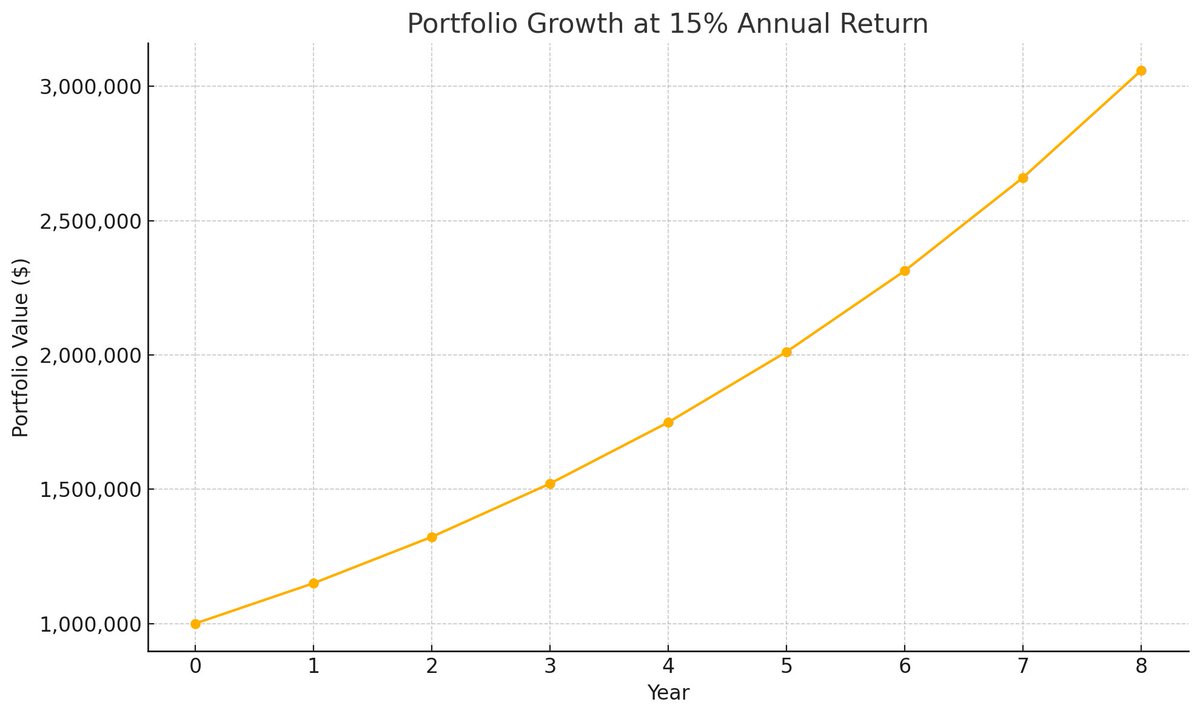
I believe that market neutral is one of the last places in which to consistently extract alpha in the crypto industry.
The state of crypto (excluding BTC) is pure PvP, with money shuffling around between the same group of people over and over. No new inflows, just rotations.
That means that people are constantly paying fees, while getting diluted by insiders with ~$0 cost basis. What was a 50/50 chance of profit turned into 49/51 after paying fees.
Each rotation skews the odds against you even more.
Each dollar that pumpfun sends to Kraken, every penny of the billions of dollars that CEXes / DEX LPs collect in fees are 100% paid by crypto participants. The fact that Binance paid $4B in fines and ByBit plugged a $1.5B without blinking is a good indication of the sheer scale of this ‘extraction’.
The people that “make it” in this market are those that leave while they’re ahead; the people who keep their capital in crypto eventually lose it.
Only maximizing for EV is short-sighted tho.
If someone offers me a coin-flip with 99.9 % odds of winning $102 and 0.01 % odds of losing $1M, I wouldn’t take it, even as EV is +$1.9. Personal cost is a thing.
I say this to make the point that “the trenches” can make sense for the financially disillusioned who see this opportunity of “making it” as the only way to achieve happiness in life, and so accept the trade-off of entering a probably losing trade.
But from a purist financial standpoint, taking a -EV trade is never ok.
Back to my point: market-neutral allows more prudent and ‘financially correct’ investors to maximize profit by providing capital / leverage to this subset of people that are ok paying sub-optimal rates in order to have a chance of fulfilling their fantasy, while paying near $0 in fees.
I’ve been doing DeFi market neutral for 8 years and have been able to average ~15 % yearly returns during this time.
15% might not seem like a lot to the reader, but keep in mind that the strategies I applied during this time are what you’d consider to be very safe by crypto standards, having no weekly drawdowns in all these years.
Even at that “low-and-safe” rate, the chart of a $1M initial investment looks like this (scroll to the bottom to see chart, Twitter is broken):
After 8 years you’d be left $3,050,000, which is $2,410,000 in today’s dollars — a 141 % real return.
This is a simplistic analysis and there’s definitely some risk and a lot of work behind these returns.
Capital base size is key when analyzing if market-neutral is something that’s worth it for you. A proper setup can set you back at least $200 a month on analytics and hardware, and at least another dozen hours weekly. This needs to be part of the equation.
I don’t expect this alpha to stay here forever, but every year the market keeps surprising me and keeps giving me opportunities to grow my portfolio with what I consider the best risk-adjusted returns in crypto.
It’s easy to get 15 % yearly when everybody is in the trenches looking for a quick 10x of their portfolio.
-Warren Buffett, probably
QT article related, cover this more in depth.
The biggest problem with “vibe coding” is it results in unintelligible code or full system breaks you can’t debug easily
Below are some heuristics to avoid these problems. Can be refined and added to system instructions in Claude code / windsurf / cursor etc
1. Each task or milestone is defined in a sprint markdown file. This is user defined — rather than “chatting” you store these / commit them in your repo
Example of a milestone: I want a system to log trades to a database in a consistent format
2. The following must be accomplished:
1. A system of logs must always be generated along with the feature. The logs should be accessible to the coding tool you use
2. Two demos must be built:
A. Command line interface
B. Ipython notebook in example directory showing core functionality
3. The system should verify the CLI implementation works before building the ipynb
4. The user must verify the functions in the ipynb before proceeding — at this point 50% time something breaks and results in scripts needing repair / iteration — log these in the sprint markdown. Chances are you need to instruct the system to read the log files here
5. After the script is verified it should be meaningfully described in architecture dot md - markdown file that describes your project
6. Post verification the system should verify the script is written in the most efficient possible way. “Please review the code for efficiency / correct use of sync / async functions, thread safe execution, good security practices and documentation. Every important function should have example use. The goal is clean intelligible code that is safe but is as minimal as possible”
7. Rules for architecture dot md
- all script names/ file path, classes and important functions within a class are described with brief examples
- file paths formatted consistently
- no qualitative descriptions outside of minimal function
8. After architecture file is updated and user reviews then sprint response markdown file is generated with summary of execution
So the basic process is:
1. Define the sprint so that it generates robust logging and tests
2. Run tests / break the script and iterate
3. Create human readable examples in ipynb or whatever your favorite interface is
4. Code clean up / efficiency
5. Light weight documentation in a single architecture file
6. Machine generated sprint response
7. Robust commits / descriptions once you’ve reached a good checkpoint
8. Repeat
I’m sure there are other methods but this is the only reliable way I’ve found for using ai to work on high stakes projects
gifted kids only can self actualize once everything has fallen apart and they're forced to glue it back together and then it isn't a gift anymore
it's a mandate
Most crypto traders don't struggle with finding good setups (trade identification).
Crypto is a relatively inefficient market where straightforward trading tools and setups work well.
Unforced errors tend to be the issue.
Here's a list of some of them.
This list is by no means complete.
Honourable mentions go to system hopping, over-indexing on short-term losing streaks, traders becoming investors/investors becoming traders, and so on.
Make your losing trades small and let your winners win.
1. Thoughtless position sizing.
Risking too much on noisy setups and not risking enough when trading your edge.
Some traders don't have a risk management framework whatsoever, and undo weeks/months of good trading with 1 large loss.
Fixed risk is a good model for slow and conservative learning in order to avoid getting wiped out, but once you have some sense of what you're doing, your risk amounts should vary depending on the setup and on market conditions.
2. Using too much leverage.
This creates an excessive reliance on specific price levels and/or requires an unreasonable amount of precision to make money.
You can be directionally correct and still lose money if you're overleveraged.
Having your liquidation price breathing down your neck with every tick also leads to rushed and poor trade management decisions made under pressure.
3. Poor trade management.
Trade management refers to your actions between the beginning and end of a trade.
You're often your own worst enemy, and there are some recurring archetypes among crypto traders:
i. Traders who get immediately impatient and start hyperventilating over every 1 minute candle when trading the daily/weekly chart.
ii. Traders who catch the start of a move and never take profit or trail their stops, resulting in huge roundtrips.
The same goes for moving your TPs and/or stops wider than originally planned, arbitrarily moving to break even for the sake of a "risk-free" trade, adding to a position without a compelling reason to increase your exposure, and so on.
Most beginners would benefit from a strict SL/TP framework in the beginning, and then taking an empirical approach to developing early exit signals, trailing stops, and other active forms of trade management.
4. Overtrading and undertrading.
Overtrading means excessively managing existing positions (that don't need to be managed) and/or trading out of boredom.
Undertrading (trust me, I know about this) means not acting on your edge when it's there and/or not making the most of market conditions that are favourable towards your strategy.
In many cases, this ends up completely ass-backwards:
i. Overtrading in bad conditions to make up for losses.
ii. Undertrading in good conditions due to complacency.
iii. Overtrading in good conditions out of boredom.
(iv. Undertrading in bad conditions is a good thing, in most cases, as you don't imbue a bias or develop bear/chop market PTSD i.e. bad habits that are very expensive later on.)
5. Poor emotional regulation.
Chasing something because of FOMO, selling something because of FUD, rebalancing your entire portfolio because of a news event or scary-sounding Twitter thread, sizing up or moving your take profit order(s) after doing some holiday in Ibiza mental PnL calculations, and so on.
Generally, unless you're experienced, anything that forces you to act and deviate from your system/edge is harmful.
Discretion is a luxury that is earned through experience.
If you're relatively new, your immediate emotional impulses are more likely to be a foe than an ally.
6. Ego/ossification/stubbornness.
Most crypto traders make a disproportionate amount of their lifetime PnL in a few good trades, trends, or months.
Having experienced that high, it's tempting to believe that you've "solved" the market and can always generate those returns (ego).
Given your success in that short time period, you're also likely to try it repeatedly and swear by it given it worked so well (ossification).
Changing your approach and/or acknowledging that a specific set of market conditions was necessary for your success is a non-starter, because it would indicate that you're not an all-seasons god-tier trader but rather right place + right time - so you keep hammering the same setups and trading the same way even if the regime has clearly shifted (stubbornness).
Summary
Don't be an arsehole.
You're your own worst enemy.
The trade identification part is easy - everything outside of that is difficult.
Retar Dio.
Of course traders start philosophically posting life wisdom after a year or two in the game.
It’s right about the time when you start to realize that your trading mistakes are usually reflections of your flaws as a person.
Greedy, hot-headed, or impatient as a person? Good chance it shows up in your trading as well.
I love seeing it cause it’s the transformative period in a trader’s journey. Some people never conquer those demons, some do.
That last mile is the loneliest.
One important thing I heard in DonAlt and Cred stream yesterday and I was thinking about recently is that :
Your trading style should depend on your psychology. Depending on what makes you suffer or stress the most, your trading must be adapted.
For example if you are stressed when you have to hold a position for too long, then you should be jumping in and out of trades frequently, and be more like a scalper and short-term trader.
Conversely, if cutting a trade is scary because you are not confident on short-term moves but rather on multi-month timeframes, then you should focus on holding your positions for longer and let your thesis materialize over time.
For me, I know that missing a pump is painful, way more than roundtripping gains. So this is why I would rather be deployed earlier and suffer drawdowns than chase a coin that is ripping (if I have been eyeing it for a long time). This is also why I don't like to take profit on coins that I think will end up higher in a few months, even if they look short-term top-ish.
crypto bros ridiculing hard working, honest people, who actually contribute to society by working ‘9-5’s’, is something I’ll never understand.
your parents worked 9-5 so that you could trade magic internet ponzis for a living, you dork.
I’ll never forget where I came from.
how is it that when you close all your long positions all the bullish headlines start to hit the feed?
protip: it's all personal, the market is watching you