“That is one of the most important presentations we will hear.”—BCRF researcher Dr. Eric Winer on today's #SABCS22 presentation by @YAbdouMD on BCRF-supported @SWOG RxPONDER data showing Black women have worse outcomes comp. to white women despite similar gene recurrence scores.
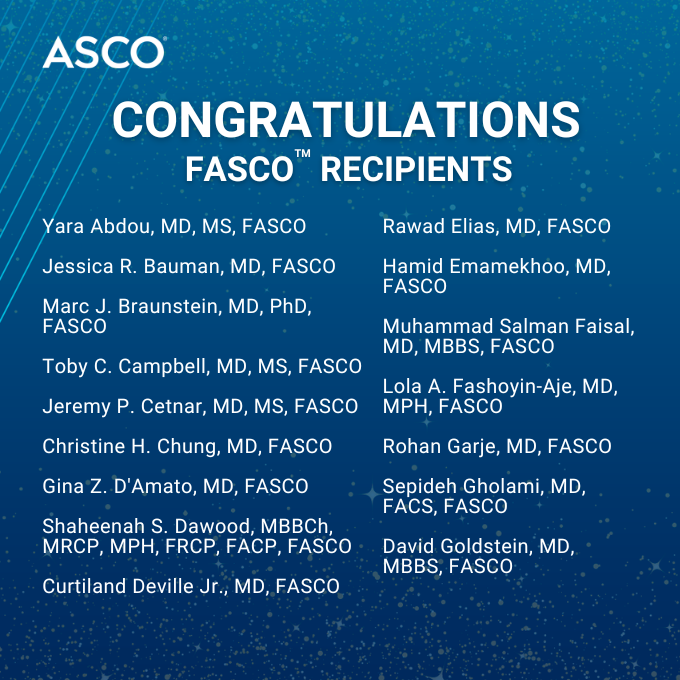
Honored to be recognized as a Fellow of ASCO! Grateful for this distinction and for the opportunity to serve our patients, our profession, and the oncology community.
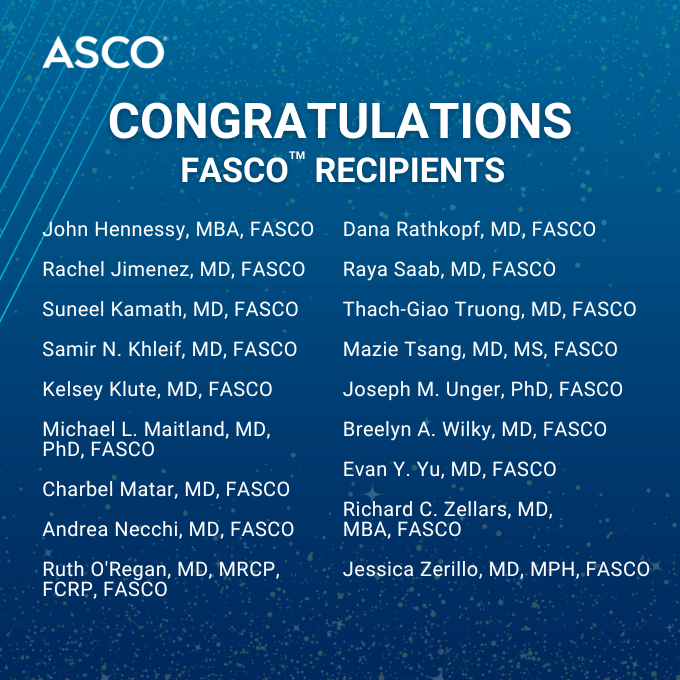
Congratulations to all of the recipients!
@UNC_Lineberger#bcsm
Join us in congratulating the following members on earning the Fellows of ASCO (FASCO) distinction this quarter! We are grateful for their extraordinary volunteer service, dedication, and commitment to ASCO.
Learn more about FASCO distinction: https://t.co/v4ACUEu3uU
"I need more protected time."
Our @CancerJournal commentary explores why protected time remains one of the greatest challenges facing clinical trialists in oncology.
Honored to write this with @RamalingamMD@jsparano
https://t.co/6Z8U0Vu2SX
How do we decide who truly needs chemo in HR+, HER2- early breast cancer?
🎧 New episode with @YAbdouMD:
✔️ Prognostic vs predictive genomic assays
✔️ TAILORx, RxPONDER, MINDACT insights
✔️ What OPTIMA means for higher-risk pts
https://t.co/YrVAUxao7d @UNC_Lineberger
1/ Excited to share our new paper in @MolecularCell:
“FANCA-dependent FEN1 recruitment suppresses transcription-replication conflicts and PARPi sensitivity”
Led by Qinhong Wang with a fantastic team at UNC.
https://t.co/uJvdcrFcEB
@UNC_Lineberger@UNC_BCBP
Great job Yara!
One additional challenge is that too many leadership and trial opportunities remain concentrated among the same institutions and the same individuals. We talk about cultivating the next generation, but advancement can feel limited when the glass ceiling is occupied by people who have held the same positions for years. Creating meaningful pathways for early-career investigators to lead not just participate is essential if we want innovation, diversity of thought, and a sustainable future for cancer research.
We’re asking the wrong question.
Not: “How do we train the next generation of breast cancer researchers?”
But: “Why are we making it so hard for them to stay?”
Our new international BIG–NCTN paper outlines practical solutions to support early-career investigators—from protected funding and trial leadership opportunities to mentorship, sponsorship, and equity-focused reforms.
Investing in ECIs isn’t altruism. It’s an investment in the future of cancer research—and in the patients who depend on it!
#bcsm @BCRFcure@theNCI@Seamusoreilly18@MariyaRozenblit@nlinmd@darioT_@io_zerdes@UNC_Lineberger@YaleBreast@DFCI_BreastOnc
https://t.co/hXp1iWjY5N