New paper from the Gallo and Knight labs! We demonstrate how the skin-gut axis also occurs in the reverse way: skin altering gut microbiome! https://t.co/go094GkOfr[…]tm_term=null&utm_campaign=CONR_JRNLS_AWA1_CN_CNPL_0034V_STKRE @KnightLabNews
Excited to share a new paper from the Gallo lab I had the opportunity to be a part of during my rotation last year! We find that Cutibacterium acnes isolates with a linear plasmid contribute to skin inflammation. https://t.co/1YPQApzNwS
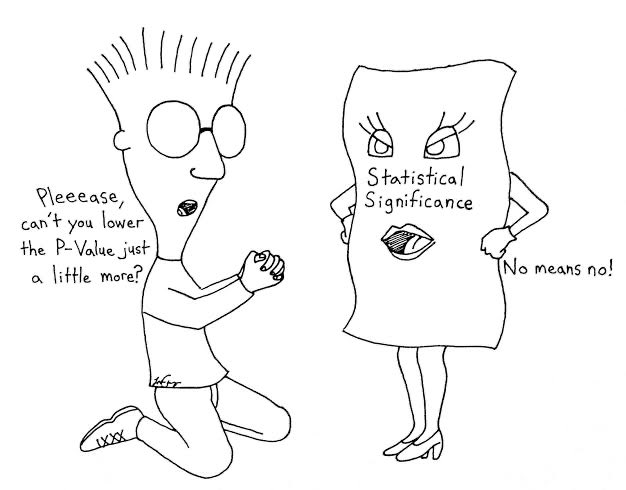
Why We Use p<0.05
🔹 Ever wondered why scientists often use p<0.05 as the threshold for statistical significance? Let's dive into its history, implications, and alternative approaches.
🔹 The p<0.05 threshold can be traced back to Sir Ronald A. Fisher in the 1920s. He suggested the 5% level as a convenient boundary for significance. However, it's important to note he never intended for it to become a rigid rule.
🔹 The p value tells us the probability of obtaining our observed results (or more extreme) if the null hypothesis is true. So, p<0.05 implies there's less than a 5% chance our results happened due to random variation alone.
🔹 However, there are critiques. Relying solely on p<0.05 has led to "p-hacking" - tweaking experiments to achieve this threshold. It's also been implicated in the replication crisis, where many scientific studies couldn't be reproduced.
🔹 So, is p<0.05 the correct way to test a hypothesis? Well, it's a tool. When used correctly and with understanding, it can provide valuable insights. But, like any tool, it has limitations.
🔹 Some suggest a more flexible approach:
•Using different thresholds depending on the field or study.
•Looking at effect sizes alongside p-values.
•Emphasizing confidence intervals to provide a range of plausible values.
🔹 Bayesian statistics is another approach. Instead of frequentist's p-values, it provides a direct probability statement about the parameter in question using prior information and observed data. This can sometimes offer a more intuitive understanding.
🔹 In conclusion, while p<0.05 has historical significance and is widely used, it shouldn't be the sole determinant of a study's validity. Science is ever-evolving, and so should our methods and understanding of data interpretation.
🔹 As always, critical thinking is key! Don't just take p<0.05 at face value. Dive deeper, understand the context, and consider alternative methods when interpreting results.
#DataScience #Statistics
@KnightLabNews (@UCSDMedSchool / @UCSDJacobs) is excited to announce a new release of Greengenes in @NatureBiotech (https://t.co/fwYB8CPd2y). With this release, we provide a single taxonomy and phylogeny unifying 16S and shotgun metagenomic analyses!
A thread (1/n)
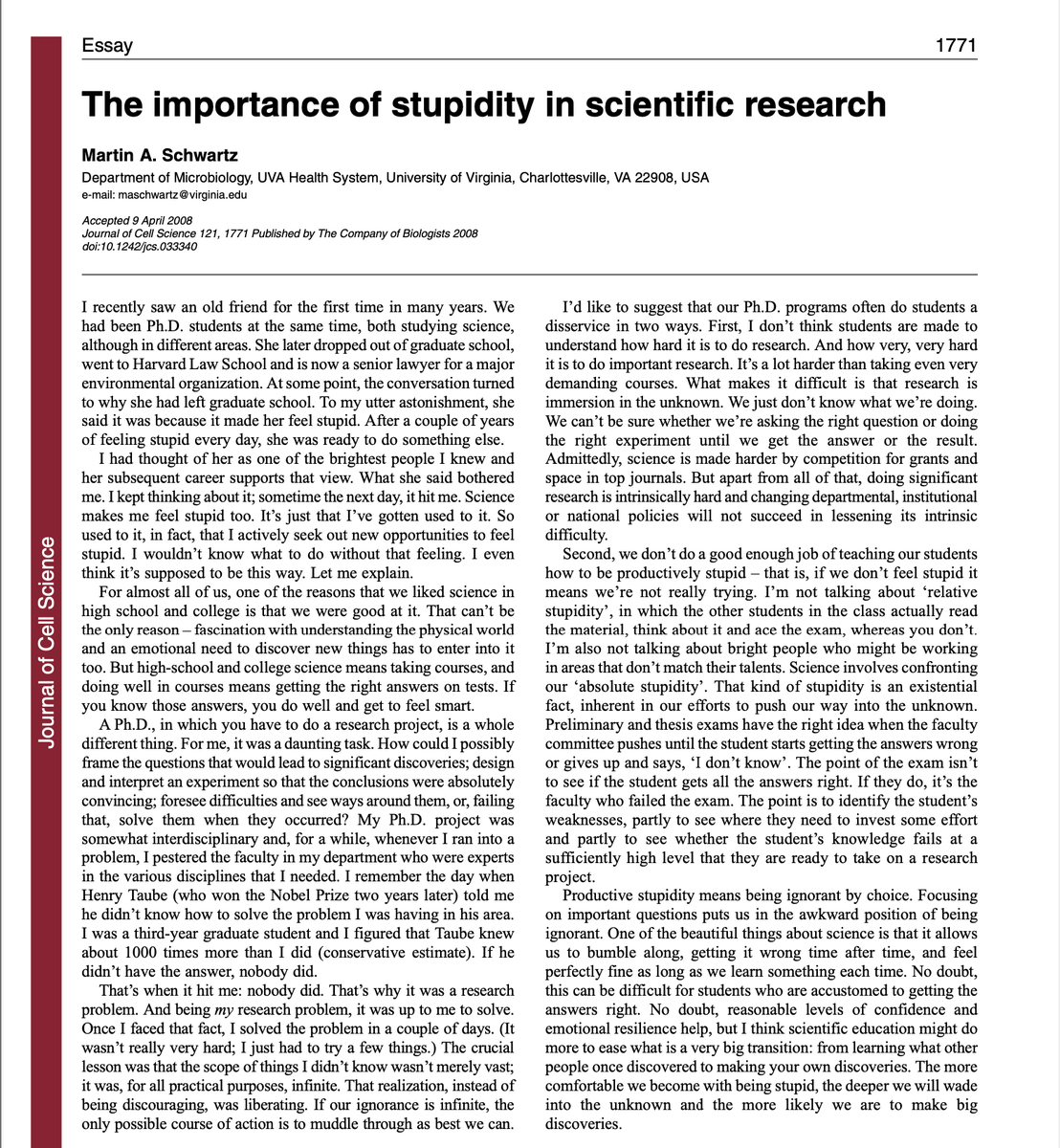
Science is hard.
Good research makes you feel stupid.
You're inadequate for the task at hand.
How else would it be? You're pushing the boundaries of knowledge.
Get used to it. This process is immensely rewarding.
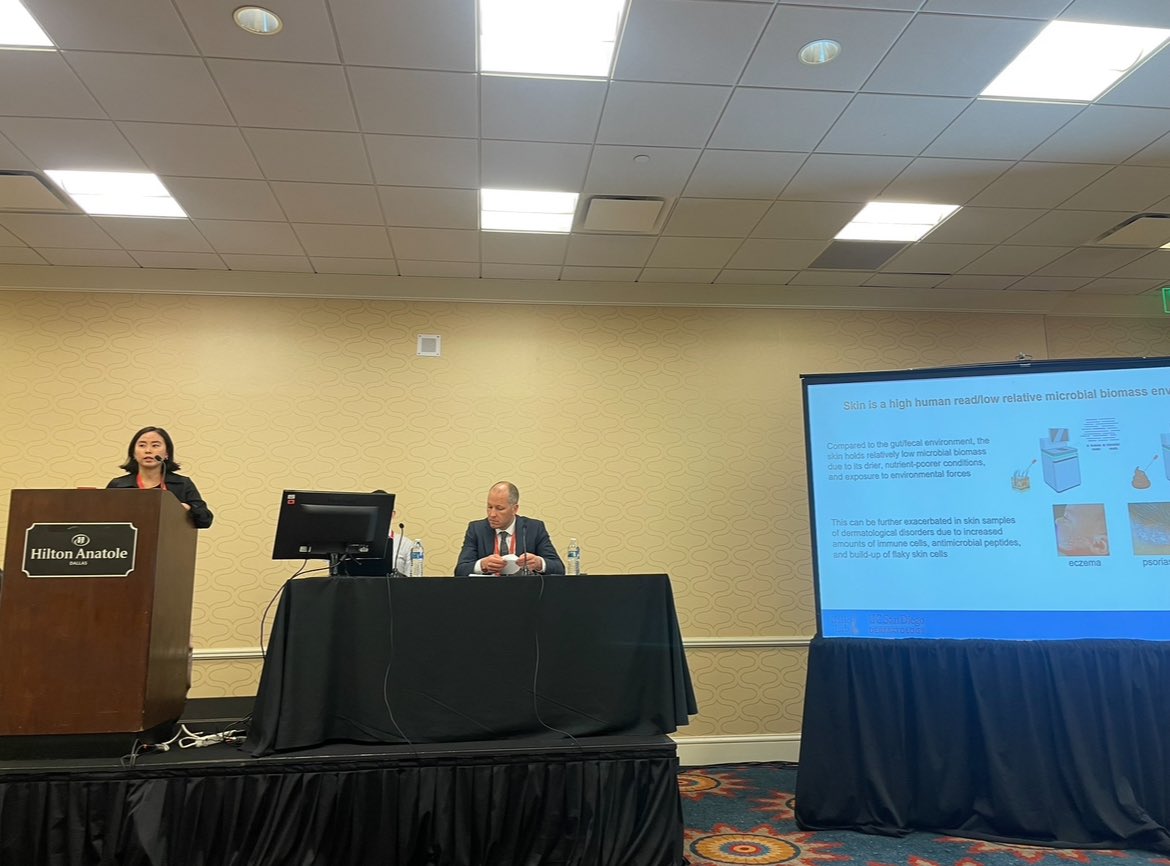
Yang Chen (@yangchen4379) describes recombination, one way viruses like SARS-CoV-2 can pick up new genetic changes, and how scientists detect recombinant viruses — work she did as part of her @NIH post-baccalaureate project 🧬
Full video: https://t.co/WHC544yjiP
2/5
Hi, I'm Yang! I’m a first generation Chinese-American biomedical researcher at the NIH. Check out my github pages website here! 🦠🧬💻👉 https://t.co/bEWiEuBGHj
Is there a show called Science Survivor? Where we take scientists from one field and plop them in a totally different field and they complete typical tasks of the field. I wanna see chemists figure out migration patterns of birds while a Physicist learns about cell culture.
Cancer tissues are often thought to be exempt from the influence of our microbiome. @multi_omics@KnightLabNews discovered cancer-specific microbial communities. This study proposes a new class of microbial-based #cancer diagnostics.
#SciComm#OpenScience
https://t.co/vG9P0Ru9WO
Put the salary in the job description.
No one should have to take time off work to find out the job they are interviewing for pays significantly less than the one they already have.
Picked up 5 yr old from school, wearing scrubs. 2 classmates approach.
Girl 1: Do you work in a hospital?
Me: Yep!
Girl 2: Are you a Dr?
Me: Yes, I am!
Girl 2: And a mommy?!
Girl 1 to Girl 2: She’s a mommy & a doctor bc you can be more than 1 thing
Me: ❤️
#MouthsofBabes
Neighbor: What does your son do?
My mom: I think he sells microscopes.
Neighbor: He got Ph.D., why can’t he find a stable job?
My mom: I am tired of telling him.
(What I actually do: Work at Zeiss and help researchers with image analysis)