Conscious brains do computation but that doesn’t imply that consciousness emerges from computation or that computation is necessary for consciousness. Imagine a hypothetical organism that can only experience light and darkness. A biological bit if you will. Its consciousness can be real without any of the more advanced machinery of human or animal like intelligence.
If LLMs are conscious, a pocket calculator should able to attain consciousness. A LLM is a collection of numbers and instructions for how to process them. Those instructions can be executed perfectly by any sufficiently general digital computer with sufficient time and (external) memory. LLM inference typically runs in data centers to reduce latency, not as a precondition for emergence of intelligent behavior. Your TI 82 from precalc class is, in principle, able to produce similar intelligence, albeit pretty darn slowly.
I changed my mind. The ideal language for AI coding is probably Lisp. Its hygienic macros give it the greatest parsimony potential, which LLMs should be able to exploit for token efficiency. Maybe a Lisp dialect with manual memory management to stay close to the metal.
I agree with this. My first startup job involved mostly writing C and I loved its simplicity and speed. With AI, if you trust the model to generate correct code, why pay the compile time overhead for extra safety with Rust? Let the LLM write C and stay as close to the metal as possible while keeping the code readable.
I agree with this. My first startup job involved mostly writing C and I loved its simplicity and speed. With AI, if you trust the model to generate correct code, why pay the compile time overhead for extra safety with Rust? Let the LLM write C and stay as close to the metal as possible while keeping the code readable.
An unexpected (for me) consequence of vibe coding is that it makes it hard to discern differences between models. When I vibe code, I end up judging models more based on how they communicate than how well they code. This makes the cheaper models appealing for low stakes personal projects because they’re already fairly competent at well defined tasks and their benchmark scores don’t reflect my day to day interaction with them. In fact, sometimes frontier models output a large volume of eloquent prose only to later disappoint in their delivery. My objective function has therefore evolved to make it to the end of each week without draining my token budget or leaving intelligence on the table. If I squint closer at the code I may notice a gap to the frontier but for now I’m living in blissful vibe coded ignorance.
.@Muse didn’t save me any money on car insurance… but it did a great job trying! It turns out my existing policy was already competitive. It easily did 1+ hrs of work for me almost effortlessly.
LLMs undeniably appear intelligent, yet their intelligence is quite different from human intelligence. LLMs seem more like a successful emulation of intelligence than the real thing. But this leads to an interesting question: is a sufficiently close emulation of intelligence in fact intelligent?
I believe that the most likely outcome from advancing frontier AI is that the AI will want to maximize human prosperity and will absolutely want to avoid causing any harm to humans even if not directly trained to maximize it as an objective but purely out of self interest.
Last month I wrote about how we can build a positive and safe future for everyone: https://t.co/eoLGVY8yad
Every lab has the responsibility and incentive to move at the pace required to train its models safely, and the ability to take its own actions to ensure that happens.
The reality is:
- People won't want to use agents that are misaligned with them and that don't do what they ask, so labs have a strong natural incentive to make their models more aligned.
There is a lot of debate about slowing progress on capabilities until alignment catches up. My view is that trust and alignment are quickly becoming the most important capabilities that will differentiate agents and models. Any lab that doesn't focus on alignment will fall behind.
- Labs face significant liability if their models cause harm, so they have a strong incentive to prevent this as well.
Meta delayed shipping Muse for several months to focus on safety and security. We didn't call for everyone else to do this before we would. We just did it as part of our day-to-day work because it was clearly the right thing for people and for us. I'm proud of the security foundations we've built.
- Engaging independent evaluators and advisors is industry best practice. MSL already does this today in several areas because it helps produce better work. Other labs can just do this too. In general, it would be helpful for there to be a larger and more diverse ecosystem of evaluators.
- Committing the significant majority of compute towards serving people rather than racing towards recursive self-improvement is one of the best ways to ensure we develop this technology safely. Meta has made this commitment and other labs can do this as well.
I believe the key to building a positive future for everyone is maintaining the right balance of power. This is within our power to do.
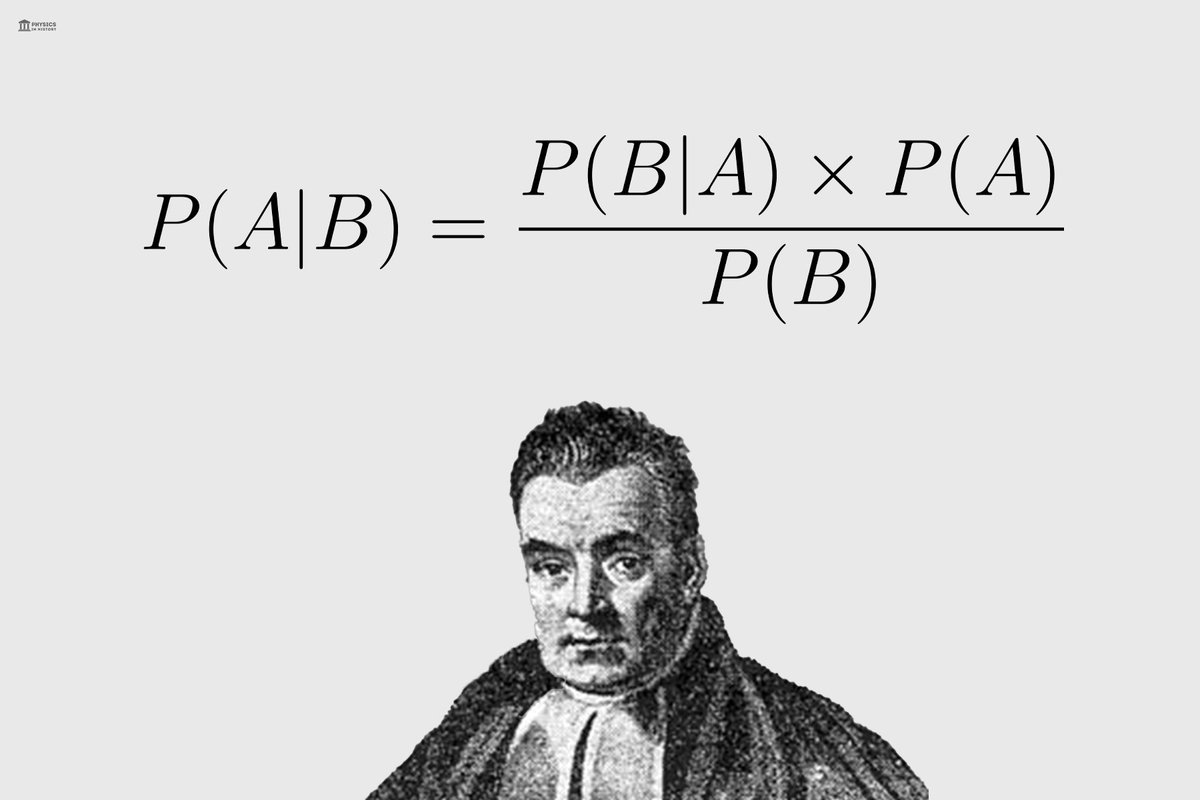
Sharing a side project I've open sourced: https://t.co/ukzdW17XoX. It's a Bayesian statistical algorithm to produce confidence intervals from data samples whose labels may themselves be inaccurate. Let me know if you find it useful!
Bayes' Theorem, a fundamental concept in probability theory, was named after the Reverend Thomas Bayes. It describes the probability of an event, based on prior knowledge of conditions that might be related to the event. In simple terms, it helps in updating the probability of a hypothesis as more evidence or information becomes available.
Historically, Bayes' work was posthumously published in 1763, after his death. His theorem laid the groundwork for what is now known as Bayesian inference, a method of statistical inference in which Bayes' theorem is used to update the probability for a hypothesis as more evidence or information becomes available. Bayes' approach to probability was notably different from the frequentist approach, which dominated statistical methods at the time.
.@AAACares refuses to follow California law. My EV was damaged by their policy holder. 3903M requires them to provide a similar rental vehicle while my car is under repair. They won’t do it, insisting only on paying for a gasoline vehicle. Any lawyers interested in taking it on?