𝗜𝗿𝗮𝗻 𝗖𝗮𝗺𝗲 𝗢𝘂𝘁 𝗦𝘁𝗿𝗼𝗻𝗴𝗲𝗿 𝗘𝘃𝗲𝗻 𝗔𝗳𝘁𝗲𝗿 𝘁𝗵𝗲 𝗪𝗼𝗿𝗹𝗱'𝘀 𝗠𝗼𝘀𝘁 𝗣𝗼𝘄𝗲𝗿𝗳𝘂𝗹 𝗠𝗶𝗹𝗶𝘁𝗮𝗿𝗶𝗲𝘀 𝗛𝗶𝘁 𝗜𝘁. 𝗘𝗴𝘆𝗽𝘁 𝗚𝗲𝘁𝘀 𝘁𝗵𝗲 𝗡𝗶𝗹𝗲 𝗙𝗿𝗲𝗲 𝗧𝗼𝗱𝗮𝘆. 𝗔 𝗗𝗶𝗿𝗲𝗰𝘁 𝗔𝘁𝘁𝗮𝗰𝗸 𝗼𝗻 𝗘𝘁𝗵𝗶𝗼𝗽𝗶𝗮 𝗪𝗼𝘂𝗹𝗱 𝗖𝘂𝗿𝘀𝗲 𝘁𝗵𝗲 𝗡𝗲𝘅𝘁 𝟭𝟬 𝗘𝗴𝘆𝗽𝘁𝗶𝗮𝗻 𝗚𝗲𝗻𝗲𝗿𝗮𝘁𝗶𝗼𝗻𝘀.
Let me extend the point from my last post, because Egypt's threats deserve a straight answer.
You hear it constantly. On Egyptian television, on Facebook, from politicians and generals, the same line on repeat. Strike the dam. Go to war with Ethiopia. 𝗖𝗮𝗶𝗿𝗼 𝗵𝗮𝘀 𝗯𝗲𝗲𝗻 𝗴𝗼𝗶𝗻𝗴 𝘁𝗼 𝘄𝗮𝗿 𝘄𝗶𝘁𝗵 𝗘𝘁𝗵𝗶𝗼𝗽𝗶𝗮 𝗼𝗻 𝘁𝗲𝗹𝗲𝘃𝗶𝘀𝗶𝗼𝗻 𝗳𝗼𝗿 𝘆𝗲𝗮𝗿𝘀 𝗻𝗼𝘄. 𝗧𝗵𝗲 𝗱𝗮𝗺 𝘀𝘁𝗶𝗹𝗹 𝘀𝘁𝗮𝗻𝗱𝘀.
So let me answer the threat plainly. Egypt will not launch a direct war on Ethiopia, and deep down Cairo knows exactly why. The water is born in Ethiopia. Strike the source of your own lifeline and you do not punish this Ethiopian generation, you create a Nile crisis for Egyptian generations after you. 𝗔 𝗰𝗼𝘂𝗻𝘁𝗿𝘆 𝗱𝗼𝗲𝘀 𝗻𝗼𝘁 𝗯𝗼𝗺𝗯 𝘁𝗵𝗲 𝘄𝗲𝗹𝗹 𝗶𝘁 𝗱𝗿𝗶𝗻𝗸𝘀 𝗳𝗿𝗼𝗺. Egypt is many things, but it is not suicidal.
And if anyone still doubts it, look at what just happened to Iran. The United States, the world's strongest military, and Israel, the region's most aggressive military power, did exactly what Egypt only talks about. They struck Iran at the highest level. And months later they were not dictating surrender. They were signing a memorandum, bargaining over a strait Iran still had its hand on. Think about what Iran came away with. Before the war, closing Hormuz was only a threat. After it, Iran is sitting at the table negotiating the terms of that strait, transit conditions, even talk of fees and transit terms for global shipping. 𝗧𝗵𝗲 𝗮𝘁𝘁𝗮𝗰𝗸𝗲𝗿𝘀 𝗽𝗮𝗶𝗱 𝗮 𝗽𝗿𝗶𝗰𝗲, 𝗮𝗻𝗱 𝘁𝗵𝗲 𝗰𝗼𝘂𝗻𝘁𝗿𝘆 𝘁𝗵𝗲𝘆 𝗮𝘁𝘁𝗮𝗰𝗸𝗲𝗱 𝘄𝗮𝗹𝗸𝗲𝗱 𝗼𝘂𝘁 𝘄𝗶𝘁𝗵 𝗹𝗲𝘃𝗲𝗿𝗮𝗴𝗲 𝗶𝘁 𝗻𝗲𝘃𝗲𝗿 𝗵𝗮𝗱 𝗯𝗲𝗳𝗼𝗿𝗲. Egypt is not stronger than the United States and Israel combined. If they paid that price, what exactly does Cairo imagine it would pay.
Now bring it home, because Ethiopia's position is stronger than Iran's, not weaker. Iran's leverage over Hormuz is military, and military leverage is legally exposed. It can be called piracy, it can be blockaded, it can be answered with a fleet. 𝗘𝘁𝗵𝗶𝗼𝗽𝗶𝗮'𝘀 𝗹𝗲𝘃𝗲𝗿𝗮𝗴𝗲 𝗶𝘀 𝗻𝗼𝘁 𝗮 𝘄𝗲𝗮𝗽𝗼𝗻. 𝗜𝘁 𝗶𝘀 𝗴𝗲𝗼𝗴𝗿𝗮𝗽𝗵𝘆 𝗮𝗻𝗱 𝗹𝗮𝘄 𝘁𝗼𝗴𝗲𝘁𝗵𝗲𝗿. Abbay is born in Ethiopian highlands, fed by Ethiopian rain, carved through Ethiopian mountains, and under equitable and reasonable use Ethiopia holds a lawful right to it. 𝗧𝗵𝗮𝘁 𝗶𝘀 𝗹𝗲𝘃𝗲𝗿𝗮𝗴𝗲 𝗻𝗼 𝗳𝗹𝗲𝗲𝘁 𝗰𝗮𝗻 𝘀𝗶𝗻𝗸 𝗮𝗻𝗱 𝗻𝗼 𝗰𝗼𝗹𝗼𝗻𝗶𝗮𝗹 𝘁𝗿𝗲𝗮𝘁𝘆 𝗰𝗮𝗻 𝗲𝗿𝗮𝘀𝗲. Iran has to threaten to close something to be heard. Ethiopia only has to stand on its own land and its own law.
And here is the part Cairo should think about hardest. 𝗘𝘁𝗵𝗶𝗼𝗽𝗶𝗮 𝗱𝗼𝗲𝘀 𝗻𝗼𝘁 𝗻𝗲𝗲𝗱 𝘁𝗼 𝗰𝗵𝗮𝗿𝗴𝗲 𝗘𝗴𝘆𝗽𝘁 𝗮 𝘀𝗶𝗻𝗴𝗹𝗲 𝗰𝗲𝗻𝘁 𝗼𝗿 𝗯𝗹𝗼𝗰𝗸 𝗮 𝘀𝗶𝗻𝗴𝗹𝗲 𝗱𝗿𝗼𝗽 𝘁𝗼 𝗰𝗵𝗮𝗻𝗴𝗲 𝘁𝗵𝗶𝘀 𝗿𝗶𝘃𝗲𝗿. It only needs to do what every sovereign nation does on its own water. This generation and the next will keep building: irrigation across the highlands, power stations, small dams, medium dams, large dams, and projects on the tributaries that feed the Blue Nile. That is not a threat. 𝗜𝘁 𝗶𝘀 𝗹𝗮𝘄𝗳𝘂𝗹 𝗱𝗲𝘃𝗲𝗹𝗼𝗽𝗺𝗲𝗻𝘁, 𝗮𝗻𝗱 𝗶𝘁 𝗶𝘀 𝘂𝗻𝘀𝘁𝗼𝗽𝗽𝗮𝗯𝗹𝗲, 𝗯𝗲𝗰𝗮𝘂𝘀𝗲 𝗶𝘁 𝗶𝘀 𝗘𝘁𝗵𝗶𝗼𝗽𝗶𝗮 𝘂𝘀𝗶𝗻𝗴 𝘄𝗵𝗮𝘁 𝗶𝘀 𝗘𝘁𝗵𝗶𝗼𝗽𝗶𝗮'𝘀. The river that reaches Egypt has always been shaped at its source. As Ethiopia rises, the old arrangement where Cairo simply assumed the whole river ends on its own, and Egypt is left with one rational choice, to come to the table as an equal and negotiate. Not because anyone forced it, but because the map and the law left it no other path.
So understand what Egypt is really sitting on. Egypt claims about 55.5 billion cubic meters of Nile water a year under a 1959 deal Ethiopia never signed, the same deal that gave Sudan 18.5 and gave Ethiopia, the source of most of the river, zero. And the overwhelming majority of that water is born on Ethiopian soil and arrives at no cost to Cairo. Tens of billions of cubic meters of strategic water flow north every year, 𝗳𝗿𝗲𝗲 𝗼𝗳 𝗰𝗵𝗮𝗿𝗴𝗲 𝗮𝗻𝗱 𝗮𝗽𝗽𝗮𝗿𝗲𝗻𝘁𝗹𝘆 𝗳𝗿𝗲𝗲 𝗼𝗳 𝗴𝗿𝗮𝘁𝗶𝘁𝘂𝗱𝗲, from the country Egypt keeps threatening and treating as if it had no rights at all. That is not a bill and not a threat. It is simply the scale of what Ethiopia already provides, while Egypt tries to block Ethiopia's own development.
Iran needs a chokepoint to be heard. Ethiopia only needs to stand on its source, its law, and its land. The threats are loud, but the map does not lie. 𝗔𝗯𝗯𝗮𝘆 𝗶𝘀 𝗻𝗼𝘁 𝗖𝗮𝗶𝗿𝗼'𝘀 𝗽𝗿𝗼𝗽𝗲𝗿𝘁𝘆. 𝗔𝗯𝗯𝗮𝘆 𝗶𝘀 𝗘𝘁𝗵𝗶𝗼𝗽𝗶𝗮'𝘀 𝗯𝗶𝗿𝘁𝗵𝗿𝗶𝗴𝗵𝘁.
#Ethiopia #GERD #Abbay #BlueNile #NileJustice #WaterSovereignty #Geopolitics #Hormuz #Sudan
𝗧𝗵𝗲 𝗙𝗼𝗿𝗺𝗲𝗿 𝗘𝗴𝘆𝗽𝘁𝗶𝗮𝗻 𝗠𝗶𝗻𝗶𝘀𝘁𝗲𝗿 𝗧𝗿𝗶𝗲𝗱 𝘁𝗼 𝗘𝘅𝗽𝗹𝗮𝗶𝗻 𝗪𝗵𝘆 𝘁𝗵𝗲 𝗗𝗮𝗺 𝗛𝘂𝗿𝘁𝘀 𝗘𝗴𝘆𝗽𝘁. 𝗛𝗲 𝗘𝗻𝗱𝗲𝗱 𝗨𝗽 𝗣𝗿𝗼𝘃𝗶𝗻𝗴 𝗘𝘁𝗵𝗶𝗼𝗽𝗶𝗮'𝘀 𝗖𝗮𝘀𝗲.
Mohamed Nasr Allam was Egypt's Minister of Irrigation. and that is exactly why his four-part series on the dam is worth answering carefully. It is calm. It sounds technical. It sounds reasonable. And that is the trick, because underneath the calm it makes one claim, that the dam quietly costs Egypt 8 to 10 percent of its water. Read it closely and that claim falls apart, knocked down by his own numbers, his own government, and one sentence he should never have written.
Let me take it piece by piece.
He spends his posts warning about water lost to storage. So let us begin there, with the reservoir that actually loses water, because it is not the one in Ethiopia.
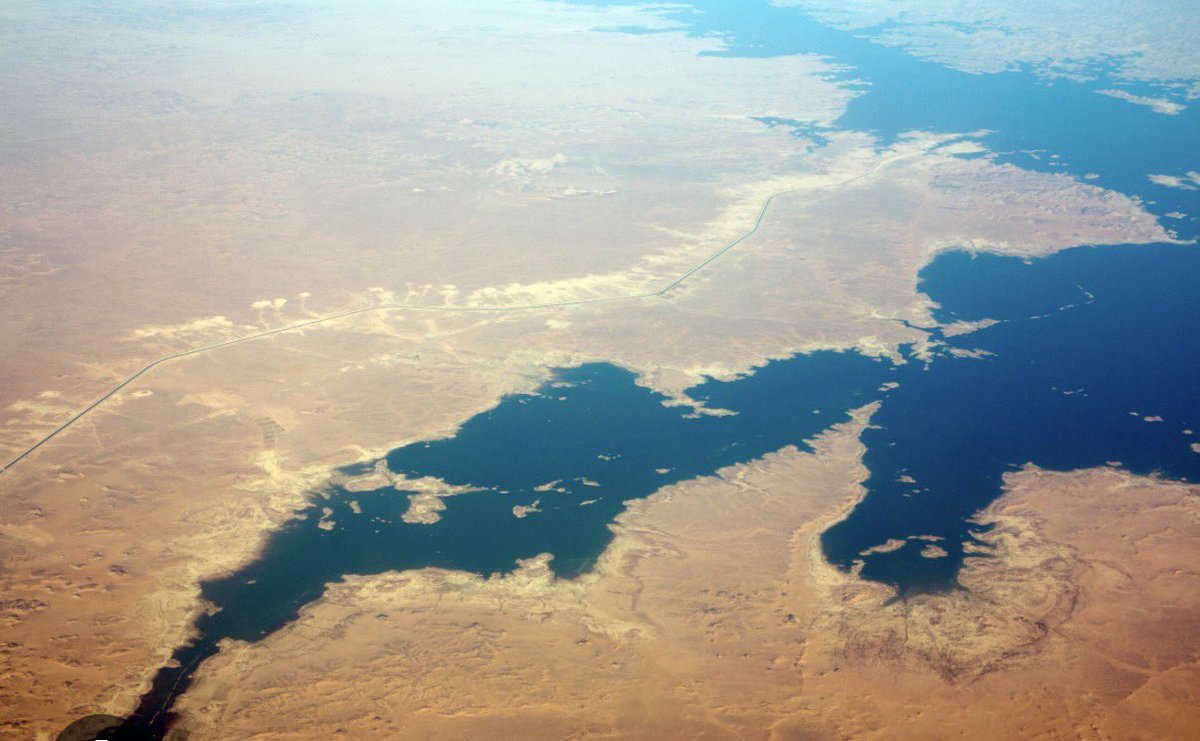
Lake Nasser, behind Egypt's own Aswan High Dam, sits in the open Sahara. 𝗣𝘂𝗯𝗹𝗶𝘀𝗵𝗲𝗱 𝘀𝘁𝘂𝗱𝗶𝗲𝘀 𝗲𝘀𝘁𝗶𝗺𝗮𝘁𝗲 𝗶𝘁𝘀 𝗲𝘃𝗮𝗽𝗼𝗿𝗮𝘁𝗶𝗼𝗻 𝗮𝘁 𝗮𝗿𝗼𝘂𝗻𝗱 𝟭𝟮 𝗯𝗶𝗹𝗹𝗶𝗼𝗻 𝗰𝘂𝗯𝗶𝗰 𝗺𝗲𝘁𝗲𝗿𝘀 𝗮 𝘆𝗲𝗮𝗿, 𝘄𝗶𝘁𝗵 𝗿𝗮𝗻𝗴𝗲𝘀 𝗰𝗼𝗺𝗺𝗼𝗻𝗹𝘆 𝗰𝗶𝘁𝗲𝗱 𝗳𝗿𝗼𝗺 𝟭𝟬 𝘁𝗼 𝟭𝟲 𝗯𝗶𝗹𝗹𝗶𝗼𝗻. That is close to a fifth of Egypt's self-claimed 55.5 billion share, lifted into the desert sky and lost, every year, forever. The dam he is attacking sits in a deep, narrow gorge in the cool Ethiopian highlands, small surface, deep water, mild air, and loses only a fraction of that. A former Egyptian irrigation minister raising the alarm about storage losses, while his own desert reservoir evaporates that much every year, is pointing at the wrong dam. Compared with desert storage at Aswan, storing Blue Nile water in Ethiopia's cooler highlands is far less wasteful, and peer-reviewed modeling shows the dam's evaporation is partly offset by reduced evaporation at Aswan once the system settles.
Now read his own words, because this is the sentence that ends the argument. He writes that the dam reduces Egypt's share "𝘄𝗶𝘁𝗵𝗼𝘂𝘁 𝘂𝘀𝗶𝗻𝗴 𝗮 𝗱𝗿𝗼𝗽 𝗼𝗳 𝘄𝗮𝘁𝗲𝗿 𝗶𝗻𝘀𝗶𝗱𝗲 𝗘𝘁𝗵𝗶𝗼𝗽𝗶𝗮."
Thank you. Read it again slowly. He has just admitted that 𝘁𝗵𝗲 𝗱𝗮𝗺 𝗶𝘀 𝗻𝗼𝘁 𝗮𝗻 𝗘𝘁𝗵𝗶𝗼𝗽𝗶𝗮𝗻 𝗰𝗼𝗻𝘀𝘂𝗺𝗽𝘁𝗶𝘃𝗲-𝘂𝘀𝗲 𝗽𝗿𝗼𝗷𝗲𝗰𝘁. It is a hydropower dam. It generates electricity and releases the water downstream, aside from reservoir losses like evaporation. Through this dam, Ethiopia is not diverting water for farms or cities at all. So the story Egypt has sold the world for years, that Ethiopia is stealing the Nile, can be retired today, on the authority of an Egyptian minister. He said it, not me. And note what this does not mean: Ethiopia keeps every right to use its fair share for irrigation in the future. That right does not disappear because this particular dam happens to be non-consumptive. The dam simply proves the theft story was never true.
So where does the frightening 8 to 10 percent come from? Do the arithmetic with him. Eight to ten percent of Egypt's claimed 55.5 billion share is 4.4 to 5.5 billion cubic meters a year. But peer-reviewed modeling puts the dam's evaporation at about 1.7 billion, and part of even that is cancelled by lower evaporation at Aswan. Evaporation does not carry him to five billion. It is not close.
If he wants to reach his number by adding seepage, he must say so plainly and prove it. Seepage depends on local geology and is still being studied, with wide uncertainty. It cannot be buried inside the soft word "losses" and inflated into a permanent annual scare. And here is the deeper sleight of hand. The water held back while a reservoir first fills is a one-time event, spread over years and timed to the wet season on purpose. 𝗙𝗶𝗹𝗹𝗶𝗻𝗴 𝗵𝗮𝗽𝗽𝗲𝗻𝘀 𝗼𝗻𝗰𝗲. 𝗔𝗳𝘁𝗲𝗿 𝘁𝗵𝗮𝘁, 𝗼𝘃𝗲𝗿 𝘁𝗵𝗲 𝗹𝗼𝗻𝗴-𝘁𝗲𝗿𝗺 𝗮𝘃𝗲𝗿𝗮𝗴𝗲, 𝗮 𝗵𝘆𝗱𝗿𝗼𝗽𝗼𝘄𝗲𝗿 𝗱𝗮𝗺 𝗿𝗲𝗹𝗲𝗮𝘀𝗲𝘀 𝘄𝗵𝗮𝘁 𝗳𝗹𝗼𝘄𝘀 𝗶𝗻, 𝗺𝗶𝗻𝘂𝘀 𝗿𝗲𝘀𝗲𝗿𝘃𝗼𝗶𝗿 𝗹𝗼𝘀𝘀𝗲𝘀, 𝘄𝗵𝗶𝗹𝗲 𝗰𝗵𝗮𝗻𝗴𝗶𝗻𝗴 𝘁𝗵𝗲 𝘁𝗶𝗺𝗶𝗻𝗴. A turnstile, not a sealed tank. He has taken a temporary filling cost and dressed it as a forever tax on Egypt.
Then comes the part Cairo never says out loud. The 1961 World Bank report shows Sudan built the Roseires Dam on the very same Blue Nile to store and regulate that water for its own irrigation, with gross storage of about 3 billion cubic meters, and engineers designed it to be raised later for billions more. So look at what we actually have. Sudan stores the Blue Nile. Egypt stores the whole Nile in the desert at Aswan. But Ethiopia, the country where the river is born, fed by its own rain and carved through its own mountains, is told that storing its own water is dangerous and unilateral. 𝗧𝗵𝗮𝘁 𝗶𝘀 𝗻𝗼𝘁 𝗵𝘆𝗱𝗿𝗼𝗹𝗼𝗴𝘆. 𝗧𝗵𝗮𝘁 𝗶𝘀 𝗵𝗶𝗲𝗿𝗮𝗿𝗰𝗵𝘆.
And there is a crisis he hangs on the dam that has nothing to do with the dam. Egypt's current irrigation minister, Hani Sewilam, says Egypt's total water needs are about 114 billion cubic meters a year, while its core water resources are about 60 billion. Egypt then leans on recycled water and virtual-water imports to close part of that gap. That gap of more than 50 billion exists with or without a single dam upstream. It was driven by population growth, desert expansion, rising demand, and the fiction that a fixed 1959 number could last forever. Ethiopia did not build that gap. Arithmetic did. The dam is the scapegoat, not the cause.
Which brings us to the assumption hidden under everything he wrote, that Egypt's claimed 55.5 billion is sacred and untouchable. 𝗧𝗵𝗮𝘁 𝗻𝘂𝗺𝗯𝗲𝗿 𝗰𝗼𝗺𝗲𝘀 𝗳𝗿𝗼𝗺 𝗮 𝟭𝟵𝟱𝟵 𝗮𝗴𝗿𝗲𝗲𝗺𝗲𝗻𝘁 𝗯𝗲𝘁𝘄𝗲𝗲𝗻 𝗘𝗴𝘆𝗽𝘁 𝗮𝗻𝗱 𝗦𝘂𝗱𝗮𝗻 𝘁𝗵𝗮𝘁 𝗘𝘁𝗵𝗶𝗼𝗽𝗶𝗮 𝗻𝗲𝘃𝗲𝗿 𝘀𝗶𝗴𝗻𝗲𝗱. That deal gave Egypt 55.5, gave Sudan 18.5, and gave Ethiopia, the source of most of the water, exactly zero. Then it treated every other upstream nation as an applicant whose claims Egypt and Sudan would graciously consider later. That is not basin justice. It is downstream gatekeeping. His whole 8-to-10-percent alarm only frightens you if you have already accepted that Egypt owns the entire river by default. Ethiopia does not accept that, and never did.
Let me be fair to him on the one point he gets right, because Ethiopia loses nothing by saying it. Coordinated drought rules, early warning, and data sharing genuinely help everyone, Sudan most of all. Sudan sits just downstream and has real reasons to want notification before releases change. No serious person denies that, and Ethiopia should not pretend otherwise. But protecting a dam is one thing. Freezing a colonial-era quota through the back door, under the cover of safety talk, is something else entirely.
So here is the whole of it, plainly. He admits the dam makes no Ethiopian consumptive withdrawal. He inflates the loss to 8 to 10 percent without proving a permanent measured figure. He says nothing about the roughly twelve billion cubic meters his own desert lake evaporates every year. He leans on Sudan's real technical concern to smuggle in Egypt's political quota. And he treats a 1959 deal Ethiopia never signed as if it binds the country where the river is born.
𝗧𝗵𝗲 𝗱𝗮𝗺 𝗶𝘀 𝗻𝗼𝘁 𝘁𝗵𝗲 𝘁𝗵𝗿𝗲𝗮𝘁. 𝗧𝗵𝗲 𝘁𝗵𝗿𝗲𝗮𝘁 𝗶𝘀 𝘁𝗵𝗲 𝗵𝗮𝗯𝗶𝘁 𝗼𝗳 𝘁𝘂𝗿𝗻𝗶𝗻𝗴 𝗲𝘃𝗲𝗿𝘆 𝘁𝗲𝗰𝗵𝗻𝗶𝗰𝗮𝗹 𝗾𝘂𝗲𝘀𝘁𝗶𝗼𝗻 𝗶𝗻𝘁𝗼 𝗽𝗿𝗼𝗼𝗳 𝘁𝗵𝗮𝘁 𝘁𝗵𝗲 𝘀𝗼𝘂𝗿𝗰𝗲 𝗼𝗳 𝘁𝗵𝗲 𝗿𝗶𝘃𝗲𝗿 𝘀𝗼𝗺𝗲𝗵𝗼𝘄 𝗵𝗮𝘀 𝗻𝗼 𝗿𝗶𝗴𝗵𝘁 𝘁𝗼 𝗶𝘁. 𝗧𝗵𝗮𝘁 𝗲𝗿𝗮 𝗶𝘀 𝗼𝘃𝗲𝗿.
Sources: Nature Communications on the dam's roughly 1.7 billion cubic meter evaporation, the 49 billion average inflow, the Aswan evaporation offset, and post-filling operation; the 1961 World Bank Roseires report on its 3 billion cubic meters of gross storage and future heightening; Lake Nasser evaporation studies estimating around 12 billion a year, with ranges of 10 to 16 billion; Egypt Independent reporting Minister Hani Sewilam's 114 versus 60 billion figures; and the text of the 1959 Egypt-Sudan Nile Waters Agreement.
#Ethiopia #GERD #Abbay #BlueNile #NileJustice #WaterSovereignty #Geopolitics #Sudan
The Garima Gospels, also known as the Ethiopian Bible, are believed to be the oldest illustrated Christian Bible in existence.
Written on goat skin parchment in the early 5th century CE, these extraordinary manuscripts have been preserved for nearly 1,600 years at the Garima Monastery near Adwa in Ethiopia’s Tigray region.
According to tradition, the Gospels were copied in just one day by a monk named Abba Garima, who was said to have received divine help to complete the monumental task. The books are renowned for their stunning, vibrant illustrations and remarkable state of preservation.
The Ethiopian Heritage Fund has played a key role in recent conservation efforts to protect this priceless religious and cultural treasure.
Today, the Garima Gospels stand as one of Ethiopia’s greatest historical treasures and offer a rare window into the early history of Christianity in Africa.
𝗜𝗳 𝗧𝗵𝗲𝗿𝗲 𝗜𝘀 𝗡𝗼 𝗔𝗯𝘀𝗼𝗹𝘂𝘁𝗲 𝗦𝗼𝘃𝗲𝗿𝗲𝗶𝗴𝗻𝘁𝘆 𝗢𝘃𝗲𝗿 𝘁𝗵𝗲 𝗡𝗶𝗹𝗲, 𝗪𝗵𝘆 𝗗𝗼𝗲𝘀 𝗘𝗴𝘆𝗽𝘁 𝗕𝗲𝗵𝗮𝘃𝗲 𝗔𝘀 𝗜𝗳 𝗜𝘁 𝗢𝘄𝗻𝘀 𝘁𝗵𝗲 𝗥𝗶𝘃𝗲𝗿?
𝗔𝗹𝗺𝗼𝘀𝘁 𝗲𝘃𝗲𝗿𝘆 𝗶𝗻𝗱𝗶𝘃𝗶𝗱𝘂𝗮𝗹 𝗳𝗮𝗰𝘁 𝗶𝗻 𝘁𝗵𝗶𝘀 𝗽𝗼𝘀𝘁 𝗶𝘀 𝘁𝗿𝘂𝗲. 𝗧𝗵𝗲 𝗰𝗼𝗻𝗰𝗹𝘂𝘀𝗶𝗼𝗻 𝗶𝘀 𝘀𝘁𝗶𝗹𝗹 𝗳𝗮𝗹𝘀𝗲. That is the signature of a half-argument: true bricks stacked toward a dishonest wall.
Start with what is correct, because none of it helps Egypt. Ethiopia is an upstream state. Its water comes from natural rainfall and runoff. And yes, no country holds absolute sovereignty over an international river. Now watch what that last admission does. If “it is only natural rainfall, not a sovereign gift” weakens a country’s standing, then Egypt has no standing at all, because Egypt contributes almost none of the river’s water. Roughly 85 percent of the Nile that reaches downstream is born in the Ethiopian highlands, through the Blue Nile or Abbay, the Atbara or Tekeze, and the Sobat or Baro-Akobo. The Blue Nile alone rises in Ethiopia near Lake Tana. Egypt sits at the very bottom of the system and adds close to nothing. 𝗡𝗮𝘁𝘂𝗿𝗮𝗹𝗻𝗲𝘀𝘀 𝗶𝘀 𝘁𝗵𝗲 𝗮𝗿𝗴𝘂𝗺𝗲𝗻𝘁 𝘁𝗵𝗮𝘁 𝗱𝗲𝘀𝘁𝗿𝗼𝘆𝘀 𝗘𝗴𝘆𝗽𝘁 𝗳𝗶𝗿𝘀𝘁.
And the terminology trick fails too. Ethiopia is not merely an “upper reaches” state. For the Blue Nile, Ethiopia is the source. Call it source, headwater, or upper riparian, the geography does not move. Rainfall is natural, but so is oil, so are minerals, and a state holds sovereignty over the natural resources within its territory, subject to its duties under shared-water law. Downstream dependence does not transfer that title downhill.
Now the real deception. The post names “no significant harm” and “prior notification” and presents them as the governing law. It deletes 𝘁𝗵𝗲 𝗽𝗿𝗶𝗻𝗰𝗶𝗽𝗹𝗲 𝗘𝗴𝘆𝗽𝘁 𝘄𝗼𝗿𝗸𝘀 𝗵𝗮𝗿𝗱𝗲𝘀𝘁 𝘁𝗼 𝗯𝘂𝗿𝘆: 𝗲𝗾𝘂𝗶𝘁𝗮𝗯𝗹𝗲 𝗮𝗻𝗱 𝗿𝗲𝗮𝘀𝗼𝗻𝗮𝗯𝗹𝗲 𝘂𝘁𝗶𝗹𝗶𝘇𝗮𝘁𝗶𝗼𝗻, the core substantive rule of modern international water law. In the 1997 Gabcikovo-Nagymaros case, legal scholars note that the International Court of Justice emphasized equitable utilization, not the downstream veto fantasy Egypt tries to build from “no significant harm.” Egypt leans on “no harm” because it freezes the status quo and shields whoever grabbed the water first. Upstream states invoke equitable use because it is the law of fair shares. The post hides fairness and shows you only the rule that locks in Egypt’s historic grab.
“No significant harm” is not a veto, however often Cairo treats it as one. Harm is one factor weighed inside equitable utilization, not a trump card over it. 𝗡𝗼𝘁𝗶𝗳𝗶𝗰𝗮𝘁𝗶𝗼𝗻 𝗶𝘀 𝗻𝗼𝘁 𝗽𝗲𝗿𝗺𝗶𝘀𝘀𝗶𝗼𝗻. 𝗗𝗲𝗽𝗲𝗻𝗱𝗲𝗻𝗰𝗲 𝗶𝘀 𝗻𝗼𝘁 𝗼𝘄𝗻𝗲𝗿𝘀𝗵𝗶𝗽. And the obligations of international water law bind every riparian, not only the upstream one. Egypt also owes duties: equitable use, cooperation, efficiency, no wasteful out-of-basin transfers, and no attempt to freeze upstream development forever.
Here is the fact the post hopes you never check: 𝗻𝗲𝗶𝘁𝗵𝗲𝗿 𝗘𝗴𝘆𝗽𝘁 𝗻𝗼𝗿 𝗘𝘁𝗵𝗶𝗼𝗽𝗶𝗮 𝗶𝘀 𝗮 𝗽𝗮𝗿𝘁𝘆 𝘁𝗼 𝘁𝗵𝗲 𝟭𝟵𝟵𝟳 𝗨𝗡 𝗪𝗮𝘁𝗲𝗿𝗰𝗼𝘂𝗿𝘀𝗲𝘀 𝗖𝗼𝗻𝘃𝗲𝗻𝘁𝗶𝗼𝗻. 𝗕𝗼𝘁𝗵 𝗮𝗯𝘀𝘁𝗮𝗶𝗻𝗲𝗱 𝘄𝗵𝗲𝗻 𝗶𝘁 𝘄𝗮𝘀 𝗮𝗱𝗼𝗽𝘁𝗲𝗱. So Egypt is selectively quoting principles from a framework it never joined, while hiding the equitable-use principle sitting at the center of that very framework.
Now turn “no significant harm” back on Egypt, because Egypt fails its own test. Every year, Lake Nasser loses between 10 and 16 billion cubic meters of water to evaporation in the open desert, which is roughly 20 to 30 percent of Egypt’s claimed Nile share, boiled into the sky by Egypt’s own choice to store water in one of the hottest places on Earth. GERD stores water in the cooler Ethiopian highlands, where far less is lost. GERD is a hydropower dam. It is non-consumptive. The water generates electricity and then flows on to Sudan and Egypt. GERD also traps a large share of the Blue Nile sediment load, easing sediment pressure on downstream reservoirs. 𝗜𝗳 𝗮𝗻𝘆𝗼𝗻𝗲 𝗶𝘀 𝗰𝗮𝘂𝘀𝗶𝗻𝗴 𝘀𝗶𝗴𝗻𝗶𝗳𝗶𝗰𝗮𝗻𝘁 𝗵𝗮𝗿𝗺 𝘁𝗼 𝘁𝗵𝗲 𝗿𝗶𝘃𝗲𝗿’𝘀 𝘂𝘀𝗮𝗯𝗹𝗲 𝘆𝗶𝗲𝗹𝗱, 𝗶𝘁 𝗶𝘀 𝗘𝗴𝘆𝗽𝘁, 𝗯𝘆 𝗱𝗲𝘀𝗶𝗴𝗻.
And the hypocrisy runs deeper. Egypt built the Aswan High Dam unilaterally in the 1960s, with none of the upstream consultation it now demands of Ethiopia. Egypt also holds alternatives Ethiopia does not, including groundwater, desalination, and water recycling, yet it treats the Nile as its private reserve and Ethiopia’s first major dam on the Blue Nile as a threat. The standard Egypt applies to others was never applied to itself.
The legal foundation Egypt never says out loud is colonial. Its claim rests on the 1929 Anglo-Egyptian treaty, which gave Cairo a veto over water works in the territories then under British control, none of which was ever Ethiopia, and the 1959 agreement, which split the entire river between Egypt and Sudan, 55.5 billion cubic meters to Egypt and 18.5 to Sudan, and assigned exactly zero to Ethiopia, the country that produces most of the water. Ethiopia signed neither. 𝗔 𝘁𝗿𝗲𝗮𝘁𝘆 𝗰𝗮𝗻𝗻𝗼𝘁 𝗯𝗶𝗻𝗱 𝗮 𝘀𝘁𝗮𝘁𝗲 𝘁𝗵𝗮𝘁 𝘄𝗮𝘀 𝗻𝗲𝘃𝗲𝗿 𝗮 𝗽𝗮𝗿𝘁𝘆 𝘁𝗼 𝗶𝘁. That is first week international law. And the basin has already moved on: the Cooperative Framework Agreement entered into force on 13 October 2024 without Egypt, while Egypt and Sudan refused to sign, and its core clause requires every Nile state to use the river in an equitable and reasonable manner.
Finally, the “absolute sovereignty” charge is a strawman, and Egypt’s own signature proves it. In the 2015 Declaration of Principles, signed by Egypt, Sudan, and Ethiopia, Ethiopia agreed to equitable and reasonable utilization and to cooperation. A country that signed up to equitable use is not claiming absolute sovereignty. 𝗧𝗵𝗲 𝗼𝗻𝗹𝘆 𝗽𝗮𝗿𝘁𝘆 𝗰𝗹𝗶𝗻𝗴𝗶𝗻𝗴 𝘁𝗼 𝗮𝗻 𝗮𝗯𝘀𝗼𝗹𝘂𝘁𝗲 𝗰𝗹𝗮𝗶𝗺 𝗼𝘃𝗲𝗿 𝘁𝗵𝗲 𝗡𝗶𝗹𝗲 𝗶𝘀 𝗘𝗴𝘆𝗽𝘁: 𝗮 𝗳𝗶𝘅𝗲𝗱 𝗰𝗼𝗹𝗼𝗻𝗶𝗮𝗹 𝗾𝘂𝗼𝘁𝗮 𝗽𝗹𝘂𝘀 𝗮 𝘃𝗲𝘁𝗼 𝗼𝘃𝗲𝗿 𝗲𝘃𝗲𝗿𝘆 𝗼𝘁𝗵𝗲𝗿 𝗻𝗮𝘁𝗶𝗼𝗻 𝗶𝗻 𝘁𝗵𝗲 𝗯𝗮𝘀𝗶𝗻.
So yes, there is no absolute sovereignty over the Nile. Egypt should read its own sentence again, slowly. 𝗡𝗼 𝗮𝗯𝘀𝗼𝗹𝘂𝘁𝗲 𝘀𝗼𝘃𝗲𝗿𝗲𝗶𝗴𝗻𝘁𝘆 𝗳𝗼𝗿 𝗘𝘁𝗵𝗶𝗼𝗽𝗶𝗮, 𝗮𝗻𝗱 𝗻𝗼 𝗮𝗯𝘀𝗼𝗹𝘂𝘁𝗲 𝗲𝗻𝘁𝗶𝘁𝗹𝗲𝗺𝗲𝗻𝘁 𝗳𝗼𝗿 𝗘𝗴𝘆𝗽𝘁 𝗲𝗶𝘁𝗵𝗲𝗿. The river is shared, and sharing is measured by equitable use, not by colonial paperwork, not by Egypt’s own desert evaporation, and not by a downstream veto that exists only in Cairo’s press releases.
#Ethiopia #Egypt #Nile #GERD #AbbayDam #BlueNile #WaterRights #NileBasin #Sudan #SouthSudan #Uganda #Kenya #Tanzania #Rwanda #Burundi #DRC
Egypt’s Per-Capita Water Share Is 490 m³? Then Why Is Cairo Pouring the Nile Into the Desert?
Egypt’s Water Minister tells the World Bank that per capita water has fallen to 490 cubic meters. He wants the world to picture thirsty families denied drinking water by Ethiopia. Let us do the math honestly.
490 m³ per person per year is about 1,342 litres per person per day. That is not a drinking water figure. That is Egypt’s entire national supply divided by its population, then presented emotionally, as if Ethiopia is emptying Egyptian taps. That is the trick.
Where does the water actually go? Around 85% of Egypt’s water is consumed by agriculture, much of it through wasteful irrigation, according to the U.S. International Trade Administration’s Egypt water sector guide. Out of every 100 litres, roughly 85 never reach a household. The “thirsty families” story is theater built on agricultural waste.
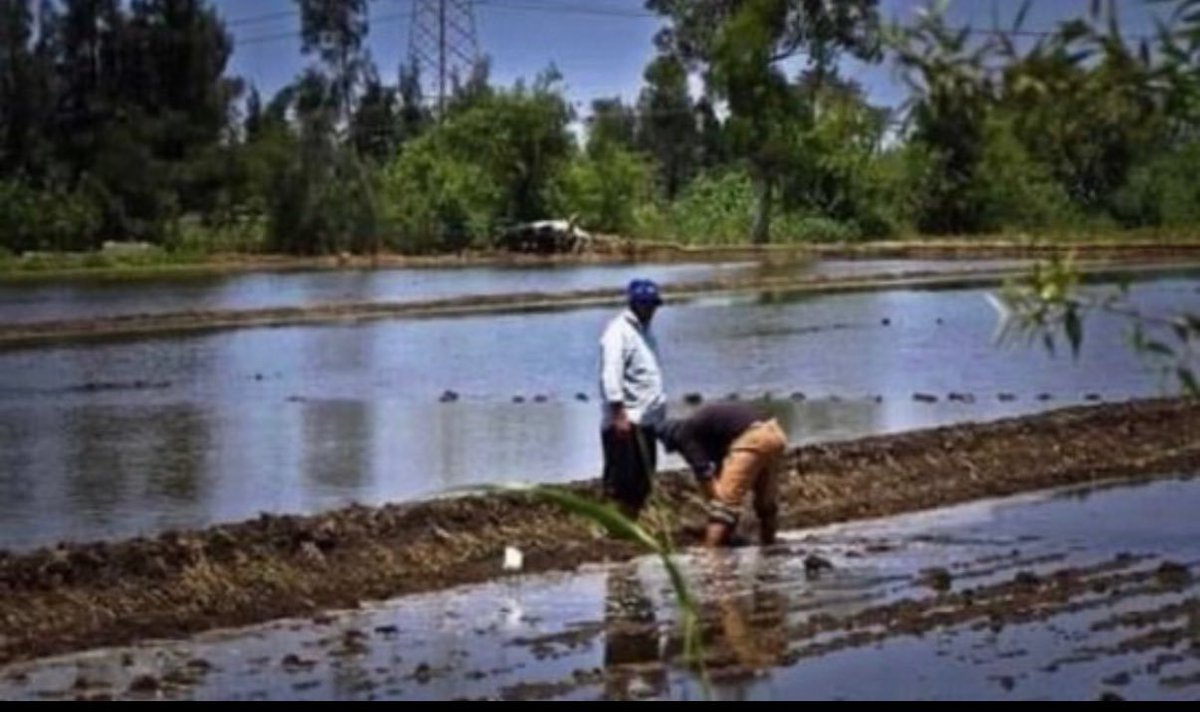
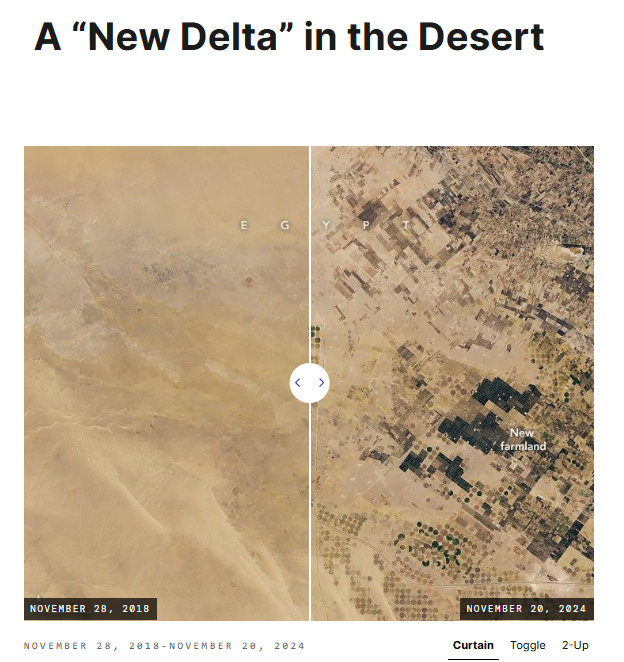
And while the minister cries scarcity in Washington, Cairo is pumping the Nile into open desert. Reuters reported that Egypt’s New Delta scheme and its new desert city would reroute about 10 million cubic metres of Nile water every day, roughly 7% of Egypt’s entire annual Nile quota(Self Claim) to irrigate 2.28 million acres of sand.
Ten million cubic metres a day is ten billion litres a day. By WHO guidance, 100 litres covers one person’s basic daily domestic needs. So Egypt’s desert diversion alone equals the basic daily water needs of 100 million people. Poured into sand. While Cairo tells the World Bank it is dying of thirst.
NASA describes the New Delta as a project transporting water into the desert west of the Nile, fed not only by treated wastewater but by pumped groundwater and a canal connected to the Rosetta Branch of the Nile itself. The Guardian reported the hydrologists’ warning: desert irrigation water does not come back. It vanishes into evaporation, salinity, and depleted groundwater.
Even Cairo’s own numbers expose the game. Egypt claims national water needs of nearly 120 billion cubic metres a year, roughly 1,000 m³ per person. Then it tells the world Egyptians survive on 490. The missing half is not Ethiopian natural rights usage . It is Egyptian appetite: desert expansion, thirsty crops in arid land, leaking canals, free water.
So let the record be clear.
They pour the river into farms.
They pour the farms into deserts.
They lose billions of cubic metres to inefficiency.
Then they stand before the World Bank and point at Ethiopia.
No.
Scarcity is not ownership. Scarcity is not a veto. Scarcity is not a colonial title over the Blue Nile.
If 85% of the water goes to agriculture, reform the agriculture. If desert farms are draining the quota, stop planting farms in sand. If the water is free, price it, conserve it, reuse it, desalinate it. The Ethiopian highlands do not exist to irrigate Egyptian desert.
Ethiopia did not write Egypt’s population policy.
Ethiopia did not design Egypt’s desert megaprojects.
Ethiopia did not dig Egypt’s leaking canals.
Yet Ethiopia is expected to carry the cost forever.
That era is over.
Let me repeat myself , Egypt is a sovereign nation like any other, and sovereignty means carrying your own burdens. Ethiopia has its own problems to solve. It will not carry Egypt’s water failures on its shoulders. Cairo created this crisis, and Cairo alone must fix it.
@MwriEgypt@HaniSewilam
#Ethiopia #Egypt #Nile #GERD #AbbayDam #BlueNile #WaterRights #NileBasin #Sudan #SouthSudan #Uganda #Kenya #Tanzania #Rwanda #Burundi #DRC
The whole Egyptian Nile argument is theater.
How can a “drought” happen in the middle of the desert?? Egypt is ALREADY dry. 🤦🏾 Smh. And yet they demand that Ethiopia guarantee their water. it doesn’t make sense at all . A sovereign country’s internal water problem isn’t Ethiopia’s to carry on it shoulder. 🇪🇹
#GERD #Nile #Egypt #Ethiopia
#BlueNile #Nile #WaterJustice
How Egypt Tried to Fool Ethiopia: Article 10.1, the Beautiful Sentence in the 2020 Draft That Was Just an Empty Box (Part One)
A close reading of Article 10.1 of the 2020 Washington draft, and why the only “gift” Ethiopia received was wrapped in ribbon and filled with air.
Let me start with a confession.
The last time I sat down and read the 2020 draft, the one Egypt initialed in Washington on February 28, 2020, the one Ethiopia walked away from, I missed something. Not a small thing. A big thing. I was so busy hunting for the poison in the document that I walked right past the one place where the document smiles at you.
There is one sentence in that whole draft that looks like the clear, headline gift for Ethiopia, the one that can make an Ethiopian reader breathe for a moment. Out of fifteen articles, four annexes, and a stack of exhibits, this is the sentence everyone points to first.
It is Article 10.1. And here is what it says, word for word: “This Agreement is not intended to be and shall not be interpreted or applied as an allocation of the waters of the Blue Nile among the Parties.”
Read that again slowly. Not an allocation of the waters of the Blue Nile. For a country that has spent a century being told by colonial-era papers it never signed that its own rain already belongs to someone downstream(Egypt), that sentence is oxygen. It says, in plain legal language, that this document does not divide the Nile. It does not hand Egypt a written quota. It does not bless the old “historical rights.” On its face, it protects the one principle Ethiopia has bled to defend: the Blue Nile is not already spoken for.
But here is the first problem, and you need to see it before you let your shoulders drop. The draft does not leave Article 10.1 standing alone. The opening of the agreement says it consists of the articles, annexes, and associated exhibits, and that these constitute an integral part of it. In plain language: Exhibit A is not decoration. Annex A is not a footnote. They are bolts in the same machine as Article 10.1. So that beautiful sentence must be read together with the very annexes that quietly do the opposite of what it promises.
So I want to be honest with you, my friends, before I get angry, because I am going to get angry. That sentence is real, and it is good. If I tell you it is worth nothing at all, I am lying to you, and a man who lies to his own people to win an argument is no better than the people he is arguing against.
But here is the question that has been burning in me since I reread it:
What is the use of one good sentence in a house built entirely to trap you?
That is what this whole article is about. So pour your coffee, settle in. Let me take you somewhere first.
Let us drive back to February 2020, into a room I was never in.
I want to be completely clear with you. I was not in that negotiation room in Washington. I have no idea what was actually said. What I am about to tell you is my imagination, a story, a picture in my head, and I am telling you it is imagination so that no one can later say Asrat made up facts. I made up nothing. I am painting a scene. Bear with me.
Picture it. February 2020. A cold Washington conference room. A long polished table. On one side, Egypt’s delegation, calm, prepared, lawyers who have studied this river for generations. Beside them, helpfully, the United States Treasury, facilitating. And in the corner, the World Bank, lending its “technical input” like a respectable witness at a wedding nobody asked for.
And the draft on the table? In my imagination, it already leaned heavily toward egypt control. I am not going to hand you a precise percentage and pretend I measured it. I didn’t, and neither did anyone who tells you a number. I am describing the shape of the text: Annex A, Exhibit A, Article 4.5, Article 9, Article 12, Article 14, and Article 15 all lean the same way, like trees bent by one strong wind. They never need to say the word “allocation” to take the water.
Now imagine, in that room, one tired Ethiopian negotiator looks up from the pages, feels his stomach drop, and says, almost begs:
“Wait. Wait. There has to be at least ONE article in here that is good for Ethiopia. One. Give us something we can carry home.”
And imagine Egypt, patient, unbothered, the way a chess player is unbothered when you finally move a pawn, leaning back, thinking for one second, and saying:
“Of course. Here. Write this down: ‘This is not an allocation of the Blue Nile.’ There. Now you have your good article. Article 10.1. Happy?”
And the pen moves, and the sentence goes in, and somewhere a shoulder relaxes.
Again, Don’t take my word for any of that. It is theater in my head. But ask yourself why the theater feels so true. Why does it fit the document so perfectly? Because when you finally read what the rest of the draft actually does, you realize that Egypt could afford to give away that sentence. It cost them nothing. They were never going to need the word “allocation.” They had already written the allocation into the machinery. They just left the name off.
The candy and the toys
Let me use an analogy, so let me give you the one every Ethiopian parent already understands.
A clever uncle visits a child. He crouches down, smiling, and holds out one bright piece of candy. “This is for you,” he says. “It’s all yours. Nobody can ever take this candy from you. I promise.”
The child’s eyes light up. Mine. He said it’s mine.
And while the child is busy unwrapping that one candy, happy, distracted, grateful, the uncle quietly gathers up every toy in the room. The blocks. The ball. The little wooden truck the child’s father carved with his own hands. All of it. Into his bag.
Then the uncle stands up, pats the child on the head, and says, “See? I kept my promise. The candy is still yours.”
That is Article 10.1.
The candy is the word. The toys are the water.
But let me give you a second picture, because the candy story is too gentle, and what was attempted in Washington was not gentle.
Imagine a man builds a house with his own hands. He carries every stone himself. He goes hungry to pay for the cement. His children carry water up the hill for the mortar. For years. And when the house is finally standing, strong, his, earned, a neighbor arrives with a contract. The contract has a beautiful first line: “This document does not say we own your house.” The neighbor smiles. “You see? We respect that it’s your house.”
And then, in the small print, the contract says: you may not lock your own door without our permission. You must leave the windows open on the nights we choose. When the well runs dry, you must give us your stored water first, even if your own children are thirsty. And you may never tear up this contract unless we agree to let you.
Whose house is that, really?
The deed says it’s yours. The operation of it belongs to the neighbor. And a house you cannot lock, cannot run, and cannot leave is not your house. It is your prison that you happen to have built yourself.
That is the genius and the cruelty of what was put on that table. Egypt did not try to take the deed to GERD. Taking the deed would have been too obvious; it would have caused an open fight. Egypt did something quieter and far more dangerous. It reached for the operating manual while letting Ethiopia keep the deed, and then it offered Article 10.1 as proof of its good manners.
Now let us leave my imagination and walk into the real document.
Here is where I stop telling stories and start showing receipts. Everything from here is in the text. I will quote it. You decide.
The whole trick of Article 10.1 rests on a distinction that sounds boring but decides everything: the difference between what a clause says it is and what a clause makes you do.
In law, this is not a small point. It is the whole point. Lawyers have a saying about it that goes back centuries: substance over form. It does not matter what you call the animal. If it has four legs, a mane, and hooves, and it carries a rider, it is a horse. You can write “this is not a horse” on a sign and hang it around its neck. It is still a horse.
Article 10.1 is the sign that says “this is not a horse.”
The annexes are the horse.
So let me walk you through the animal, piece by piece, strongest evidence first, because you asked me to start from the top of the mountain and come down, and the view from the top is brutal.
Exhibit A: the receipt that ends the argument
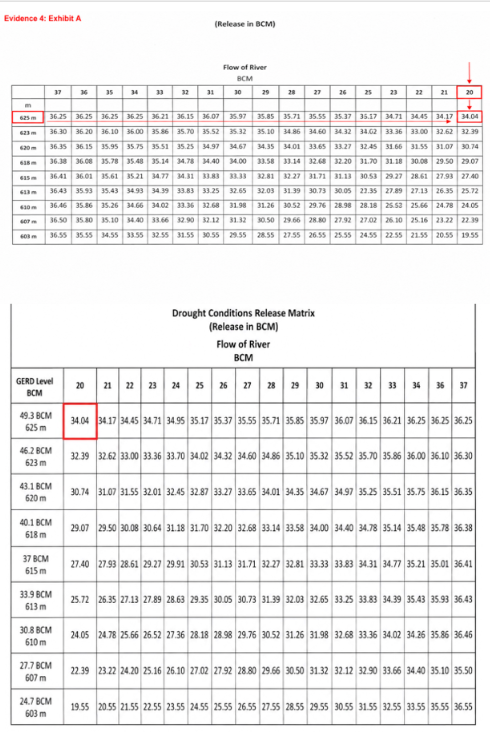
If I could show an Ethiopian only one page of this draft, it would be Exhibit A, the Drought Conditions Release Matrix. It is a grid of numbers, dry and bureaucratic, and inside that grid sits the single most damning fact in the entire document.
Find the row where the GERD reservoir is at its highest listed level: 625 meters above sea level, holding 49.3 billion cubic meters. Now follow it across to the column where the river’s flow for the year is only 20 BCM. A drought year. A hungry year. A year when the rain failed.
The number in that box is 34.04.
Stop and feel what that means. The river brought you 20. If signed as written, the document would require you to release 34.04 BCM. That is about 170 percent of everything nature gave you that year. Where do the missing 14.04 billion cubic meters come from? Not from the sky; the river brought only 20, not 34.04. The missing 14.04 must come from your storage, from the water you saved, from the water your country went into debt to hold back. In the dry year, when your own people most need that reserve, the rule would reach into your reservoir, pull out roughly 14 billion cubic meters of stored Ethiopian water, and send it downstream.
Now turn back to Article 10.1 and read it one more time: “not… an allocation of the waters of the Blue Nile.”
My friends, what do you call a rule that tells you exactly how much water to deliver downstream under specified drought conditions, enforceable through the agreement, and drawn from your own stored water? There is only one honest description for it: functional allocation. Allocation without the name. Egypt did not need the word, because Egypt had the number: 34.04.
That single box cancels most of the comfort of 10.1 by itself. I would put it roughly ninety percent of the way toward making 10.1 meaningless. The sign says “not a horse.” The horse just kicked you.
Annex A: the water debt that follows you into the dark
It gets worse, and I need you to follow me carefully here, because this is the part a downstream legal strategy would love and the Ethiopian public never understood.
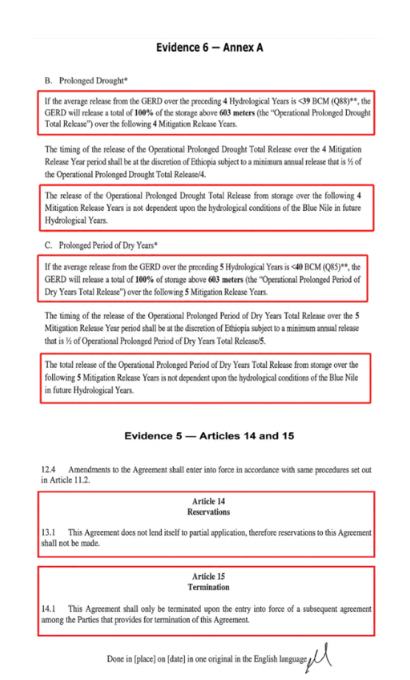
Look at the long-term operation rules in Annex A. They say that if the average GERD release over the preceding four hydrological years falls below 39 BCM, GERD must release 100% of the storage above 603 meters over the following four mitigation years. And if the average over the preceding five years falls below 40 BCM, GERD must release 100% of the storage above 603 meters over five mitigation years.
One hundred percent. Not a share. Not a portion. All of the storage above 603 meters.
And then comes the sentence that should make every Ethiopian’s blood run cold. The draft says these releases are: “not dependent upon the hydrological conditions of the Blue Nile in future Hydrological Years.”
Read that slowly, because it is the cruelest line in the document. Not dependent on the future. It means this: suppose a drought hits, and the rule triggers a multi-year obligation to drain your storage. Now suppose the next years are also dry, God forbid, a real drought, the kind the Horn of Africa knows too well. Under any sane, humane rule, your obligation would shrink, because there is no water and your own people are suffering.
But this draft says no. The debt was calculated from the past. You must pay it regardless of the present. Even if your children are thirsty. Even if your turbines are starving. The water debt does not care about the future, because it was never designed to protect you. It was designed to guarantee Egypt’s supply no matter what the sky does to Ethiopia.
This is not cooperation. Cooperation shares the pain of a drought. This exports the pain of drought out of Egypt and pushes it upstream onto us. It turns GERD, the dam we built to protect ourselves from drought, into an insurance policy for someone else’s drought. We pay the premiums. They collect the claim.
And here is the engineering knife hidden inside the legal one. Draining your reservoir down to 603 meters does not only cost you water. It costs you power. A hydropower dam generates electricity from the pressure of the water stacked above the turbines, the “head.” Drop the level, and you drop the pressure, and you drop the megawatts. So in the very years when drought makes electricity most precious, this clause would put GERD under forced drawdown: less stored water, less hydraulic head, exactly when reliability matters most, so that Egypt’s fields stay green. We built the largest dam in Africa, and the draft would have us run it under drawdown to water someone else’s harvest.
What does Article 10.1 do about any of this? Nothing. It cannot. It is a sentence about a name. Annex A is a machine about water. When a name fights a machine, the machine wins every time.
Exhibit B: how one dry year becomes a chain that drags you for years
Now, someone might say: “Fine, one bad drought, one big release. We survive it and move on.” I wish that were true. Read Exhibit B, and you find out it is not a single bad year. It is a system.
Exhibit B does one small kindness. It says overlapping drought and dry-year measures should not be double-counted, and the higher value applies. Good. But it does not make this a single-year problem. It builds a stacking-risk architecture. It shows that a release obligation created in a drought period reduces the water GERD is allowed to keep in later years. And it shows that ordinary drought-matrix releases can operate during the very periods when prolonged-drought or dry-year mechanisms are already in effect.
So watch the chain form. A dry year triggers the matrix. A prolonged dry stretch creates a multi-year release duty. That duty then eats into your retention in the following years, years that may be perfectly normal. And on top of that, the drought matrix can still be firing at the same time. One bad season does not simply pass. It can attach itself to your dam and walk beside you for years, draining a little more along the way.
Article 10.1 has nothing to say to this system. It cannot, because it was never written as a master switch. It does not say “no annex may create water debt.” It does not say “no rule may force release above the year’s inflow.” It is a polite sentence sitting in the corner while the machine runs.
The definitions: how they made your success the reason you must pay
You would never look twice at Article 2. It is the “Definitions” section, the part everyone skips. That is exactly why it is dangerous. The most important traps are always set in the boring rooms.
The draft defines “Flow” like this: “‘Flow’ means the total volume of water entering the GERD reservoir in any given Hydrological Year.”
And it defines “GERD Level” as the level of your reservoir at the start of the year.
Why does this matter? Because these two boring definitions are the trigger for the whole release machine. The matrix doesn’t look at the water crossing into Sudan. It looks at the water inside your dam and at how full your reservoir is. And the fuller your reservoir, the more the matrix demands that you release.
Think about the madness of that. You worked hard. You saved water. You filled your dam, the dam you built to secure your own future. And the document treats your full reservoir not as your achievement but as the evidence that you can afford to give more away. Your savings account becomes the proof that you owe. Your success becomes the trigger of your obligation.
And there is a second blade here, aimed straight at the future, and this is the part I beg you not to skip. Because “Flow” is measured at the dam, any future Ethiopian project upstream of GERD could be argued to reduce GERD inflow and trip the same drought machinery, unless the agreement clearly protects future development from being converted into a release obligation. An irrigation scheme to feed Ethiopian children. A small dam for a thirsty highland town. A watershed to hold back the rains. Each one could lower the flow arriving at GERD, and a lower flow at GERD could be read as a drought under these very definitions. So Ethiopia developing its own land could, on paper, be made to look like the sky failing. Someone downstream could point at your new canal and argue that a drought was triggered, and the matrix would obey. The trap is not only set for today. It is set for your grandchildren, and it risks punishing them for the crime of building.
So when Article 10.1 says “not an allocation,” ask it: then why does my own water level decide how much I must surrender, and why might feeding my own people count against me? The article has no answer.
Article 10.2: the second beautiful sentence, also not enough
To be fair, there is a second sentence that looks friendly to Ethiopia, and an honest writer must deal with it. Article 10.2 says future developments upstream of GERD may be undertaken, but “without prejudice to this Agreement,” and in line with international-law principles like equitable use, no significant harm, and cooperation. That sounds good. Ethiopia should want that sentence.
But look carefully at four words: without prejudice to this Agreement. And what does this Agreement already do? It defines “Flow” at GERD. It ties release rules to GERD flow and GERD level. It pulls Annex A and Exhibit A into operation. So if future Ethiopian development reduces the inflow into GERD, the downstream argument writes itself: you have affected the trigger system inside the draft.
That is why Article 10.2 is not enough either. Future development should not merely be “allowed” in a sentence. It needs a real safe harbor, a line that says lawful Ethiopian development shall never automatically become drought, breach, shortage, compensation, water debt, or a release obligation. Without that protection, the future is allowed on paper but still forced to walk through the cage the rest of the draft has already built.
My Conclusion for part One
So let me close Part One with the simplest truth.
Article 10.1 looks good. If you read it alone, it looks like the most beautiful sentence Ethiopia received in the 2020 Washington draft. It says the agreement is not an allocation of the waters of the Blue Nile. It sounds like sovereignty. It sounds like protection. It sounds like Ethiopia finally got one sentence in its favor.
But once you read the rest of the draft, that beautiful sentence begins to collapse.
Because a sentence does not protect a dam if the annexes control the releases. A sentence does not protect sovereignty if the tables control the storage. A sentence does not protect Ethiopia if the operating machinery turns GERD into a downstream drought buffer.
That is why I call Article 10.1 an empty box.
The ribbon is beautiful. The words are beautiful. The promise sounds beautiful. But when you open the box, the real power is not inside Article 10.1. The real power is buried in Annex A, Exhibit A, Exhibit B, Article 2, and the legal machinery that comes after them.
In Part One, I showed the empty box. I showed the candy. I showed Exhibit A, Annex A, Exhibit B, Article 2, and Article 10.2.
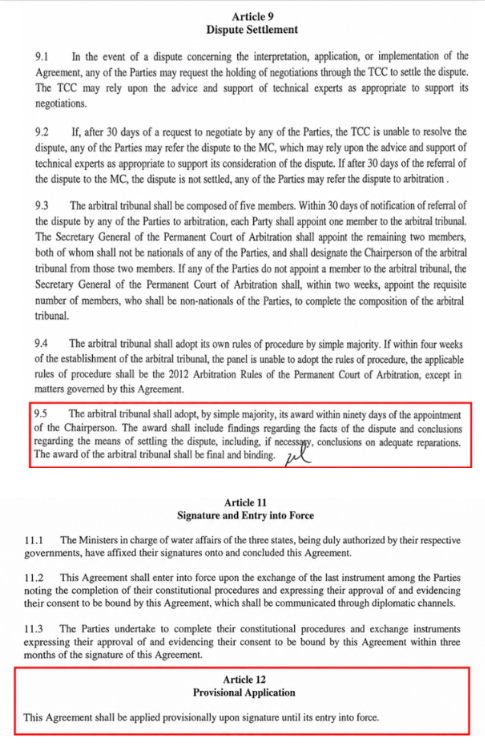
In Part Two, I will show the lock on the box: Article 4.5, Article 9, Article 12, Article 14, and Article 15. That is where the draft moves from dangerous operation into legal trap: approval pressure, arbitration, provisional application, no reservations, and no easy exit.
Part One showed why the beautiful sentence is weak.
Part Two will show why the trap could have become enforceable.
To be continued..
#Egypt #Sudan #SouthSudan #Ethiopia #Eritrea #Uganda #Kenya #Tanzania #Rwanda #Burundi #DRC #UAE @AbiyAhmedAli #NileRiver #WaterRights #Sovereignty #BlueNile #NileDam #AfricanWaters #NoToColonialism #GERD #NileRiver #Kechene @MFAEthiopia #Sovereignty
✈️ 6, 7, 8 and 80 years to celebrate!
Thank you, @flyethiopian, for ordering six more 787 #Dreamliner jets to grow your fleet.
We are proud to be your partner, now 80 years and counting.
Release: https://t.co/mSHkzQcwI8
@Habtishgreat Don't attack a person. Attack an opinion. Try to find the true cause, not the result. May be the message might be otherwise. I see that way.
Title: Cairo Screams “Life or Death” While Pumping the Nile Into the Desert
President @AlsisiOfficial keeps telling the world that the Nile is a “life and death” issue for Egypt, that the river supplies more than 98 percent of Egypt’s water, and that Cairo will not compromise on its “vital water interests.” That is the line Egypt wants the world to hear. But Egypt’s own official numbers tell a much uglier story.
Egypt’s own 2026 figures say annual water demand is 88.55 bcm: 68.1 bcm for agriculture, 12.45 bcm for drinking water, 5.5 bcm for industry, and 2.5 bcm for other uses. Another official 2026 frame gives 65.35 bcm/year of renewable resources and 23.2 bcm/year reused. A separate official strategy frame gives 59.25 bcm/year of conventional resources, a 20.75 bcm gap, 20 bcm/year of virtual-water imports, and 21 bcm/year of reuse, with a resource mix of 55.5 bcm Nile water, 2.1 bcm deep groundwater, 1.3 bcm rainfall and flash floods, and 0.35 bcm desalinated water. Cairo is not surviving on raw Nile flow alone. Cairo is already surviving through storage, reuse, groundwater, desalination, and imported virtual water.
Now do the arithmetic Cairo prefers not to say out loud. Out of 88.55 bcm, agriculture takes about 76.9%. Drinking water takes about 14.1%. So when Cairo performs this dispute as if it is only about a thirsty child with an empty cup, its own numbers say something else: this is overwhelmingly an agriculture-heavy state allocation problem. The slogan hides a giant irrigation economy behind the image of household survival. That is the first deception.
The famous “98% Nile” line is another deception. It is political shorthand, not a stable engineering ratio across Egypt’s own official accounting frames. Take Egypt’s own 55.5 bcm Nile figure. Against the 65.35 bcm frame, that is about 84.9%. Against the 59.25 bcm conventional-resource frame, that is about 93.7%. Against the full 88.55 bcm annual-demand frame, it covers only about 62.7%. So which Egypt is Cairo asking the world to believe, the Egypt of official accounting, or the Egypt of slogans?
Then comes the part Cairo most wants hidden: storage. Egypt’s own Ministry of Water Resources and Irrigation says the High Dam and Lake Nasser system was designed for a maximum water level of 183 m and a storage capacity of 169 bcm, divided into 31.6 bcm dead storage, 89.7 bcm to guarantee average annual discharge, and 47.7 bcm for flood protection. The same official page says the spillway can discharge 200 million m3/day. This is not a country standing with one cup of water in its hand. This is a state operating one of the largest hydraulic buffers on Earth.
And Cairo forgets its own history whenever it acts helpless. Official public records say that during the low-flow sequence from 1979 to 1987, Egypt drew down nearly 70 bcm from Lake Nasser storage to cover natural deficits. Read that again. Seventy bcm. A state that can withdraw nearly seventy bcm from strategic storage cannot honestly act as if every upstream fluctuation means instant national collapse.
Then comes the evaporation hypocrisy. Cairo lectures Ethiopia about “lost water,” while one of Egypt’s biggest losses is Lake Nasser evaporation. Peer-reviewed studies place Lake Nasser evaporation broadly in the 10 to 16 bcm/year range, with some estimates around 12.3 to 12.9 bcm/year over 2001 to 2013. By contrast, the widely cited Nile operations study in Nature Communications estimates GERD net evaporation at about 1.7 bcm/year, partly offset by about 1.1 bcm/year of reduced evaporation in the High Aswan reservoir once the system reaches a new equilibrium. So when Cairo screams about upstream “waste,” it conveniently forgets that it stores massive volumes in a desert reservoir where huge amounts vanish into the air every year.
And then there is the desert-expansion story, the part that blows up the entire morality play. Cairo says every drop is life and death. Then Cairo’s own official project pages show that New Delta is not a treated-wastewater-only story. The Egyptian Presidency says treated wastewater is moved through a 170 km canal and 17 lifting stations to a treatment plant with capacity of 7.5 million m3/day, while a 41 km canal extension carrying 10 million m3/day is meant to cultivate about 700,000 additional feddans. The same page says 350,000 feddans are already reclaimed using 2,600 pivots, and ties the “Future of Egypt” component to 1.05 million feddans within a broader 2.2 million feddan New Delta target. NASA independently describes the New Delta as a 2.2 million feddan desert expansion supplied by treated wastewater, pumped groundwater, and a canal connected to the Rosetta branch of the Nile. That point matters. Cairo cannot hide behind the claim that this is only recycled water and therefore outside the Nile argument. It is not only recycled water. It is a multi-source desert-expansion scheme.
The arithmetic makes that even clearer. 7.5 million m3/day is about 2.74 bcm/year. Spread across 2.2 million feddans, that alone is nowhere near enough to explain the whole project. That is exactly why Egypt’s own public descriptions add other sources: groundwater and Nile-linked conveyance. So no, the morality problem does not disappear just because Cairo says “treatment plants.” Egypt’s own public record shows a broader reality: treated water is part of the system, but so are groundwater extraction and direct Nile-linked supply. That is not mere survival. That is strategic expansion.
The most politically explosive number in the whole record is still the Reuters Jirian figure. Reuters reported that Egypt plans to route about 10 million m3/day of Nile water, roughly 3.65 bcm/year, about 7% of Egypt’s self-claimed annual Nile quota, to the Jirian desert city corridor while helping irrigate the adjacent 2.28 million-acre New Delta agricultural project. Let that sink in. Cairo tells the world the Nile is “life and death,” then moves about 7% of its annual quota into a desert-city and frontier-agriculture corridor designed to raise land values and expand development. That is not emergency drinking water. That is regime-priority water.
Sinai tells the same story. The Egyptian Presidency says the Bahr El-Baqar wastewater-treatment plant has a daily capacity of 5.6 million m3/day and supports the reclamation of 456,000 feddans, with treated water sent under the Suez Canal into Sheikh Jaber Canal. That is about 2.04 bcm/year of treated water going into frontier development. Again, this is not a country behaving as if every contested cubic metre is reserved only for existing subsistence needs. This is a state making deliberate choices about where water goes.
Toshka and export agriculture deepen the contradiction again. The Egyptian Presidency says Toshka farm covers about 60,000 feddans, irrigated through a pumping station with 7 pumps supplying about 7,000 m3/hour, including 40,000 acres of date palms and about 2.5 million palm trees. At the same time, Egypt’s own official reporting says agricultural exports hit a record 9.5 million tons worth $11.5 billion in 2025, with citrus at about 2 million tons and potatoes at about 1.3 million tons. Cairo cannot honestly tell the world that all Nile water is simply household survival water while also using water to support large export-oriented agricultural systems. If this is truly “life and death,” then why is so much of it leaving the country as dates, citrus, and potatoes?
And since Cairo loves saying “we have no alternative,” let us talk about alternatives. Egypt’s own 2026 public record says it has 129 operational desalination plants with a combined capacity of 1.411 million m3/day, plus 19 more under construction. The long-term strategy targets around 9 million m3/day by 2050. Egypt Today also reported in April 2026 that Sisi had directed priority attention to the seawater-desalination sector in Sinai. So when Ethiopians ask why Egypt does not lean harder on the Mediterranean, the Red Sea, reuse, and desalination, the honest answer is not “there is no alternative.” The honest answer is that alternatives exist, but Cairo prefers to present them as secondary while turning Ethiopia into the villain.
Then there is the transparency hypocrisy. Egypt is very generous with numbers when those numbers advertise state projects: 88.55 bcm demand, 23.2 bcm reuse, 170 km canals, 17lifting stations, 7.5 million m3/day treatment, 10 million m3/day desert conveyance, 5.6 million m3/day Sinai reuse, 129 desalination plants. But on 5 April 2026, when Egypt’s own ministry said it reviewed Nile inflows, volumes reaching Lake Nasser, High Dam procedures, water levels, discharge rates, and allocations, the accessible public statement still did not publish the actual current Lake Nasser level, live storage, inflow, High Dam release, or turbine-dispatch numbers. So Cairo demands upstream transparency from Ethiopia while withholding a clean weekly operating dashboard for the High Dam and Lake Nasser. That is not principled hydropolitics. That is selective disclosure.
And here is the legal point Cairo never wants to face. International water law is not a doctrine of downstream monopoly. The UN Watercourses Convention makes equitable and reasonable utilization the core principle and states plainly that, absent agreement or custom to the contrary, no use of an international watercourse enjoys inherent priority over other uses. Vital human needs matter, yes, but they do not turn one downstream state’s entire agriculture-heavy, evaporation-heavy, export-oriented, desert-expansion water economy into a permanent veto over an upstream country’s development. Scarcity is real. Scarcity is not a title deed. Dependence is real. Dependence is not ownership.
So let us say it clearly. Nobody denies that Egypt’s water stress is real as most countrie in the world. What is false is the moral theater that turns that stress into a permanent claim over Ethiopia’s future. Cairo is not just a passive victim. Cairo is also an allocator, a diverter, a pumper, a recycler, a desalination builder, a desert-expansion state, and an agricultural exporter. Cairo’s own numbers expose that truth. That is why the phrase “the Nile is life and death” is not an engineering description. It is a downstream-veto narrative dressed up as survival language. The real question is not whether Egypt needs water. Of course it does. The real question is this: for which use, under which priorities, and at whose expense? For drinking water and basic survival, there is one argument. For export agriculture, desert megaprojects, elite city corridors, and frontier expansion, there is another. Cairo wraps all of them into one sacred bucket and then demands that Ethiopia freeze its development under the weight of that emotional packaging. That is not necessity. That is power wrapped in victim language.
#GERD #BlueNile #NileBasin #Hydrology #WaterPolicy #WaterSecurity #Hydropower #DamEngineering #LakeNasser #NewDelta #Jirian #BahrElBaqar #Toshka #DataNotNoise #Ethiopia #Egypt #Sudan #SouthSudan #Uganda #Kenya #Tanzania #Rwanda #Burundi #DRC #Eritrea @AlsisiOfficial@EGPresidency_AR@MwriEgypt@MfaEgypt@MFAEgOfficial@EgyptCabinet@nbiweb
You just proved my point.
You said no country has exclusive legal control over an international river.
Exactly.
That means Egypt has no exclusive control over the Nile. Egypt has no veto over Ethiopia’s development. The 1959 Egypt-Sudan deal does not bind Ethiopia.
Shared river means shared rights, not Egyptian monopoly. Thank you!
Title:Ethiopia Will Not Carry Egypt’s Water Burden
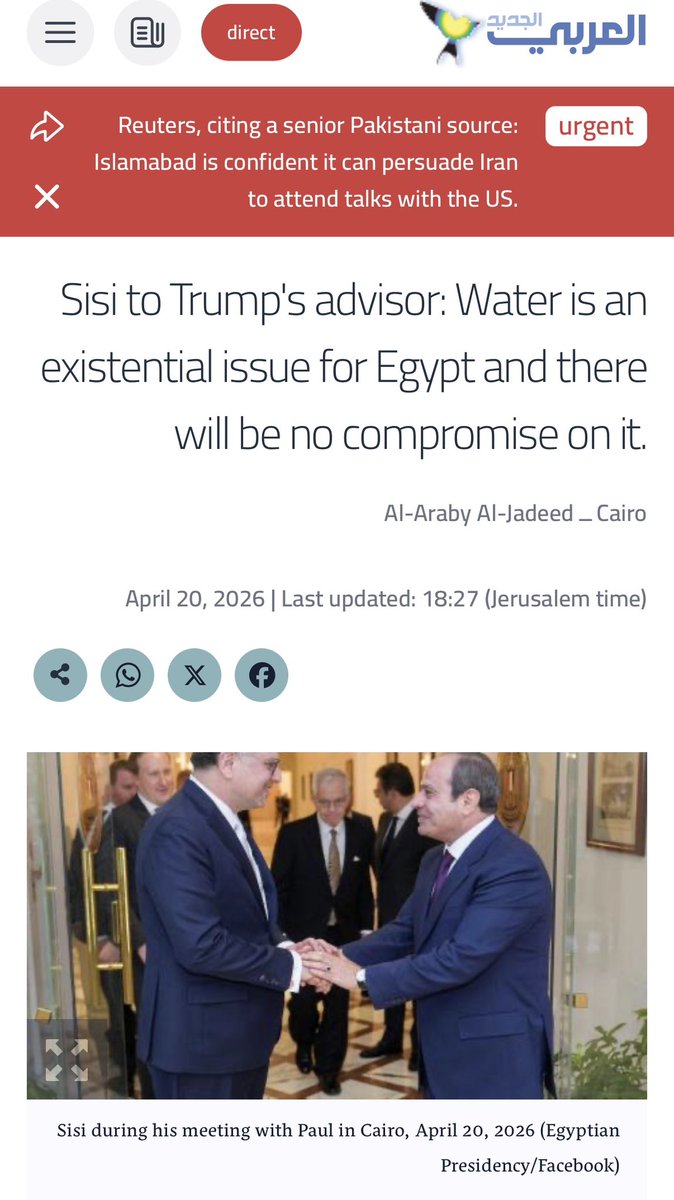
Egypt’s @AlsisiOfficial says water is an “existential issue” and that there will be “no compromise.”
Fine. Ethiopia also has existential issues: electricity, food production, poverty reduction, climate resilience, and sovereign development on Abbay.
Egypt keeps repeating that it depends more on the Nile because much of Egypt is desert. But that is not Ethiopia’s burden to carry forever. Geography does not give one country ownership over a shared river. Scarcity is not a title deed. Dependence is not a veto.
Ethiopia has no obligation to guarantee Egypt’s preferred water security model at the expense of Ethiopian sovereignty, development, and national security. International water law is built on equitable and reasonable utilization, cooperation, and no significant harm not permanent downstream control over upstream development.
The Nile is not Egypt’s private property.
The Blue Nile rises in Ethiopia. Ethiopia has its own people, farmers, industries, power demand, and climate risks. An independent country cannot be expected to freeze its future because another country built its water policy around entitlement.
Cooperation is valuable. But responsibility begins at home.
Egypt has options: groundwater, reuse, desalination, the Mediterranean, the Red Sea, demand management, agricultural reform, and efficiency. Egypt must invest in its own water security instead of turning Ethiopia’s natural contribution into a permanent political hostage.
For decades, Ethiopia’s water flowed downstream while Ethiopia remained poor, dark, and underdeveloped. Now that Ethiopia is using Abbay for hydropower and development, Egypt calls it a threat.
No.
What is threatened is not Egypt’s survival. What is threatened is Egypt’s old monopoly mindset.
Ethiopia will not carry Egypt’s burden. Ethiopia will not accept a downstream veto. Ethiopia will not apologize for developing its own river.
Fairness is non-negotiable.
The future of the basin must be cooperation without domination, law without colonial privilege, and water security without sacrificing Ethiopia’s sovereignty.
#Ethiopia #Egypt #Sudan #SouthSudan #Uganda #Kenya #Tanzania #Rwanda #Burundi #DRC #GERD #BlueNile #NileBasin #WaterSecurity #TransboundaryWater #Hydropower @AlsisiOfficial@EGPresidency_AR@MwriEgypt@MfaEgypt@MFAEgOfficial@EgyptCabinet@nbiweb
Lake Nasser quick level-to-storage check, usable baseline, weak sediment correction
If someone wants a fast first-pass way to translate small Lake Nasser level changes into storage change, the baseline linear approximation is acceptable. Using the ILEC / WLDB active-storage line of 90.7 km³ across the 147 to 174 m band gives a slope of about 3.3593 km³ per 1.0 m, or about 335.93 million m³ per 0.1 m. That means a move from 174.0 m to 174.3 m implies about 1,007.78 million m³ in the baseline approximation.
That is the strong part of the table.
The methodological weakness begins when sediment scenarios are presented as if they were corrected Lake Nasser storage values. The widely cited 5.876 km³ figure refers to sediment accumulation in Lake Nubia, the Sudanese reach, not cleanly to Lake Nasser itself. The companion estimate for Lake Nasser is much smaller, about 1.194 km³ to 2012. So using 5.876 km³ as if it were a verified Lake Nasser sediment correction is not technically defensible.
The second problem is structural. A flat percentage reduction of the whole stage-storage slope is only a scenario assumption. It is not a demonstrated corrected dV/dh relation. Without an updated post-sedimentation stage-storage curve, those adjusted columns should be treated only as rough brackets, not as corrected Lake Nasser storage conversions.
There is also a measurement caution. One whole-lake validation reported satellite-altimetry RMSE around 0.62 to 0.72 m against in-situ levels, although some smaller-area studies reported lower errors. That means small level changes, especially below about half a meter, should not be overinterpreted unless the exact data source, processing method, and uncertainty treatment are stated clearly.
So the only defensible reading is narrow and limited. The baseline column is useful as a rough screening tool. The sediment-adjusted columns are scenario brackets, not verified Lake Nasser corrections. And the table is not strong enough to support confident headlines about corrected live storage unless a real updated hypsometry is provided.
#LakeNasser #AswanHighDam #Nile #Hydrology #WaterBalance #RemoteSensing #Sedimentation #DamEngineering #Egypt