This is a story of grit and determination.
Story of Smt Santro Devi.
Her husband died 20 years ago, leaving behind three daughters and 2 year old Hardeep.
Worked as a 'mid day meal' worker in government school at paltry payment.
After school, worked in fields as a farm labourer, etching out a very tough life in the village of Alipur, Narwana, Jind, Haryana.
Today Lt Hardeep Gill gets commissioned from IMA.
Hardeep studied at a village school and later graduated from IGNOU.
He too worked in the fields till the day he finally joined IMA.
Happy to have played a small role in mentoring this young man.
The real strength of our armed forces is the rural youth, they will become leaders of tomorrow. Jai Hind 🇮🇳
@adgpi@thebetterindia@IndianMilitar11
Yesterday, @IndianExpress reported an unprecedented rupture inside the Election Commission: TWO of its three members objecting on record, 14 times in 10 months, to decisions taken without their knowledge.
Today, the second part of our investigation looks at the concern Election Commissioners Sukhbir Singh Sandhu and Vivek Joshi flagged most often: Who really controls our electoral rolls?
We followed that question to Goa, where we found something deeply concerning.
Stay with me....
(1/14) 🧵
We spent months investigating the inner working of the EC.
What we found: the majority of the Commission, kept in the dark for almost a year.
Election Commissioners Sukhbir Singh Sandhu and Vivek Joshi objected on record at least 14 times in 10 months, FOUR times on a single day, to decisions taken in the Commission's name without their knowledge.
Here is what they flagged:
(3/10)
https://t.co/LuOZBDxKt8
Khamenei's Last Move!
Guys, you have to watch this video.
How he nursed and built a doctrine to fight the ultimate war, for 36 years. How his death undid all that US had planned.
#Mustwatch
https://t.co/v1kBpwwlaE
@GuptaPragnya I have spoken on the issue multiple times. Our education system is in the grips of people who themselves promote blind faith. He also runs a course on reincarnation in the IIT!
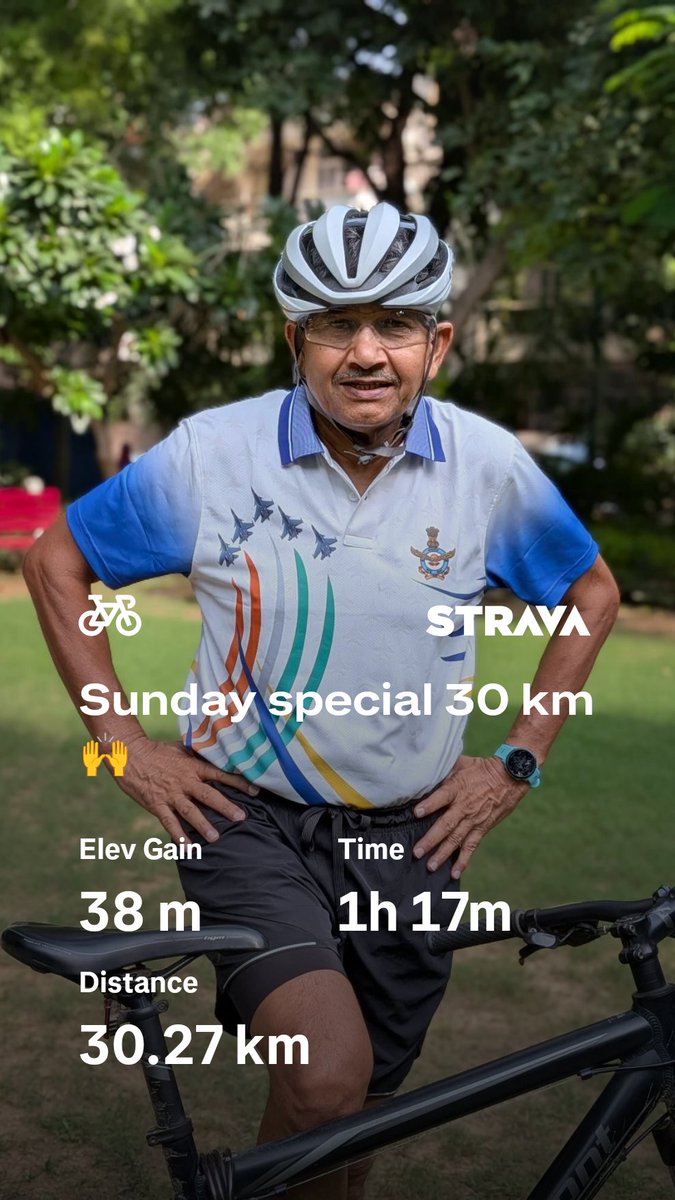
Sunday special, 30 km ride across Golf Course Road in Gurgaon.
Making every Sunday count and also supporting the Sekhon Marathon organised by IAF in Chandigarh on 04th Oct, as one of the Brand Ambasadors.
#fitness#cycling#Sunday@IAF_MCC
Check out my ride on Strava: https://t.co/ogiHoxQDFp
RIP Alfred: the Bull who Cooked the PAF's Goose
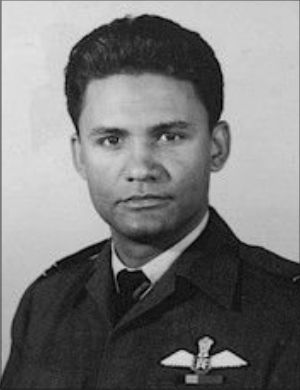
I have long believed that if the Indian Air Force had awarded a Param Vir Chakra for its actions in the 1965 war, it should have gone to Flight Lieutenant Alfred Tyrone Cooke. He was awarded the Vir Chakra for his action over Kalaikunda on 7 Sep 1965. On 18 Sep 2026, sixty-one years later, Alfred took off for Valhalla in Delhi, barely a day before No. 14 Squadron, the Bulls, was due to celebrate its Platinum Jubilee. The timing is difficult to ignore for a man who remained closely attached to a Squadron he had left more than half a century ago.
The broad outlines of Cooke's action over Kalaikunda are well known. He was the tall, lanky Hunter pilot of 14 Squadron who, on 7 Sep 1965, found himself in the middle of the second PAF raid on the airfield. Cooke and his wingman, Flying Officer Subodh Chandra Mamgain, were on combat air patrol when they were directed towards the raiders. Four Sabres of the PAF's own No. 14 Squadron were involved in that second attack, three at low level over the airfield and one above them. Cooke went down after the three.
Squadron Leader @joe_sameer reconstructed the full action from Cooke's own account, gun-camera evidence and Pakistani sources. Cooke shot down the Sabre flown by Flying Officer Afzal Khan, badly damaged Flight Lieutenant Tariq Habeeb's aircraft, engaged Flight Lieutenant Haleem's Sabre and then, having exhausted his ammunition, went after the remaining aircraft when it was engaged with Mamgain. The official record credited him with one confirmed kill. What is beyond argument is that his gun camera recorded him engaging several different Sabres, and that he continued the fight after his guns were empty. His Vir Chakra citation records him getting into position behind another enemy aircraft after his ammunition ran out and continuing to keep it on the run.
Cooke's Hunter returned with vegetation lodged under the aircraft. Years later, when a painting of the combat was shown to him, Alfred's correction was simple: the aeroplane was too high. His wingtip, he said, had been about six to ten feet above the ground.
Cooke himself could be abrupt. Those who knew him remembered high standards and little patience for people who did not meet them. He had great confidence in his own flying and strong views on how an aeroplane should be flown. He also remembered precisely who had taught him much of it.
That man was Squadron Leader O. N. “Piloo” Kacker. Cooke credited Kacker's intensive low-level combat training before the war with giving him the confidence to manoeuvre a Hunter at the heights to which the Kalaikunda fight eventually descended.
His interest in flying began much earlier. He grew up in Agra during the Second World War, with Hurricanes, Spitfires and Mustangs operating in the skies around him, and by his own recollection wanted from a young age to become a fighter pilot. He was educated at La Martiniere College, Lucknow, a school that produced a remarkable number of IAF fighter pilots and war veterans. In 2015, he returned there along with Denzil Keelor when the Air Chief honoured the school's veterans of the 1965 war.
Cooke was commissioned on 19 Dec 1961 with the 80th Pilots Course, and his entire commissioned career lasted only seven years. By 1967 he had decided to migrate and had put in his papers. He had originally been selected among the pilots to convert to the Su-7; once his decision to leave was known, Flight Lieutenant O. J. D'Sena took his place. Cooke finally left the Air Force in December 1968 and settled in Australia.
A seven-year career should ordinarily leave only a modest footprint in a Service's history. Alfred managed the opposite. He left as a Flight Lieutenant and remained identifiable throughout the rest of his life simply as Alfred Cooke of 14 Squadron. No later rank displaced it.
Australia became home, and he built a life there with his family, but his Indian and Air Force connections remained strong. In April 2023, Alfred led the Indian Army, Navy and Air Force veterans at the ANZAC Day march in Brisbane. It rained, but the march went on. More than half a century after leaving the IAF, he was still putting on his medals and walking at the head of a veterans' contingent.
Away from flying, Alfred loved dancing. Even in his later years, he went every week to a sports club for its weekly dance. When Deb Gohain contacted him to reconstruct the Kalaikunda combat for a painting, Alfred quickly dispensed with “Sir”; he was simply Alfred. The two spent hours getting the relative positions of the Hunter and Sabres right and remained friends afterwards.
I continue to find the award difficult to explain. The case for a Param Vir Chakra does not require retrospective embellishment. The official record confirms one kill and records that Cooke continued to pursue the enemy after his ammunition was exhausted. The gun-camera evidence and subsequent reconstruction tell us considerably more. In my view, what Alfred Cooke did that morning merited the Param Vir Chakra.
In 2015, on the fiftieth anniversary of the war, Alfred returned to India and handed his Vir Chakra to No. 14 Squadron. “My Vir Chakra belongs to the squadron,” he said. He later tried to have the monthly Jangi Inam that came with it transferred to the Bulls as well. The medal made it back; bureaucracy defeated the money.
Tomorrow, No. 14 Squadron turns seventy-five. The Param Vir Chakra never came. The Vir Chakra Alfred did receive has been back with the Bulls for eleven years.
#IAFHistory @IAF_MCC
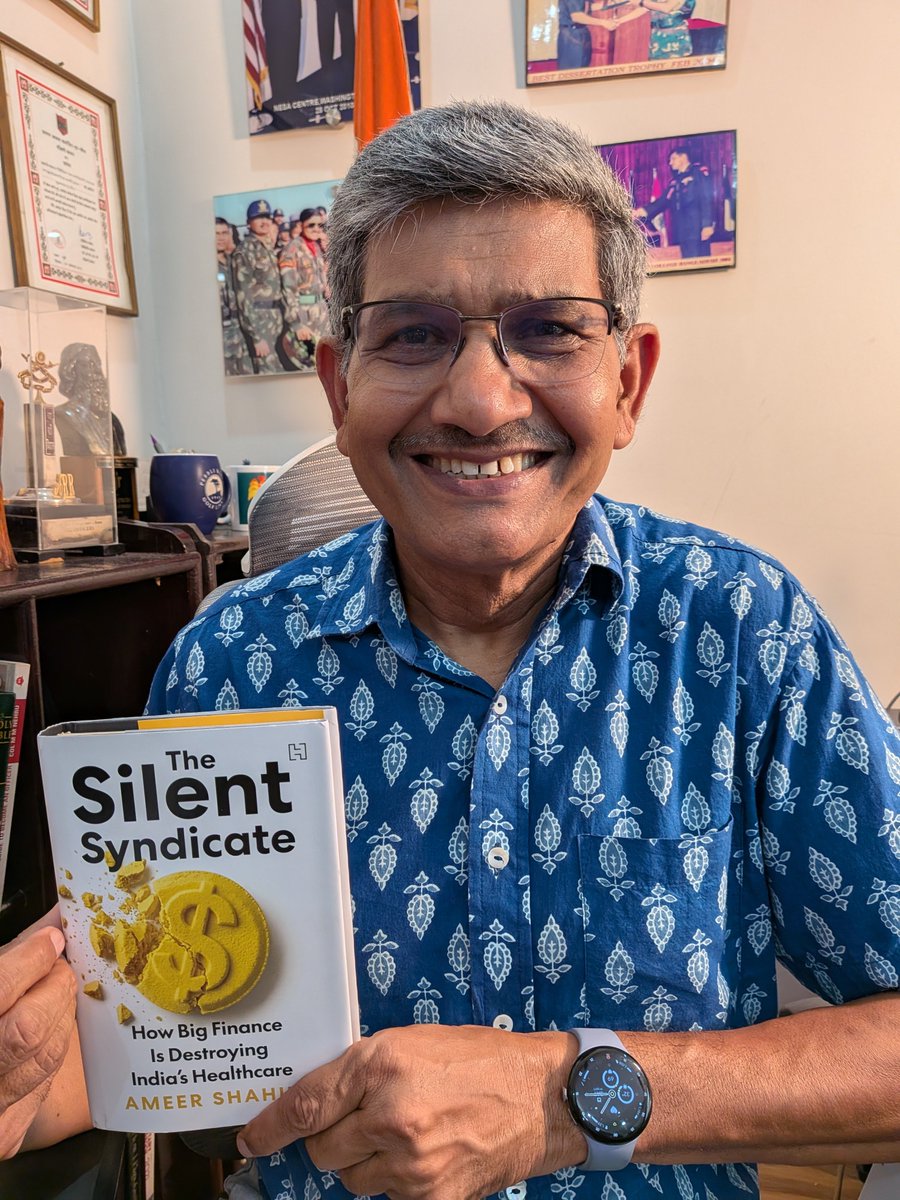
The Silent Syndicate
How Big Finance Is Destroying India's Healthcare @ameershahul
A very regorous inquiry into our healthcare system.
The patient is no longer at the centre of our healthcare ecosystem - capital is.
IPS lobby is stronger than cadre officers of CAPF. How IPS Officers are getting 4 promotion in 15 years service where as Assistant Commandant of CAPF is not getting single promotion.
One of India’s greatest fighter pilots, Flt Lt Alfred Cooke’s passing yesterday is a great loss. In 1965, while flying CAP in a Hawker Hunter over Calcutta, he took on a formation of F-86 Sabre Jets that were attacking Kalaikunda & fired at all four, shooting down two. RIP Sir!
@samirsrivastava@RailMinIndia First time I halted at this station was sometime in summer of 1985. We were out for collective training as part of a newly raised Division, practicing river crossing. Vivid memories of the successful counter attack by 'A' coy at midnight under Maj PS Mann, SM.
@TerrificHRYnv Excellent, keep writing, this is a huge socio-economic factor in recruitment. That has been totally dismantled with this scheme. The distress and impact in rural areas is very much visible.