(Re)Introducing AgentLane – a runtime-first framework for building reliable, scalable, inspectable AI agent systems.
It started as a weekend project and turned into a foundation for building agents at Diadia, where we are building AI workflows for complex healthcare use cases.
Agentic systems are reaching the point where they are no longer just interactive assistants or single-session workflows. Increasingly, they will run in the background, coordinate across tools and agents, maintain state over time and memory, self-improve as they solve more tasks, involve human review when needed, and work through complex problems end to end.
There is already a lot of impressive work happening at the agent harness layer: coding agents, research agents, deep agents, tool-using assistants, and increasingly sophisticated workflow systems.
But when we started building our own production workflows, we kept running into a lower-level question: how much control do we have over the runtime itself?
Can agents be addressed across environments? Can execution move from local development to distributed workers without changing the top-level harness? Can state, memory, personalization, skills, and human review be composed into the system without locking the whole design into one execution model?
AgentLane was built around those primitives from the start.
It provides these runtime primitives – addressing, message passing, persistent state, resumable execution, distributed workers – together with the agent-level pieces needed to build real harnesses on top: personalization, memory, skills, extensibility, tool use, and human-in-the-loop review.
The goal is to keep the flexibility of agentic workflows while giving builders more control over how those agents actually run in production.
For us, this matters especially in healthcare, where reliability and inspectability are not optional.
AgentLane is still early, but it is already shaping how we build AI systems at Diadia.
I’d especially love feedback from builders working on agents that need to coordinate, resume, scale, or stay inspectable in production.
IMO the best way to position for a wannabe long term $SPCX investor is not to buy at/pre-IPO but to sell cash secured puts around $80–90 strike zone after some initial market validation
Finally got around to productizing a few of the skills I use frequently.
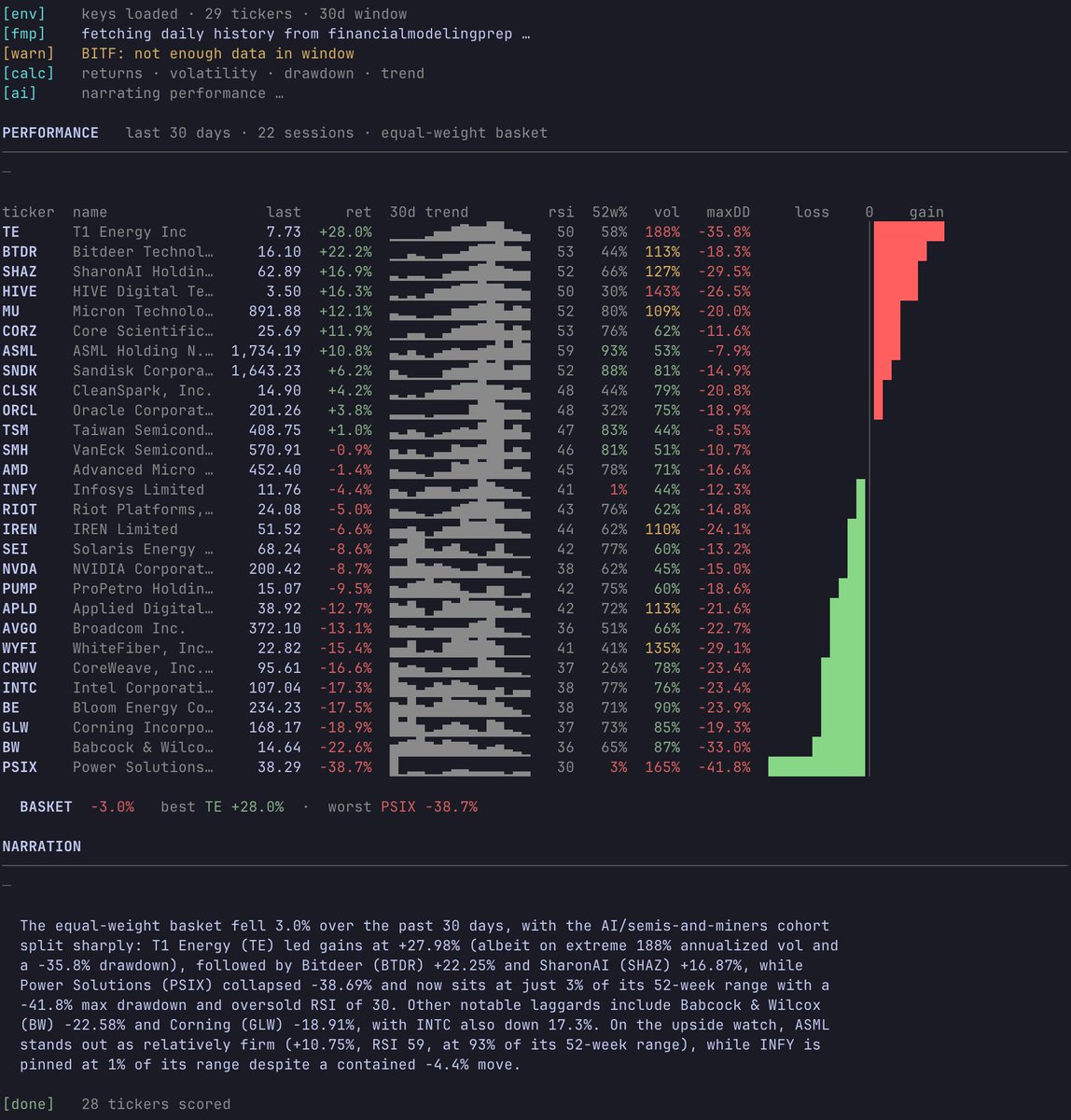
Starting with /terminal-report since most of my work happens in the terminal. This one teaches to render proper terminal reports: aligned tables, sparklines, colored bars, tagged logs. Zero external dependencies.
Install it with
npx skills add yasik/skills --skill terminal-report
Use in the prompt
Build me a CLI that shows how a list of stock tickers did over the last 30 days. A clean terminal table sorted by return, with a sparkline and a colored bar for each one. Make it look polished.
Will be publishing more in the coming weeks.
Here's what the first run gave me (Opus 4.8), I pointed it at a fund's full 13F book ↓
AgentLane 0.9.0 is out🌙
A lot has been added: spawned sub-agents, first-party tool permissions, approval/run-event streaming and distributed examples.
It's now getting closer and closer to a full e2e cloud agents harness.
https://t.co/GplOo8kT5k
Just pay the tax and move on
The tax will be due someday anyway. But instead of having all the freedom in the world today you gonna be locked up for the rest of your best years in some layered structures and assets that require management, accounting and hard to get out of.
Pay the tax, invest the rest, take some profits when you need them, and enjoy life.
I spoke with a member of the technical staff at Anthropic yesterday who is about to make $17 million.
He's been there less than 2.5 years and is blown away by his equity value. His biggest worry now is tax strategy.
His CPA told him to "max out his 401(k) and consider a donor-advised fund."
While that's a great starting point, here's what makes even more sense:
He's acquiring a 48 unit apartment complex in Phoenix for $14.5 million.
We're running a cost segregation study to reclassify approximately 30% of the depreciable basis into 5, 7, and 15 year property.
Here's the math:
• $14.5M purchase price
• ~$12.3M depreciable basis (excluding land)
• ~$3.7M reclassified to short-life assets via cost seg
• 100% bonus depreciation under OBBBA = $3.7M accelerated to Year 1
Plus standard Year 1 depreciation on the remaining basis adds another ~$315K.
Total Year 1 deduction: approximately 4M.
His wife is qualifying as a real estate professional 750+ hours, more time than any other activity. The loss is no longer passive. It offsets ordinary income.
At a 37% federal bracket plus 13.3% California, that's a combined rate just over 50%.
$4M × 50% = 2M+ in tax savings. Year 1.
Layer in operating expenses, loan interest, and startup costs on the property, the total offset against his Anthropic income crosses $3 million.
Not deferred. Not spread over 27.5 years.
Meanwhile, the property cash flows. He's converted concentrated tech stock into a real asset producing monthly income. And he's done it all before he files the return on his equity windfall.
This is what real tax planning looks like for tech liquidity.
If you're an engineer, exec, or early employee sitting on a meaningful equity position and your CPA hasn't mentioned cost segregation, bonus depreciation, or REPS qualification, you're probably leaving seven figures on the table.
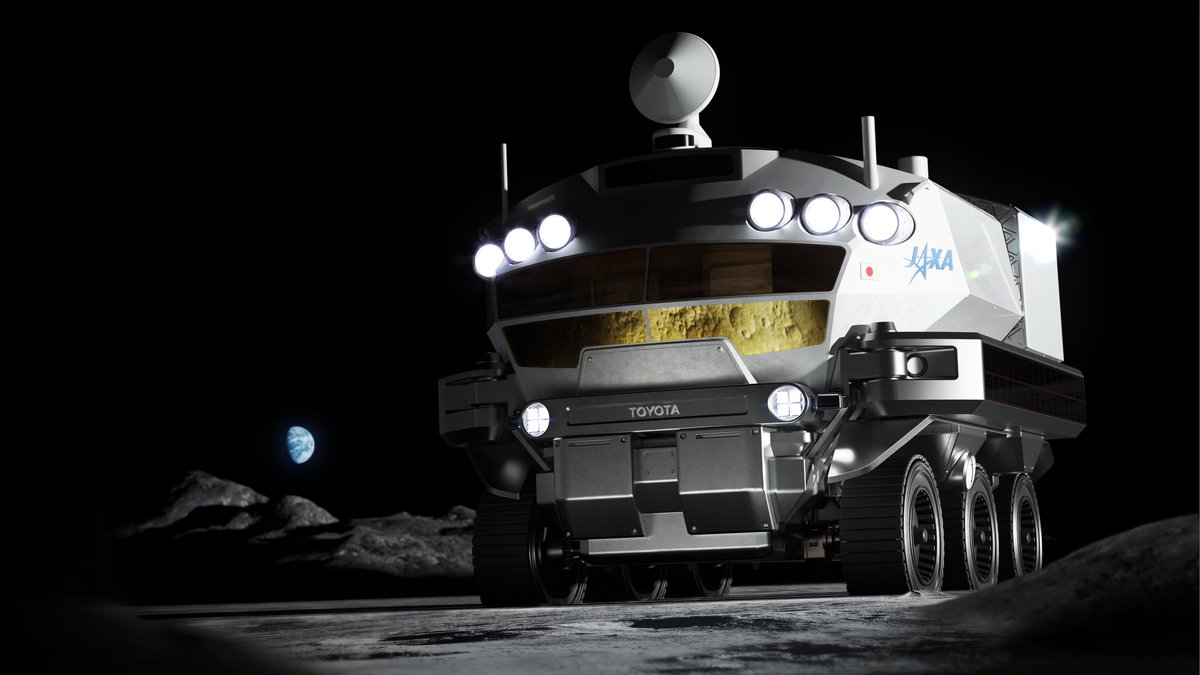
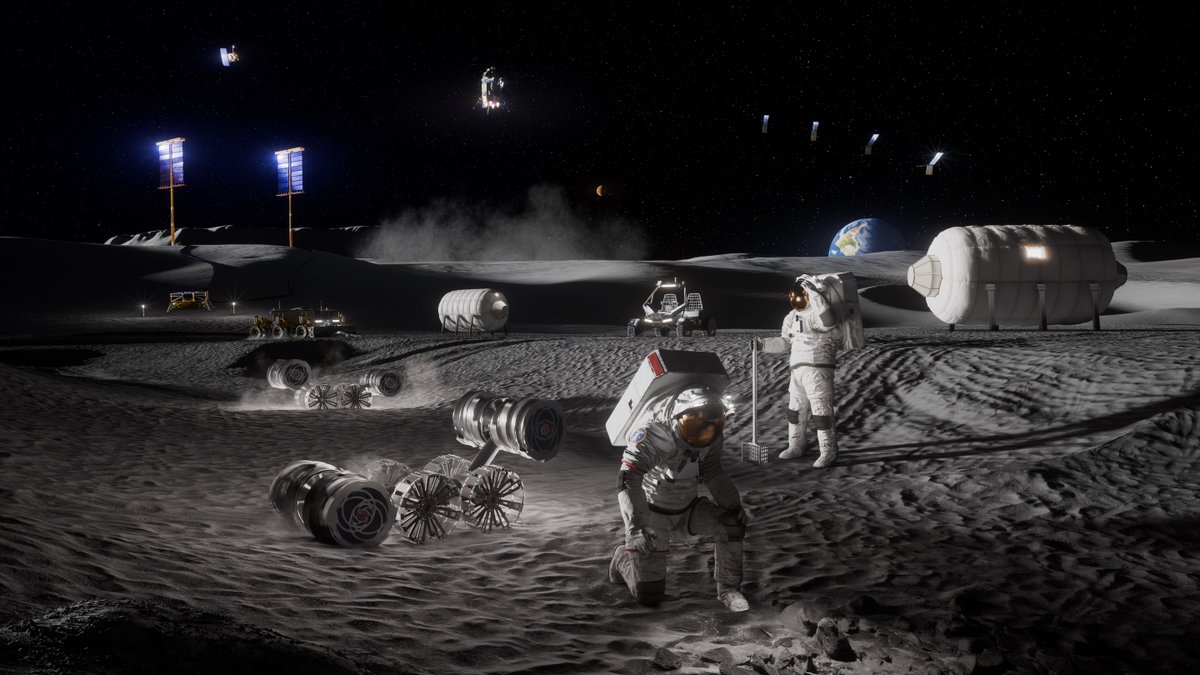
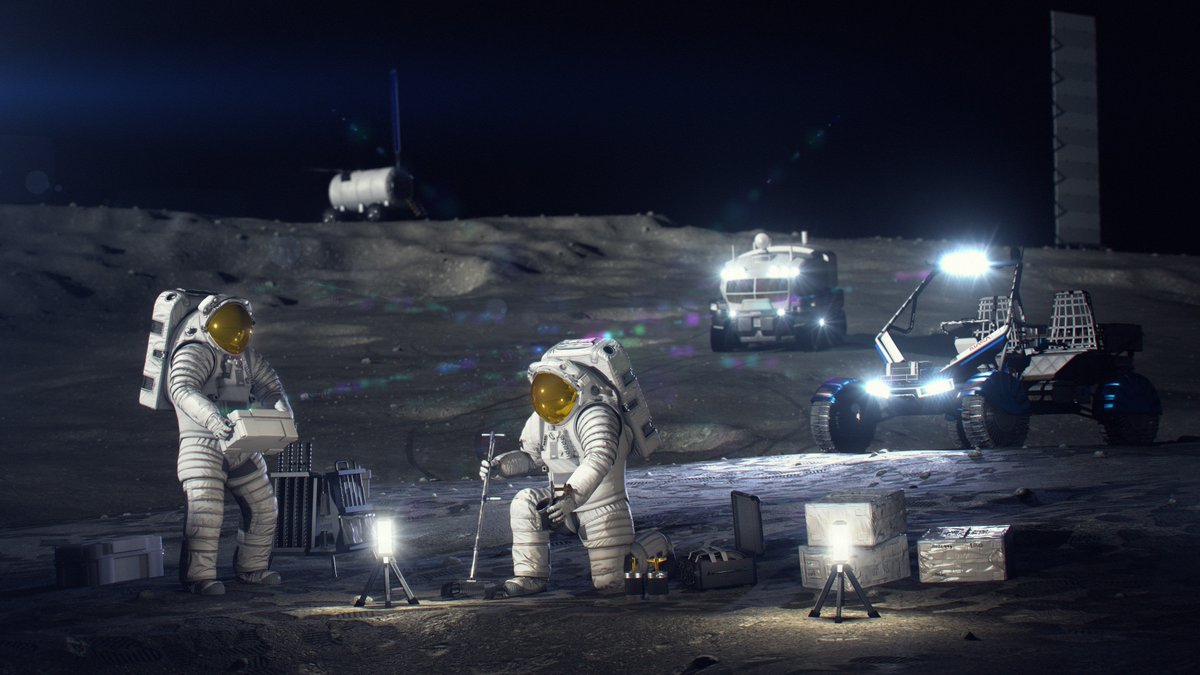
NASA has just launched a new website for its Moon Base missions, which aims to build a permanent $20 billion U.S. base on the Moon. @SpaceX's Starship rocket will play a big role in these missions.
"The Moon Base is a home away from Earth for Artemis astronauts who will live and work at humanity’s first lunar outpost. NASA is leading global teams of innovators across international space agencies, industry, and academia to build the Moon Base and establish an enduring human presence near the lunar South Pole for the benefit of all.
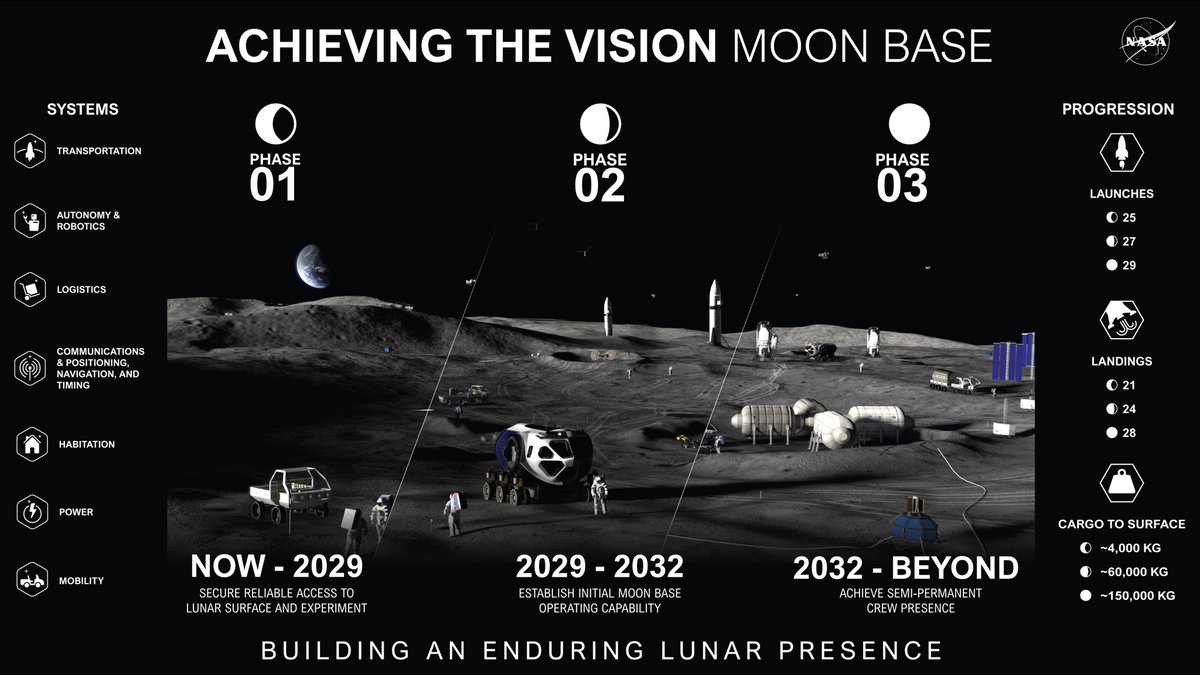
Phase One (Now–2029): Experiment and Learn
NASA will begin with a rapid series of robotic missions to scout the lunar South Pole region, test technologies, and prepare for surface operations ahead of future astronaut missions.:
• A major increase in lunar activity, with up to 25 missions, including 21 landings.
• Crewed and autonomous rovers for mobility demonstrations and surface preparation, along with four drones known as MoonFall and communications relay and observation satellites.
• Early demonstrations of power, navigation, communications, and nuclear radioisotope heater unit technologies designed to endure the long lunar night.
• Scientific payload opportunities integrated across landers and rovers.
• The first tangible footprint of Moon Base effort, with four tons of payload delivered to test what works on the lunar surface.
Phase Two (2029–2032): Early Habitation
By 2029, NASA will transition to assembling semi-permanent infrastructure and initiating early habitation and logistics operations:
• Deployment of expanded solar power systems and initial nuclear surface power capabilities, potentially including fission reactors and radioisotope power systems.
• Upgraded rovers, potential advanced MoonFall drones, and early habitation elements.
• Enhanced surface-to-orbit communications networks to provide reliable connectivity across the lunar South Pole region.
• Delivery of up to 60 tons of cargo through as many as 24 landings using low-, medium-, and heavy-class cargo landers.
Phase Three (2032 and Beyond): Sustained Human Presence
This phase will scale operations to achieve a true enduring presence, with routine crew rotations and continuous surface activity. This is when living and working on the Moon becomes a reality:
• Semi-permanent habitation modules with spacious interior for crew living and operations.
• Operational fission surface power systems capable of delivering steady, reliable energy through the long lunar nights, leveraging in situ resource manufacturing.
• Advanced logistics networks supported by crewed and autonomous rovers to keep the base supplied and functioning year-round.
• Delivery of up to 38 tons of cargo annually to sustain habitats, power systems, logistics operations, and major science outposts, enabled by low-cost reusable heavy-lift capabilities."
Moon base website: https://t.co/nefXl3J2FR
@morganlinton If that’s the only stock you are investing for a long time then it’s best not to invest at the IPO. Markets never go up indefinitely, besides in the current conditions the dip is coming. I’d wait.
This is a very good take that I agree with on many points.
It is incredibly hard to contain and manage AI slop in code. There is a point beyond which AI is simply unable to simplify and improve further, it's just outside of the model's RL boundary, but it is well within a human's boundary of logical reasoning and experience.
Some of the smartest most cracked engineers I know that are working on really complex systems are still writing a lot of their code by hand and are reviewing every line of AI generated code. Part of it is that the most complex problems also reside outside of model's RL boundary. As a result you get too much of generalization that's unusable.
In my work, whenever I go down trying to optimize something sufficiently low level or decompose the problem into simpler terms AI becomes less and less helpful the deeper you go or the harder you push it.
It will be interesting to see what the next 6 months of models will look like.
https://t.co/Ijbrcm6bua
@skcd42@elonmusk Interesting, distributed agents was the core idea behind Agentlane I’m building, but slightly different approach. Might add ssh/tmux support now :)
https://t.co/TBsPoIt3FL
We're building a Moon Base!
@NASAMoonBase will serve as a habitat where astronauts live and work during long-term science missions.
Join us at 2pm ET on Tuesday, May 26, for a live news event where we’ll share updates on our lunar exploration plans: https://t.co/IJXA7xYwju
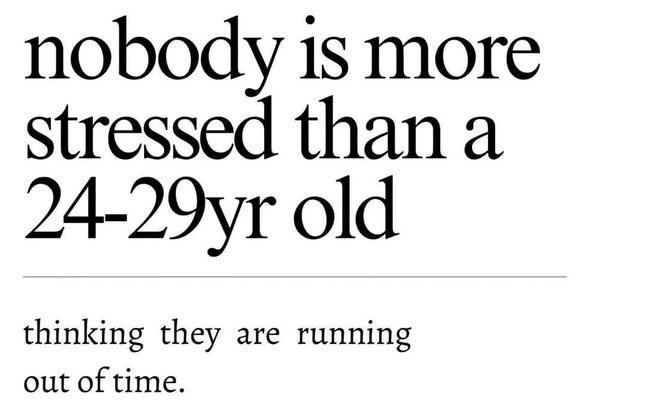
The vibes in SF feel pretty frenetic right now. The divide in outcomes is the worst I've ever seen.
Over the last 5yrs, a group of ~10k people - employees at Anthropic, OpenAI, xAI, Nvidia, Meta TBD, founders - have hit retirement wealth of well above $20M (back of the envelope AI estimation).
Everyone outside that group feels like they can work their well-paying (but <$500k) job for their whole life and never get there.
Worse yet, layoffs are in full swing. Many software engineers feel like their life's skill is no longer useful. The day to day role of most jobs has changed overnight with AI.
As a result,
1. The corporate ladder looks like the wrong building to climb.
Everyone's trying to align with a new set of career "paths": should I be a founder? Is it too late to join Anthropic / OpenAI? should I get into AI? what company stock will 10x next? People are demanding higher salaries and switching jobs more and more.
2. There’s a deep malaise about work (and its future).
Why even work at all for “peanuts”? Will my job even exist in a few years? Many feel helpless. You hear the “permanent underclass” conversation a lot, esp from young people. It's hard to focus on doing good work when you think "man, if I joined Anthropic 2yrs ago, I could retire"
3. The mid to late middle managers feel paralyzed.
Many have families and don't feel like they have the energy or network to just "start a company". They don't particularly have any AI skills. They see the writing on the wall: middle management is being hollowed out in many companies.
4. The rich aren’t particularly happy either.
No one is shedding tears for them (and rightfully so). But those who have "made it" experience a profound lack of purpose too. Some have gone from <$150k to >$50M in a few years with no ramp. It flips your life plans upside down. For some, comparison is the thief of joy. For some, they escape to NYC to "live life". For others still, they start companies "just cuz", often to win status points. They never imagined that by age 30, they'd be set. I once asked a post-economic founder friend why they didn't just sell the co and they said "and do what? right now, everyone wants to talk to me. if i sell, I will only have money."
I understand that many reading this scoff at the champagne problems of the valley. Society is warped in this tech bubble. What is often well-off anywhere else in the world is bang average here.
Unlike many other places, tenure, intelligence and hard work can be loosely correlated with outcomes in the Bay. Living through a societally transformative gold rush in that environment can be paralyzing. "Am I in the right place? Should I move? Is there time still left? Am I gonna make it?" It psychologically torments many who have moved here in search of "success".
Ironically, a frequent side effect of this torment is to spin up the very products making everyone rich in hopes that you too can vibecode your path to economic enlightenment.
the only thing i ever worried about in my late twenties was my US immigration status and path to green card and then citizenship (well over a decade ago)
i have not worried about anything ever since i got it
it's all relative