Every LLM speedup claim has an asterisk. Same GPU? Same precision? Same concurrency?
The yasp Model Catalog shows all of it: baseline, hardware, different loads.
9 open models incl. the Qwen3 family. Up to 2.3× tokens/s on one H100, accuracy-checked.
https://t.co/zeiXIRmbIh
Revolut’s AI ops lead: out-of-the-box inference is terrible. Tuning cut their time to first token by 88% on the same GPUs.
We measured that gap on 9 open models: standard vLLM vs. tuned by yasp. Up to 2.3× more tokens/s, accuracy-checked.
Benchmarks: https://t.co/It3uxlDawV
Inference costs keep growing, and most teams depend on one hardware vendor.
So we tested AWS #Trainium3: our agents ran Qwen3.5-35B-A3B at 11,400 tok/s on one instance, 512 concurrent requests.
That’s 81% of an 8-GPU server’s throughput, same workload.
More models soon.
Baseline is torch.compile with the Neuron backend; the ~1.5x is one example kernel. Correctness on 11 simple problems: 3 correct on the first attempt, 6 by the second. The rest trace back to docs we left out of this training run.
You can read the full blog post here https://t.co/BnU5xgUezE
I believe in Artificial Expert Intelligence.
The breakthrough my team had today is what makes me excited about our future.
We create a coding intelligent model build on Qwen which can write not only correct but faster code than PyTorch.compile for AWS Trainium hardware.
What I care about here: more throughput from the same chip AND faster responses per user.
Qwen3.5-35B-A3B on one Trainium2 chip: 427 tok/s total, ~53 tok/s per user, +83% yasp optimized vs. initial port.
Big thanks to @awscloud Trainium Team and @PyTorch#TorchNeuron.
#GTCBerlin in one line: AI is now an infrastructure race. Power → chips → AI factories → tokens.
Europe is building fast, but power and GPUs are the limit.
The next gains come from more tokens per GPU and per watt. We help teams get there. #Inference#infrastructure
New open models drop every few weeks. Making each run at its best takes months of kernel work.
@awscloud & @PyTorch just launched #TorchNeuron: native PyTorch on Trainium. yasp is a partner building on it.
TorchNeuron brings models to Trainium. We make them run at their best. Full read: https://t.co/A7Hs94OWlG
We are at #NVIDIAGTC this week in Berlin with one question: what’s your inference bottleneck?
Most AI pilots don’t fail on the model. They fail on latency and GPU cost.
yasp optimizes your model on your GPU, autonomously.
Let’s talk 👇
@NVIDIAGTC@nvidia
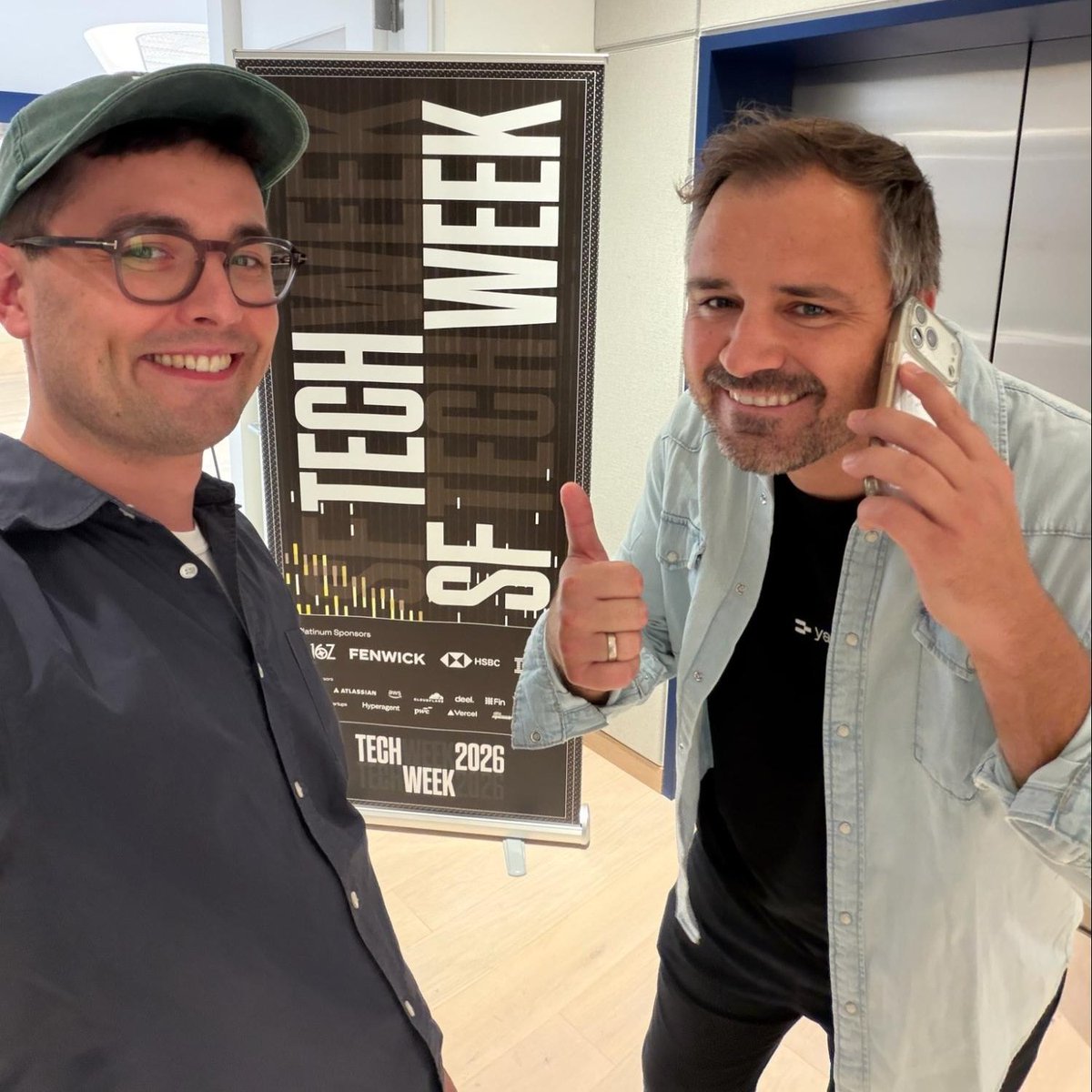
Big news to close out #SFTechWeek: @yasp_ai now has an office in Palo Alto 🎉
Our takeaway from the week: compute is scarce, power even more so. Efficiency is the lever.
When more GPUs aren’t an option, the answer is getting more out of every chip, across vendors and architectures. That’s exactly the problem we’re solving at yasp.
Thanks @GeneralCompute@FenwickWest@SambaNovaAI @Extropic_AI @Techweek_ 🙏
Our AI agent wrote a GPU kernel 4709x faster than torch.compile.
Correct output. Every operation performed. Nothing wrong with the math.
We rejected it anyway. Here’s why ↓ https://t.co/eYa0eKRT15
What's between your @PyTorch model and production? Usually weeks of hand-tuning per chip.
yasp's agents deliver your model's fastest version, measured on real chips: Nvidia, AMD, AWS Trainium, cloud to edge.
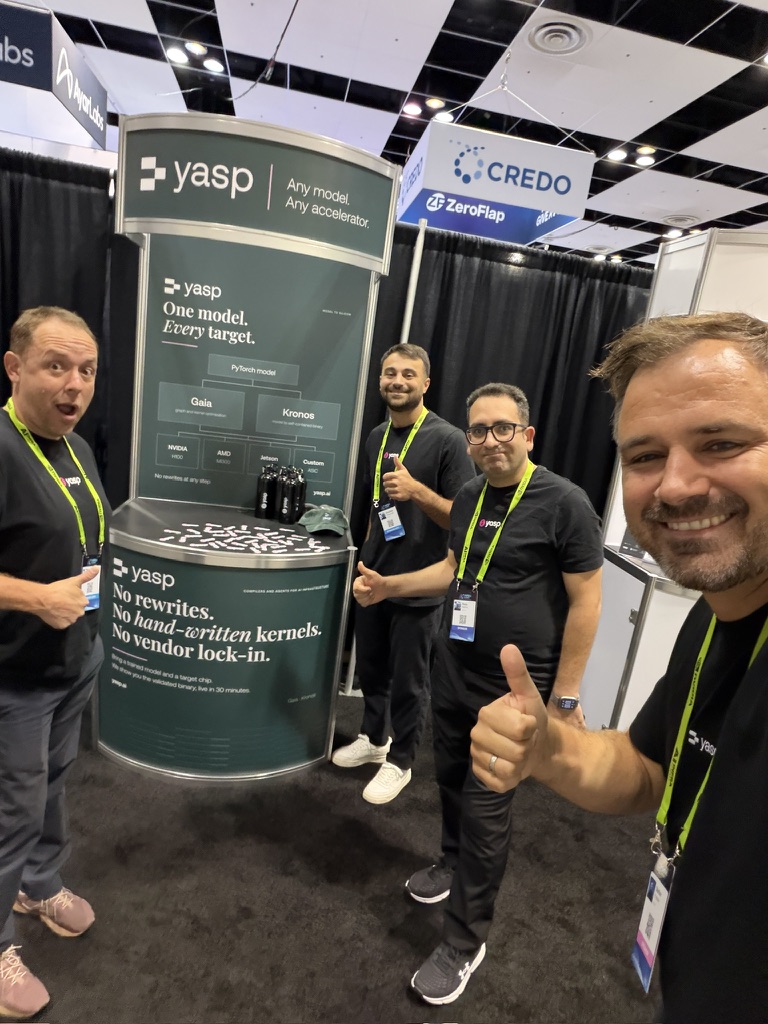
📍Join us at #PyTorchCon Booth #47, Oct 20–21, San Jose https://t.co/cK5sfI3LRv
One chip, many specialized ones, or disaggregated clusters?
Big question at The Future of Inference by @GeneralCompute x @FenwickWest#SFTechWeek.
Takeaway: workloads specialize, hardware follows, and efficiency per watt becomes the bottleneck.
Let's connect in SF @Techweek_ if you’re building, deploying, or investing in AI infrastructure.
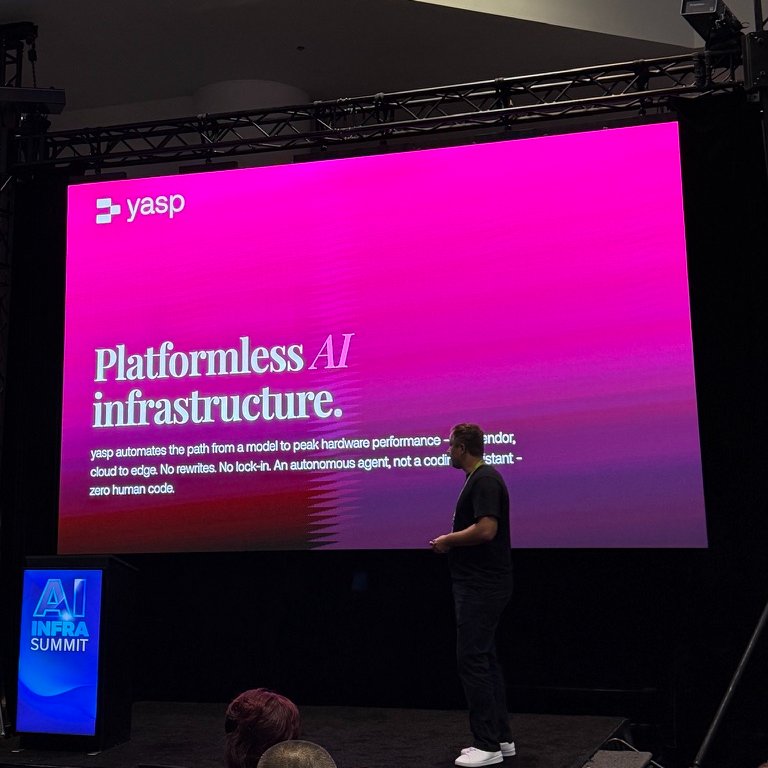
At #AIInfraSummit, the conversation has clearly moved to inference.
One question came up again and again: how do we get more tokens per second from the hardware we already have?
Our CEO Stefan pitched on stage. Here's what we took away:
Our CTO Reza on getting more tokens per second: better kernels alone won't get you there.
"The optimization problem has three parts: the customer's workload, the model, and the hardware. You need to consider all three together."
Gaia is live on the Microsoft Marketplace.
Give it a PyTorch model and your production shapes. It profiles, generates kernels, compiles for your GPU. Correctness verified on device, speed timed on real hardware.
NVIDIA + AMD on Azure:
https://t.co/ZOkth5YioI