Doing compiler magic at Quarkslab. Passionate about Reverse Engineering and Binary Analysis. - past developer of DRM for Sony(SecuROM 7+)/Denuvo. Ex-Scene 97-05
@momo5502 i've also never looked at anti-cheat, but ive often pondered about how it would be designed. in my mind the cheater detected status being sent back to the server and where this status/msg is constructed deep In the chain would always be the weakest point.
I made a lame gdbserver for basic remote debugging old 32bits exes on old windows versions like windows 98/XP. works with binary ninja's "GDP RSP" adapter. probably nobody needs this but me, but now it exists, so there. :) https://t.co/Bxo4Zj2umy
@dodo_sec true)) the only time i use graph mode is if you ever have a binary obfuscated by inserting jmps between every instruction up and down the whole code section, then swapping into graph mode makes it readable in a linear way instantly
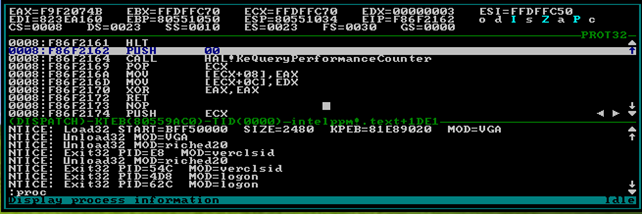
This is how boomers did debugging :D, this shows loading the ring0 softice tool on windows 2000, setting some style options, then setting a system wide API breaking point and following a stack string decryption
I wrote a thing. if you are interested in obfuscation/de-obfuscation and compilers, but perhaps don't have a tangible experience with it, then i hope this story will be interesting to you and teach a few things along the way (-:
Obfuscation vs The Optimizer: A Battle in LLVM Middle End.
@yates82 shows us how the continuous improvement of the LLVM optimizer defeats naive code obfuscation, and how the obfuscator can fight back.
An eternal fight in which all victories are ephemeral
https://t.co/KGRcbImqf4
along with intel's new hardware they have released "Intel® Binary Optimization Tool". its being marketed as a way to enhance perf for gaming. They have profiled a bunch of games and with that info do profile-guided DBI basic block order rewriting to increase IPC. pretty wild.