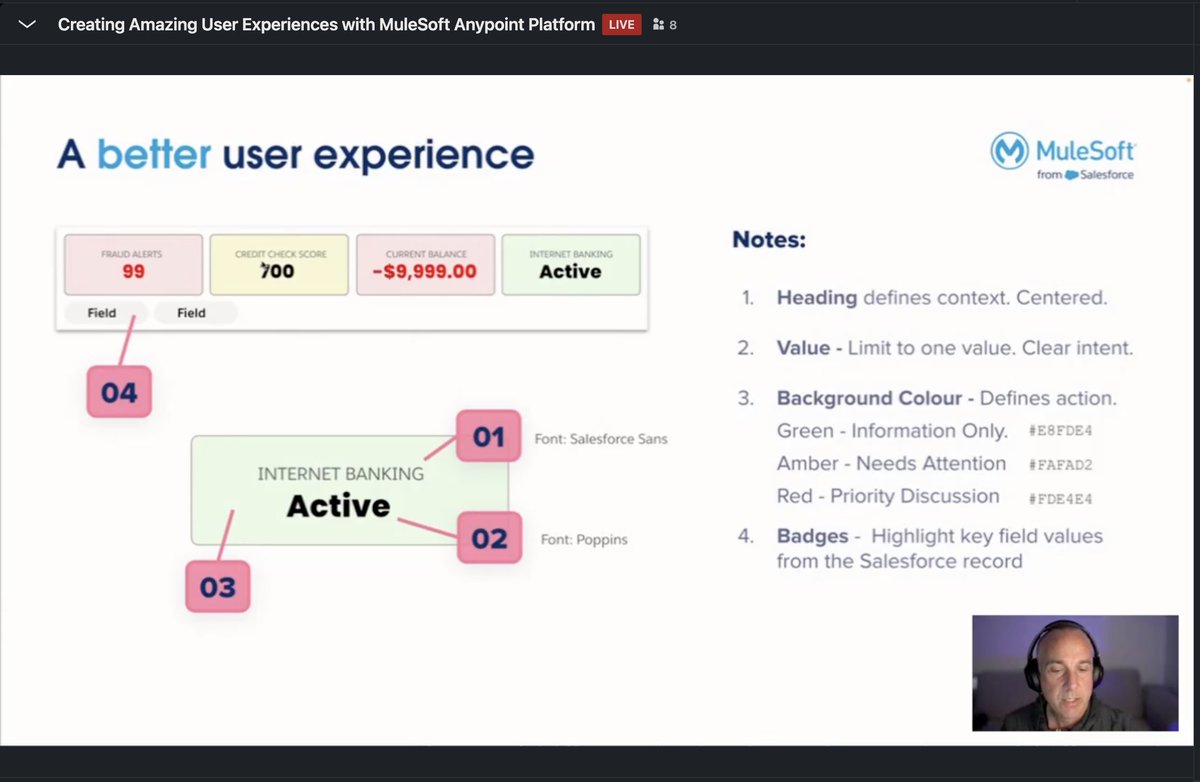
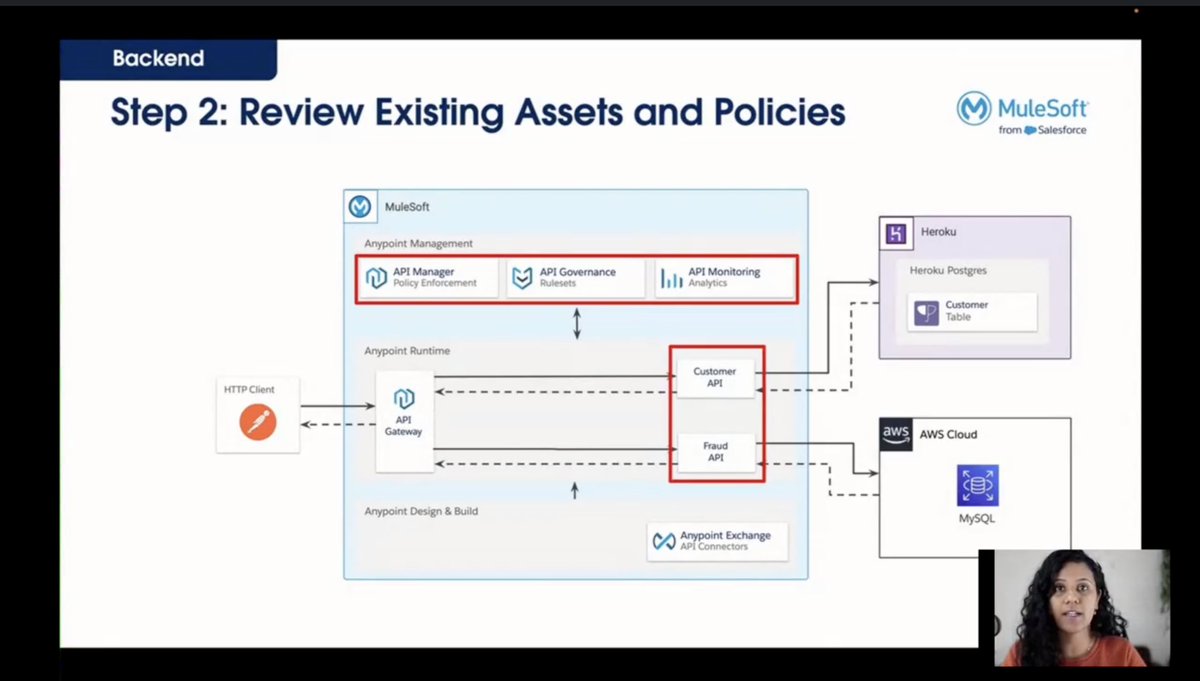
Anypoint Code Builder for Desktop is out today! 🚀
Accelerate API and integration development with next-generation developer tooling.
Learn more: https://t.co/ltcOZsDWwj
NodeJS developers...
We built a tool that automatically fetches the docs for all of the NodeJS packages you're using, compiles them into one platform and helps you navigate them with AI 🪄
Join the @DoctopusAI waitlist & get early access ⚡️ https://t.co/P3Zcan2WD3
Values Bring Value. 25 years ago, @Salesforce created the Pledge 1% model. Now, it's a global movement that has inspired over 18,000 companies in 100 countries to commit 1% of their equity, product, time, or profit to giving back. When we commit to our values, “Business is the greatest platform for change!” ❤️ @PledgeOne https://t.co/9JOqq83tBR
👇Can I use Cloudhub 1.0 application in Cloudhub 2.0 ?
✅You will find your best answer here in below link with proper explanation
Check this out important link @MuleDev@MuleSoft
https://t.co/HTzBjhWP32
Spread this for other people
#mulesoft#salesforce#cloudhub
OAuth 2.0 Explained With Simple Terms.
OAuth 2.0 is a powerful and secure framework that allows different applications to securely interact with each other on behalf of users without sharing sensitive credentials.
The entities involved in OAuth are the User, the Server, and the Identity Provider (IDP).
What Can an OAuth Token Do?
When you use OAuth, you get an OAuth token that represents your identity and permissions. This token can do a few important things:
Single Sign-On (SSO): With an OAuth token, you can log into multiple services or apps using just one login, making life easier and safer.
Authorization Across Systems: The OAuth token allows you to share your authorization or access rights across various systems, so you don't have to log in separately everywhere.
Accessing User Profile: Apps with an OAuth token can access certain parts of your user profile that you allow, but they won't see everything.
Remember, OAuth 2.0 is all about keeping you and your data safe while making your online experiences seamless and hassle-free across different applications and services.
Over to you: Imagine you have a magical power to grant one wish to OAuth 2.0. What would that be? Maybe your suggestions actually lead to OAuth 3.
–
Subscribe to our weekly newsletter to get a Free System Design PDF (158 pages): https://t.co/4QcX8btXGL
Introducing https://t.co/y0HvlyQfAa
An open source project to take your API learning journey to next level. With this now you can learn and build complex application using any web or mobile framework or library.
This will be a game changer Open Source Repo to bring change in learning and prove your learning.
https://t.co/LzchS1tZCw
How to improve API performance?
The diagram below shows 5 common tricks to improve API performance.
1. Pagination
This is a common optimization when the size of the result is large. The results are streaming back to the client to improve the service responsiveness.
2. Asynchronous Logging
Synchronous logging deals with the disk for every call and can slow down the system. Asynchronous logging sends logs to a lock-free buffer first and immediately returns. The logs will be flushed to the disk periodically. This significantly reduces the I/O overhead.
3. Caching
We can cache frequently accessed data into a cache. The client can query the cache first instead of visiting the database directly. If there is a cache miss, the client can query from the database. Caches like Redis store data in memory, so the data access is much faster than the database.
4. Payload Compression
The requests and responses can be compressed using gzip etc so that the transmitted data size is much smaller. This speeds up the upload and download.
5. Connection Pool
When accessing resources, we often need to load data from the database. Opening the closing db connections add significant overhead. So we should connect to the db via a pool of open connections. The connection pool is responsible for managing the connection lifecycle.
Over to you: What other tricks do you use to improve API performance?
–
Subscribe to our weekly newsletter to get a Free System Design PDF (158 pages): https://t.co/90RMwmA3Mu
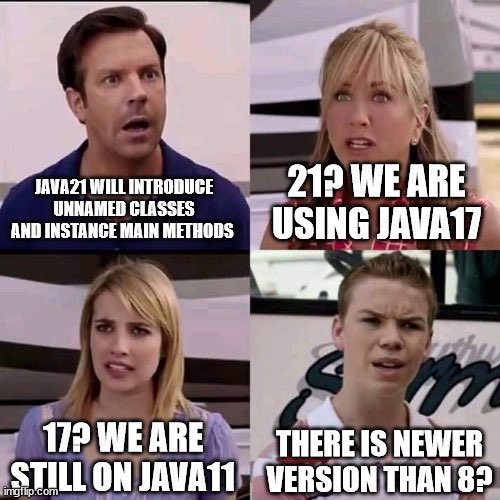
#Java developers.
Enjoy the laugh.
More importantly, upgrading matters!
Java 21 is gonna be lit!
Learn more: https://t.co/mC4Jac6426
#OpenJDK#JDK#Java21#JDK21