It's a bit sad and confusing that LLMs ("Large Language Models") have little to do with language; It's just historical. They are highly general purpose technology for statistical modeling of token streams. A better name would be Autoregressive Transformers or something.
They don't care if the tokens happen to represent little text chunks. It could just as well be little image patches, audio chunks, action choices, molecules, or whatever. If you can reduce your problem to that of modeling token streams (for any arbitrary vocabulary of some set of discrete tokens), you can "throw an LLM at it".
Actually, as the LLM stack becomes more and more mature, we may see a convergence of a large number of problems into this modeling paradigm. That is, the problem is fixed at that of "next token prediction" with an LLM, it's just the usage/meaning of the tokens that changes per domain.
If that is the case, it's also possible that deep learning frameworks (e.g. PyTorch and friends) are way too general for what most problems want to look like over time. What's up with thousands of ops and layers that you can reconfigure arbitrarily if 80% of problems just want to use an LLM?
I don't think this is true but I think it's half true.
Excited to release Zephyr-7b-beta 🪁 !
It pushes our recipe to new heights & tops 10x larger models 💪
📝 Technical report: https://t.co/3R4czrpbu5
🤗Model: https://t.co/8uUkvg4E7j
⚔️Evaluate it against 10+ LLMs in the @lmsysorg arena: https://t.co/2cMZRUvhOc
Details in the 🧵
How do students' sleep timing clash with #university scheduling policy? Check out my latest work on the effect of class start time and #chronotype on students' academic performance, #sleep, and class attendance
https://t.co/yLxagO0VRC
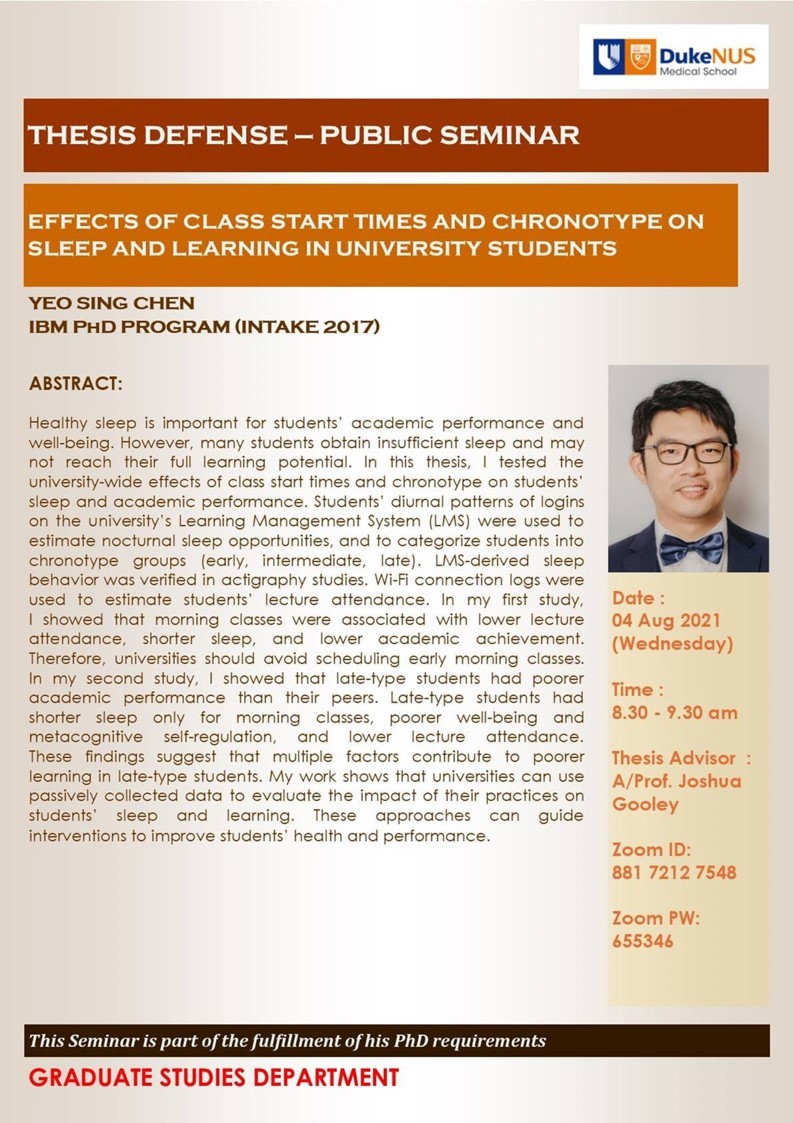
Time to graduate! Welcome anyone who is interested in #sleep and #learninganalytics research to join my public defense.
Please note that the date and time are in Singapore local time.
https://t.co/VK6SSiGJBC
Proud to share the first chapter of my thesis: using big data to show that early morning classes are bad for your attendance, sleep, and academic performance.
#University#learning#DataScience
https://t.co/XdetQ9OCCh
A small number of #eLearning classes can decrease the potential for disease transmission while minimising disruption to university operations 🎓 A great paper by @yeo_sing et al. using the @alsetNUS Data Lake https://t.co/ILgUnGHOjP @OER_NIE @CherelEric @Pier_Grd @SoLAResearch
SCIENTISTS: “We’ve produced the first-ever image of a supermassive Black Hole, 55-million light years away”
RESPONSE: “Oooh!”
SCIENTISTS: “We’ve concluded that humans are catastrophically warming Earth”
RESPONSE: “That conflicts with what I want to be true, so it must be false”