Anthropic engineer:
"You're not supposed to prompt Claude. You're supposed to build a system that prompts itself."
In 45 minutes she shows exactly how Anthropic builds agents that remember, fix their own mistakes and get smarter with every run.
This beats any paid course on agents I've seen.
Bookmark and watch it later, you’ll be glad you did.
Elon Musk literally sat down for a 45-minute talk with Y Combinator that explains how to build world-changing companies better than any business school on earth. This is the advice he gave a room full of young founders:
1. Don't try to build something great. Try to build something useful.
Everyone obsesses over greatness. Musk says that's the wrong target. "I didn't originally think I would build something great. I wanted to try to build something useful. I didn't think I would build anything particularly great. Seemed unlikely, but I wanted to at least try." Aim for useful first. Greatness, if it comes, is a byproduct.
2. When you can't get in the front door, build your own door.
Before Musk started his first company, he tried to get a job at Netscape. "I sent my resume into Netscape and nobody responded. I tried hanging out in the lobby to see if I could bump into someone, but I was too shy to talk to anyone. So I'm like, this is ridiculous, I'll just write software myself." He didn't set out to be a founder. He became one because no one would hire him.
3. He slept in the office and showered at the YMCA.
The origin of his first company was not glamorous. "We couldn't even afford a place to stay. The office was 500 bucks a month, so we just slept in the office and showered at the YMCA." He couldn't afford proper internet either, so he drilled a hole through the office floor and ran a cable to the internet provider downstairs. That was the founder of the future richest man on earth.
4. Keep the chips on the table.
When Musk sold his first company, he received a $20 million cheque. His bank balance went from $10,000 to $20 million overnight. Most people would have stopped. He put almost all of it straight back into his next company. "I kept the chips on the table." He did the same thing decades later, over and over. He hates money sitting idle. Money is fuel for the next mission.
5. Start with the mission, then work backwards to make it a business.
Musk didn't start SpaceX to make money. He went on the NASA website to find out when humans were going to Mars, and there was no plan. So he decided to build one. "There had been no prior example of a rocket startup succeeding. A small chance of success is better than no chance of success." The mission came first. The business model came later.
6. He started SpaceX expecting to fail.
He is brutally honest about the odds. "SpaceX started in mid-2002 expecting to fail. Probably 90% chance of failing. When recruiting people, I said, we're probably going to die, but small chance we might not die." The first three launches failed. The fourth one worked with no money left. "If the fourth launch hadn't worked, it would have been curtains. We made it by the skin of our teeth."
7. Break every problem down to physics.
This is the core of how Musk thinks. "First principles means break things down to the fundamental elements that are most likely to be true, then reason up from there, as opposed to reasoning by analogy." His example is rockets. Everyone priced them based on what old rockets cost. Musk asked what a rocket is actually made of, priced the raw metals, and found the materials were only 1-2% of the historical price. The rest was inefficiency he could attack.
8. When told something takes 24 months, break it down and do it in six.
Last year xAI needed a giant computer to train its AI. Suppliers said it would take 18 to 24 months. "It's like, well, we need to get that done in six months or we won't be competitive." So he broke it into parts. Needed a building, so he found an old factory. Needed power, so he rented generators. Needed cooling, so he rented a quarter of America's mobile cooling capacity. He slept in the data centre and ran cabling himself. It got done.
9. Watch your ego-to-ability ratio.
Musk's single sharpest piece of advice for young founders is about staying honest with yourself. "A major failure mode is when your ego-to-ability ratio gets too high. Then you break the feedback loop to reality." Keep the ego small, internalise responsibility for everything, and stay ruthlessly connected to what's actually true. "You want to close the loop on reality hard. That's a super big deal."
10. Chase work, not glory.
His closing philosophy ties it all together. "It's so hard to be useful. The area under the curve of total utility is how useful you've been to your fellow human beings times how many people. If you aspire to do true work, your probability of success is much higher. Don't aspire to glory, aspire to work."
He was ridiculed for years. The press called him "internet guy attempting to build a rocket company." He agreed it sounded absurd. He did it anyway, because a small chance of doing something useful beat no chance at all.
Here's the thing though....
Musk became the most followed founder alive because everything he does happens in public. The launches, the failures, the talks like this one. The companies made him powerful. The personal brand made his every word travel around the world before he finishes saying it.
We build massive distribution and grow personal brands on X and beyond without our clients lifting a finger.
If you're a founder or VC looking for that kind of exposure, book a call below.
We average 1.5M views a week.
https://t.co/UoXuYlkBQq
Anthropic CEO:
"There are jobs that took generations to build that may disappear."
One of the best interviews I've seen in a long time.
31 minutes of pure insight from the man running a $965B company.
The whole economy splits in two: people who use AI, and people who get replaced by those who do.
This isn't a forecast, it's already happening and you can't adapt while ignoring it.
Watch it, then read the guide on Claude features that 99% of users don't know exist below.
INSTEAD OF WATCHING AN HOUR OF NETFLIX TONIGHT.
This 1 hour Stanford lecture by Joel Peterson will teach you more about negotiation and getting what you want than most people learn in years.
Bookmark it and give it an hour, no matter what.
🚨 Anthropic just showed a 27-minute workshop on how to actually do prompts for Claude.
Taught by the people who built it.
Free. No registration. No paywall.
I've seen $300 courses that don't cover what they teach in the first 8 minutes.
Watch it and bookmark it now.
Dois engenheiros da Anthropic acabaram de ensinar em 24 minutos todas as funcionalidades do Claude que ninguém conhece.
Esse vídeo vai mudar completamente a forma como você usa IA.
Assista e salve.
🎨 The Grok Imagine Prompting Cheat Sheet
Stop letting AI guess your camera angles.
Most people prompt "Cool cyberpunk character" and get the same boring medium shot every time. To get cinematic results, like the shots in the video below, you need to speak the director's language.
I broke down the specific Shot Types into a copy-paste formula for Grok.
⚠️ Pay attention to the "Mistake" section at the bottom, it solves the two most annoying AI habits.
Steal the cheat sheet below. 👇
Formula: (Shot Type) + (Art Style) + (Character) + (Clothing) + (Style Details)
1. 📐 Shot Type (The Frame)
• Establishing Shot: Far away, environment focus.
⚠️ PRO TIP: If the AI zooms in too close, describe your character as a "tiny silhouette" to force the camera back.
• Full Shot: Head to toe. Best for showing off outfits.
⚠️ PRO TIP: If it cuts off the legs (landscape mode), describe the boots and the floor to force the full frame.
• Medium Shot: Waist up. The standard "dialogue" shot.
• Close-Up: Head and shoulders. Focuses on emotion.
• Extreme Close-Up: Macro focus on a specific detail (eye, ring, scar).
2. 🎨 Art Style
• 90s Anime Cel-Shaded
• Cinematic 35mm Film Photography
• Digital Concept Art (Unreal Engine 5)
• Dark Fantasy Oil Painting
3. 👤 Character
• Cybernetic Street Samurai
• High-Elf Diplomat
• Noir Detective
4. 🧥 Clothing
• Holographic flight jacket
• Tattered ceremonial robes
• Tactical ballistic vest
5. ✨ Extra Style Details
• Volumetric fog & God rays
• Golden Hour lighting
• Film grain
📋 Copy-Paste Examples
• The Scene Setter (Establishing Shot): "Extreme wide establishing shot of a massive fantasy metropolis built into a cliffside. In the distance, a tiny silhouette of a traveler stands on a bridge. Cinematic lighting, epic scale."
• The Outfit Showcase (Full Shot): "Full shot of a 90s Anime style Mech Pilot wearing an orange flight suit and heavy magnetic boots, standing on the concrete hangar floor. Cel-shaded details, industrial lighting."
• The Emotion (Close-Up): "Close-up of a Hyper-realistic Soldier, intense stare, mud splatters on face, 8k resolution, dramatic shadows."
🛑 Troubleshooting: Common Mistakes & Fixes
Mistake #1: The "Vanity" Zoom (Establishing Shot)
❌ Bad Prompt: "Establishing shot of a Cyberpunk hacker wearing a black trench coat with blue neon circuit patterns, high collar, and tactical gear."
Why it fails: You described the clothing details too much. The AI panicked and zoomed in to show you the "neon patterns," ignoring your request for a wide shot.
✅ The Fix: "Extreme wide establishing shot of a massive Cyberpunk city. In the distance, a tiny silhouette of a hacker stands on a rooftop." (Describe the environment, not the clothes).
Mistake #2: The "Missing Legs" (Full Shot)
❌ Bad Prompt: "Full shot of an anime pilot standing in a hangar."
Why it fails: In landscape images, AI hates leaving empty space on the sides. It naturally zooms in to the waist (Cowboy Shot) to fill the frame, cutting off the feet.
✅ The Fix: "Full shot of an anime pilot wearing heavy magnetic boots, standing on the concrete hangar floor." (Describe the footwear and the ground to force the AI to render the bottom of the image).
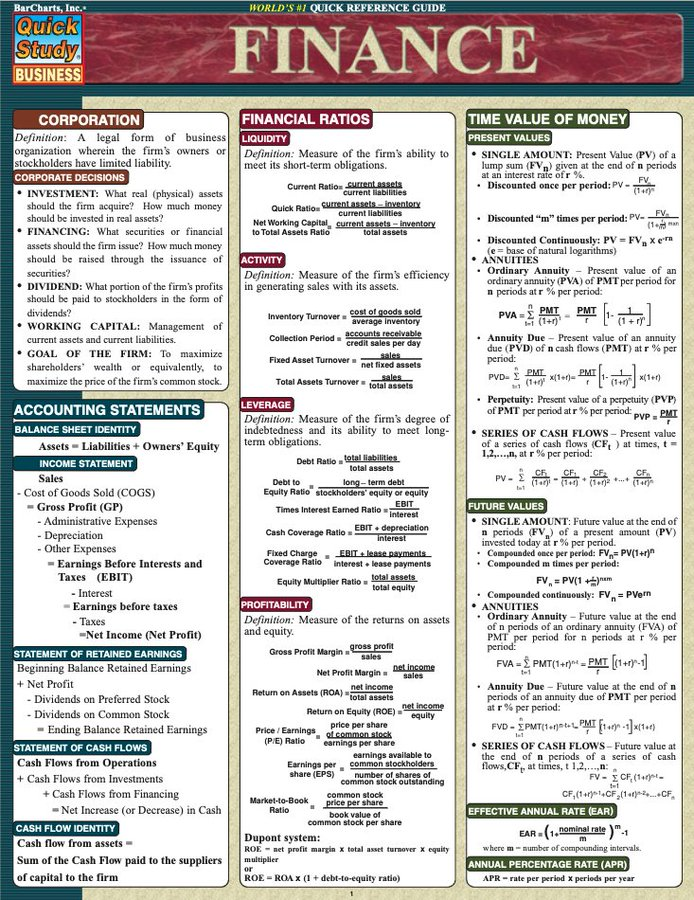
A CFA is the most prestigious degree you can earn as a professional investor:
• It costs around $4,000
• You need to study 1,000 hours
• The pass rates are less than 40%
Today I am sharing a 12-Page Cheat Sheet which is handy for every investor 👇