¡Trucazo de GitHub! Añade un 0 a cualquier URL de una Pull Request para que una IA te ayuda a revisar y entender los cambios que quieren fusionar. Sin coste. Te lo explico ↓
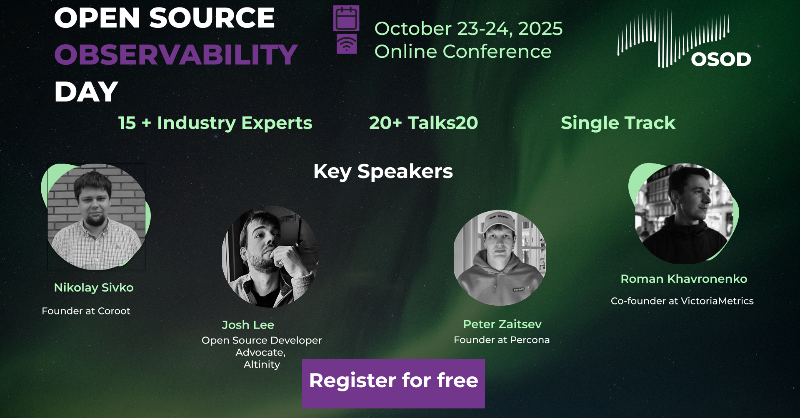
🎙️ Open Source Observability Day | Oct 23-24
Join 600+ attendees and 15+ experts for 20+ talks on the latest in open-source observability.
- Tracing, Logs, Metrics
- Cloud-Native, eBPF
- Kubernetes, OpenTelemetry, Prometheus, Clickhouse
Register for free
Mathematics, physics.
We live in a chaotic, unpredictable universe. This is a grid of 812 double pendulums, each with slightly different initial conditions for the two angles of the pendulum.
By Jonathan Nafziger, https://t.co/4GwhsBu2jl, Used with permission
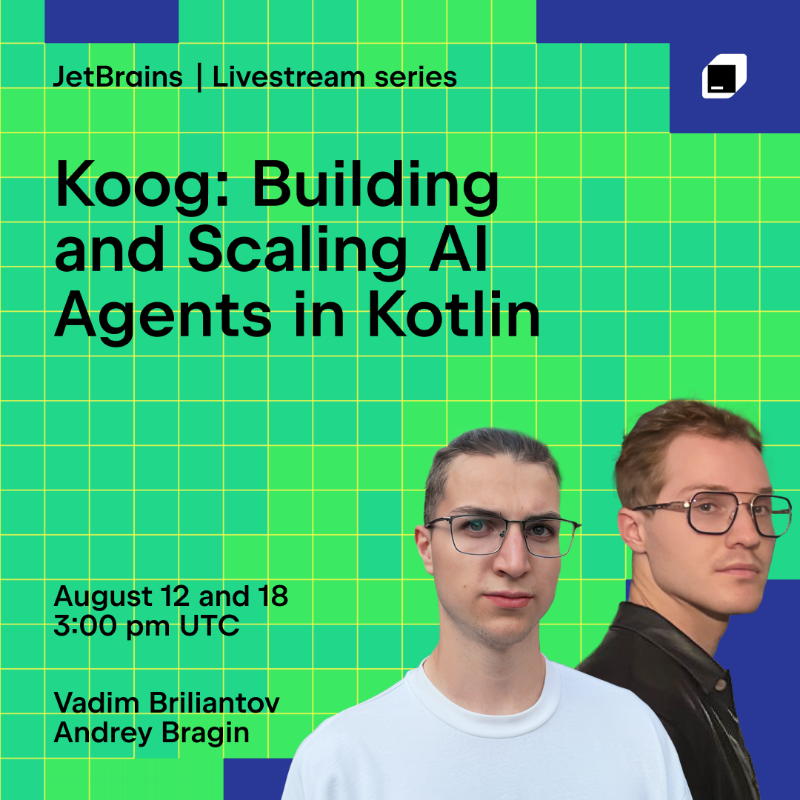
Want to build smart AI agents in Kotlin? Join our Koog livestream series on August 12 and 18! Gain hands-on insight into JetBrains’ cutting-edge open-source framework for building scalable agents in just two sessions.
Save your spot!
Huge computer science result:
A Tsinghua professor JUST discovered the fastest shortest path algorithm for graphs in 40yrs.
This improves on Turing award winner Tarjan’s O(m + nlogn) with Dijkstra’s, something every Computer Science student learns in college.
Strong vs. Eventual Consistency
🔹 Strong Consistency
- Every read reflects the most recent write.
- As soon as data is written, all future reads across all replicas will return the latest value.
Pros:
- Predictable behavior
- Great for user-facing systems like financial apps
Cons:
- Higher latency
- Less available during network partitions
🔹 Eventual Consistency
- Data will be consistent eventually, but not immediately.
- Different nodes might temporarily show different values, but they’ll converge over time.
Pros:
- Highly available
- Lower latency
- Better suited for geo-distributed systems
Cons:
- Reads can return stale data
- Complexity in handling conflicts
♻️ Repost to help others in your network.
Kubernetes Deployment Strategies need not be that complex to understand.
Here, We’ve made this to simplify the understanding.
47K+ read our TechOps Examples newsletter: https://t.co/wwkI6UOSo4
What do we cover:
DevOps, Cloud, Kubernetes, IaC, GitOps, MLOps
🔁 Consider a Repost if this is helpful
AI Agents vs. Agentic AI
→ AI Agents react to prompts; Agentic AI initiates and coordinates tasks.
→ Agentic AI includes orchestrators and meta-agents to assign and oversee sub-agents.
🧵1/n
🧠 The Core Concepts
AI Agents and Agentic AI are often confused as interchangeable, but they represent different stages of autonomy and architectural complexity.
AI Agents are single-entity systems driven by large language models (LLMs). They are designed for task-specific execution: retrieving data, calling APIs, automating customer support, filtering emails, or summarizing documents. These agents use tools and perform reasoning through prompt chaining, but operate in isolation and react only when prompted.
Agentic AI refers to systems composed of multiple interacting agents, each responsible for a sub-task. These systems include orchestration, memory sharing, role assignments, and coordination.
Instead of one model handling everything, there are planners, retrievers, and evaluators communicating to achieve a shared goal. They exhibit persistent memory, adaptive planning, and multi-agent collaboration.
🏗️ Architectural Breakdown
AI Agents: Structured as a single model using LLMs. Equipped with external tools. Operates through a cycle of perception, reasoning, and action. Executes one task at a time with limited context continuity.
Agentic AI: Uses multiple LLM-driven agents. Supports task decomposition, role-based orchestration, and contextual memory sharing. Agents communicate via queues or buffers and learn from feedback across sessions.
🔧 How AI Agents Work
An AI Agent typically receives a user prompt, chooses the correct tool (e.g., search engine, database query), gets results, and then generates an output. It loops this with internal reasoning until the task is completed. Frameworks like LangChain and AutoGPT are built on this structure.
🤖 What Agentic AI Adds
Agentic AI introduces:
- Goal decomposition: breaking tasks into subtasks handled by specialized agents.
- Orchestration: a meta-agent (like a CEO) delegates and integrates.
- Memory systems: episodic, semantic, or vector-based for long-term context.
- Dynamic adaptation: agents can replan or reassign tasks based on outcomes.
Examples include CrewAI or AutoGen pipelines, where agents draft research papers or coordinate robots.