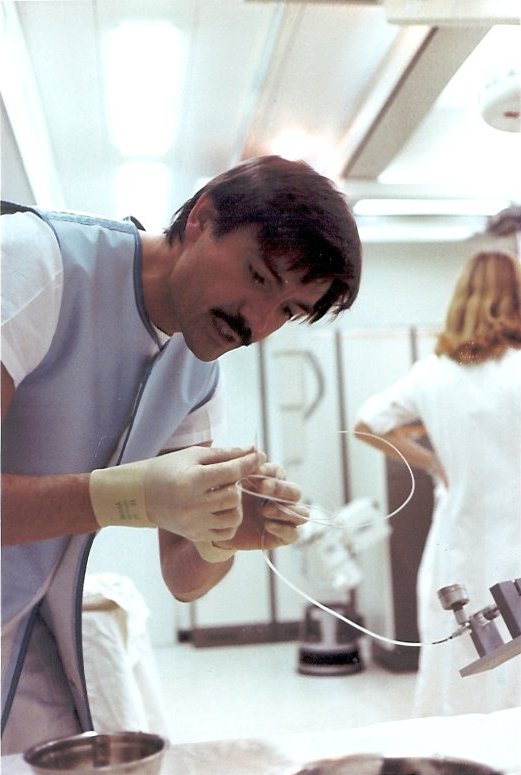
Our backgrounds shape how we care for patients. @yigitcansenolmd shares how growing up and training in a resource-limited healthcare environment taught him that limitations can become strength, requiring him to adapt to challenges, not focus on obstacles. #WeAreNeurointervention
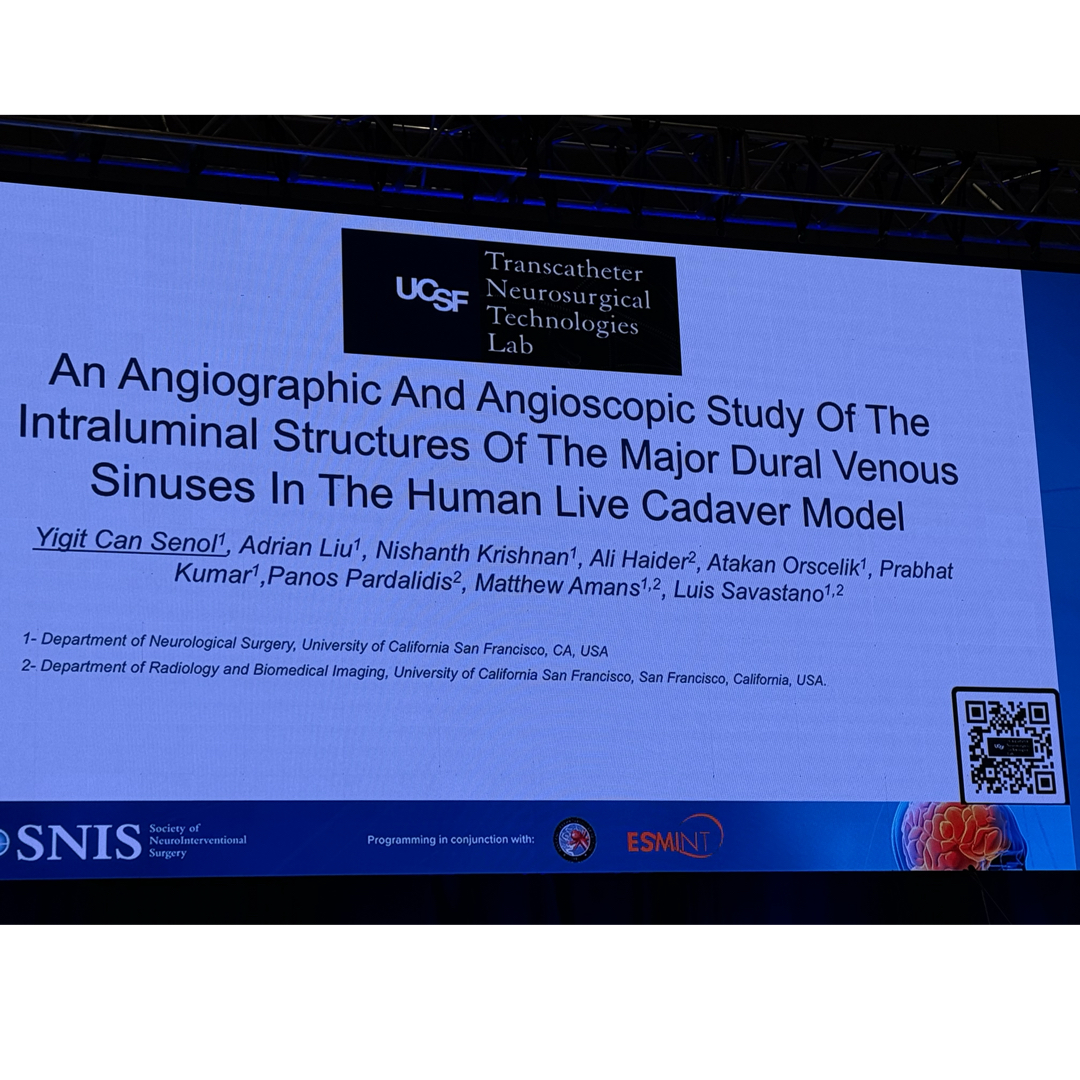
Excited to share our new paper published by @JNIS_BMJ! We used a novel angioscopic approach in a perfused human cadaveric model to visualize device-anatomy interactions in the dural venous sinuses.
The key takeaway? Veins are not arteries!
Read the full study 👇
🧠 Veins are not arteries. Direct angioscopic visualization of the dural venous sinuses revealed why arterial-derived devices often struggle in venous interventions: parallel channel navigation, stent deformation, constrained expansion, and aspiration catheter occlusion. These findings underscore the need for venous-specific technologies. Read more here: https://t.co/TXezD7nqkC
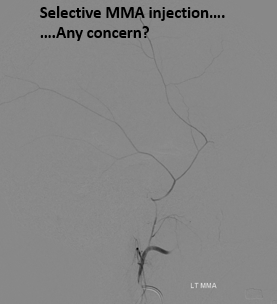
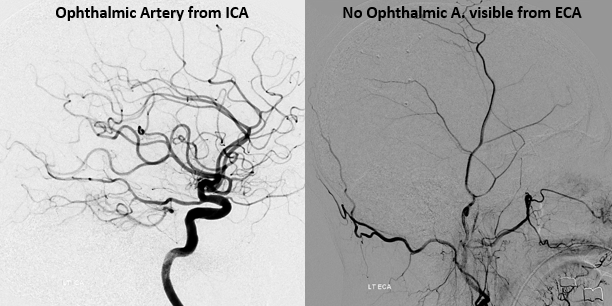
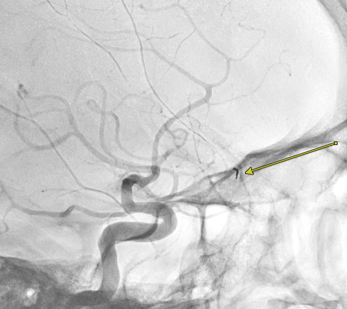
No Ophth Artery seen from the ECA injection—are we safe to embolize the MMA? 👀This case is a reminder: absence of visualization ≠ absence of connection⚠️"The danger is there even if you don't see it". Meningo-ophthalmic connection coiled 🧵, SDH embolized with glue, no issues✅
Join us in congratulating Luis Savastano, recipient of the 2025 Best Abstract Award!
SVIN proudly recognizes excellence in research that advances stroke and neurointerventional science.
Learn more: https://t.co/2JRkSW4RwV
#SVIN#SVIN25#SVINAnnualMeeting#SVINAwards #BestAbstract
"I've done it!" On 16 September 1977, Andreas Grüntzig made history: he carried out the first #angioplasty, and changed the lives of millions of patients forever.
Standing on the shoulders of the giants that came before him, his vision and determination drove an entire new field of cardiology: Interventional Cardiology
Listen to this description of his incredible journey by Jean Marco, who knew him and was also a pioneer in the field. Jean Marco carried out his first angioplasty in 1979 and was inspired by Gruntzig's example to launch a LIVE demonstration Course in 1982.
This ultimately paved the way for the first PCR Course in 1989, founded with Jean Fajadet in Toulouse, and gave birth to PCR as we know it today.
From the legs to the coronaries: How Andreas Grüntzig reached his dream 📺 🎧 https://t.co/IZxUFqLjEm
(interviewed by @kiadeb87 )
More about the history of PCR here 🔗 https://t.co/eIAE7rz8zj
#interventionalcardiology #medicalhistory #interventionalcardiologist #cathlab
🚴♂️Cycling through Europe for Neurosurgery - Berlin to Vienna | 1-4 October 2025, "The Power of Collaboration" | An EANS-supported journey
🗺️5 days - 4 stops - 1 goal: Starting from Berlin, a team of brave neurosurgeons will cycle through Europe: Dresden, Prague, Brno, and ultimately reach Vienna for the EANS2025 Congress. Covering a total distance of 700 kilometres, we aim to send a strong message: That much can be achieved through collaboration and community empowerment. Long distances can be covered, difficulties can be overcome, and amazing things can happen.
🌐Join this ambitious project, led by Dr. Rik Demaerel and supported by EANS, and embark on this once-in-a-lifetime journey, towards the neurosurgical heart of Europe - The EANS Congress!
👉Register here:
🔗https://t.co/lM7MGVkSGl
#EANS2025 #PowerOfCollaboration #NeurosurgeryJourney
Getting closer to a paradigm shift in the surgical treatment of non-acute subdural hematoma. Liu et al evaluated 69 brain CT scans to determine that the posterior MMA division accomodated a 0.027in microcatheter in >90% of cases, with perforation trajectories into high probability hematoma in nearly every case. They also shoed feasibility of aspiration of cSDH through microcatheter, which could potentially be combined with MMA embolization for subset of lesions. https://t.co/sMawWVI9UR #cSDH #mmaembolization
Is there any field of neurosurgery that endovascular intervention can't help? This series demonstrates the promise of endovascular embolization as refractory epilepsy treatment when anatomic or medical considerations preclude traditional surgery https://t.co/Tdxk2tJiin #EpilepsyTreatment #EpilepsyAwareness
One of his speeches left a deep impact on me. I knew I could do it, but I worked every day to become at best.
We lost a mentor who carried the passion for innovation that has bound me to neurosurgery with love for years. #gaziyasargil
In Memoriam: Professor M. Gazi Yaşargil (1925-2025)
The world of neurosurgery mourns the passing of Professor Mahmut Gazi Yaşargil, who died today at the age of 99, just one month before what would have been his 100th birthday celebration.
Born on July 6, 1925, in Turkey, Professor Yaşargil’s journey from a young medical student to becoming “Man of the Century 1950-1999” represents one of medicine’s most remarkable careers. Hailed as the “Neurosurgeon of the Century (1950–2000)” by the journal Neurosurgery in 1999, his innovations revolutionised surgical approaches to conditions that were previously considered inoperable.
On behalf of the European Association of Neurosurgical Societies (EANS), we remember Professor M. Gazi Yaşargil not with sadness for what we have lost, but with gratitude for what he gave to the world.
We celebrate a life that fundamentally transformed neurosurgery and improved the lives of countless patients worldwide. His vision of precise, anatomically-informed microsurgery established principles that will guide neurosurgeons for generations to come. While his physical presence is no longer with us, his intellectual legacy lives on in every microsurgical procedure performed, every life saved through techniques he pioneered, and every neurosurgeon inspired by his example of excellence.
Rest in peace.
Read the full obituary here https://t.co/ZKwBpd7FLh