Last weekend I attended the vibe coding event hosted by @zarazhangrui and demoed my little project 🧶Loopy🐶.
🧶Loopy helps pet owners design personalized crochet accessories for their pets.
- You upload a photo of your pet.
- You describe what you imagine.
- You see it come to life visually.
- Then you get step by step instructions to make it yourself.
🩷Loopy is built on a simple belief: technology should carry the complexity so people can focus on love and creativity. That, to me, is how AI empowers our lives.
I built this because I love making things for my dog.
But crochet patterns online, even on Etsy, are rarely tailored to your pet’s size or style. And modifying them can feel intimidating if you are a beginner.
🧶Loopy is still early. It is not perfect. But I decided to start building in public instead of waiting until everything feels polished.
I would really love your thoughts:
- Would this be something you would use for your pet?
- And if you crochet, or know someone who does, I would truly love to connect. I am currently tuning my own crochet pattern model and would truly welcome insights from crochet domain experts.
Thank you to Zara for creating such a warm space for builders. The energy at the event gave me the courage to share this sooner than I planned.
Demo below 🤍
🚀 Training gets the headlines. What comes after builds the product.
Fine-tuning, RLHF, evals, inference, deployment, and beyond.
Join builders from @GoogleDeepMind , @baseten , and @sgl_project to unpack what actually moves the needle.
🤝 Presented by The MBA Fund × @harvardintech × @Accel
Hope to see you there! 👋
📍 Register here: https://t.co/xmMjsR8oiN
Working with AI is challenging my reading skills. I am not designed for reading those long text outputs (design docs etc). 🤯Just give me a 1 pager with visualization 🥹
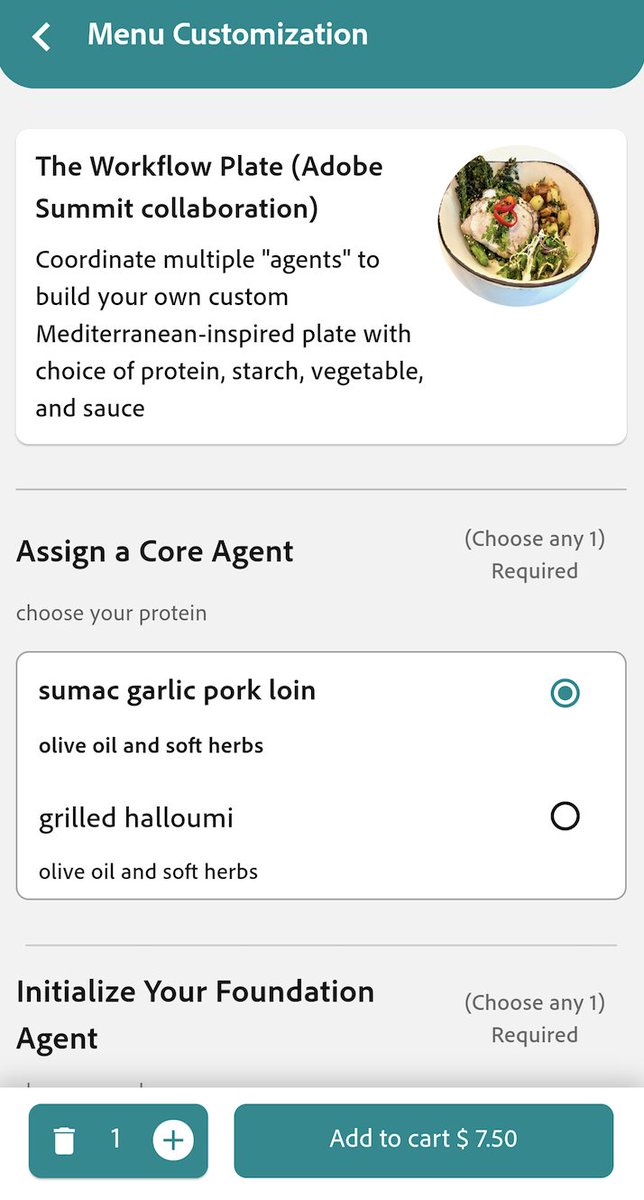
@Adobe 's cafe menu has its own "multi-agent" system now. 😎🍱
During #AdobeSummit, we got a chef special called "The Workflow Plate" where you "lego" your own lunch:
1. Assign a Core Agent (protein)
2. Initialize a Foundation Agent (base carb)
3. Add a Specialist Agent (veggie)
4. Optimize Output (sauce)
Rarely been this delighted by a menu. Kudos to the cafe staff 👏
"What's unchanged?"
Ali Golshan asked this at the #OpenClaw safety panel at #GTC. Thousands spent four days on what's new. This question hit harder than any announcement.
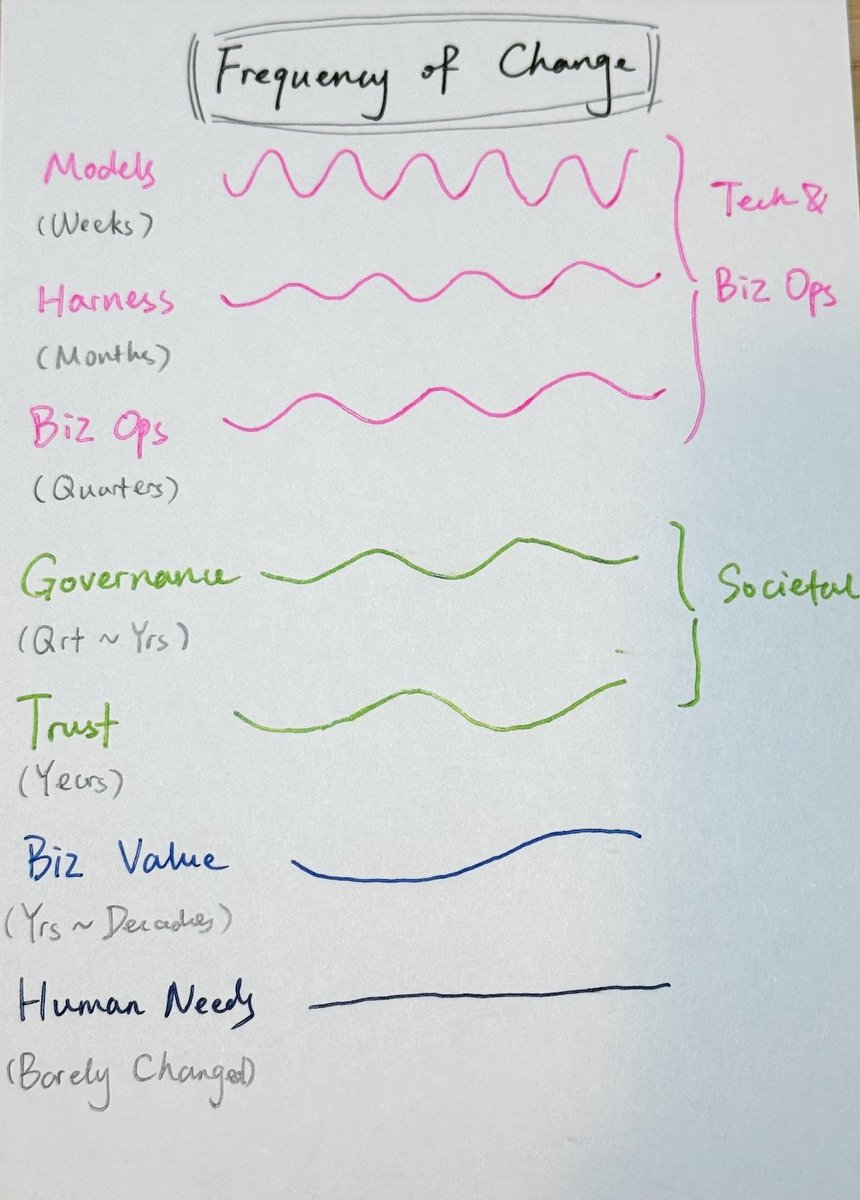
Here is my take: not everything changes at the same speed. I sketched out the frequency of change across layers, from models (weeks) to fundamental human needs (barely changed).
To me, a lot of AI anxiety comes from collapsing all these layers into one "everything is changing so fast."
Welcome any thoughts.
To be honest, a lot of my best vibe coding insights came from watching non-technical friends.
No baggage. Full of passion. Naturally comfortable. More "AI native."
Vibe coding isn't "AI writes code." It's a shared language that turns different perspectives into something real, from talking to showing.
As a coder, I've been vibe coding for a little over a year. Here are my honest notes so far:
Lesson 1: Unlearn the coder instinct.
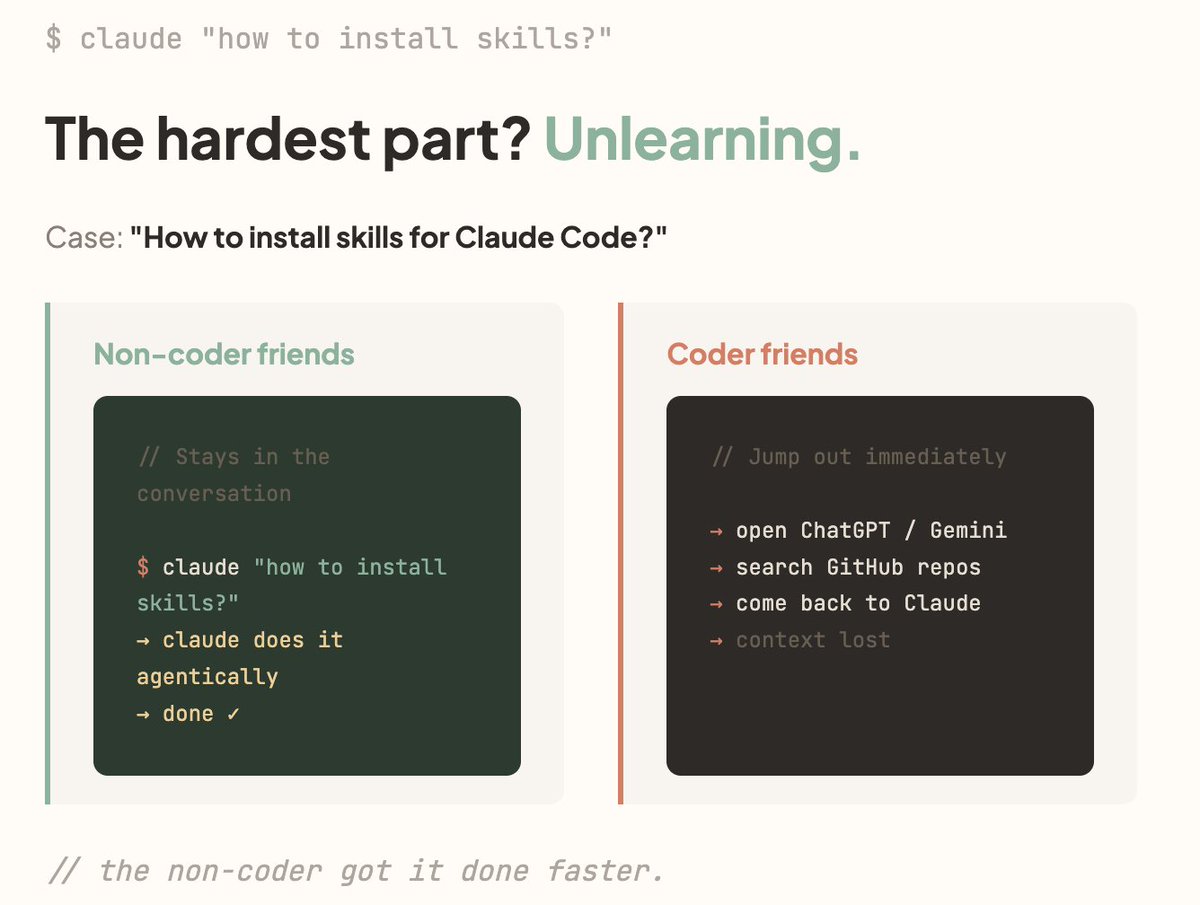
When Claude Code Skills came out, I watched my coder friends and non-coder friends react quite differently.
Coders jumped out of Claude Code immediately. Ask GPT or Gemini, search GitHub, find a package, read the docs, then come back.
Non-coders? Just asked Claude Code directly. It got things done. They moved on.
But it's not just speed.
Every time you leave the AI environment to handle something yourself, the AI loses that context. It doesn't know what you changed or why.
"I'll just do it myself" creates context breakpoints that quietly degrade everything downstream.
Lesson 2 for Coders: Vibe Coding is a collaborator, not a competitor
Honestly? I wasn't fully trying to collaborate at first. Part of me was looking for flaws. When AI messed up, I felt relief. "See, it still needs me."
That mindset made me miss chances to actually learn how to work with it.
The shift: I stopped putting it all on the AI. Started focusing on what I can sharpen:
- Was my request clear enough?
- Did I give it the right context?
- Are there patterns I can package up and reuse?
Small adjustments compound. Collaborating well in one project makes the next one start better.
Harvard in Tech (@harvardintech) is hosting an in-person AI panel in SF on April 29th, co-hosted by @Accel.
🎙️Speakers:
• Charlie Cheever (@ccheever), Co-Founder of Expo & Quora
• Will Bryk (@WilliamBryk), CEO & Co-Founder of Exa
• Florian Juengermann (@florian_jue), CTO & Co-Founder of Listen Labs
• Rachael Fuller, Tech Lead at Replit
• Zara Zhang (@zarazhangrui), AI product builder
SF Harvard alumni, come join us! Check out to join: https://t.co/COcom5WaHb
For non-Harvard guests, we also have a few seats open. Please DM for details.
Big shoutout to Jessica (@jessicafeiyali) and the Harvard in Tech volunteer team for making this happen.
@claudeai And yes, this entire thread is me doing exactly what the report said I do: challenging AI's output.
At least I'm consistent lol.
What's your experience. Do you adapt to AI, or have you found AI that adapts to you?
AI keeps telling me to adapt to it.
Shouldn't it be the other way around tho? 🤔
I used @claudeai Claude Code /insights to analyze how I collaborate with AI.
What I found surprised me. 🧵
If AI can already diagnose the friction, why stop at diagnosis? Close the loop with action.
Ask when uncertain. Remember my patterns. Adapt session over session.
Every new model resets what we've learned. That's an adaptation tax that keeps growing. Collaboration is a two-way street and it would be better if AI can take on more of the lift.
Example: Claude didn't recognize @openclaw (surprisingly or not), guessed wrong, went down the wrong path.
The report said I should have given more context.
But I didn't know it didn't know. I don't know what you don't know.
The bad: every suggestion for improvement was aimed at me.
"Provide more context." "Scope sessions smaller."
The system knew what went wrong. Then told ME to fix it.