Code was never the leverage.
Interpretation was.
Prompting, vibe-coding, tuning models, these aren’t new skills, they’re surface expressions of something deeper: the ability to instruct a system coherently.
If you can’t frame the problem, no amount of models will save you.
If you can, the tools almost don’t matter.
you need four hobbies. no more, no less.
create
bring something into existence. write, build, draw, code, cook. creation grounds you. it turns thought into reality.
consume
read books. watch films. study art. this feeds taste and perspective. good input sharpens good output.
cavort
move your body daily. walk, lift, run, dance. motion stabilizes the mind. a stagnant body distorts thinking.
commune
have a community. friends, family, peers. isolation corrodes judgment. shared reality keeps you sane.
miss one, and the system degrades.
keep all four, and life stays balanced, generative, and human.
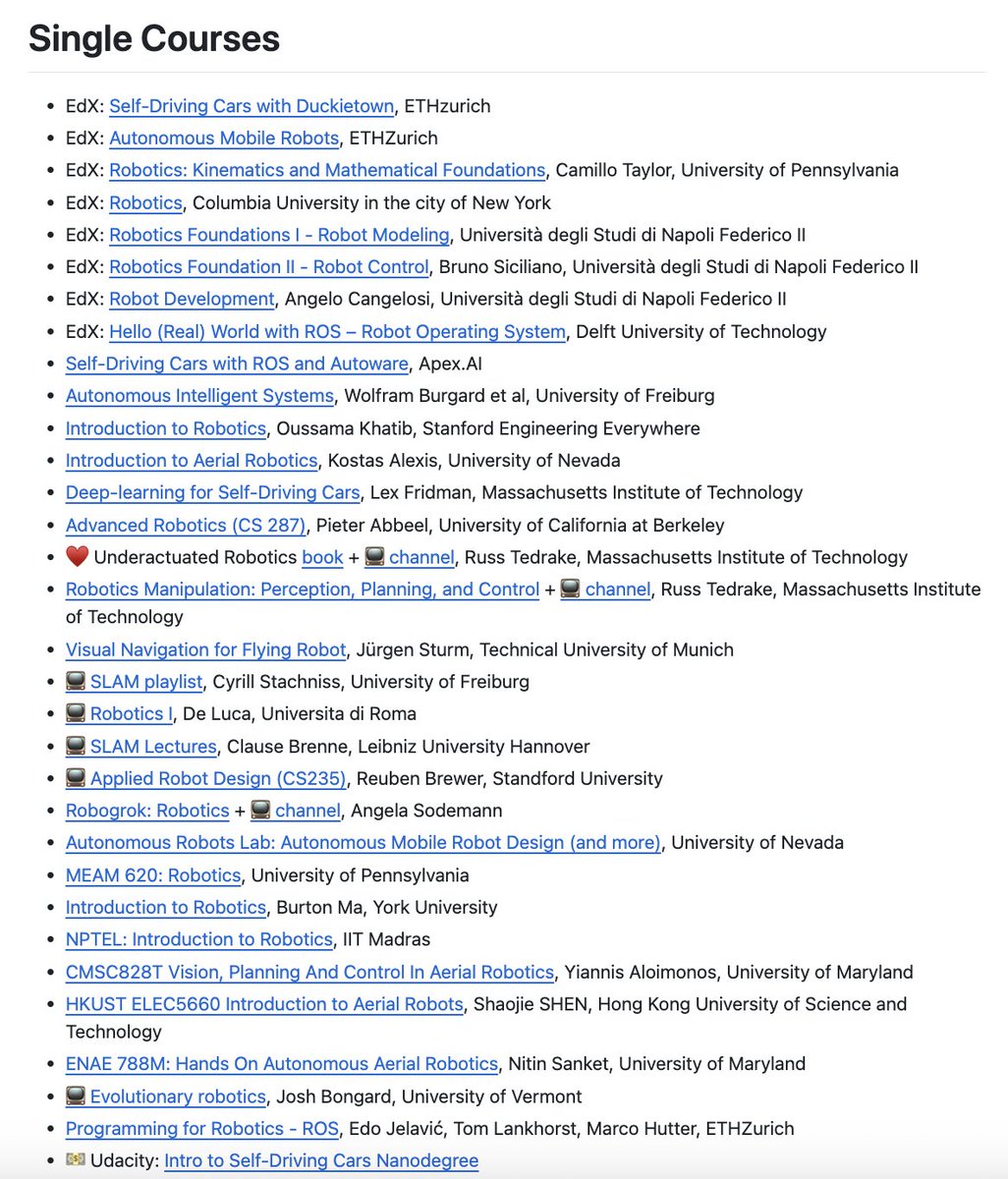
A roadmap for learning robotics!📚
🔖 If you’re self-learning robotics, this is genuinely one of the better repos to bookmark!
This GitHub repo is basically a curated learning map for anyone trying to get into robotics without drowning in random bookmarks.
SOOOOO many free courses on almost every topic related to robotics, and 3k+ ⭐️ on GitHub says it all...
If I had had this list during my studies, my career might have turned out differently.
It’s a structured collection of links to:
→ robotics courses (online + university)
→ ROS / embedded / hardware basics
→ math & algorithms that actually matter for robots
A clean, opinionated list that helps you go from “where do I start?” to a real learning pipeline.
And it’s open-source, so you can contribute resources too.
Try it out here: https://t.co/qUME6mJCzZ
~~
♻️ Join the weekly robotics newsletter, and never miss any news → https://t.co/GoA3ZuwoPB
I'm Boris and I created Claude Code. Lots of people have asked how I use Claude Code, so I wanted to show off my setup a bit.
My setup might be surprisingly vanilla! Claude Code works great out of the box, so I personally don't customize it much. There is no one correct way to use Claude Code: we intentionally build it in a way that you can use it, customize it, and hack it however you like. Each person on the Claude Code team uses it very differently.
So, here goes.
Agency > Intelligence
I had this intuitively wrong for decades, I think due to a pervasive cultural veneration of intelligence, various entertainment/media, obsession with IQ etc. Agency is significantly more powerful and significantly more scarce. Are you hiring for agency? Are we educating for agency? Are you acting as if you had 10X agency?
Grok explanation is ~close:
“Agency, as a personality trait, refers to an individual's capacity to take initiative, make decisions, and exert control over their actions and environment. It’s about being proactive rather than reactive—someone with high agency doesn’t just let life happen to them; they shape it. Think of it as a blend of self-efficacy, determination, and a sense of ownership over one’s path.
People with strong agency tend to set goals and pursue them with confidence, even in the face of obstacles. They’re the type to say, “I’ll figure it out,” and then actually do it. On the flip side, someone low in agency might feel more like a passenger in their own life, waiting for external forces—like luck, other people, or circumstances—to dictate what happens next.
It’s not quite the same as assertiveness or ambition, though it can overlap. Agency is quieter, more internal—it’s the belief that you *can* act, paired with the will to follow through. Psychologists often tie it to concepts like locus of control: high-agency folks lean toward an internal locus, feeling they steer their fate, while low-agency folks might lean external, seeing life as something that happens *to* them.”
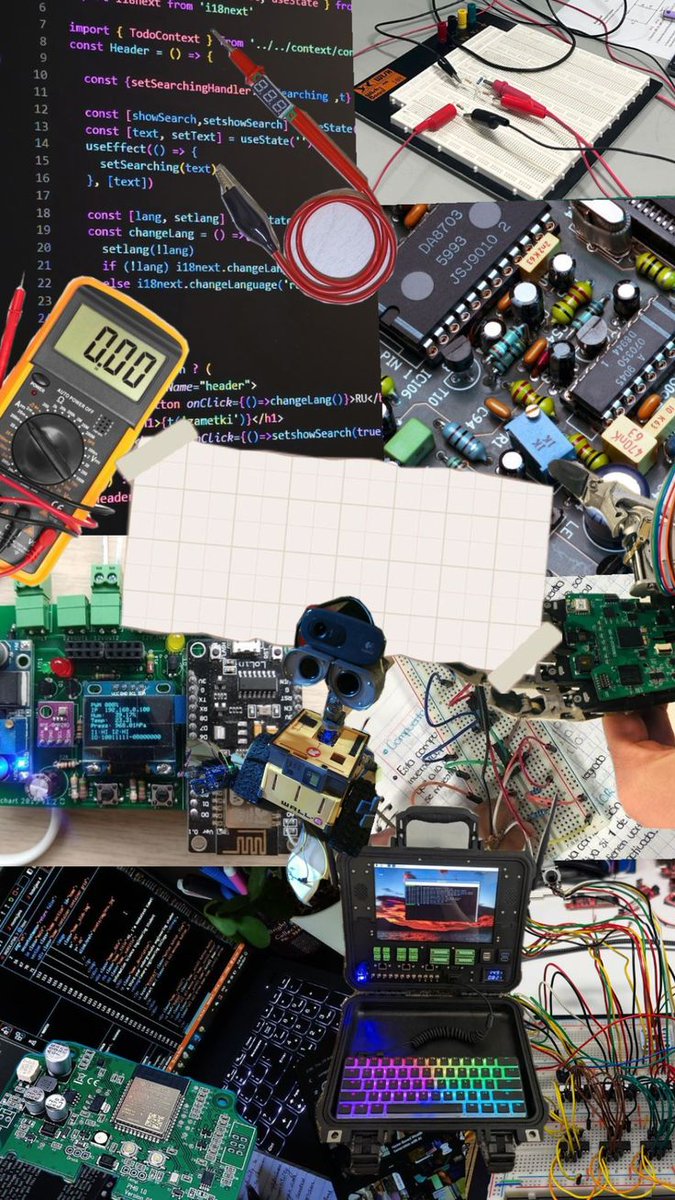
if you’re in software, pivot to electronics.
because the next decade isn’t about writing apps. it’s about wiring intelligence into matter.
software is saturated.
electronics is starving for talent.
chips, sensors, power electronics, motor drivers, RF, embedded systems, PCB design;
these are the foundations of every real-world intelligent machine being built right now.
the future is physical:
robots, drones, autonomous vehicles, industrial automation, medical devices, energy systems, wearables, smart infrastructure.
every one of them needs people who understand electrons, not just abstractions.
software gives you leverage.
electronics gives you capability.
combine both and you become unstoppable.
learn circuits.
learn embedded.
learn signal flow.
learn microcontrollers.
learn power systems.
learn how to put intelligence directly into hardware.
the world is reindustrializing.
there’s a new frontier opening.
don’t miss the wave.
how to study and learn really difficult subjects:
1. don’t panic. hard just means dense. it’s not impossible, it’s just packed. unwrap it slowly.
2. get a map before diving in. watch an overview video, read the table of contents, or skim the wikipedia page. you need context first.
3. use multiple sources. one book will confuse you, two will clarify, three will enlighten.
4. build intuition, not memory. visualize it. simulate it. code it. teach it to a friend or a wall.
5. tolerate confusion. you’ll feel dumb 90% of the time; that’s the price of learning something that rewires your brain.
6. connect it to reality. every abstract thing has a real-world analog. find it. relate it. ground it.
7. revisit the same topic after a week. mastery is not about reading once; it’s about returning after your brain has “chewed” on it.
8. don’t romanticize genius. smart people aren’t born knowing it. they just survived longer in the confusion phase.
the truth is; learning hard stuff isn’t about intelligence.
it’s about endurance, humility, and curiosity.
you stay long enough in the fog until it clears.
I like quiet people. People who are simple, read books, can watch a 2 hour documentary about bees, are crazy smart, but still stay low-key and private.
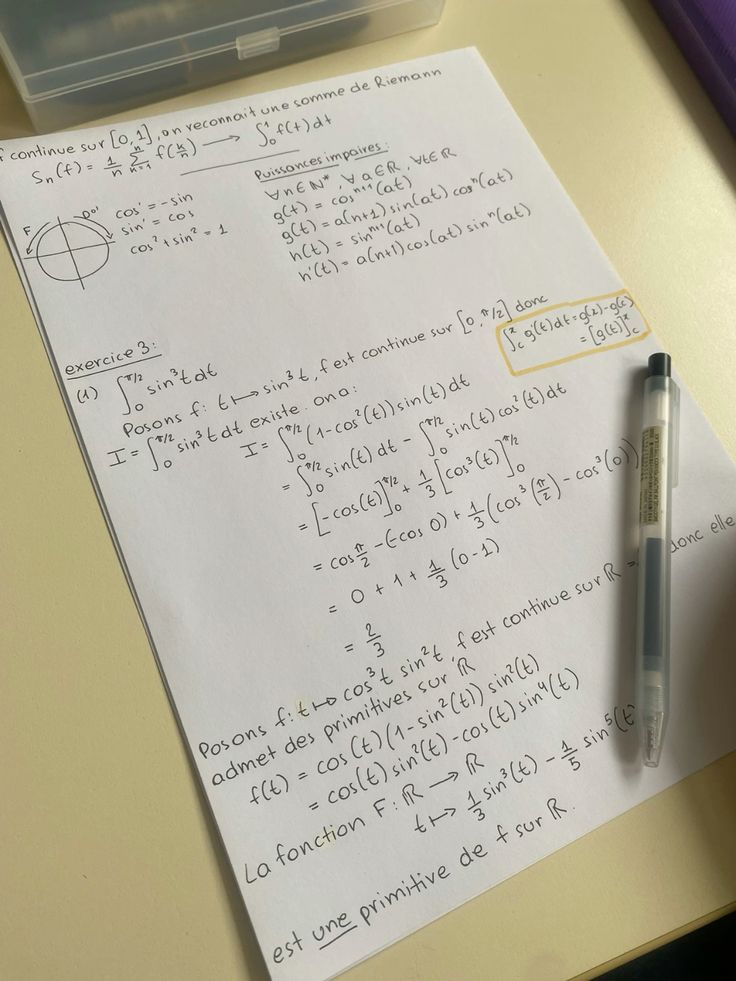
study math.
not for grades.
not for exams.
but because math rewires how you think.
it teaches you precision in chaos.
how to see structure where others see noise.
how to break a giant, messy problem into clean, solvable chunks.
every great engineer, physicist, and builder; whether they admit it or not; stands on mathematical intuition.
math sharpens your reasoning.
it builds pattern recognition.
it gives you the language of reality.
if you can think mathematically,
you can think about anything.
Google just build the craziest AI photo editor ever
Nano Banana in Gemini is wild
People are already dropping insane use cases
10 wild examples :
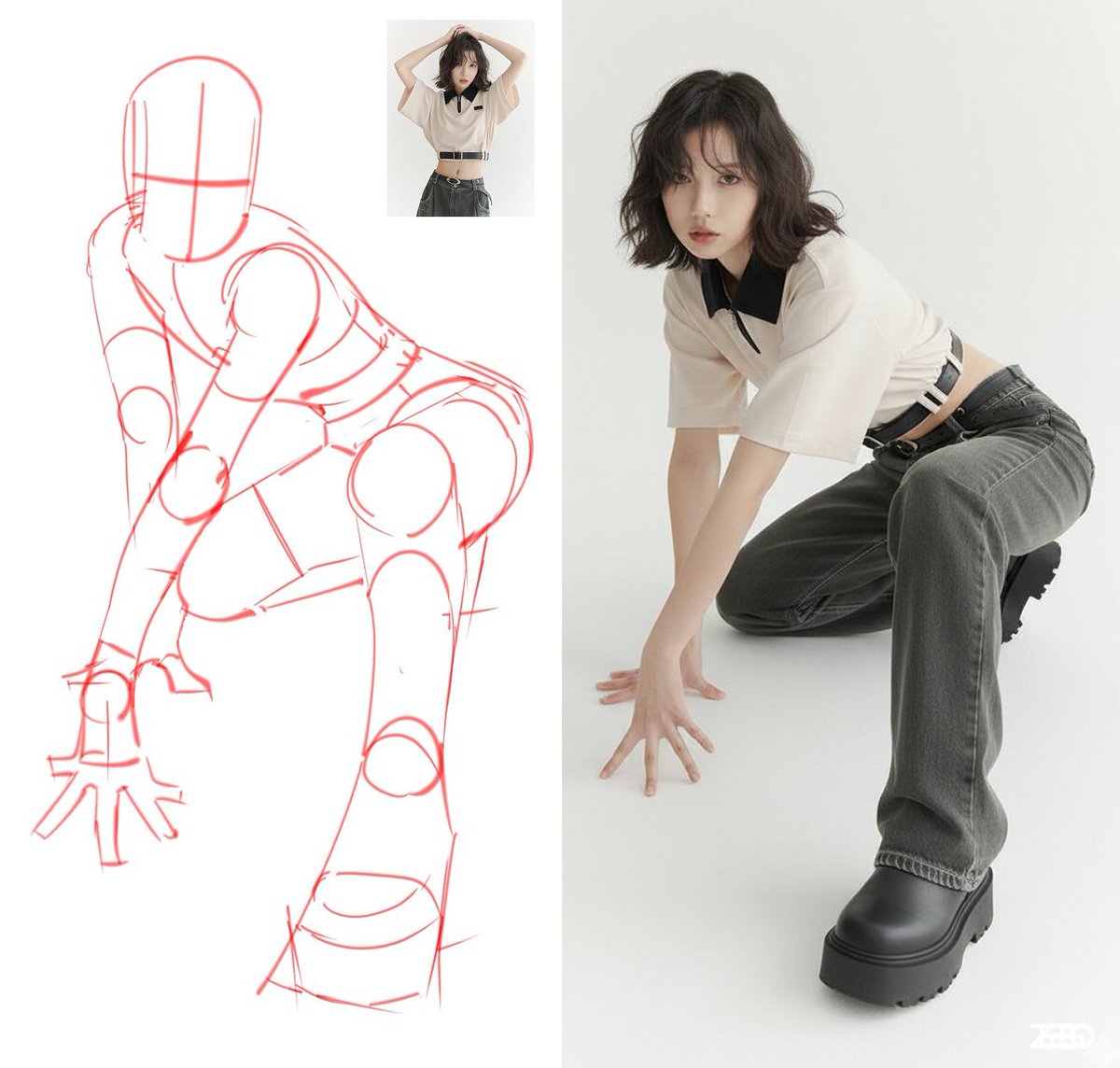
1. Model pose like the sketch