Senior Sustainable Development and Behavioral Scientist at The Nature Conservancy. Conservation | Human Well-being | Climate Change | Sustainable Development
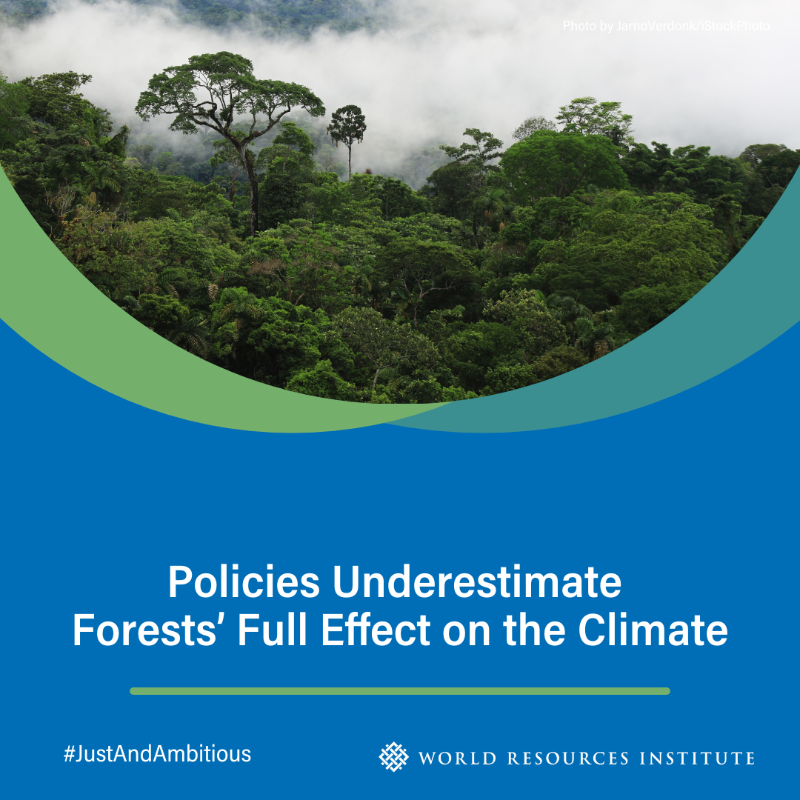
Forests aren't just about carbon. Failing to account for the non-carbon effects of forests leads to a systematic undervaluing of climate services and results in inequitable allocation of responsibilities & resources for #ClimateAction.
Learn more: https://t.co/33QFLIWNLd
#COP27
Great piece by @JanePalmerComms in BioScience (https://t.co/c5BCKek8Bn) on our recent work related to the impacts of rising temperatures associated with tropical #deforestation and climate change.
@DukeEnvironment@DukeNews
Scaling tree cover restoration that prioritizes smallholder rights and benefits should be a central concern for those interested in NCS/NBS.
Read why in our recent article.
https://t.co/6yuKi7Udgq
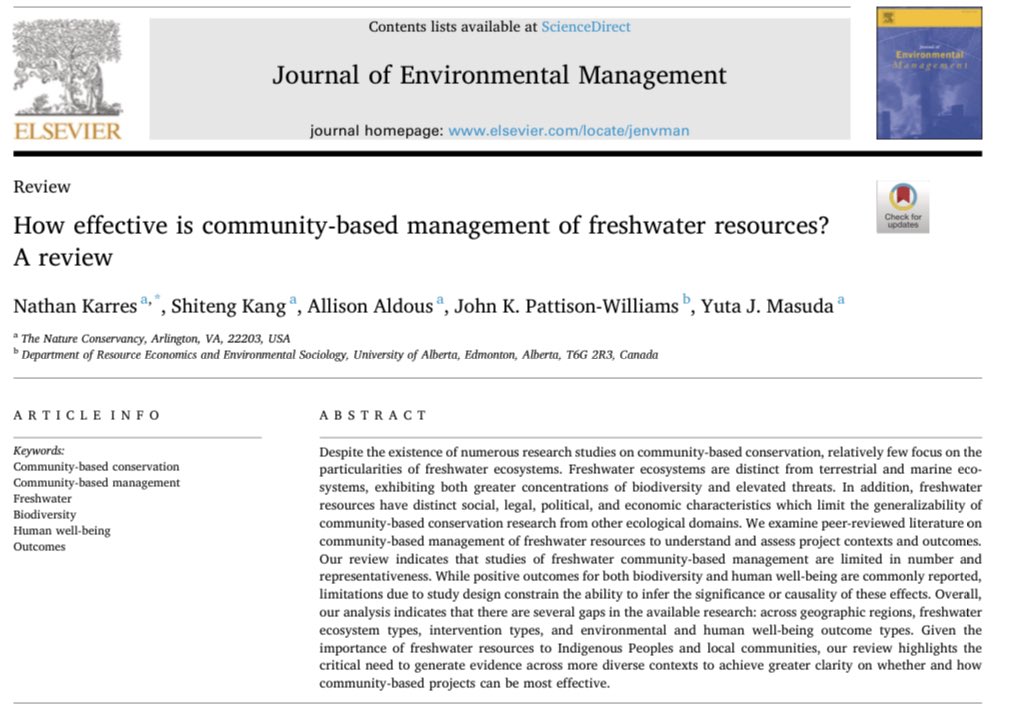
•These projects have significant relevance to freshwater biodiversity, but such outcomes are often not explicitly studied. Considerable work is needed to understand how CBC can best support IPLCs at the forefront of freshwater biodiversity threats.
Very excited to share a new publication on freshwater community-based conservation programs out now in JEM, led by Nathan Karres @nature_org https://t.co/OwXQ9eZFk8
Our review finds:
•While the available research broadly represents many geographies and project types, there are also many notable gaps.
•there are positive effects for different components of environmental and human well-being outcomes, but generally weak evidence.
Want to work at the intersection of conservation science practice? @nature_org is hiring an Implementation Social Scientist to study and use lessons from social science to improve conservation outcomes and equity!
Apply here: https://t.co/EqVSB8tRLL
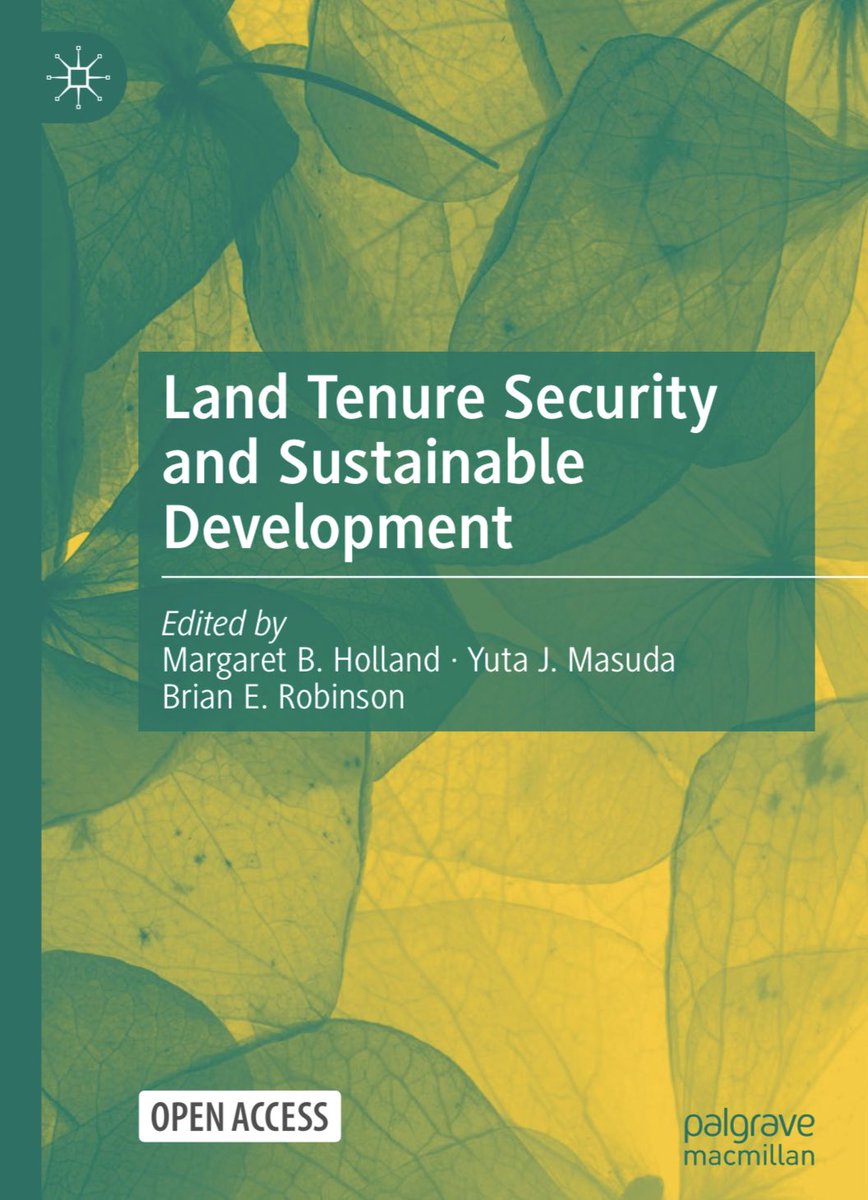
Really excited to share that our book (with so many amazing coauthors!) on tenure security and sustainable development is out and open access! The book provides both foundational and topical chapters of tenure security. https://t.co/MuRZ3slYDO
The next paper in our study on environmental discourse on Twitter using cutting-edge methods. Study led by @harpactes provides foundational insights for enviro advocates seeking to reach environmentally-minded Twitter users!
Thanks to @jamesNESW for a fabulous write-up of our project describing six environmental personas on Twitter. You can read the full article (free, open access) here: https://t.co/hdeyzcQZrD
Thanks to @marilynjthomsen at @pomonacollege for this fantastic description of our project analyzing environmental personas on Twitter: https://t.co/Jiif264CDj
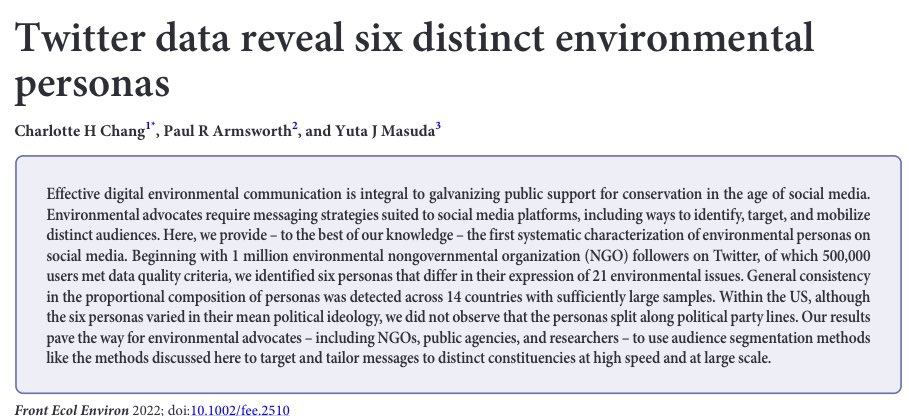
Excited to share a cutting edge project that examines and identifies “personas”/groups of Twitter users that are environmentally minded and follow eNGOs etc. We found six types of personas from data on >500k users. https://t.co/qERXREG43s
Have you ever wondered if there are distinct ways that people talk about the environment online? Do these views differ based on political ideology? I looked at ~1.3 billion tweets to find out. A thread 🧵.
Awesome work by @savymack leading a diverse team of experts from conservation, pub health, fire, and other areas to outline history of wildfire, rx fires, and it’s impacts on nature and nature. Figuring out how these groups can work together is a critical advance!
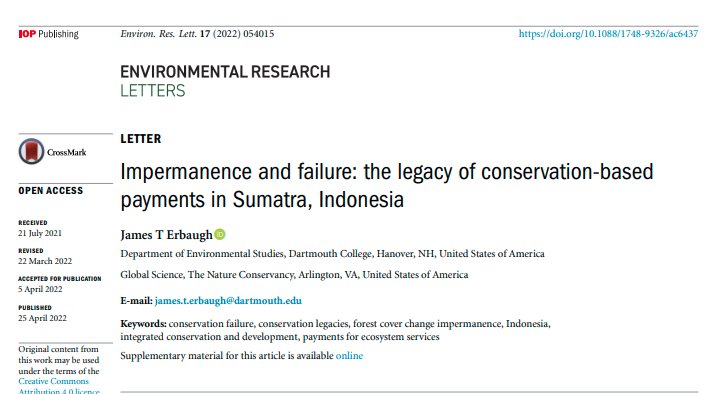
Impacts from conservation projects are not static. The impermanence of outcomes applies equally to conservation projects that, when they end, fail to generate significant change.
https://t.co/42U4PFKr6g
Does gender equality lead to more pro social outcomes? An important q for procedural equity in commons mgmt. Checkout our new paper in @WorldDevJournal where we conducted a field experiment by randomizing participants to single and mixed gender groups.
Ultimately, we believe it is critically important to continue testing assumptions to be able to design programs that truly integrate and elevate womens empowerment in conservation and development.