Speaker. Created one of the first search engine co on the internet (before Google was IT). Built & sold 2 software co's & 1 hedge fund. Full stack AI and dev
Educational content on grid trading mechanics, not financial advice. Grid trading involves risk, including potential loss of capital. Crypto is highly volatile — DYOR.
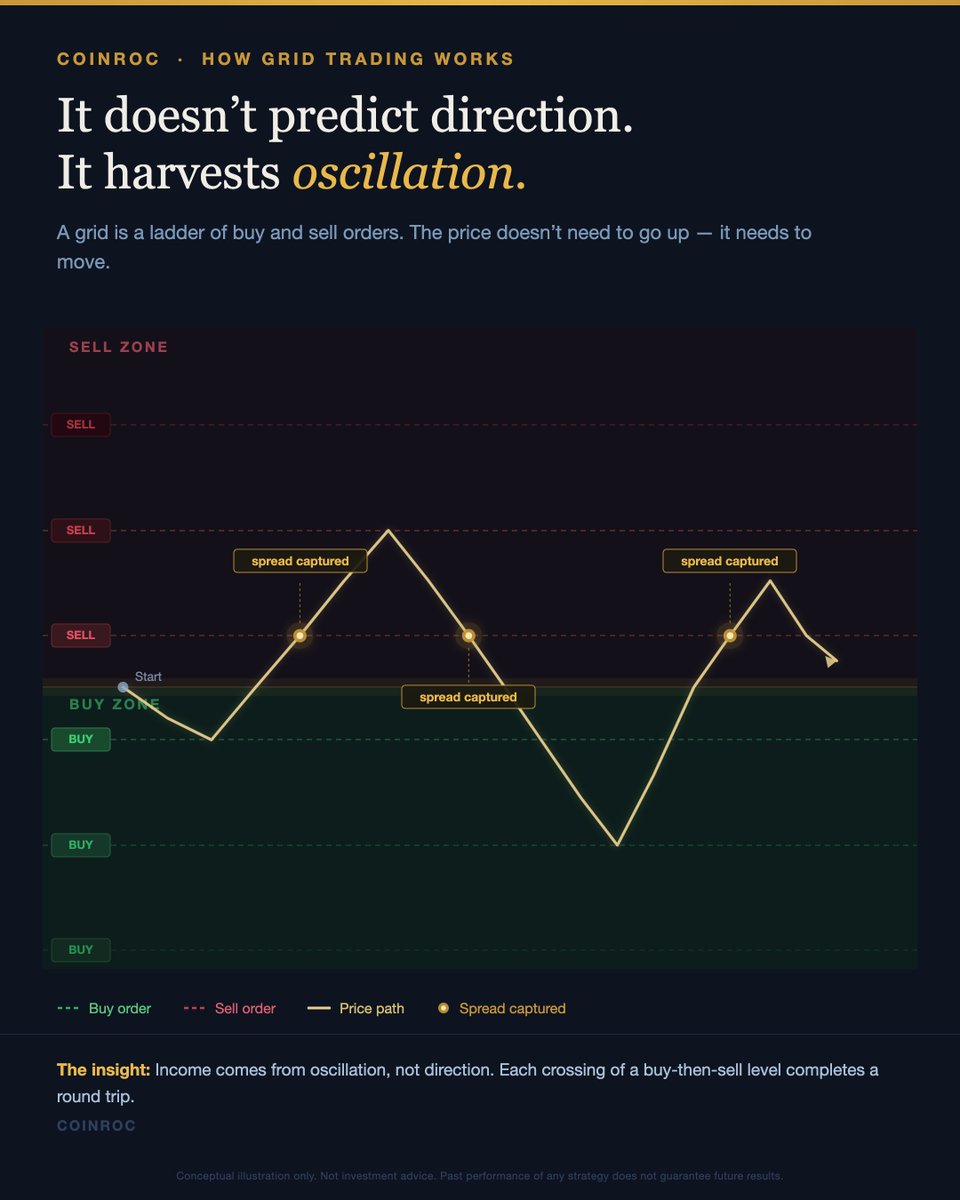
A grid bot doesn't predict anything.
It just waits.
Buy orders sit below the current price. Sell orders sit above it. When price touches a level, the order fills — automatically.
That's the entire mechanic. How it actually works: 🧵
We built a visual guide walking through all of it — how the grid is built, the round-trip engine, the sideways sweet spot, and the grid-walk risk:
https://t.co/Yp7N9NesBQ
Full explainer on the 4 signals, the mechanism, and the walk-forward simulation research:
https://t.co/gBdYljr3OF
Educational content. Simulated results. Not investment advice. Full disclosures at the link.
RXI is not a forecast. It reads current market structure — whether the market is oscillating (grid-friendly) or trending (grid-hostile) — and applies deterministic rules.
It does not predict the next bar. That distinction matters for accuracy and regulatory clarity.
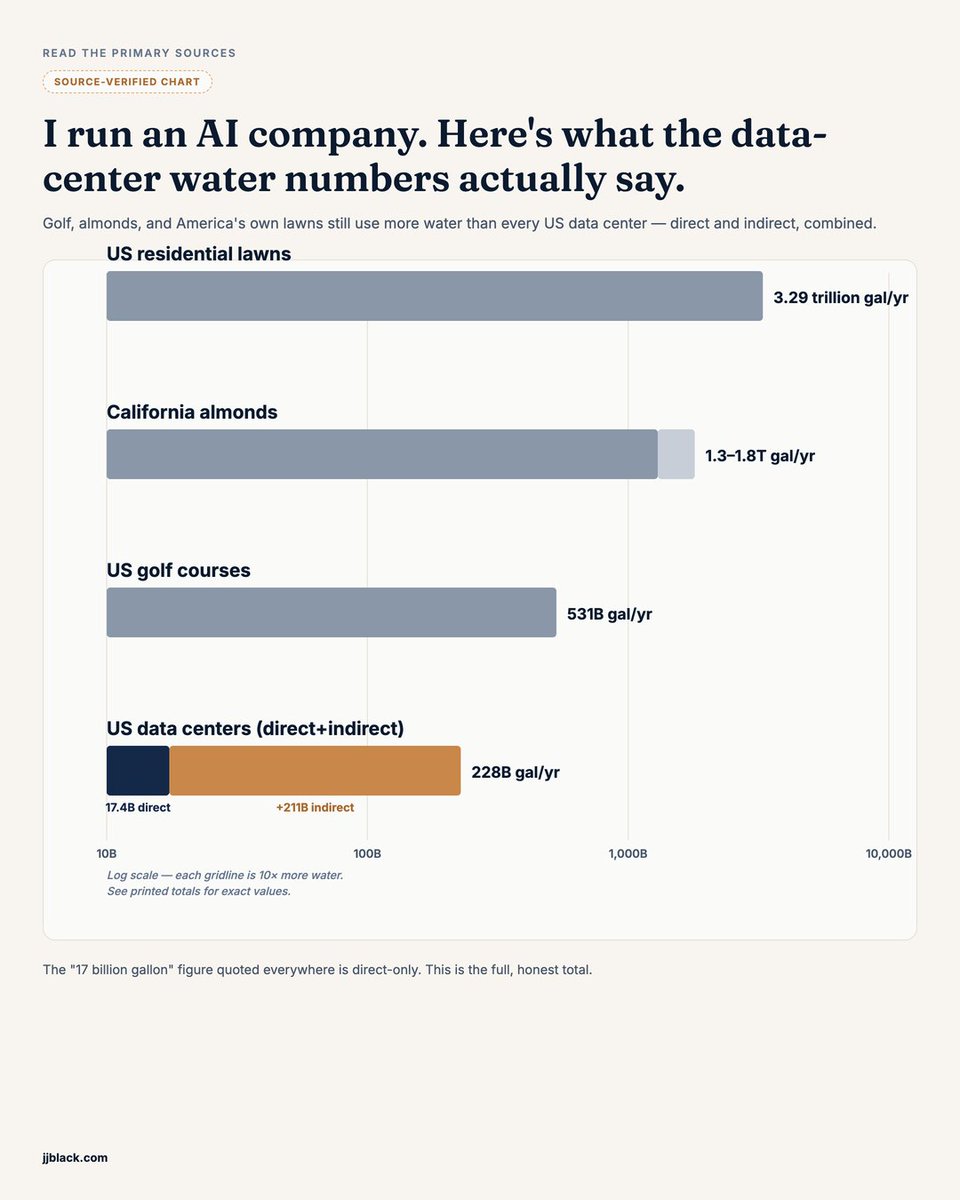
Bottom line: the national numbers don't support panic. The local ones, in specific drought-stressed places, deserve real scrutiny. Full breakdown with sources, on LinkedIn:https://t.co/VUFmExZTvm
We build AI infrastructure and own a crypto product, so we have every incentive to wave off the data-center water panic. Instead we read the primary studies. Here's what held up, and what didn't:
This isn't "nothing to see here." A Georgia utility found an operator drawing 29M+ gallons through an unbilled meter during a statewide drought. Tucson rejected a hyperscale project in 2025. If you live next to one in a dry county, your complaint is local, and it's earned.