PhD Students - Here is an example of a good introduction.
A good introduction should have the following 6 parts
1. Topic introduction
2. Topic background
3. Research problem
4. Research objective
5. Research methodology
6. Paper outline
Systematic Literature Review Vs. Meta-Analysis
𝐖𝐡𝐚𝐭
𝑆𝑦𝑠𝑡𝑒𝑚𝑎𝑡𝑖𝑐 𝐿𝑖𝑡𝑒𝑟𝑎𝑡𝑢𝑟𝑒 𝑅𝑒𝑣𝑖𝑒𝑤
↳ A qualitative process to assess existing literature
𝑀𝑒𝑡𝑎-𝐴𝑛𝑎𝑙𝑦𝑠𝑖𝑠
↳ A quantitative process to assess existing literature
𝐖𝐡𝐲
𝑆𝑦𝑠𝑡𝑒𝑚𝑎𝑡𝑖𝑐 𝐿𝑖𝑡𝑒𝑟𝑎𝑡𝑢𝑟𝑒 𝑅𝑒𝑣𝑖𝑒𝑤
↳ To provide gaps for future research
𝑀𝑒𝑡𝑎-𝐴𝑛𝑎𝑙𝑦𝑠𝑖𝑠
↳ To provide statistically precise conclusions
𝐖𝐡𝐞𝐧
𝑆𝑦𝑠𝑡𝑒𝑚𝑎𝑡𝑖𝑐 𝐿𝑖𝑡𝑒𝑟𝑎𝑡𝑢𝑟𝑒 𝑅𝑒𝑣𝑖𝑒𝑤
↳ To ideate the current knowledge
𝑀𝑒𝑡𝑎-𝐴𝑛𝑎𝑙𝑦𝑠𝑖𝑠
↳ To provide a picture of relationships
𝐖𝐡𝐞𝐫𝐞
𝑆𝑦𝑠𝑡𝑒𝑚𝑎𝑡𝑖𝑐 𝐿𝑖𝑡𝑒𝑟𝑎𝑡𝑢𝑟𝑒 𝑅𝑒𝑣𝑖𝑒𝑤
↳ All relevant studies and their interpretations
𝑀𝑒𝑡𝑎-𝐴𝑛𝑎𝑙𝑦𝑠𝑖𝑠
↳ An empirical examination through statistical procedures
𝐇𝐨𝐰
𝑆𝑦𝑠𝑡𝑒𝑚𝑎𝑡𝑖𝑐 𝐿𝑖𝑡𝑒𝑟𝑎𝑡𝑢𝑟𝑒 𝑅𝑒𝑣𝑖𝑒𝑤
↳ Using guidelines for systematic literature reviews
𝑀𝑒𝑡𝑎-𝐴𝑛𝑎𝑙𝑦𝑠𝑖𝑠
↳ Using main model and moderator analysis.
One thing is common among both SLR and Meta-Analysis
Both require extraction of data from papers
This is task is very time-consuming
Now, you can automate this with 𝐂𝐡𝐚𝐭𝐏𝐃𝐅
This is a feature offered by @teampaperpal, which
➟ Extracts data from papers
➟ All key pointers and summary
➟ Fetch critical information with source
➟ Insert data into tables
➟ You can download the data as CSV
Once downloaded, you can analyze the data
Try it here: https://t.co/JPVigW1krB
Anything you'd like to add?
Writing review papers that get cited 1000+ times?
Dead simple, once you know the formula.
Don't dive straight into literature with no clear protocol.
Here's the 6-step framework that actually works:
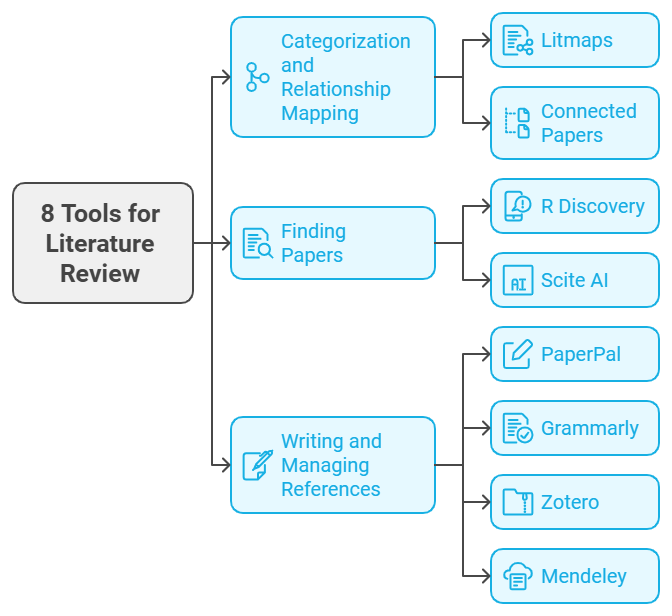
PhD Students - 8 tools to help you in your literature review.
Every PhD student needs to conduct a literature review.
A solid literature review takes at least 2-3 months. Using tools, you can reduce this time by 50%.
𝐂𝐚𝐭𝐞𝐠𝐨𝐫𝐢𝐳𝐚𝐭𝐢𝐨𝐧 𝐚𝐧𝐝 𝐫𝐞𝐥𝐚𝐭𝐢𝐨𝐧𝐬𝐡𝐢𝐩 𝐚𝐦𝐨𝐧𝐠 𝐩𝐚𝐩𝐞𝐫𝐬
1. @LitmapsApp
- Helps you find relevant papers from just a single paper
- Helps you to categorize the papers
- Works with your reference managers (Zotero, etc.)
- Visualize the relationship between papers.
- Share papers via reference manager.
- Get alerts about new papers to add to your literature review.
Link: https://t.co/djhByzyg7M
2. @ConnectedPapers
- Figure out the forward and backward links to a research paper.
- Quantitatively shows the relevance index of papers.
- Visualize the relations between the papers in your literature review.
Link: https://t.co/6EWn5B0Lc2
𝐅𝐢𝐧𝐝𝐢𝐧𝐠 𝐩𝐚𝐩𝐞𝐫𝐬 𝐟𝐨𝐫 𝐲𝐨𝐮𝐫 𝐥𝐢𝐭𝐞𝐫𝐚𝐭𝐮𝐫𝐞 𝐫𝐞𝐯𝐢𝐞𝐰
3. @R_Discovery
- Notifies you as soon as a relevant paper is published.
- Audio stream paper for you to listen to instead of reading.
- Translate papers automatically to your native language.
- Offers automatic integration with Zotero and Mendeley.
Link: https://t.co/1WiEBSyShJ
4. @Scite
- Shows you the most relevant papers to a seed paper.
- Determines for you whether other papers agree/disagree to a paper.
- Helps you understand the holistic work done by a lab/organization.
- Notifies you about latest papers published in your research area.
Link: https://t.co/anbwtUpw6w
𝐋𝐢𝐭𝐞𝐫𝐚𝐭𝐮𝐫𝐞 𝐑𝐞𝐯𝐢𝐞𝐰 𝐖𝐫𝐢𝐭𝐢𝐧𝐠
5. @teampaperpal
- Specifically designed for assisting in scientific writing
- Rephrase confusing sentences
- Offers real-time suggestions for smooth writing
- Simple and very easy to use
Link: https://t.co/QesC1s57yz
6. 𝐆𝐫𝐚𝐦𝐦𝐚𝐫𝐥𝐲
- Ensures your writing is polished
- Clean up tangled and hard-to-read sentences.
𝐑𝐞𝐟𝐞𝐫𝐞𝐧𝐜𝐞𝐬 𝐦𝐚𝐧𝐚𝐠𝐞𝐦𝐞𝐧𝐭 𝐟𝐨𝐫 𝐲𝐨𝐮𝐫 𝐥𝐢𝐭𝐞𝐫𝐚𝐭𝐮𝐫𝐞 𝐫𝐞𝐯𝐢𝐞𝐰
𝟕. @zotero
- Offers automatic citation capture from web pages, PDFS, and other sources.
- Organize and categorize references effortlessly
𝟖. @mendeley_com
- Integrates very easily with MS word
- Enables you to collaborate and share references with research teams.