Orwell's most brilliant observation in "Nineteen Eighty-Four" was that reducing a person's vocabulary also reduces his capacity to think.
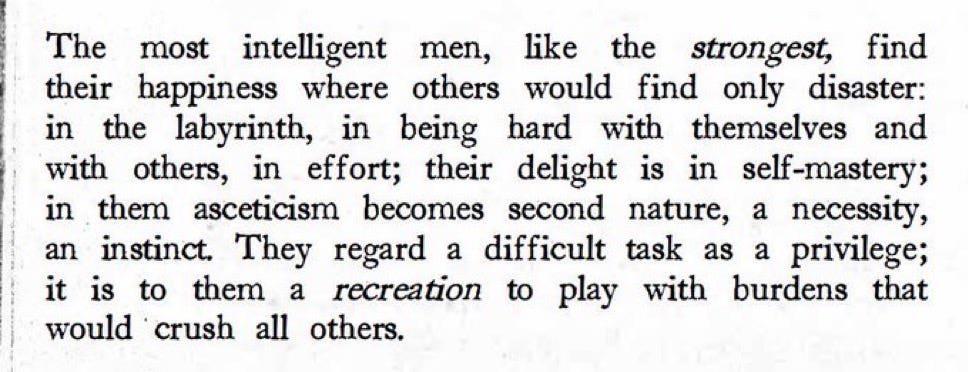
Reading old or difficult literature will unleash the full potential of your mind.
Great video 👇
Governments don’t create wealth, they tax the wealth that Australians create. Long-term prosperity comes from encouraging investment, entrepreneurship and productivity, not making it harder for ordinary Australians to build assets. If we keep reducing the incentives for mum and dad investors to save for retirement, we risk leaving more Australians with fewer private assets and greater reliance on the taxpayer in retirement. That’s not a recipe for a stronger or more self-reliant Australia.
This is so incredibly good:
Economist Joseph Schumpeter warned that capitalism weakens when prosperous societies become so comfortable they forget where prosperity came from – and begin resenting the entrepreneurial class that created it.
A country might survive high taxes for periods of time. What becomes dangerous is something deeper: the moral suspicion of ambition itself. The creeping belief that commercial success is inherently exploitative, that profit is morally dubious, or that founders should quietly accept punishment for surviving years of uncertainty.
Prime Minister Anthony Albanese and Treasurer Jim Chalmers should think carefully about the signals embedded in this budget. Tax policy communicates values. This budget signals that founders are not viewed as partners in national prosperity, but simply reservoirs of revenue whose success is viewed with suspicion...
Civilisation advances because some people are willing to bet on tomorrow before tomorrow exists. Australia should be doing everything possible to encourage those people to build businesses here. Because once a society begins treating ambition as something suspect rather than admirable, it eventually discovers that no nation can remain prosperous after teaching its most ambitious people that they are unwelcome.
https://t.co/nxmwyx9aZc
In 458 BC, Rome was on the brink of collapse.
An invading army had trapped the Roman consul and his legion in a mountain pass. Panic spread through the city. The Senate did the only thing they could think of:
They sent messengers to find a 60-year-old farmer plowing his field.
His name was Lucius Quinctius Cincinnatus. He had once been a senator, then lost his fortune paying his son's bail. Now he worked his own four-acre plot just to feed his family.
When the Senate's envoys arrived, they found him sweating behind a plow. They asked him to put on his toga so they could deliver an official message.
The message: Rome was making him dictator. Absolute power. Total command of the army. No checks. No oversight. No term limit.
He accepted.
Within 16 days, Cincinnatus had raised an army, marched out, surrounded the enemy, and forced their surrender. The republic was saved.
He had legal authority to rule for six months. He could have stayed. He could have expanded his power. He could have done what every other ruler in human history did when handed unlimited control.
Instead, he resigned on day 16.
He took off the toga, walked back to his farm, and finished plowing the field he'd left half-done.
Twenty years later, when Rome faced another crisis, they called him back. He was 80 years old. He took command, crushed the conspiracy, and resigned again, this time after just 21 days.
He died poor. On his farm.
2,200 years later, when George Washington was offered a kingship after winning the American Revolution, he refused and went home to Mount Vernon. The reason he was hailed as "the American Cincinnatus" is because Europeans literally could not believe a man who had won would willingly give up power.
King George III, on hearing Washington would resign rather than rule, said: "If he does that, he will be the greatest man in the world."
The lesson isn't that Cincinnatus was humble.
The lesson is that for most of human history, the people most qualified to lead were the ones who didn't want to. And the moment a society starts rewarding those who chase power instead of those who flee from it is the moment the republic begins to die.
Cincinnati, Ohio is named after him.
Most people who live there have no idea why.
"Another mark of a tyrant is that he likes foreigners better than citizens, and lives with them and invites them to his table; for the one are enemies, but the others enter into no rivalry with him".
— Aristotle
Seneca on Reading
“Be careful, however, lest this reading of many authors and books of every sort may tend to make you discursive and unsteady. You must linger among a limited number of master thinkers, and digest their works, if you would derive ideas which shall win firm hold in your mind. Everywhere means nowhere. When a person spends all his time in foreign travel, he ends by having many acquaintances, but no friends. And the same thing must hold true of men who seek intimate acquaintance with no single author, but visit them all in a hasty and hurried manner.”
― Letters from a Stoic