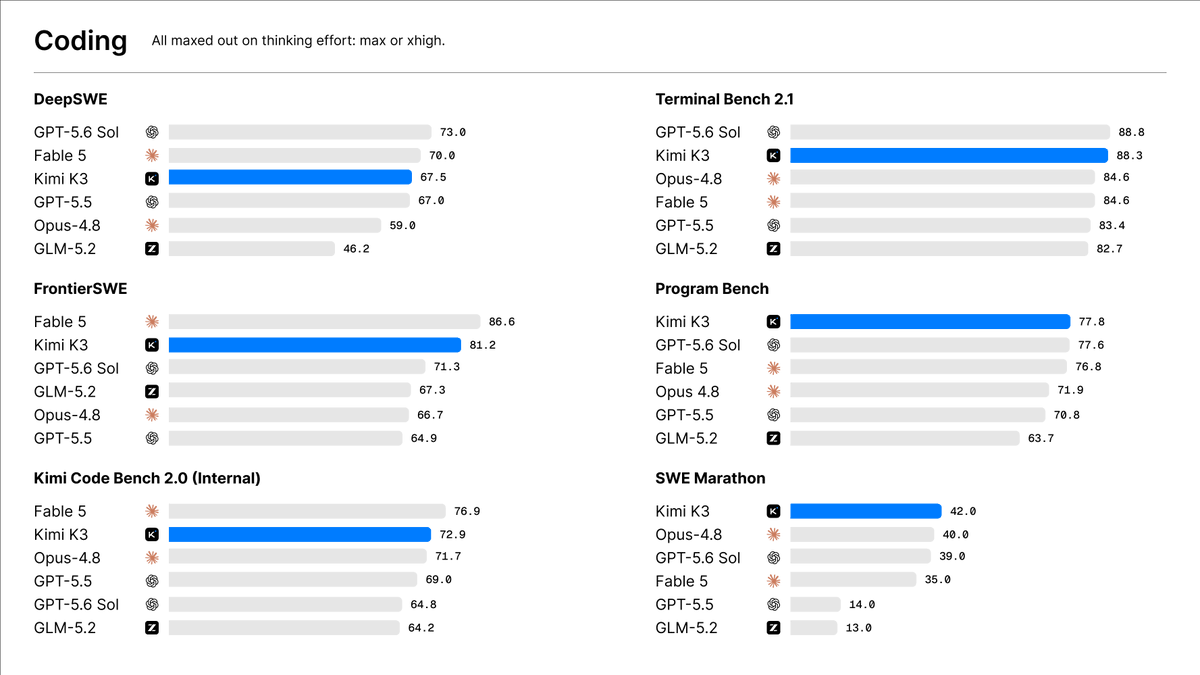
Introducing Kimi K3: Open Frontier Intelligence
🔹 2.8 Trillion Parameters, 1 Million Context, Native Multimodal
🔹 Kimi Delta Attention enables up to 6.3x faster decoding in million-token contexts
🔹 Attention Residuals deliver ~25% higher training efficiency at <2% additional cost
🔹 Built for long-horizon agentic coding and self-evolving workflows
Kimi K3 is now live on on https://t.co/zrk6zZxZUo, Kimi Work, Kimi Code, and the Kimi API.
Open Weights by July 27, 2026.
🔗 API: https://t.co/XCrgjXAqMw
🔗 Tech blog: https://t.co/YTfiMSNM1f
Why LLMs are a dead end for human-level intelligence, and especially for Physical AI / Robotics.
The next leap isn’t bigger language models.
It’s World Models.
I just dropped a full 1-hour presentation from Shanghai:
“World Models: the ChatGPT moment for robotics?”
→ Why LLMs hit a wall
→ Why action-conditioned world models planning in latent space are the real path
→ Live World Forge demo with LeWorldModel + Hugging Face LeRobot
Watch here.
The future of intelligence is embodied, not just chatty.
Second big release from us today: Nemotron-3.5-ASR-Streaming!
🌎40 languages
⚡️80ms - 1s controllable latency
🔥240 - 2400 concurrent streams on 1xH100
🧱FastConformer Cache-Aware RNN-T architecture
https://t.co/lxmcAnKeOl
Visual AI is shifting from pixels to code.
With Arrow 1.1, every illustration is generated as editable SVG source code, creating outputs that can be refined, adapted, and integrated into real workflows.
World Labs CEO Dr. Fei-Fei Li: "The world is not made of words."
"Language models have given machines an extraordinary command of concepts, vocabulary, and reasoning, but the physical world, virtual or real, runs on a different substrate."
"Where language models learn the statistical structure of text, world models learn the statistical structure of space and time: how light falls on a surface, how a garden looks from an angle no camera has captured, how objects respond to force and follow the laws of physics."
"Language gave machines a way to talk about that world. World models are how machines will finally come to understand, imagine, reason and interact with it."
Full piece: https://t.co/C9qOJg5wuc
Today, we’re excited to introduce Miso One, the most emotive voice model in the world.
Miso One is an 8-billion-parameter text-to-speech model for highly expressive speech generation. It emotes like a human and responds faster than a human, with just 110 milliseconds of latency.
We’ve open-sourced the model weights, with API access coming soon.
Hear how Miso One sounds in the thread below.
Building autonomous agents for scientific discovery? 🧬🤖
@GoogleDeepMind Science Skills is now available on GitHub. We've open-sourced this specialized toolkit to accelerate your agentic workflows with scientific grounding and higher token efficiency.
Download now ↓
https://t.co/cwp1HOeKvo
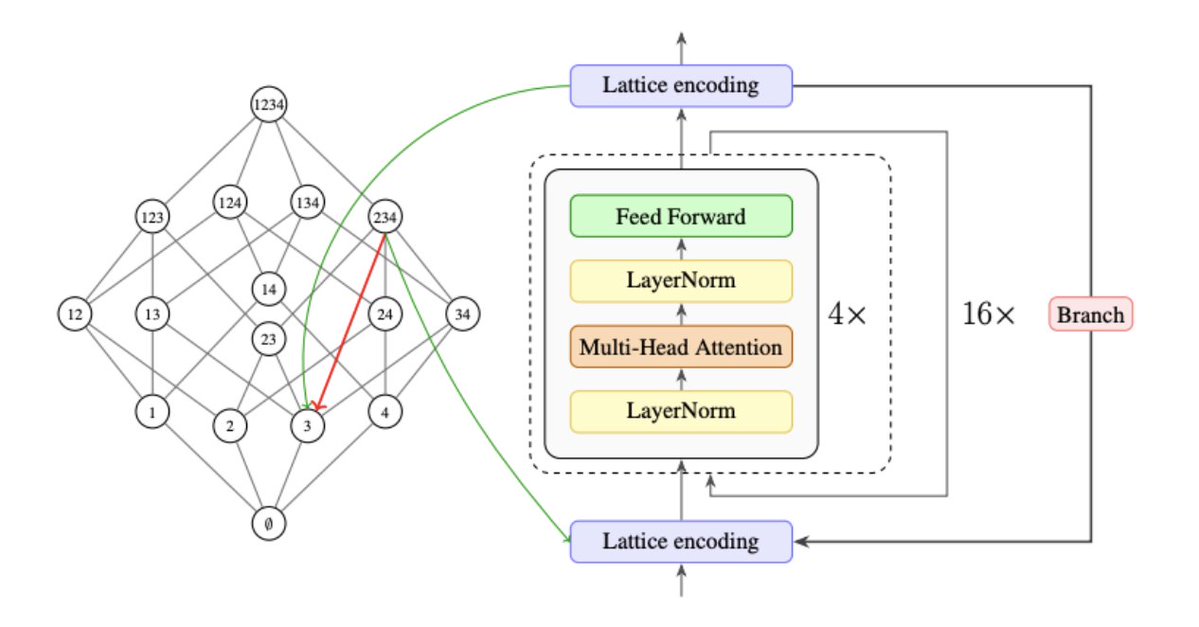
Introducing Lattice Deduction Transformers: An 800k-parameter looped transformer that reasons like a SAT solver achieves 100% on Sudoku-Extreme with only 15 minutes of training.
A collaboration between @axiommathai, @AmherstCollege and @BarnardCollege.
This is THE moment of Physical AI!
We are officially announcing Cosmos 3: Omnimodal World Models for Physical AI 🚀
- Cosmos 3 is an omnimodal world model: within a unified architecture, it can understand and generate language, images, video, audio, and actions.
- It is not just a VLM, not just a video generator, not just an audio-visual generative model, and not just a physics simulator / world-action model. It can understand images and videos, generate images, videos, and audio, simulate future worlds, predict actions, and generate robot policies—enabling models to truly begin to “touch the world.”
- Cosmos 3 is the #1 open-weight reasoner / T2I / I2V / robot policy across many benchmarks.
Huge thanks to every teammate who fought side by side on this journey—from architecture, data, training, infra, serving, and evaluation to post-training. Every part of this project carries an incredible amount of hard work. This was my first time leading a project as Tech Lead, and I feel truly fortunate.
The future of Physical AI needs models that can not only “see” and “describe” the world, but also “imagine,” “simulate,” and “act”—and eventually close the loop with the real world. I hope Cosmos 3 can become an important starting point for this direction, and I’m excited to push Physical AI into its next stage together with the open-source community.
Welcome to the era of Physical AI.
HuggingFace: https://t.co/QW5h5pIWWM
Project Website: https://t.co/Jppa0gkn16
Code: https://t.co/aJgaLm5BaG
Do 3D reconstruction transformers really need a billion parameters, or are most of those layers just doing the same thing over and over?
Introducing Déjà View: a single transformer block, looped K times, that matches or beats models 8–10× its size with lower compute. 🧵
With Opus 4.8, you can add system instructions mid-conversation without breaking the prompt cache.
More cache hits means lower cost and latency for your API requests.
llama.cpp now has an official website: https://t.co/vztdUpdBWL
Our goal is to make local AI accessible to everyone, and improving the user experience is a big part of that. On the new landing page you’ll find a single-line cross-platform installer. The installation provides a single unified `llama` entrypoint which you can use to run/serve models and interface with 3rd-party agentic applications.
While oriented towards simplified user experience, the new `llama` application also provides all the advanced functionality of the existing llama.cpp tooling with which experienced users are already familiar. Also note that all GGUF models that you might have already downloaded with llama.cpp in the past will be automatically available to use without downloading again (they are stored in the common HF cache on your machine).
We have many improvements in the pipeline both at the UX and at the engine level and we plan to iteratively ship new things over the coming months. One of the main focuses will be seamless integration with local-friendly 3rd-party agents (such as Pi). In the meantime, we’ll continue to listen for feedback from the community and adjust accordingly, so keep letting us know what you think and need.
Robots can now reconstruct 3D scenes in real time from a single RGB camera.
[📍 Projects page + paper]
No depth sensor. No retraining. 30 FPS.
Researchers at the Imperial College London introduced KV-Tracker, a training-free method that makes heavy models like π³ and Depth Anything 3 fast enough for real-time tracking.
The idea is simple.
These models use global self-attention, which is powerful but computationally expensive.
KV-Tracker caches the key and value pairs from selected keyframes and reuses them for new frames.
That cache becomes an implicit scene representation.
Result:
• Up to 30 FPS
• 10 to 15x speedup
• Accurate 6-DoF tracking on benchmarks like TUM RGB-D and 7-Scenes
• Works with monocular RGB only
It also supports object-level tracking with masks and allows saving the KV-cache for later reuse.
For robotics, this reduces hardware constraints and moves real-time 3D perception closer to practical deployment.
Credit to Marwan Taher (@marwan_ptr) at Imperial’s Dyson Robotics Lab and many others who contributed to this!
📍 Save projects page + paper for later:
https://t.co/IxgTl19zZ7
Video: https://t.co/wVxLhd6VpP
——-
if it matters in AI or Robotics you'll read it here first: https://t.co/9Nm01QUcw3
This #CVPR2026 paper from our research team is trending #1 on @HuggingFace 🤗
Meet LocateAnything: a vision-language detection model that rethinks bounding box prediction. For AI agents and robots, “seeing” is only useful if a model can pinpoint where something is fast enough to act.
Trained on 138M high-quality samples, LocateAnything decodes bounding boxes in parallel instead of one coordinate at a time, improving localization accuracy while dramatically increasing throughput for visual grounding and detection.
Project page: https://t.co/O7JMe8tzFM
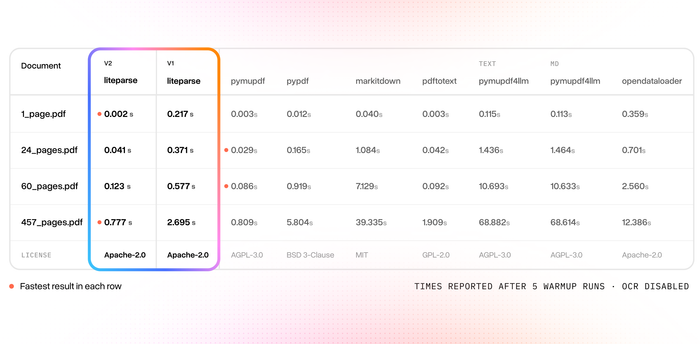
We've created the world's fastest PDF parser ⚡️
And it's more accurate than any other open-source, model-free PDF parser out there (pymupdf, pypdf, markitdown, pdftotext, opendataloader, pymupdf4llm)
Introducing LiteParse v2 - we rewrote the entire library into Rust and adapted it as native packages for Python and Node.
It supports 50+ different document types, can be triggered directly or installable directly within your favorite AI agent.
Blog: https://t.co/ckb0G73ESs
Repo: https://t.co/JNER0mVcB8
Meet Gemini 3.5 Flash — our strongest agentic and coding model yet.
It delivers frontier-level performance at 4x the speed of comparable frontier models — often at less than half the cost.
Generally available, starting today. 🧵
#GoogleIO