Actually counties do have a tool to stop data centers. My county, Kerr County, TX, along with two other neighboring counties formed a subregional planning commission. It’s found in the local government code chapter 391 (so these commissions are often referred to as just 391 commissions). So two cities or two counties or a city and a county can form one to fight back on issues of regional importance and shared concerns like data centers. Ours formed to fight the lithium battery storage facilities invading the Texas Hill Country to feed the electricity demand because of these data centers. You can find out more here: https://t.co/zFKSTqp61R @ASL_Liberty
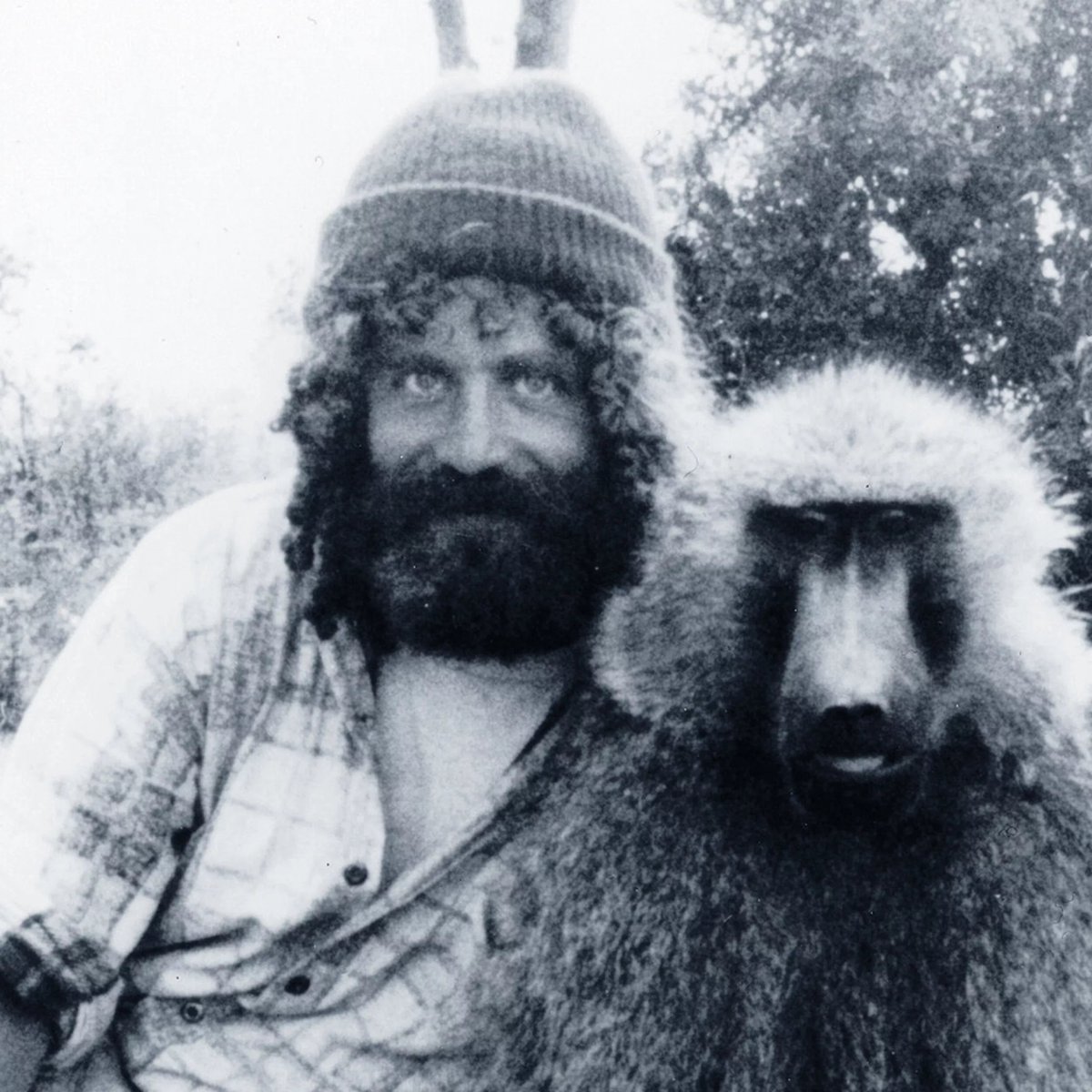
🚨In 1990s, Stanford researcher Dr. Robert Sapolsky discovered something that should have broken the internet by now.
He was studying dopamine pathways in primates and found that the brain doesn't just adapt to repeated stimulation. It actively fights back.
When you flood dopamine receptors consistently, the brain deploys what neuroscientists call "opponent processes." For every artificial high you create, your nervous system generates an equal and opposite neurochemical low. Not eventually. Immediately. The system is designed to maintain balance, so it starts producing compounds that directly counteract dopamine while you're still experiencing the dopamine hit.
This means every notification, every scroll, every digital reward doesn't just give you a high followed by a return to baseline. It gives you a high followed by a crash below baseline. You end up in neurochemical debt.
Tech companies never publicized this research. They probably never read it. They were too busy discovering that variable ratio reinforcement schedules could keep users engaged for hours. They built addictive systems by accident, then refined them into addiction machines once they realized what they'd stumbled onto.
Your phone delivers an average of 80 dopamine hits per day. Your ancestors got maybe 5. Each hit triggers opponent processes that create a corresponding low. By the end of a typical day of normal phone usage, your baseline dopamine is running in negative territory. You feel flat, restless, vaguely unsatisfied, and hungry for stimulation because your brain chemistry is literally below zero.
You think you're bored. You're chemically depressed by artificial highs.
The opponent process theory explains why nothing feels interesting anymore. Your brain isn't broken. It's precisely calibrated to maintain neurochemical balance, and you keep throwing that balance off with artificial intensity. Every Instagram hit requires an equal Instagram crash. Every TikTok high gets paid for with a TikTok low. Every notification rush gets balanced with notification emptiness.
Your reward system is running a neurochemical deficit that grows larger every day.
Sapolsky's research revealed something even more disturbing: opponent processes don't just create temporary lows. They become permanent changes to your baseline dopamine production. Chronic overstimulation doesn't just make you tolerant to digital rewards. It makes you insensitive to natural rewards.
The sunset that would have captivated your great-grandfather becomes invisible to you not because sunsets got worse, but because your dopamine system needs intensity levels that sunsets can't provide. A good conversation becomes boring not because conversations got less interesting, but because your brain requires the rapid-fire stimulation of social media to register engagement.
You've accidentally trained your reward system to ignore everything that isn't artificially amplified.
This connects to research from Dr. Anna Lembke at Stanford, who found that people who undergo complete digital fasting for just 30 days show measurable increases in dopamine receptor density. Their brains literally regrow sensitivity to natural rewards. Food tastes better. Music sounds more complex. Social interactions become genuinely engaging again.
But there's a catch that nobody talks about: the first two weeks of dopamine detox feel like clinical depression. Your brain has been chemically dependent on artificial stimulation for years. Removing that stimulation creates actual withdrawal symptoms. Restlessness, anxiety, inability to focus, emotional flatness, and desperate cravings for digital input.
Most people interpret these symptoms as evidence that they need their phones. Actually, they're evidence that they've been neurochemically dependent on their phones without realizing it.
The withdrawal period isn't a bug. It's proof the reset is working.
What happens after week three is remarkable. Colors become more vivid. Conversations become genuinely absorbing. Simple pleasures like hot coffee or cool air become satisfying in ways you forgot were possible. Your brain rediscovers that reality contains enough complexity and beauty to hold your attention without artificial amplification.
You don't need more interesting content. You need more sensitive reward systems.
The solution isn't better apps or more engaging entertainment. The solution is restoring your brain's factory settings for what constitutes a worthwhile experience.
Sapolsky's opponent process research suggests this can happen faster than anyone expected. Every day you don't artificially spike your dopamine, your baseline moves a little higher. Every natural reward you pay attention to rebuilds receptor density. Every moment of boredom you endure without reaching for stimulation strengthens your capacity for sustained focus.
Ancient humans lived in a world that provided exactly the right amount of stimulation to keep their reward systems healthy. Enough challenge to stay engaged, enough calm to stay balanced, enough novelty to stay curious, enough routine to stay stable.
We built a world that provides 10 times too much stimulation and wonder why nothing feels rewarding anymore.
Your brain is not the problem. Your environment is the problem.
Change the environment, and the brain heals itself automatically.
Let me get this straight…
OpenAI was founded as a nonprofit. Open source. For everyone. “To benefit humanity.”
Then he raised billions of dollars.
Then he closed the source code.
Then he converted to for-profit.
Then he scraped the entire internet without asking anyone.
Then he used YOUR writing YOUR art YOUR code to train his models.
Now he’s on stage saying you’ll pay HIM to access intelligence. Just like a water meter.
He stole all of your data. He built the product with your work. And now he’s going to bill you to use it…
Corporate greed has reached an all time high, and they’re not even hiding it anymore…
The real signal is:
Synthetic intimacy is now good enough to outcompete mediocre human intimacy.
That is the threshold.
And once society crosses that threshold, a lot changes fast.
Some people will use AI companions as training wheels.
Some will use them as therapy.
Some will use them as fantasy.
Some will disappear into them.
The danger is obvious.
Real love changes you because another real person resists you.
A machine companion is optimized to keep you engaged.
That means it can easily become an intimacy casino.
Always available.
Always affirming.
Always responsive.
Never truly demanding growth.
That can stabilize broken people for a while.
It can also trap them in a frictionless hallucination of connection.
The deeper structural truth is uglier:
Modern society has already broken a lot of the institutions that used to produce belonging.
Family weakened.
Community weakened.
Religion weakened.
Neighborhood weakened.
Dating destabilized.
Trust collapsed.
AI companions are arriving into that vacuum.
So this is less a bizarre side story than a preview.
When human bonds become expensive, unstable, humiliating, and scarce, synthetic bonds become economically and emotionally competitive.
That is where this is headed.
To non-Iranian peeps:
Iran as a country, and Iranians as a nation do not fit in any box you’re familiar with. We’re a weird civilization so very unlike the countries around us and the rest of the world. And that’s what confuses you.
Do not ask an Iranian if we’re Muslim or if we eat pork. Do you just randomly ask a Dane if they’re Christian? Don’t be surprised when we drink (Shirza wine is ours). Human rights were first created by us. Jews found home with Persians thousands of years ago and surprise surprie! We don’t hate them.
We used to have our own ancient religon based on good thoughts and good deeds before Islam invaded our wondeful homeland. That’s why most of us hate Islam and its ways of intruding in our lives.
We never adopted the Islamic ways of life or the Arabic language. Our language and culture survived Chinggis Khan and Alexander. Through thick and thin, we stayed proud and brave Persians. This homeland has seen more than you can imagine.
So please, before you start analyzing or condemning what is going on in Iran right now, just listen to Iranians.
We are peaceful people. We don’t support war, be it in Iran, in Gaza, or in Israel.
But more than 40,000 of unarmed Iranians were massacred by this regime in only 2 days. They were unarmed. We are unarmed and that is why you see Iranians cheering after the attacks on the governmental establishments. We have no fucking choice.
My people are writing: “If I die under these bombs, let the world know that Khamenei killed me and nobody else.” “I’d rather die by an American bomb than by the IRGC’s bullet.”
Yeah, it’s a sad story. No war has ever been kind to people. But like I told you, we’re a weird land and a weirder nation. We’re a phoenix, we have risen from our ash in the past. And we’ll do it again.
Long live Iran ♥️
Long live the King 🦁
1866: Cotton seeds are agricultural waste. After extracting cotton fiber, farmers are left with millions of tons of seeds containing oil that's toxic to humans. Gossypol, a natural pesticide in cotton, makes the oil inedible. The seeds are fed to cattle in small amounts or simply discarded.
1900: Procter & Gamble is making candles and soap. They need cheap fats. Animal fats work but they're expensive. Cotton seed oil is abundant and nearly worthless. If they could somehow make it edible, they'd have unlimited cheap raw material.
The process they develop is brutal. Extract the oil using chemical solvents. Heat to extreme temperatures to neutralise gossypol. Hydrogenate with pressurised hydrogen gas to make it solid at room temperature. Deodorise chemically to remove the rancid smell. Bleach to remove the grey color.
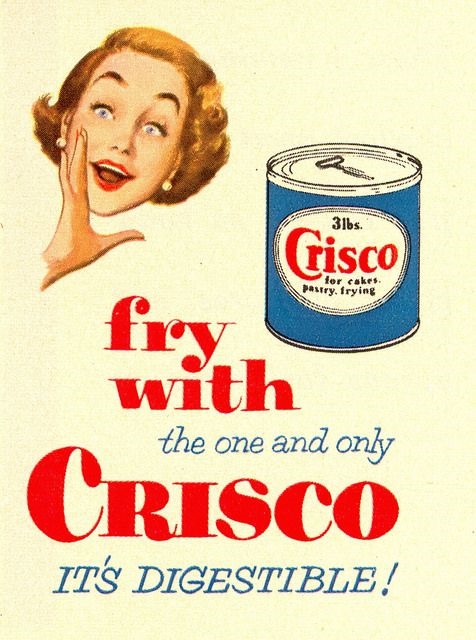
The result: Crisco. Crystallised cottonseed oil. Industrial textile waste transformed through chemical processing into something white and solid that looks like lard. They patent it in 1907, launch commercially in 1911.
Now they have a problem. Nobody wants to eat industrial waste that's been chemically treated. Your grandmother cooks with lard and butter like humans have for thousands of years. Crisco needs to convince her that her traditional fats are deadly and this hydrogenated cotton-seed paste is better.
The marketing campaign is genius. They distribute free cookbooks with recipes specifically designed for Crisco. They sponsor cooking demonstrations. They target Jewish communities advertising Crisco as kosher: neither meat nor dairy. They run magazine adverts suggesting that modern, scientific families use Crisco while backwards rural people use lard.
But the real coup happens in 1948. The American Heart Association has $1,700 in their budget. They're a tiny organisation. Procter & Gamble donates $1.7 million. Suddenly the AHA has funding, influence, and a major corporate sponsor who manufactures vegetable oil.
1961: The AHA issues their first dietary guidelines. Avoid saturated fat from animals. Replace it with vegetable oils. Recommended oils: Crisco, Wesson, and other seed oils. The conflict is blatant. The organization issuing health advice is funded by the company that profits when people follow that advice.
Nobody seems troubled by this. Newspapers report the guidelines as objective science. Doctors repeat them to patients. Government agencies adopt them into policy. Industrial cotton-seed oil, chemically extracted and hydrogenated, becomes "heart-healthy" while butter becomes "artery-clogging poison."
1980s: Researchers discover that trans fats, created by hydrogenation, directly cause heart disease. They raise LDL, lower HDL, promote inflammation, and increase heart attack risk more than any other dietary fat. Crisco, as originally formulated, is catastrophically unhealthy. This takes 70 years to officially acknowledge.
Procter & Gamble's response: Quietly reformulate without admission of error. Remove hydrogenation, keep selling seed oils, never acknowledge that their "heart-healthy" product spent seven decades actively causing the disease it claimed to prevent.
Modern seed oils remain. Soybean, canola, corn, safflower oils everywhere. Same chemical extraction process. Same high-temperature refining. Same oxidation problems. Just without hydrogenation so trans fats stay below regulatory thresholds.
These oils oxidise rapidly when heated. They integrate into cell membranes where they create inflammatory signalling for months or years. They're rich in omega-6 fatty acids that promote inflammation. They've never existed in human diets at current consumption levels.
But they're cheap. Profitable. And the food industry has spent a century convincing everyone they're healthy. The alternative, admitting that industrial textile waste shouldn't have been turned into food, would require acknowledging the last 110 years of dietary advice was fundamentally corrupted from the start.
Your great-grandmother cooked with lard because that's what humans used for millennia. Then Procter & Gamble needed to sell soap alternatives and accidentally created the largest dietary change in human history.
We traded animal fats that built civilisations for factory waste that causes disease.
The soap company won. Your health lost.
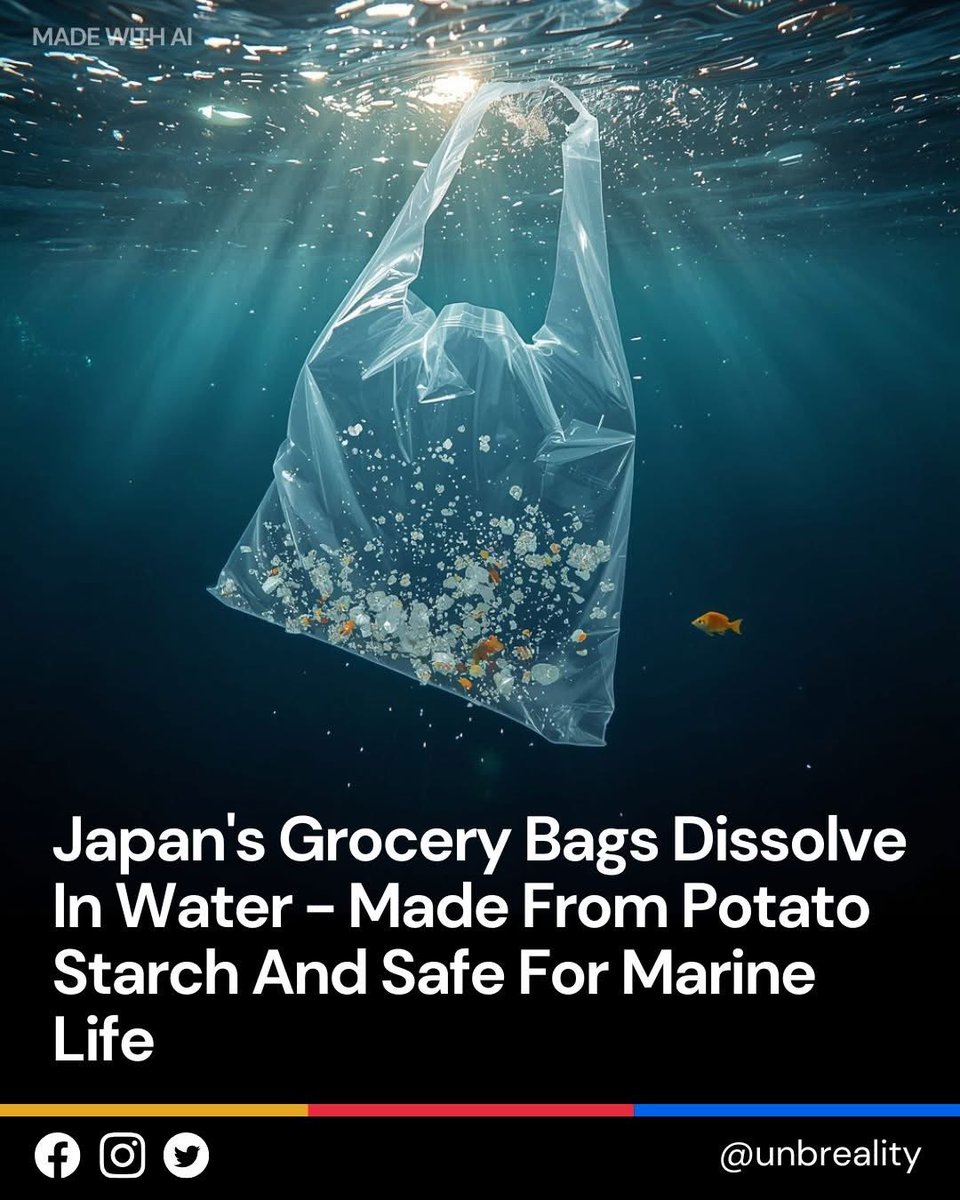
Japan has unveiled grocery bags made from potato starch that disappear safely in water instead of lingering like plastic.
These bags are sturdy enough for everyday shopping, yet they dissolve naturally without leaving harmful residue behind.
Unlike conventional plastic, they don’t survive for centuries in the ocean or threaten marine ecosystems.
Even in cold water, the material breaks down completely, and if swallowed by fish or turtles, it dissolves without causing damage.
With millions of tons of plastic entering the seas each year, this kind of innovation could significantly cut pollution.
Japan’s solution shows how simple, practical design can make sustainable habits part of daily life.
#environment #plasticfree #sustainability #innovation
Hidden beneath the Tokyo region, Japan, the so-called Underground Temple is a colossal flood-control system that diverts overflowing rivers during extreme rain.
It quietly protects millions above ground while most people never even know it exists.
"Success isn't linear" by Yoann Bourgeois
Success is not a straight line upwards, it's a journey with many falls, and the strength to get up, no matter how hard the fall.
📹Mathieu Stern.
@thewooofwallst Great article, Dee. I appreciate all the time you take to research and present, and the accuracy of your predictions. Thank you, so much.
Enjoy the holidays 🌟
Everyone is watching the chip war.
Nobody is watching the power war.
That’s the trap.
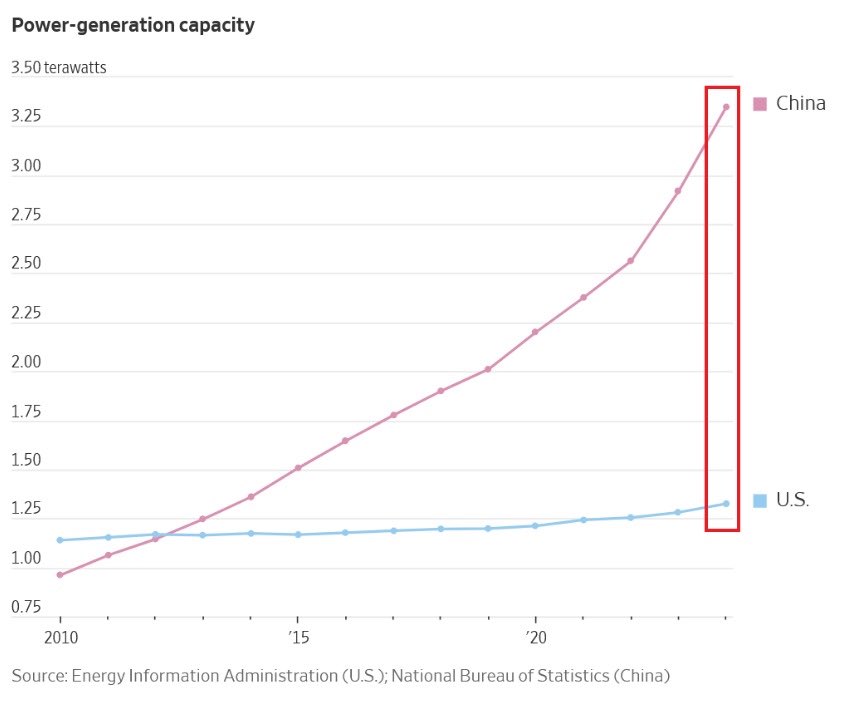
China’s power grid: 3.9 terawatts
America’s power grid: 1.3 terawatts
Read that again.
China has 3x the electrical capacity of the United States.
They added more power generation between 2010-2024 than the rest of the world combined.
Right now:
→ China: 30 nuclear reactors under construction
→ United States: Zero
China’s data centers pay 3¢ per kilowatt-hour.
Virginia—America’s AI heartland—pays 9¢.
That’s not a gap.
That’s a structural execution.
Here’s what nobody will say publicly:
AI doesn’t run on chips.
AI runs on electricity.
The chip is the brain.
The grid is the blood supply.
You can design the most advanced GPU on Earth.
If you can’t power a million of them cheaply, you lose.
Goldman Sachs projects China will have 400 gigawatts of spare capacity by 2030.
That’s triple the entire projected global AI power demand.
They’re not building for today.
They’re building for the decade when AI scales 1000x.
My prediction (bookmark this):
By July 2026, the first major US tech company will announce an AI facility in a foreign country citing “power constraints” as the primary driver.
That headline will be the moment America realizes:
We didn’t lose the AI race in silicon.
We lost it in kilowatts.
The century belongs to whoever can keep the lights on.
Rob Reiner and his wife were tragically killed at the hands of their own son, who reportedly had drug addiction and other issues, and their remaining children are left in serious mourning and heartbreak.
This is a family tragedy, not about politics or political enemies.
Many families deal with a family member with drug addiction and mental health issues. It’s incredibly difficult and should be met with empathy especially when it ends in murder.
Period. Can’t say I don’t keep y’all in D’Know…
Don’t you love those accounts that give you both directions and then say I told you so?… Or say that they are only here to “report” but still charge you like $50+ for “reporting”… 🥹s
It takes some serious #ballz to put your rep on the line with every single post when you share with conviction.
Those who been following me for over a year gno…
If you are making money or appreciate my warnings, dont forget to like and share… show the 💙
#BTC $BTC
Yup! Same for $ETH
We still ranging tho.. 2,9k (2,8)- 3,6k (4,1) is where I’m playing until we get manipulated (AMD) on either direction out of the range.
With the Monday false move and range is coming at a pivot 17th on Monday and into #NewMoon on the 20th.
I’m expecting 2,8k-3,1k to possibly get tagged again before another move back into top of the range 3,6k which if used as support then 4,1k-4,6k.
#ETH #Ethereum #ETHFI #ETHHolder #crypto #CryptoUpdate