The last 32 for the 2026 World Cup...
🇿🇦🇨🇦 South Africa vs. Canada
🇧🇷🇯🇵 Brazil vs. Japan
🇩🇪🇵🇾 Germany vs. Paraguay
🇳🇱🇲🇦 Netherlands vs. Morocco
🇨🇮🇳🇴 Ivory Coast vs. Norway
🇫🇷🇸🇪 France vs. Sweden
🇲🇽🇪🇨 Mexico vs. Ecuador
🏴🇨🇩 England vs. DR Congo
🇧🇪🇸🇳 Belgium vs. Senegal
🇺🇸🇧🇦 USA vs. Bosnia and Herzegovina
🇪🇸🇦🇹 Spain vs. Austria
🇵🇹🇭🇷 Portugal vs. Croatia
🇨🇭🇩🇿 Switzerland vs. Algeria
🇦🇺🇪🇬 Australia vs. Egypt
🇦🇷🇨🇻 Argentina vs. Cape Verde
🇨🇴🇬🇭 Colombia vs. Ghana
Reply with your picks for the last 16... ⤵️
🚨 BREAKING: OpenAI just bought Windsurf for $3 billion.
They’re not just acquiring a product they’re cornering a market.
This is the start of an AI coding war.
Cursor, Replit, v0… all just became targets.
Here’s what’s really going on:
• Windsurf pivoted from GPU infra to becoming the most underrated code-gen engine.
• OpenAI passed on Cursor even with its $9B buzz to pick precision over hype.
• Their o3/o4-mini models now top coding leaderboards across speed, accuracy, and cost.
• This isn’t a feature grab it's OpenAI absorbing the entire dev workflow.
The IDE is dead.
Long live the prompt.
SO WHAT DOES $PLTR ACTUALLY DO?
I get this question all the time -- and honestly, it makes sense.
But that’s not because it lacks a story. It’s because the story doesn’t fit into the usual enterprise software narrative. Most software companies build tools that make business functions more efficient -- better CRMs, faster databases, cleaner dashboards. Palantir is building something else entirely: the infrastructure layer for AI-native decision-making in high-stakes, real-world environments.
Palantir isn’t trying to make software that looks good in a pitch deck. It’s making software that takes real-time data from dozens of fractured systems -- internal, external, structured, unstructured -- and turns it into executable action at machine speed. Not "insights." Not charts. Actual execution: what to do, when to do it, and what happens if you don’t.
This is where most people get lost, especially now that AI is being thrown around as a buzzword across every earnings call. Everyone says they “do AI.” Palantir doesn’t just do it -- it operationalizes it.
We’re entering stage two of the AI economy. The first wave was all about model development and infrastructure: GPUs, cloud scaling, LLMs. That was the foundation. The second wave is where it gets real -- application, deployment, and decision loops that close in seconds, not weeks. And this is where Palantir becomes the most important software company almost no one can properly explain.
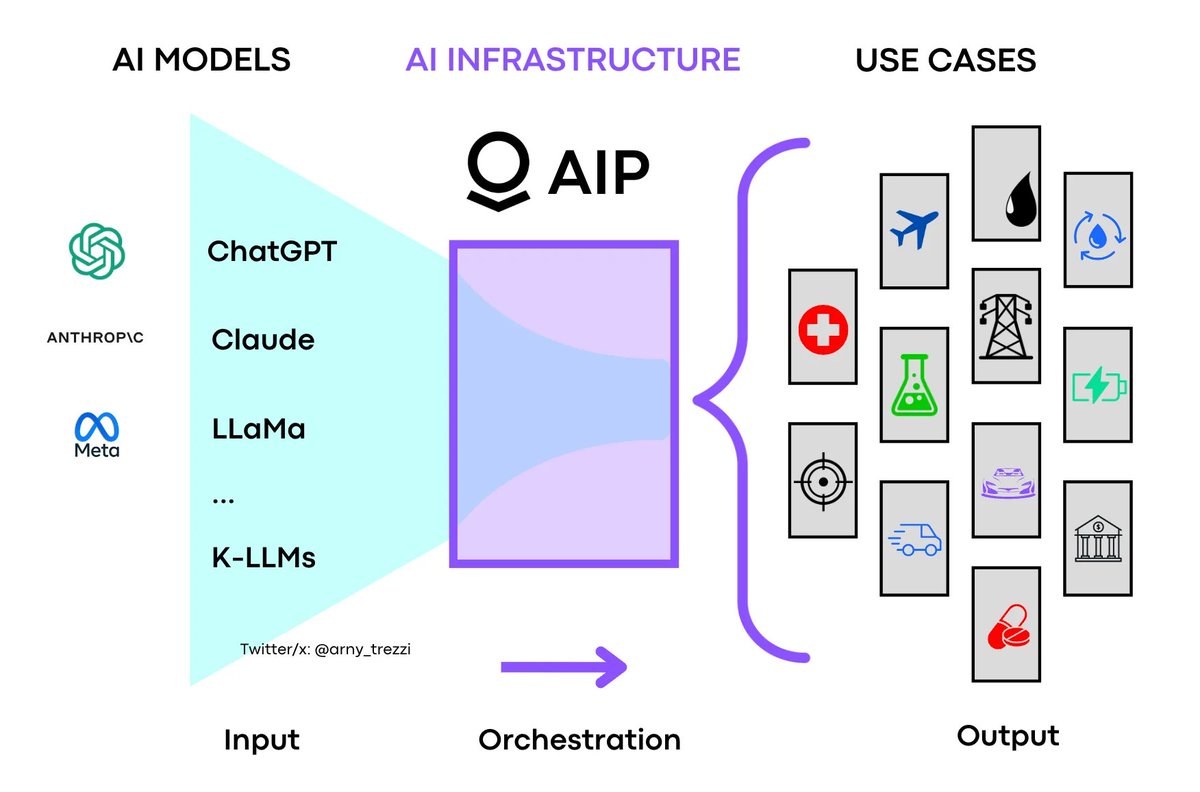
Its AIP isn’t some plug-and-play analytics tool. It’s an AI-native control layer that embeds itself across the entire operating stack of a company. In defense, that means orchestrating battlefield logistics, drone surveillance, and supply movements across thousands of nodes in real time -- without human lag. In energy, it means rebalancing entire grids based on weather, usage, and geopolitical constraints. In healthcare, it means modeling drug manufacturing timelines, workforce shortages, and patient flows dynamically, down to the individual hospital level.
AIP doesn’t surface "recommendations." It runs simulations. It allocates resources. It creates, tests, and deploys policies based on real-world constraints -- and then it adapts them continuously as new data comes in. It’s the difference between a static ERP system and an AI-native nervous system.
That’s why Palantir doesn’t have churn. Once AIP is deployed, it becomes core infrastructure -- hardwired into procurement systems, compliance frameworks, and regulatory operations. It’s not just software anymore. It’s the brain of the organization. And there’s no alternative product on the market that offers that level of AI-governed, multi-layered operational command.
And here’s the part the market hasn’t priced in yet: we’re about to enter a phase where most enterprises have to make the jump from insight-driven to action-driven systems. They’ve built data lakes. They’ve hired teams of analysts. They’ve run pilots on LLMs and built out dashboards. But they still can’t act fast enough. They still depend on layers of approvals and manual reconciliation between systems that were never designed to talk to each other. And while everyone else is stuck in the UI, Palantir is already deep in the backend, where real transformation happens.
When the Fortune 500 begins to industrialize AI -- not just in labs, but on factory floors, in boardrooms, and in live supply chains -- Palantir will be there first, because it already is.
So no, it’s not about "AI to kill enemies." That’s the cartoon version of the story -- the one people default to when they don’t have the language for what this company actually is.
It’s about giving decision-makers the tools to operate in environments where failure is catastrophic and time is scarce. Whether that’s in government, healthcare, logistics, or finance, Palantir is building the AI execution layer of the new digital economy.
Option Strategies, for Long Degenerates.
For anyone who may want to be long a highly volatile asset that tends to increase in volatility as the price of the underlying rises.
I have used MSTR options to bet directionally over a long amount of time, with conservative strikes and price targets.
How to tailor your own long option portfolio over the next six months (after which I will be scaling back on leverage and will be addressing different aspects of volatility selling).
------------------------------------------------------------
Glossary:
Vega - Change in an option's price relative to a change in the Implied Volatility of the underlying.
Delta - Change in an option's price relative to a change in the price of the underlying (first derivative of price).
Gamma - Rate of change of Delta with respect to a change in the underlying (second derivative of price)
Theta - Rate of change of an option's price relative to expiration (typically negative)
------------------------------------------------------------
I am a straight shooter when it comes to being long and feel strongly that most of the time, holding through gut wrenching drawdowns is the best plan of attack (at least for me).
This will be a 5 part post that breaks down the available long call options over the next six months.
Let's begin.
...
Expiration #1 - Feb 21, 2025
For those looking to gamble on events related to the Inauguration or even the options expiry this Friday, January 17th.
(Note* shorted dated contracts may be more effective, but aren't discussed here).
Most likely, purchasing a call for this expiration will be an attempt to get leveraged movements in the short term on MSTR.
If that's the goal, then you will be shopping for strikes between 350 and 450.
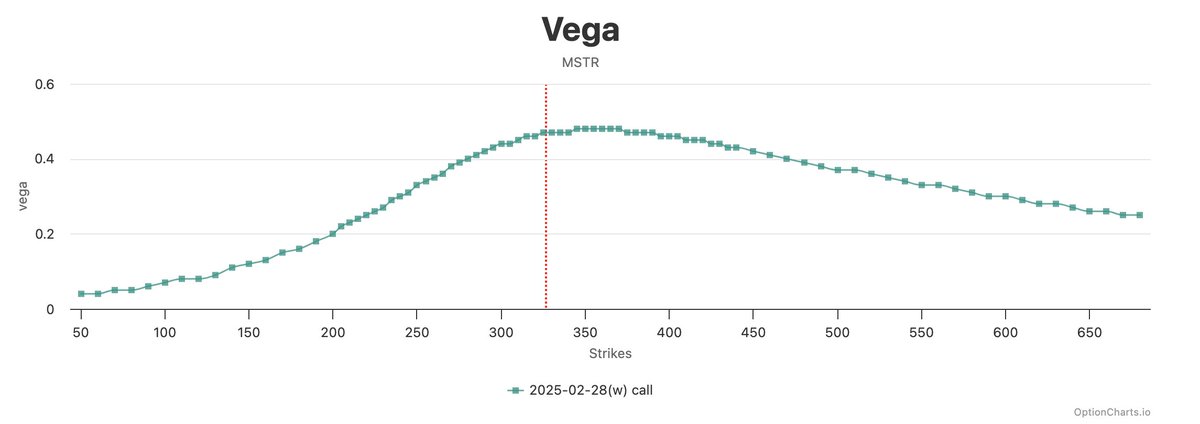
These simplistic options Greek charts below illustrate the sweet spot for short term price movement leverage.
You are trying to target the highest Vega and Gamma possible. Ideally, if you aren't betting on a outrageous upside move, you want a reasonably high delta.
All the while, limiting the theta decay eating into your profit before capturing the desired move.
Application: Capturing a spike in price, not necessarily outsized in price, while providing leverage exposure over the next month.
Summary: Provide levered exposure to short term moves in price.
CES 2025 just started, and we’re already seeing incredible tech.
Here're 20 most impressive reveals of CES 2025 so far:
1. Halliday Glasses: 3.5-inch AI smart glasses
This is by far the craziest video from the fire in Los Angeles. This guy is filming huge walls of fire surrounding a house they're in, and there's another person and a dog. I have no idea why they didn't evacuate or what happened to them. Let's hope they're okay. #PalisadesFire
OFFICIAL: The Bulls will retire Derrick Rose's number during the 2025-26 NBA season. No other player will ever wear the number 1 for the Chicago Bulls.
Number 1 will always be from Chicago.
@FinanceLancelot The International Space Station just orbited above Hurricane Milton as it is re-intensifying over the southern Gulf of Mexico.
Spectacular view from space.
The Blindsight device from Neuralink will enable even those who have lost both eyes and their optic nerve to see.
Provided the visual cortex is intact, it will even enable those who have been blind from birth to see for the first time.
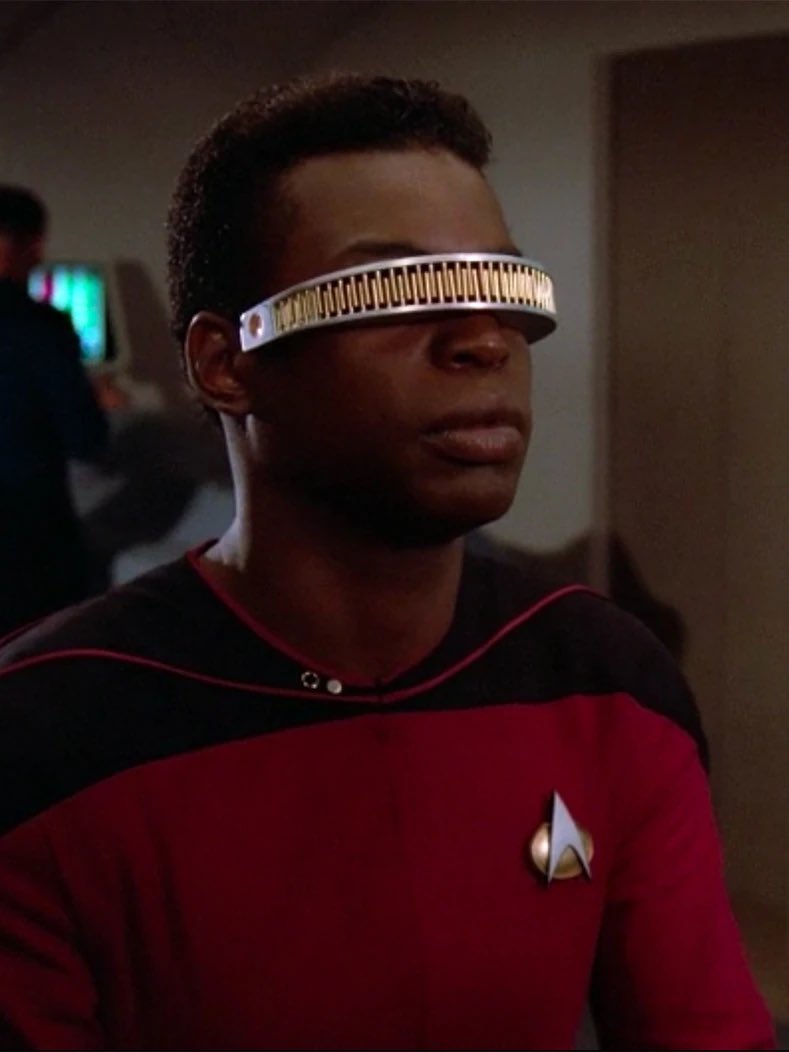
To set expectations correctly, the vision will be at first be low resolution, like Atari graphics, but eventually it has the potential be better than natural vision and enable you to see in infrared, ultraviolet or even radar wavelengths, like Geordi La Forge.
Much appreciated, @US_FDA!
BREAKING: Charles Schwab, Fidelity, E-Trade and Robinhood are currently experiencing trading platform outages.
Since these outages began, the S&P 500 has rebounded 1.5%, adding ~$600 billion of market cap.
Why have these trading platform outages not been fixed?
Introducing Udio, an app for music creation and sharing that allows you to generate amazing music in your favorite styles with intuitive and powerful text-prompting.
1/11