had some fun playing with late interaction visual embedding models for medical text and wrote about it.
tl;dr nvidia/nemotron-colembed-vl-8b-v2 is a good model :)
https://t.co/rfFD8dYO1S
I made a tiny tool to manually eyeball your retrieval results.
Just give it your search function with any parameters and it will generate a simple ui.
https://t.co/P3GBy4ne3Q
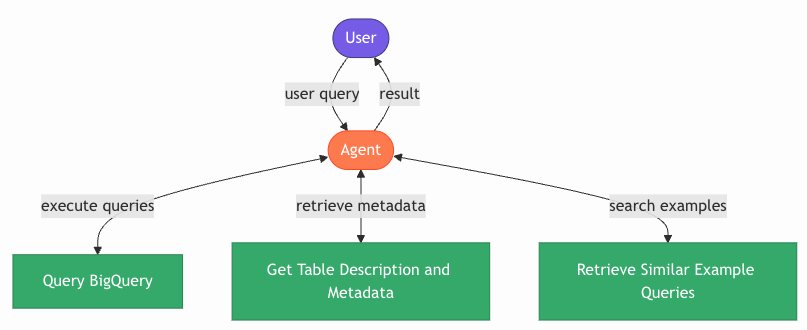
I made a minimal agent to explore Mimic-III dataset and wrote about it.
You don't need any fancy agent library to do cool things ;)
https://t.co/wwhkmk27qa
Fun experiment: Training a custom model using TotalSegmentator-generated weak labels, powered by Monai + Keras 3 w/ PyTorch backend
https://t.co/Lkq1gNdDqY
I've added a new feature to @huggingface `apply_chat_template` that makes it return a mask of assistant-generated tokens, making it easier to label other tokens with -100 during training. Previously, I had to manually tokenize the conversation and keep track of these tokens. 🥳
I think most finetuning scripts are sub-optimal in that they do not mask user parts of the conversation.
this includes popular training scripts:
* hf alignment-handbook
* mlabonne llm-course
* hf autotrain
I did some experiments and wrote about it here
https://t.co/Oh3y7MwqVI
i suggested a feature in the apply_chat_template abstraction that will make it return the labels with -100 on user tokens. https://t.co/9RuVZwEipL this can make training scripts more aligned with inference code
@BramVanroy the loss in both cases is computed the same, only on assistant tokens. BUT of course you are right! this should further be tested on some downstream task.
I wrote how to do "Extractive QA" with a decoder model like llama. This technique guarantees the generated output will 100% be a substring of the context.
https://t.co/mQPQaWn88E