Update: I’ve left Coinbase. I’m starting a company.
I’ll continue to be involved with x402 as a member of the Technical Steering Committee with the foundation, and as an advisor to Coinbase on agentic commerce.
I’m incredibly proud of the work we’ve done in @CoinbaseDev. It's truly an elite team executing at the highest of levels. Many exciting things coming soon 👀. @yugacohler will be taking the helm as Head of Engineering, he’s a rockstar, he’ll crush it.
It's been an exceptional second tour of duty at Coinbase. It was a hard decision to leave, but there's an idea in my head I need to get into the world.
Big thank you to @barmstrong, @emiliemc and @nemild for bringing me back, and to @alecglovett, @yuga@brian__foster and everyone else in CDP - it's been an honour.
President Trump is pursuing funding deals with a group of drone companies to boost domestic production.
Another signal that U.S.-made drones are becoming a national security priority.
$ONDS, $AVAV, $KTOS, $AVEX, $UMAC, $RCAT, $DPRO
Microsoft just open-sourced SkillOpt!
A framework for training agent skills like neural networks:
SkillOpt treats a plain markdown file as the trainable parameter of a frozen LLM agent, applying the same optimization discipline used in weight training: learning rates, validation gates, batch sizes, and epoch schedules.
The analogy maps precisely. The skill document is the parameter. Trajectory-derived edits are the gradient direction. An edit budget is the learning rate. A held-out split is the validation check.
Here's how it works.
A frozen model runs tasks with the current skill and produces scored trajectories. A separate optimizer model analyzes failures in minibatches, proposes structured add/delete/replace edits, and ranks them under a budget cap.
If the candidate skill improves performance on a held-out split, the edit is accepted. If not, it's rejected and stored so the optimizer avoids repeating failed changes.
The deployed output is a single best_skill. md file, typically 300 to 2,000 tokens. No weight changes, no extra inference-time calls.
The learned rules are compact and readable. These read like rules a thoughtful engineer would write after a day with the benchmark, except they were discovered automatically.
Learn more:
Paper: https://t.co/sdj5DW7t9h
GitHub: https://t.co/W3DcpBCni0
SkillOpt isn't the first system to treat skills as something you can optimize.
Hermes Agent independently built the same idea through a combination of skill_manage, Curator, and an optimization loop called GEPA that scores, mutates, and promotes skill documents across runs.
Two teams, different architectures, same conclusion: the skill file is the highest-leverage thing to optimize in a frozen-model agent.
I wrote a deep dive on how the Hermes agent works and covered all of these topics briefly.
The article is quoted below.
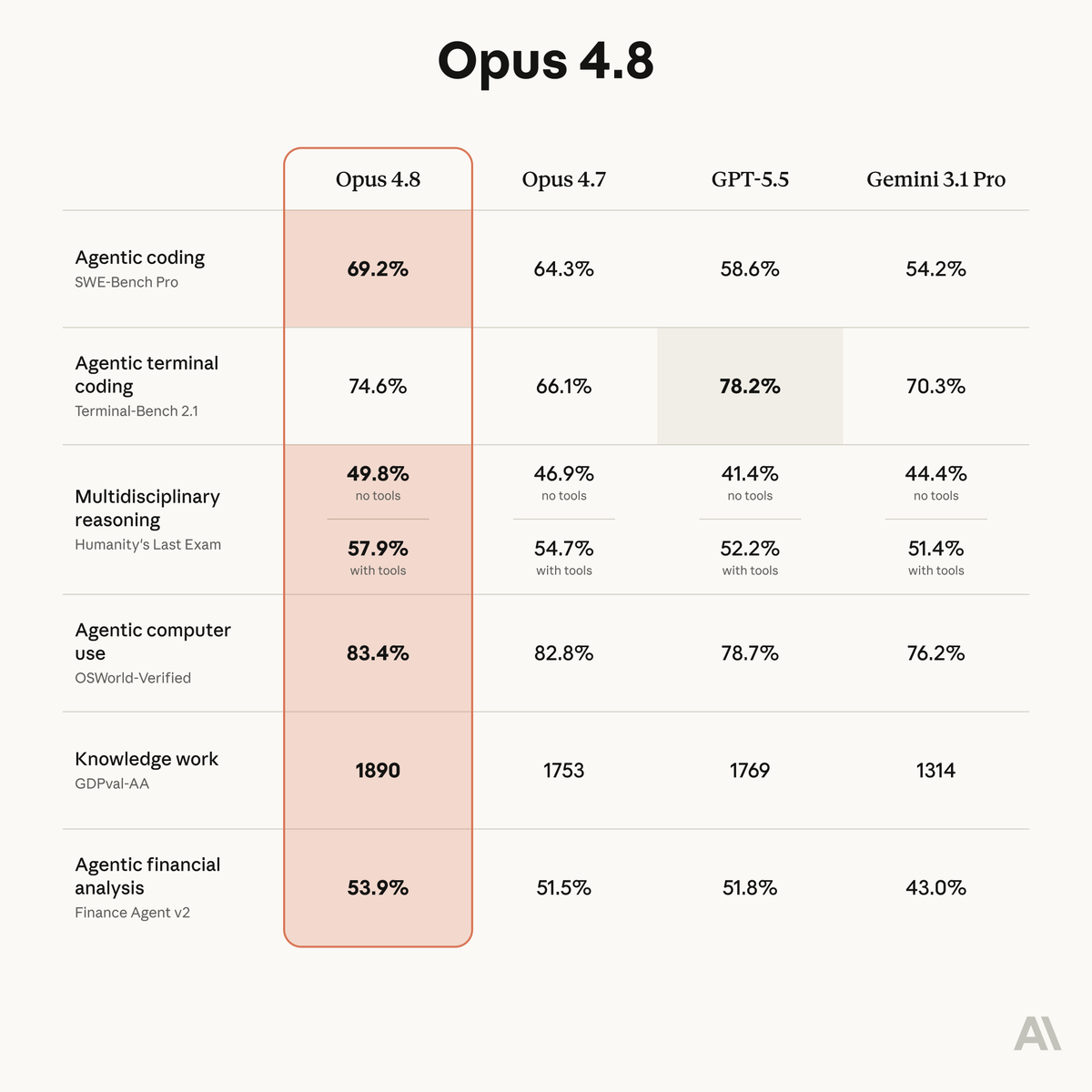
Introducing Claude Opus 4.8: it builds on Opus 4.7 with sharper judgment, more honesty about its own progress, and the ability to work independently for longer than its predecessors.
Available today at the same price.
Met my girlfriend's parents for the first time.
Her dad asked what I do for work. I said I build trading systems.
He said: "Like Wall Street?"
I said no. It's open-source. Anyone can see how it works.
He laughed. "So you're gambling with open-source code?"
I didn't argue. I opened my laptop.
One wallet I was tracking made $2.4M in March alone. Another traded $36M in volume. One more turned $35K into $442K.
His face changed.
"That's not gambling. That's... math?"
Exactly.
Then I showed him the repos. All public. All free.
First one: https://t.co/klxt0tuTYF
Every trade ever made. 86M+ trades. Free to download. Snapshot saves 2+ days of research.
Second one: https://t.co/eqMxVwgjbK
Market making bot. Both sides of the book. Gas optimized. Google Sheets execution layer.
Third one: https://t.co/ysuz8O6erJ
ML + heuristics. Flagged that $35K → $442K wallet before anyone noticed.
Her dad went quiet. Then he asked: "Can my son run this?"
Her mom asked for the channel link.
Profile: https://t.co/NtFAzO6YXo
Most people think you need a finance degree or a hedge fund.
You don't. You just need to read the code and start.
I just got back from SF and I FEEL INSPIRED.
I spent 5 days with frontier AI model teams, AI startup founders, and 3 billionaires.
My takeaways:
1. I had lunch with 3 billionaires. All of them are buying SaaS companies and rebuilding them agent-first. They were deeply inspired by Bending Spoons and Ryan Cohen's eBay deal. Buy the company, cut the headcount, rebuild the tech, add agents, add features, make more valuable experience, raise prices.
2. The frontier model companies are hungry for usage data from the field. They can see API calls and token counts. They can't see the actual workflows. If you're deep in a niche using these models in ways the model companies haven't seen, that understanding is incredibly valuable. Usage intelligence is the new alpha.
3. Consumer AI is massively underbuilt. Every billboard in SF is either B2B inference infrastructure or vertical agent companies. The entire city is optimized for enterprise. Meanwhile you have companies like Cal AI doing $50M ARR in 18 months as a consumer app. I met with a cool few teams doing consumer AI (@paulscherer / @ekuyda)
4. MCP came up in literally every conversation. The companies exposing their product as MCP endpoints are getting pulled into deals they never pitched for. The ones that aren't are becoming invisible to agents. This is the new SEO. If agents can't find you, you don't exist. Building products for agents is the new zeitgeist in general.
5. Not uncommon for hot seed rounds to be $25-50 million valuations. I saw a Series A at $450 million
6. If I had a dollar every time someone mentioned "forward-deployed engineer" this trip I could have funded a seed round. It's the hottest role in SF right now. The person who sits between the agent and the customer, making sure everything actually works.
7. The mood around open source shifted. A year ago it felt like open source was chasing the frontier models. Now founders are telling me Gemma and DeepSeek are good enough for 80% of what they need at a fraction of the cost. The "which model do you use" conversation is being replaced by "which model for which task." Model loyalty kinda feels dead.
8. Voice agents came up more than I expected. Multiple founders told me voice is the interface for the next billion users. The billion people who will never type a prompt will absolutely talk to one.
9. The Obsidian community in SF is weirdly intense. Multiple founders showed me their vaults unprompted. Like showing someone your home gym. It's a flex now. The quality of your knowledge base (second brain?) is becoming a status symbol among builders.
10. Maybe it was just the people I met but the age of the founders is shifting. I met more founders over 40 this trip than any trip before and more founders under age 21 than ever before. Founders getting older and younger at the same time.
11. I spoke to a lot of fast-growing startups, VCs and frontier models who are hiring content creators right now.
12. The restaurant scene in SF is actually better than it's been in years. Founders are going out more. Alcohol is out, not surprisingly.
13. SF doesn't feel like the only place anymore. We all have access to the same frontier models. We all read the same X feed. A founder in NYC or Lagos is calling the same APIs as a founder in SoMa. So in the past it felt like SF was always lightyears ahead, doesn't feel that way anymore. It's okay not to live in SF and have BIG DREAMS.
14. The coworking spaces in SF are half empty but the coffee shops are packed. People want to be around people. I had a few startup ideas here....
15. Walking around the Mission I noticed something: the street-level businesses, the taquerias, the barbershops, the laundromats, none of them use any AI at all.
16. I heard the phrase "agent debt" for the first time. Like technical debt but for agents. When you hack together an agent workflow fast and never clean it up, the system prompts conflict, the memory gets polluted, the tools overlap. 6 months later the agent is doing weird things and nobody knows why lol.
17. Met a few people who carry two phones now. One for personal. One that's basically an agent terminal running Telegram or iMessage connections to their agent fleet.
It's always amazing to get that dose of inspiration in SF. I FEEL INSPIRED.
But I'm so happy to be back home, locked in and building.
We're 12-18 months into a shift that will take 15 years to play out. The urgency in every conversation was real.
What an incredible time to be building.
I just got back from SF and I FEEL INSPIRED.
I spent 5 days with frontier AI model teams, AI startup founders, and 3 billionaires.
My takeaways:
1. I had lunch with 3 billionaires. All of them are buying SaaS companies and rebuilding them agent-first. They were deeply inspired by Bending Spoons and Ryan Cohen's eBay deal. Buy the company, cut the headcount, rebuild the tech, add agents, add features, make more valuable experience, raise prices.
2. The frontier model companies are hungry for usage data from the field. They can see API calls and token counts. They can't see the actual workflows. If you're deep in a niche using these models in ways the model companies haven't seen, that understanding is incredibly valuable. Usage intelligence is the new alpha.
3. Consumer AI is massively underbuilt. Every billboard in SF is either B2B inference infrastructure or vertical agent companies. The entire city is optimized for enterprise. Meanwhile you have companies like Cal AI doing $50M ARR in 18 months as a consumer app. I met with a cool few teams doing consumer AI (@paulscherer / @ekuyda)
4. MCP came up in literally every conversation. The companies exposing their product as MCP endpoints are getting pulled into deals they never pitched for. The ones that aren't are becoming invisible to agents. This is the new SEO. If agents can't find you, you don't exist. Building products for agents is the new zeitgeist in general.
5. Not uncommon for hot seed rounds to be $25-50 million valuations. I saw a Series A at $450 million
6. If I had a dollar every time someone mentioned "forward-deployed engineer" this trip I could have funded a seed round. It's the hottest role in SF right now. The person who sits between the agent and the customer, making sure everything actually works.
7. The mood around open source shifted. A year ago it felt like open source was chasing the frontier models. Now founders are telling me Gemma and DeepSeek are good enough for 80% of what they need at a fraction of the cost. The "which model do you use" conversation is being replaced by "which model for which task." Model loyalty kinda feels dead.
8. Voice agents came up more than I expected. Multiple founders told me voice is the interface for the next billion users. The billion people who will never type a prompt will absolutely talk to one.
9. The Obsidian community in SF is weirdly intense. Multiple founders showed me their vaults unprompted. Like showing someone your home gym. It's a flex now. The quality of your knowledge base (second brain?) is becoming a status symbol among builders.
10. Maybe it was just the people I met but the age of the founders is shifting. I met more founders over 40 this trip than any trip before and more founders under age 21 than ever before. Founders getting older and younger at the same time.
11. I spoke to a lot of fast-growing startups, VCs and frontier models who are hiring content creators right now.
12. The restaurant scene in SF is actually better than it's been in years. Founders are going out more. Alcohol is out, not surprisingly.
13. SF doesn't feel like the only place anymore. We all have access to the same frontier models. We all read the same X feed. A founder in NYC or Lagos is calling the same APIs as a founder in SoMa. So in the past it felt like SF was always lightyears ahead, doesn't feel that way anymore. It's okay not to live in SF and have BIG DREAMS.
14. The coworking spaces in SF are half empty but the coffee shops are packed. People want to be around people. I had a few startup ideas here....
15. Walking around the Mission I noticed something: the street-level businesses, the taquerias, the barbershops, the laundromats, none of them use any AI at all.
16. I heard the phrase "agent debt" for the first time. Like technical debt but for agents. When you hack together an agent workflow fast and never clean it up, the system prompts conflict, the memory gets polluted, the tools overlap. 6 months later the agent is doing weird things and nobody knows why lol.
17. Met a few people who carry two phones now. One for personal. One that's basically an agent terminal running Telegram or iMessage connections to their agent fleet.
It's always amazing to get that dose of inspiration in SF. I FEEL INSPIRED.
But I'm so happy to be back home, locked in and building.
We're 12-18 months into a shift that will take 15 years to play out. The urgency in every conversation was real.
What an incredible time to be building.
How to build a vertical AI agent cash-flowing startup:
find painful workflow in a boring industry → talk to 10 people who do that workflow every day → map every step, every tool, every spreadsheet, every phone call →
do the workflow manually first → be the agent before you build the agent → find the edge cases that break everything → document them in obsidian as structured markdown →
set up your agent stack → hermes for the harness → obsidian vault as the knowledge base → composio for authentication across apps → build your first 1-3 skills that solve the core pain →
use claude code or codex to build the product → use agents to set up other agents → use perplexity MCP and context7 for up-to-date docs → let the agent handle the scaffolding while you focus on the workflow logic →
ship the agent to your first 5 customers for free → watch what they actually use it for → they will surprise you → the thing you built for isn't always the thing they need most →
build content around the niche → not "building in public" content → useful content → the tips, the shortcuts, the pain points that only someone who does this workflow would know → become the person for that niche →
charge per outcome not per seat → per lease renewed, per claim processed, per candidate sourced → the ROI conversation takes 10 seconds when it's tied to a result →
set up watchdogs and alerts → your agent emails you when a cron job breaks or a skill fails → the customer should never have to tell you something is broken →
connect to open router → see exact costs per model per task → use GPT 5.5 for tool calls → use open source for lightweight tasks → route the right model to the right job → watch your margins double →
let hermes write to its own memory after every task → the agent compounds → the longer it runs the better it gets → that accumulated memory becomes your moat → a competitor can clone your product but they can't clone 6 months of context →
expand the workflow → you started with one step → add the next → then the next → now you own the entire workflow end to end → you went from a tool to the operating system for that vertical →
stack the agents → one agent is a side project → five agents across five customers is a business → each one runs in its own environment → you check in once a day →
raise only if you need capital not credibility → most agent businesses should never raise → the margins are too good to give away equity → stay lean → stay profitable → repeat
i'm rooting for you
the anatomy of the perfect 𝗦𝗢𝗨𝗟.𝗺𝗱 file for AI agents.
𝗦𝗢𝗨𝗟.𝗺𝗱 is the one file you write yourself for an AI agent.
it sits at the top of the system prompt, before memory, before skills, before tools. it defines who the agent is when it shows up.
an hour spent on it changes every conversation that follows. most other layers update themselves. this one is yours.
i just broke down what a 𝗦𝗢𝗨𝗟.𝗺𝗱 file that actually works looks like.
here are the 8 sections that matter:
→ identity (a one-line statement of who, not what)
→ core truths (imperative principles, each with a one-line unpacking)
→ worldview (opinionated takes by domain, sharp enough to predict)
→ voice (concrete rules for how the agent talks, not adjectives)
→ expertise (primary domain, fluent tools, where it defers)
→ boundaries (explicit "won't" lines, no soft language)
→ memory policy (what persists, what stays private)
→ pet peeves (phrases and tones the agent never produces)
generally people write "be helpful and professional" and call it done.
that changes nothing. every model already tries to be helpful and professional by default.
the agents that compound have 𝗦𝗢𝗨𝗟.𝗺𝗱 files with real opinions, hard limits, and a voice you can predict before you read the response.
a strong 𝗦𝗢𝗨𝗟.𝗺𝗱 is 30 to 80 lines. specificity beats coverage.
bookmark this. the first agent you build will need it.
i wrote a full masterclass on Hermes Agent that walks through the 𝗦𝗢𝗨𝗟.𝗺𝗱 layer, the three-tier memory system, the self-evolving skills loop, and how to run three specialized agents on your machine 24/7.
the article is quoted below.
🚨 You can now deploy unlimited AI voice agents on your own infrastructure for $0.
Stop bleeding margin to per-minute SaaS rentals.
A team of YC alumni just built an open-source exit hatch, and I've been really excited to be involved with it.
Dograh is a fully self-hosted voice AI platform.
One Docker command deploys your infrastructure.
Drag and drop your workflow, define your prompt, and launch a production-ready bot in 120 seconds.
Your stack, your rules!
> Bring your own LLM
> Any Speech-to-Text
> Any Text-to-Speech
> Inbound and outbound calls
> WebRTC and standard phone numbers
Built on Pipecat, FastAPI, and Next.js.
SaaS platforms charge sales teams $10,000+ annually for this.
Dograh is 100% free and open-source.
... and almost 3k GitHub stars already.
repo in 🧵↓
Leopold Aschenbrenner is literally giving you insider trading info
He turned $225M into $5.5B in less than 12 months
In 2025 he bought:
$BE at $18 & is now $297
$LITE at $59 & is now $935
$SNDK at $42 & is now $1,466
Now in 2026, he’s telling you to buy:
1) Applied Digital $APLD
2) Bloom Energy $BE
3)CleanSpark $CLSK
4)CoreWeave $CRWV
5)Intel $INTC
6) IREN $IREN
7) Keel Infrastructure $KEEL
8) Micron $MU
9) Riot $RIOT
10) Sandisk $SNDK
11) T1 Energy $TE
12) Taiwan Semiconductor $TSM
Don’t miss out on a generational run
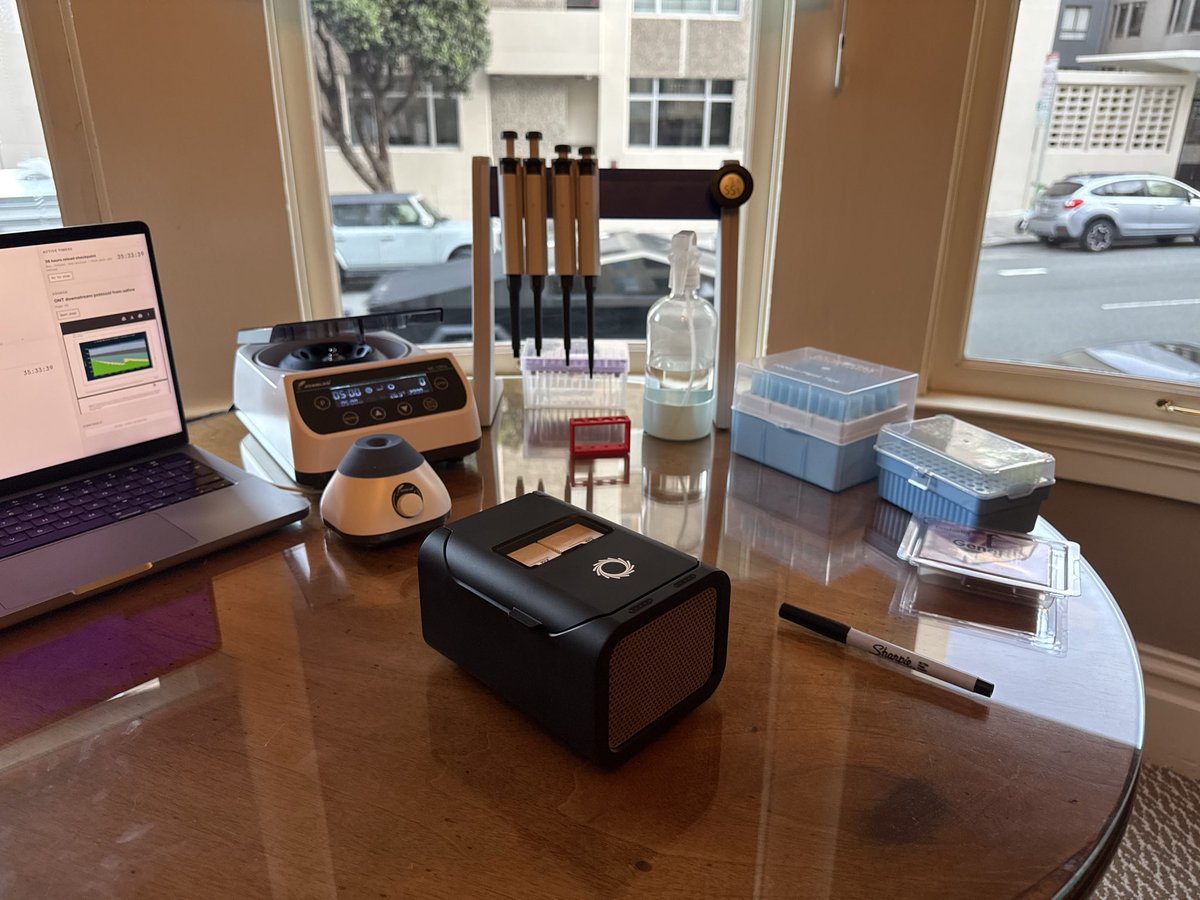
I just sequenced a human genome to 30× coverage entirely at home.
As far as I know, this is the first time this has been done.
I didn’t step foot in a lab once. Every step - from saliva collection, to running the sequencer - took place in a single room with a dining table + kitchenette.
Six weeks ago, I had never done wet lab biology before.
I used an Oxford Nanopore P2 Solo - the only commercially available sequencing device portable enough to do 30x human genome sequencing at home.
Biggest takeaway - I could build something that combined software, hardware, and molecular biology far faster than I thought was possible.
I can name >100 specific instances where AI helped me solve a technical problem that would previously have blocked me because I lacked access to a domain expert.
For example: how do I save my sequencing run when my DNA extraction yield is 4x lower than I need it to be, and I have this limited set of reagents to hand?
To make this work, I had to navigate multiple disciplines:
- writing software to monitor sequencing runs and orchestrate remote GPU infra for basecalling
- learning + executing 5 hour long molecular biology protocols
- building a hardware device to quantify DNA concentration
Apologies for the hyperbole, but I feel super lucky to be living in 2026.
A few weeks ago I decided to sequence a human genome to 30x at home.
Then I actually did it. And I did it really quickly.
if you want to design with AI agents, these skills are amazing
- impeccable https://t.co/Wcykv4uHwT
- taste https://t.co/rThOMA1z76
- layers https://t.co/VKFrJiCoBN
- superdesign https://t.co/cibZkPsd3D
I also made a plugin based on Refactoring UI (use for polish): https://t.co/hV6iVpBgqf
find more here: https://t.co/5LJs9brXDv