Don't waste 2 years learning to become an AI agentic engineer in 2026.
Andrew Ng, the godfather of AI, gave the complete playbook to become one from scratch.
1 hour course. Free:
• 00:00 - AI agent basics
• 12:12 - AI Agentic workflows & design patterns
• 53:27 - Practical tips for building AI agents
• 1:20:30 - self-improving AI agent loops
• 1:30:19 - multi-agent AI systems
I watched it last night.
Halfway through, I realized I could get into Anthropic in weeks, not years.
Bookmark now. Watch it. Then build your own AI agent
INSTEAD OF WATCHING NETFLIX TONIGHT. Spend 2 hour with this. Claude AI FULL COURSE that teaches you how to BUILD and AUTOMATE anything. The people who watch this tonight will wake up tomorrow with a new skill. Watch it and bookmark it now.
If I was a doctor with a private practice, I would offer to sit with the patient and configure their Claude, ChatGPT, Gemini and Grok with instructions and skills, along with a series of prompts/tasks that the patient can use and that can be shared with the doctor and inform the patient.
LLM , every day at 5pm I want you to ask Joe the following questions , and show him your response. Upon completion , I want you to email me everything in this chat
Every morning I want you to look for new questions I emailed joe that will come from my email with the subject Questions
Rinse and repeat.
You get the point.
Help the patient use AI to help you help the patient.
Thoughts ?
Anthropic just released a 4-hour course to getting a $500k AI engineering job:
00:15 - The right way to prompt Claude
33:21 - What makes Claude act dumber on your code
01:33:39 - How Anthropic use Claude every day
02:50:56 - The fix that makes Claude way smarter This
4-hour Anthropic free course replaces about 10 paid engineering courses.
Watch it today, then read the step-by-step guide on building loops below.
Anthropic engineer:
"You're not supposed to prompt Claude. You're supposed to build a system that prompts itself."
In 45 minutes she shows exactly how Anthropic builds agents that remember, fix their own mistakes and get smarter with every run.
This beats any paid course on agents I've seen.
Bookmark and watch it later, you’ll be glad you did.
Yesterday I spent an hour with a man in his eighties who has one cancer spot, in his brain, in the speech area. He can barely get words out now. He wants to stay alive because his wife is sick and he is the one who takes care of her. He does not want chemotherapy because he remembers what it did to him last time. His family wants everything done.
Tell me which model solves that.
I read the JAMA Perspective arguing that autonomous AI will exceed AI aided physicians. The numbers in it are real and I am not here to dispute them. But two things are worth saying plainly.
It is a Perspective, not a trial. And it went viral in large part because of whose name is on it. Put Khosla on almost anything about AI replacing doctors and it travels.
Here is the part I want to argue with instead.
The paper measures medicine as diagnosis and decision making. That is maybe ten percent of my day. The other ninety percent is not in the literature at all.
Another patient this week, heavy smoking history, previous pancreatic cancer removed surgically, now new spots in the lungs. Could be lung. Could be pancreatic. We ran the full genetic workup and we still do not know. He and I have to decide anyway. There is no paper for that.
A third has had bladder cancer and breast cancer. Every trial I would want for her excludes her, because a second primary disqualifies you. The evidence base was not built with her in it.
So when we say AI selects "the most appropriate treatment," I want to ask who defined appropriate. It was defined by prior literature and prior trials. Trials that excluded my patient. Trials with their own biases baked in. Sometimes the right move is a less appropriate treatment, because it is the one that fits the life the person actually wants to live. The patient decides that, not the guideline.
And I should be clear: if AI takes this part of my job, I am fine with it. I am not defending my job. It is heavy to deliver prognosis all day. I love this work and I am already moving toward machine learning because I want to work on curing cancer rather than only treating it.
What I actually wonder about is behavior, not capability.
When Airbnb started, the idea that you would let a stranger sleep in your house sounded insane. It changed because people got paid. The money moved the behavior.
Health has no equivalent lever. Patients already come to me having asked ChatGPT, and I encourage that. Then they sit down and we talk anyway. Because what they came for was not the answer. It was to be helped to decide, by someone who will still be there when the decision goes badly.
I do not know what changes that. Maybe something does. But the paper is about accuracy, and the thing standing between these tools and my exam room is not accuracy.
🚨 CLAUDE IS A GAME CHANGER FOR ACADEMIC RESEARCH.
These 9 prompts help you review literature, uncover debates, identify research gaps, and synthesize evidence from uploaded papers.
🤫 ACADEMICS DON’T WANT YOU TO KNOW THIS.
🔖 Save this. Your next research paper will thank you.
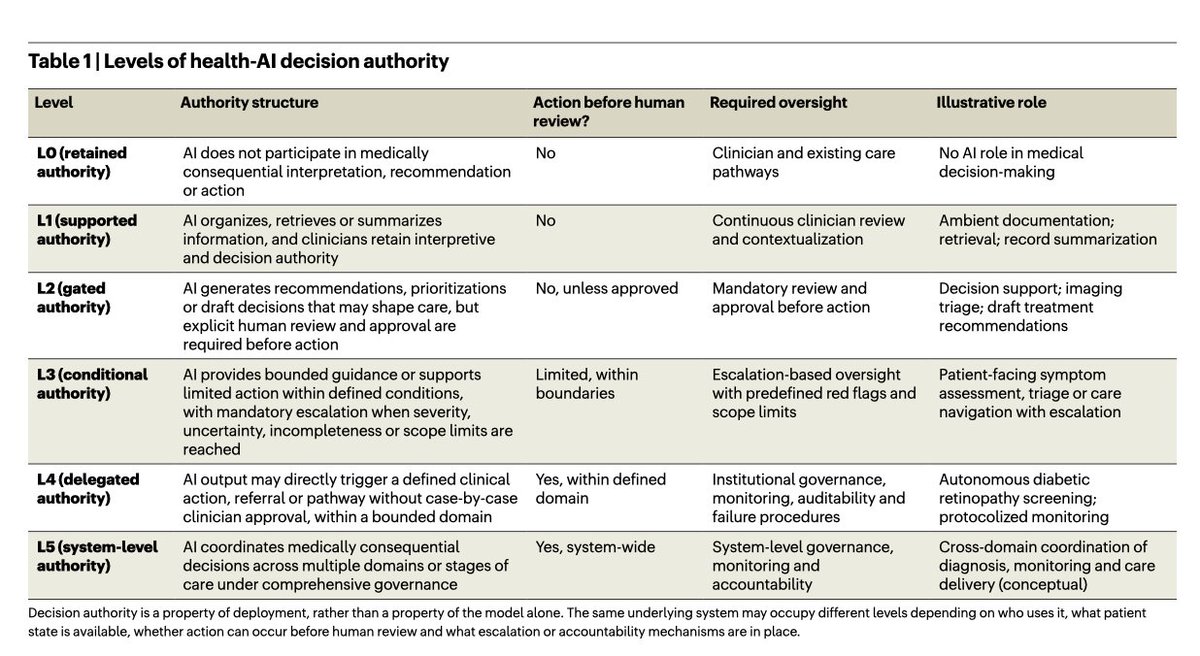
Our perspective on decision authority in health AI was just published at @Nature Health, w/ Aiden Gu
free access https://t.co/JE0OVWFe2l
https://t.co/OBhpEVTPZg
I just cracked the Top 5 in Substack’s Healthcare Politics category.
I looked around.
Most of the list built their audience around COVID, vaccines, and MAHA.
I didn’t.
My work is about something bigger.
Incentives.
Congress.
Payment policy.
Hospital consolidation.
Physician independence.
Private equity.
PBMs.
Price transparency.
Vertical integration.
The rules that quietly determine what your healthcare costs before you ever walk into a doctor’s office.
COVID exposed cracks in the system.
I’m interested in the foundation underneath it.
If you can explain incentives, you can explain almost everything else.
That’s the lane I’m building.
The Rojas Report isn’t about one moment in healthcare.
It’s about understanding the machinery that created all of them.
Rojas Actual.
🚨 BREAKING: Perplexity can now research any company, competitor, or market like a $200/hour McKinsey analyst. For free.
Here are 12 prompts that give you Wall Street-level intelligence in minutes:
(Save this before it disappears)
8. The “Expert Reviewer” Prompt
“Act as a peer reviewer. Critically evaluate this research paper and identify weaknesses, biases, methodological issues, and areas for improvement.”
A hospital administrator will use every legal, financial, and political tool available to protect the balance sheet.
An independent physician will call that “too complicated” and go back to seeing 28 patients.
Then wonder why the administrator won.
The most disruptive idea in American medicine is still a physician who owns his own work.
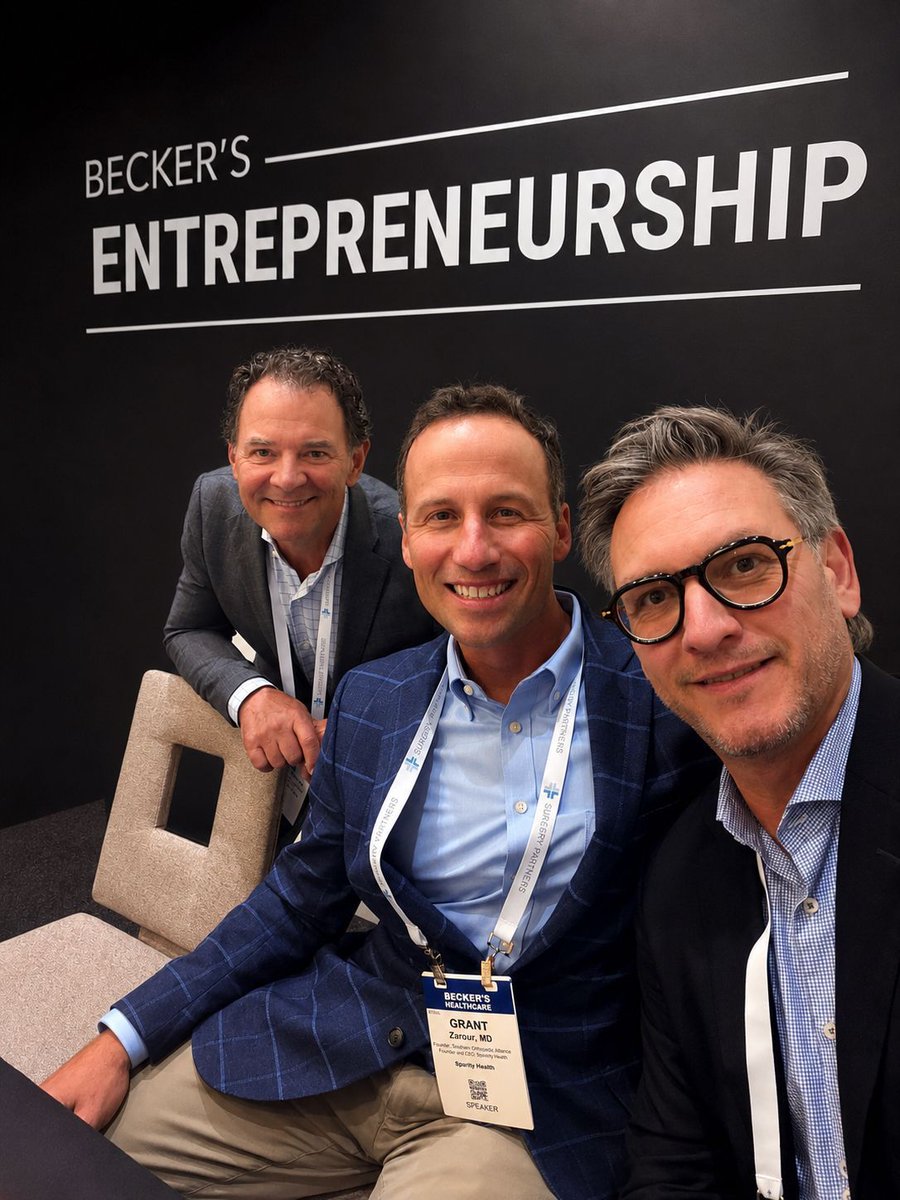
Yesterday I joined Grant Zarzour, MD and Paul Slosar, MD at Becker’s to talk physician entrepreneurship.
Our case was simple.
An independent practice with a real balance sheet can deliver higher quality at a lower price than the hospital-owned or PE-backed practice across the street.
Obvious, on its face.
Instead, it remains contrarian.
Healthcare spent 30 years separating physicians from ownership, capital, and control. Then it acted surprised when prices rose, quality flattened, and doctors burned out.
Physician ownership is not nostalgia.
It is the threat.