‘#Eritrea’s refusal to reduce its maritime space to a bargaining chip is not isolationism, it is discipline.’ #EritreaPrevails
The Custodians of the #RedSea: Eritrea and the Balance of the Horn https://t.co/iuY4Ma2TZQ via @Red Sea Beacon @AlulaFre
If you want to cringe for ten minutes straight, watch this self-promotional video Abiy Ahmed released just before rising to power in 2018.
It is embarrassing on every level. He pretends to “speak from the heart” while visibly reading from a script. He forces a strange, fake American accent. The delivery is awkward, filled with errors and rehearsed emotion that fails spectacularly.
But the most revealing part is what he doesn’t say.
Not once — not once — does Abiy mention #Ethiopia’s supposed “need” for sovereign access to the sea. This is the same man who now claims that he has “documented evidence” stretching back years about Ethiopia’s right to a coast. Yet in this carefully staged pre-power interview, the topic never even crosses his mind.
And ironically, it’s clear he had not yet been embraced by the UAE. In the video, he actually calls the UAE and Turkey “emerging threats” to the region — the exact opposite of the alliances he now depends on for survival.
The whole clip exposes the contradiction between Abiy’s past claims, his current narratives, and the foreign patrons he later aligned himself with.
Good Read - A journey through "three seasons in two hours"; by Irdi Issaias
*"...Eritrea is a country with incredible diversity — a wide range of climates, cultures, landscapes, and ecosystems, making it a truly unique and fascinating place to live in and explore. Nature is one dimension that demonstrates Eritrea’s diversity, reinforcing the idea that the country is a fascinating place, with diverse environments and landscapes that offer unique experiences".
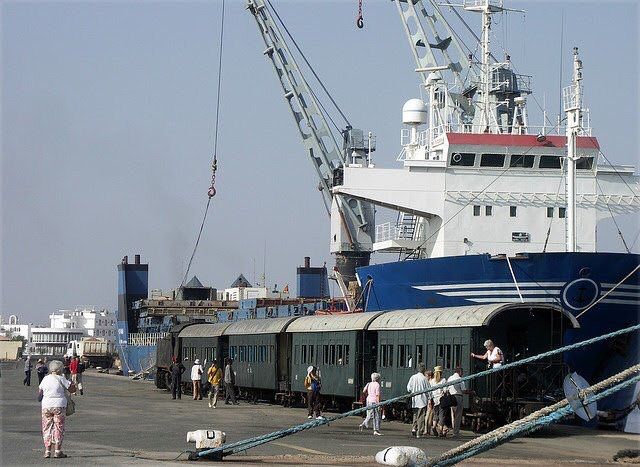
*"...With its year-round pleasant climate, rich cultural heritage, and diverse landscapes, Eritrea is an attractive destination for tourists. The country’s 70-mile journey from Asmara to Massawa offers a thrilling experience, with beautiful scenery, unique cultures, and refreshing climates. When you drive from Asmara to Massawa at any time of the year, within a two-hour journey, you might feel like you’re in a different season as the landscape, vegetation, and the climate changes dramatically".
*"...Known for its pristine beaches and marine life, the port city of Massawa offers a unique combination of history and architectural beauty,... As you delve into the detailed aspects of the country’s extensive marine environment, Eritrea’s coastline features stunning beaches, mangrove forests, and coral reefs, with an incredible array of marine species waiting to be discovered."
https://t.co/nBdQjHQLO2
Training on Police Profession to New Police Members
The Eritrean Police have provided training to 761 members of the 37th round of the national service, including 154 females, on the basic police profession. The training was conducted in Adi-Halo. The graduation ceremony was held in the presence of President Isaias Afwerki on 13 November.
Maj. Andom Mehari, head of police profession training at the Police and Security Forces Training Center, reported that the training covered familiarization with the objectives and mission of the police profession, police station activities, law and crime investigation, public relations and civic education, reporting, internet and cyber security, as well as topics related to police activities.
Noting that the trainees have successfully completed their theoretical training and are now moving to practical work, Col. Mehari Tsegay, Commander of the Eritrean Police Force, called on them to practically apply the knowledge they gained in maintaining peace and security in the society.
At the event, outstanding trainees were recognized. The program also featured artistic performances by the Eritrean Police music band.
The Potemkin Party’s fairytale keeps getting wilder. Now they’re asking the international community to help them claim another sovereign country’s sea—as if borders are mere props in their political theatre. #Eritrea#Ethiopia#HoA
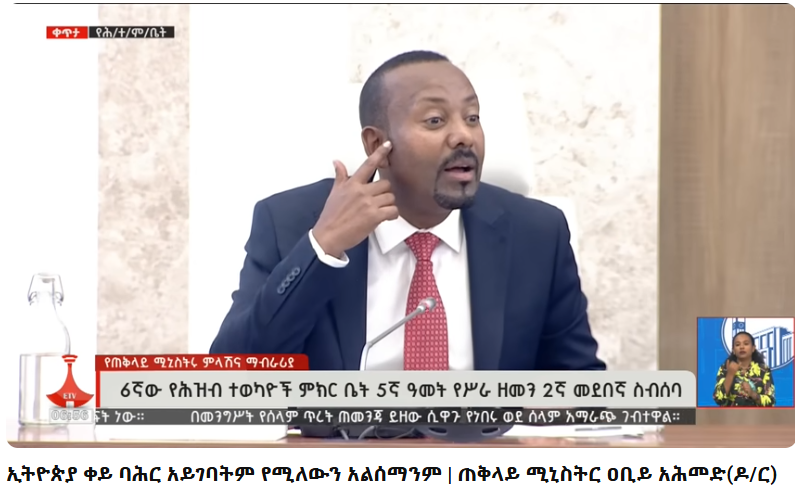
Prime Minister Abiy Ahmed seems to relish storytelling, even if it requires borrowing, or outright embellishing, tales to fit his narrative. His speeches are a genre of their own: part sermon, part stand-up, part historical fan fiction. Each monologue arrives drenched in metaphor, punctuated with borrowed wisdom, and sprinkled with a sense of divine destiny. His recent address to the Ethiopian Parliament was no exception. I listened closely, and something felt off…it smelled fishy.
In that infamous monologue, PM Abiy slipped into full storyteller mode. He recounted the tale of a physics student who arrived late to class, was sent to sit on the balcony as punishment, and, unaware that two equations on the blackboard were deemed “unsolvable”, copied them down believing they were homework questions.
Over the weekend, the student solved one. Upon returning, the professor was stunned: the student had unknowingly solved a long-unsolved problem. Abiy framed the lesson dramatically: the student succeeded because he “did not hear”- ኣልሰማም-that the problems were impossible or unsolvable.
Something was indeed fishy. You could sense it in his tone...that polished calm before the performance. He was up to something. My gut feeling was right. What followed wasn’t just another speech; it was a carefully staged act of deception.
With his trademark smile and preacher’s cadence, Abiy Ahmed was about to hoodwink the Ethiopian Parliament, and he did. In broad daylight, before cameras and lawmakers, he recited a borrowed parable as if it were his own revelation, weaving fiction into history, and once again proving that in his political theatre, truth is merely a prop.
The real story is not new, and most of us have heard it before; some may even have seen the movie "Good Will Hunting", inspired by that story. For those unfamiliar, like the members of the Ethiopian Parliament, it is the well-known anecdote of George Dantzig. In 1939, George Dantzig, a graduate student at UC Berkeley, famously arrived late to a statistics class and mistook two notoriously unsolved problems on the blackboard for routine homework.
Over the next few days, he diligently worked through them, submitting his solutions with the innocent assumption that they were ordinary assignments. Only later did he learn that he had solved problems that had baffled mathematicians for years, and his “homework” became the cornerstone of his doctoral thesis, a testament to one quietly achieved brilliance. He had unknowingly solved problems, simply because he did not hear the professor say they were unsolvable…because he was late to class.
In academia, Dantzig’s story is a lesson in #humility, #curiosity, and #perseverance, a quiet triumph of intellect over intimidation. Abiy, however, appropriated the tale without attribution and transformed it into a nationalistic parable declaring:
“…If anyone says #Ethiopia does not deserve to be on the Red Sea, our answer is ኣልሰማንም! (‘We didn’t hear’) …”
There is a big difference between willfully not hearing and not hearing because one was not there. George Dantzig, for all his brilliance, was late to class, he didn’t ignore the lesson; he simply missed it. By contrast, when PM Abiy told the Ethiopian Parliament that “we did not hear” about the issue of #Ethiopia and the Red Sea, it was not an innocent oversight.
It was a deliberate performance, pretending that there was some alternative solution other than respecting international law and the sovereignty of the Red Sea states, a fiction meant to mislead lawmakers and cloak the obvious truth in false possibilities.
The implication was obvious: Ethiopia, like the student, would defy doubters and achieve the impossible. In Abiy’s framing, the student is #Ethiopia, the teacher is the international community, and the “unsolvable problem” is a place on the Red Sea for #Ethiopia.
Dantzig’s lesson about disciplined inquiry and quiet brilliance was transformed into a sermon about entitlement: faith over fact, aspiration over sovereignty.
Where Dantzig quietly achieved brilliance, Abiy loudly declares what reality should be, and demands applause. The Parliament complied, clapping with uncritical excitement.
This is plagiarism with a political twist. Dantzig’s story celebrates discovery through diligence; Abiy’s retelling twists it into justification for ignoring international law and the sovereignty of neighboring states.
Someone needs to tell the Prime Minister to stop manipulating Ethiopians, especially the gullible youth. No number of borrowed parables will bring #Ethiopia any closer to the sea. Borders do not dissolve under metaphor. Nations cannot rewrite themselves through inspirational speeches.
When governance falters, spectacle becomes the substitute. When facts fail to inspire, fables take their place. Abiy’s speeches are no longer about guiding a nation through turbulent times; they are about maintaining the illusion of control, the theater of messianic leadership. He lifts from films, parables, and university folklore to recast Ethiopia’s political crises as heroic journeys or divine tests.
This is how such leaders lead their people straight into the abyss. It is not merely deceit, it is desperation.
Dantzig’s triumph came from diligence, patience, and humility; Abiy’s performance relies on theatrics, borrowed stories, and the willing suspension of critical thought. Pity the people of #Ethiopia, who are led to cheer for illusions while real challenges go unaddressed.
Pity a nation where hope is manufactured on a podium rather than built through strategy, diplomacy, and respect for law. Pity the youth, whose aspirations are fed by borrowed parables rather than grounded in reality. Spectacle cannot fill ports, redraw borders, or rewrite history...yet, for now, applause masks the truth.
Allow me to end with my twist on this old Ethiopian adage…
ምከረው ምከረው እንቢ( ኣልሰማም) ካለህ መከራ ይምከረው!
Documents signed between Menelik II and Italy and Britain:
The Borders Between Eritrea and Ethiopia
On July 10th 1900,· the Emperor of Ethiopia, Menelik II, and captain Federico Tchico Decola, the representative of #Italy in #Ethiopia, signed a treaty between Italy and Ethiopia in Adiss Ababa for the demarcation of borders between #Eritrea and #Ethiopia. The two parties to the treaty agreed that the Tumat-Tudlek, Marab, Bilsa - Muta line be the borderline between Eritrea and Ethiopia.
However, the last borderline between Eritrea and Ethiopia was soon changed by the memorandum appended to the treaty of May 15th, 1902, among #Britain, #Italy and #Ethiopia. The first article of this treaty stipulated that "The borderline between Eritrea and Ethiopia goes from the junction of the depression of Um Hager with the Setitit river following the course of the latter until its meeting with the Maitib river. Then the borderline goes along with the course of Maitib leaving the mountain of 'W elakatakora' or 'Alatakora' inside Eritrea up to the junction of the Ma'arab river with the Mai Ambsa river. The borderline between the junction of Setit and Maitib and the junction of Ma'arab and Mai.
Ambsa will be left up to Italian and Ethiopian delegates to determine, provided the Kunama tribe stay within Eritrean territory.
On May 16th, 1908, Menelik II and the representative of the Italian government in Addis Ababa, Guiseppi Coli de Felesiano, signed a treaty between Italy and Ethiopia for the demarcation of borders between the colony of Eritrea and Ethiopia; The first article of this treaty stipulated that the borderline between the colony of Eritrea and the Tigrai province go from the furthest point east of Muta river south east ward in a direction parallel to the coast and sixty kilometers away from it until it met the borders of French possessions in Somali-land [today's #Djibouti].
Z recent update warns of significant risks in Ethiopia, including civil war, sexual violence, kidnappings, Christian-targeted massacres, & terrorism. It calls for changes in governance detrimental to Z country's prosperity & notes Z USA's inaction compared to warnings abt Nigeria
CALL AN AGGRESSOR BY ITS NAME
The #AU, the #UN, and all responsible member states bear not only a moral duty but also a binding legal obligation to reject and condemn #Ethiopia’s “#Prosperity” Party #expansionist rhetoric and its dangerous implications. Their publicly declared maritime ambitions, orchestrated media campaign and planned intentions to invade sovereign Eritrean territories can not be considered a mere political discourse; it is a direct assault, not only against a sovereign country, but also on the international legal order, the Charter of the United Nations, and the foundational principles of the African Union that uphold the recognition of colonial borders and respect the #sovereignty of member states.
Failure to act or even silence in the face of such open threats amount to complicity. It will embolden those who entertain daydreams and believe borders can be redrawn by force. It will also further destabilize a region already burdened by instability. The international community must therefore speak with one clear voice; call an #aggressor by its name. #Aggression, in any form or guise, should neither be tolerated nor have a place in the 21st century. Peace and stability among nations depend on principled, decisive, and collective rejection of unlawful expansionist territorial ambitions.
It has been crystal clear that Eritrea’s #independence, its sovereignty and territorial integrity are non-negotiable; they were earned through immense sacrifice, united popular support and safeguarded by unshakable national unity and resolve of its people. Any attempt to undermine these principles would be a grave miscalculation. #Eritrea possesses both the legitimate right and capability to defend its #sovereignty; firmly, lawfully, and decisively.
#EritreaPrevails
#Africa
#RedSea
‘In @AbiyAhmedAli’s case, the Nobel Committee must choose between precedent and principle. History will judge which path it takes—but the uniqueness of this case demands a response unlike any before.’ Dr. Asgede Hagos
https://t.co/OrIYTr58r9
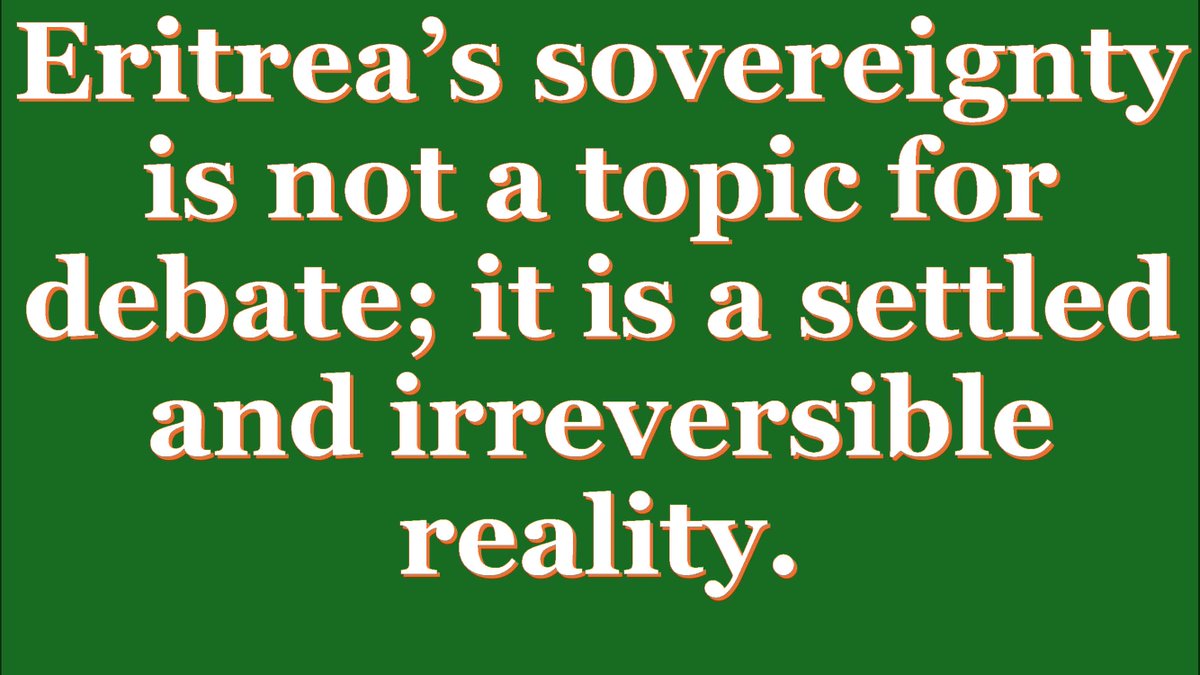
It must be clearly stated that #Ethiopia - since its inception as a country has never, at any point in history, possessed sovereign access to the #RedSea. The only time it used Eritrean ports was during its illegal #occupation of Eritrea - an occupation rejected by the Eritrean people and defeated through a 30-year protracted struggle for #independence. Eritrea’s #sovereignty and territorial integrity was achieved through enormous sacrifice and is not subject for any negotiation or revision. Any attempt by Ethiopia’s current PP leadership to lay claim to Eritrean land or ports like Assab or any other place for that matter, is not only historically false but also an open violation of international law and the 1963 OAU principle that upholds colonial boundaries. Such reckless rhetoric serves only to destabilize the region and expose the aggressor nature of those who utter it. Eritrea’s sovereignty is not a topic for debate; it is a settled and irreversible reality.
#EritreaPrevails
#AU
#Breaking_news!
Egyptian intelligence has leaked news that we will initiate the first round of war with Ethiopia, regardless of whether Eritrea provides us with a passage or not.
@ebczena
At #UNGA 80, Minister Osman of #Eritrea stressed that today’s global order remains marked by domination, plunder, and injustice, challenges that weigh heaviest on Africa through exploitation, debt, and instability. Calling for a fairer and more just wld order…


![SirakBahlbi's tweet photo. Documents signed between Menelik II and Italy and Britain:
The Borders Between Eritrea and Ethiopia
On July 10th 1900,· the Emperor of Ethiopia, Menelik II, and captain Federico Tchico Decola, the representative of #Italy in #Ethiopia, signed a treaty between Italy and Ethiopia in Adiss Ababa for the demarcation of borders between #Eritrea and #Ethiopia. The two parties to the treaty agreed that the Tumat-Tudlek, Marab, Bilsa - Muta line be the borderline between Eritrea and Ethiopia.
However, the last borderline between Eritrea and Ethiopia was soon changed by the memorandum appended to the treaty of May 15th, 1902, among #Britain, #Italy and #Ethiopia. The first article of this treaty stipulated that "The borderline between Eritrea and Ethiopia goes from the junction of the depression of Um Hager with the Setitit river following the course of the latter until its meeting with the Maitib river. Then the borderline goes along with the course of Maitib leaving the mountain of 'W elakatakora' or 'Alatakora' inside Eritrea up to the junction of the Ma'arab river with the Mai Ambsa river. The borderline between the junction of Setit and Maitib and the junction of Ma'arab and Mai.
Ambsa will be left up to Italian and Ethiopian delegates to determine, provided the Kunama tribe stay within Eritrean territory.
On May 16th, 1908, Menelik II and the representative of the Italian government in Addis Ababa, Guiseppi Coli de Felesiano, signed a treaty between Italy and Ethiopia for the demarcation of borders between the colony of Eritrea and Ethiopia; The first article of this treaty stipulated that the borderline between the colony of Eritrea and the Tigrai province go from the furthest point east of Muta river south east ward in a direction parallel to the coast and sixty kilometers away from it until it met the borders of French possessions in Somali-land [today's #Djibouti].](https://pbs.twimg.com/media/G5ZcnuOXwAAN-uR.jpg)
![SirakBahlbi's tweet photo. Documents signed between Menelik II and Italy and Britain:
The Borders Between Eritrea and Ethiopia
On July 10th 1900,· the Emperor of Ethiopia, Menelik II, and captain Federico Tchico Decola, the representative of #Italy in #Ethiopia, signed a treaty between Italy and Ethiopia in Adiss Ababa for the demarcation of borders between #Eritrea and #Ethiopia. The two parties to the treaty agreed that the Tumat-Tudlek, Marab, Bilsa - Muta line be the borderline between Eritrea and Ethiopia.
However, the last borderline between Eritrea and Ethiopia was soon changed by the memorandum appended to the treaty of May 15th, 1902, among #Britain, #Italy and #Ethiopia. The first article of this treaty stipulated that "The borderline between Eritrea and Ethiopia goes from the junction of the depression of Um Hager with the Setitit river following the course of the latter until its meeting with the Maitib river. Then the borderline goes along with the course of Maitib leaving the mountain of 'W elakatakora' or 'Alatakora' inside Eritrea up to the junction of the Ma'arab river with the Mai Ambsa river. The borderline between the junction of Setit and Maitib and the junction of Ma'arab and Mai.
Ambsa will be left up to Italian and Ethiopian delegates to determine, provided the Kunama tribe stay within Eritrean territory.
On May 16th, 1908, Menelik II and the representative of the Italian government in Addis Ababa, Guiseppi Coli de Felesiano, signed a treaty between Italy and Ethiopia for the demarcation of borders between the colony of Eritrea and Ethiopia; The first article of this treaty stipulated that the borderline between the colony of Eritrea and the Tigrai province go from the furthest point east of Muta river south east ward in a direction parallel to the coast and sixty kilometers away from it until it met the borders of French possessions in Somali-land [today's #Djibouti].](https://pbs.twimg.com/media/G5ZckDaWEAA7dtX.jpg)
![SirakBahlbi's tweet photo. Documents signed between Menelik II and Italy and Britain:
The Borders Between Eritrea and Ethiopia
On July 10th 1900,· the Emperor of Ethiopia, Menelik II, and captain Federico Tchico Decola, the representative of #Italy in #Ethiopia, signed a treaty between Italy and Ethiopia in Adiss Ababa for the demarcation of borders between #Eritrea and #Ethiopia. The two parties to the treaty agreed that the Tumat-Tudlek, Marab, Bilsa - Muta line be the borderline between Eritrea and Ethiopia.
However, the last borderline between Eritrea and Ethiopia was soon changed by the memorandum appended to the treaty of May 15th, 1902, among #Britain, #Italy and #Ethiopia. The first article of this treaty stipulated that "The borderline between Eritrea and Ethiopia goes from the junction of the depression of Um Hager with the Setitit river following the course of the latter until its meeting with the Maitib river. Then the borderline goes along with the course of Maitib leaving the mountain of 'W elakatakora' or 'Alatakora' inside Eritrea up to the junction of the Ma'arab river with the Mai Ambsa river. The borderline between the junction of Setit and Maitib and the junction of Ma'arab and Mai.
Ambsa will be left up to Italian and Ethiopian delegates to determine, provided the Kunama tribe stay within Eritrean territory.
On May 16th, 1908, Menelik II and the representative of the Italian government in Addis Ababa, Guiseppi Coli de Felesiano, signed a treaty between Italy and Ethiopia for the demarcation of borders between the colony of Eritrea and Ethiopia; The first article of this treaty stipulated that the borderline between the colony of Eritrea and the Tigrai province go from the furthest point east of Muta river south east ward in a direction parallel to the coast and sixty kilometers away from it until it met the borders of French possessions in Somali-land [today's #Djibouti].](https://pbs.twimg.com/media/G5ZcZVzWYAAnEhR.jpg)












![SirakBahlbi's tweet photo. Documents signed between Menelik II and Italy and Britain:
The Borders Between Eritrea and Ethiopia
On July 10th 1900,· the Emperor of Ethiopia, Menelik II, and captain Federico Tchico Decola, the representative of #Italy in #Ethiopia, signed a treaty between Italy and Ethiopia in Adiss Ababa for the demarcation of borders between #Eritrea and #Ethiopia. The two parties to the treaty agreed that the Tumat-Tudlek, Marab, Bilsa - Muta line be the borderline between Eritrea and Ethiopia.
However, the last borderline between Eritrea and Ethiopia was soon changed by the memorandum appended to the treaty of May 15th, 1902, among #Britain, #Italy and #Ethiopia. The first article of this treaty stipulated that "The borderline between Eritrea and Ethiopia goes from the junction of the depression of Um Hager with the Setitit river following the course of the latter until its meeting with the Maitib river. Then the borderline goes along with the course of Maitib leaving the mountain of 'W elakatakora' or 'Alatakora' inside Eritrea up to the junction of the Ma'arab river with the Mai Ambsa river. The borderline between the junction of Setit and Maitib and the junction of Ma'arab and Mai.
Ambsa will be left up to Italian and Ethiopian delegates to determine, provided the Kunama tribe stay within Eritrean territory.
On May 16th, 1908, Menelik II and the representative of the Italian government in Addis Ababa, Guiseppi Coli de Felesiano, signed a treaty between Italy and Ethiopia for the demarcation of borders between the colony of Eritrea and Ethiopia; The first article of this treaty stipulated that the borderline between the colony of Eritrea and the Tigrai province go from the furthest point east of Muta river south east ward in a direction parallel to the coast and sixty kilometers away from it until it met the borders of French possessions in Somali-land [today's #Djibouti].](https://pbs.twimg.com/media/G5Zc1JJWEAAES1a.jpg)