We’ve heard you! Local split-screen multiplayer racing is coming in early 2027.
A dedicated team at @Fuse_Games has been working hard to bring a brand new mode, Free Play, to STAR WARS: Galactic Racer™.
This new mode will allow you to choose your vehicle, character, planet, and race track to race alone or with up to 3 other players in local split-screen action.
Kenney Shape is now FREE! (and it'll remain free, forever) ✨
Previously a paid tool, I'm releasing it as a gift to the community. Today's update will be the final one, with no further updates planned. That way I can focus on new software & projects!
https://t.co/Ucsn2H5yHZ
Our GMTK 2026 game placed in the Top 1% for Creativity (#102) and Audio (#105) out of 10,634 entries!
Thank you to everyone who played! ❤️
#gmtkjam#gmtk#indiedev
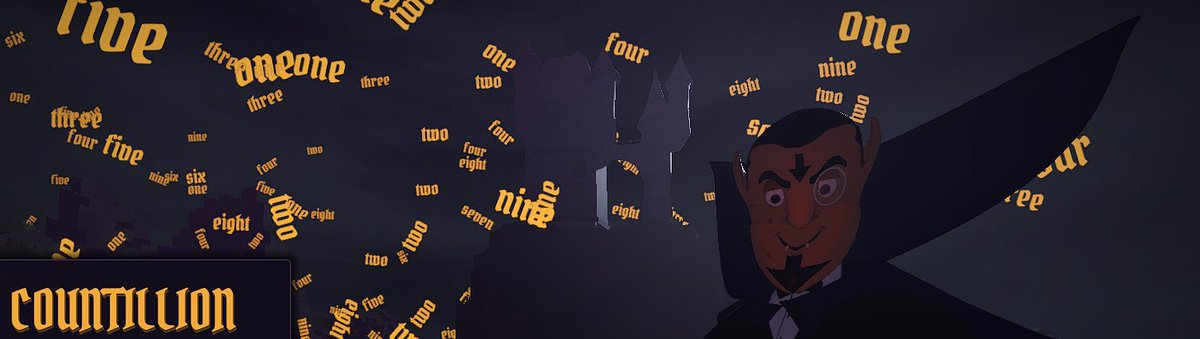
Here's a game I made for One Button Game Jam over 3 days!
It's a (spooky) carnival game roguelike!
See if you can create a crazy build and beat all 3 bosses!
https://t.co/4B12adGYGp
You're watching a $248 million film and not a single green or blue screen was used. The alien is a handmade puppet. The cockpit physically rotates to simulate gravity. I looked at the production tech behind this 95% score, and the engineering is wild.
Phil Lord and Chris Miller, directing their first live-action movie in 12 years, built the entire Hail Mary spacecraft as a real set at Shepperton Studios in England. Not a miniature. Not a digital model. A full-size ship interior you can walk through. Production designer Charlie Wood studied the International Space Station, Russia's Mir station, and the Boeing 747 cockpit to get the look right. He deliberately made the panels mismatched, because real spacecraft are assembled from parts made by different companies. Nothing matches perfectly. That's what makes it feel real.
The cockpit is only about 8 feet wide. It sits on a mechanical platform that can tilt, spin, and shake, so when the ship changes direction or enters different gravity conditions, the whole set moves. Chairs end up on walls. Ladders flip direction. Gosling was suspended inside a spinning ring so he could float and move through the ship for real, reacting to actual hardware around him. No guessing where a wall might be added later.
Then there's Rocky. He's the alien co-lead, and he's not CGI. Neal Scanlan, the creature designer who built the Porgs for Star Wars, spent a full year on this character. Over 300 designs before they landed on the final look. Rocky is a thin, hollow shell, 3D-printed from a digital sculpture, then hand-painted in see-through layers so light passes through him like skin. His arms pop off and swap out depending on the scene: one set has a closed fist for walking, another has tiny motorized fingers strong enough to pick up objects. Five puppeteers (nicknamed the "Rockyteers") operated him in every scene. James Ortiz, an award-winning puppet designer from New York theater, voiced Rocky and controlled him on set. When Scanlan met him, he told Ortiz, "You're Frank Oz, and I'm making Yoda for you." Every reaction Gosling gives to the alien is to something physically in front of him.
Greig Fraser, who won the Oscar for shooting Dune, filmed the space scenes in the larger IMAX format (that taller image you see in IMAX theaters) and the Earth flashbacks in regular widescreen. Then the team did something unusual: they took the digital footage and printed it onto real film strips, twice, using two different types of film stock. Then they scanned those strips back into digital. It sounds redundant, but it adds a texture and warmth that you can only get from physical film. Fraser used the same technique on Dune and The Batman.
Drew Goddard spent six years writing this screenplay. His last adaptation of Andy Weir's novel, The Martian, earned him an Oscar nomination. He described the challenge this way: a screenplay gets about 5% of a novel's word count. The lead is alone for most of the runtime. When he finally gets a co-star, that co-star doesn't speak English, communicates through sounds closer to whale song, and has no face. Goddard called it a screenwriter's nightmare, then said that difficulty was the whole point. He and the directors fought studio pushback to keep Weir's original ending intact.
95% from 212 critics. 98% from over 2,500 audience ratings. And the lead isn't a superhero, a cop, or a soldier. He's just an ordinary middle school science teacher.
it is genuinely hilarious having 100000000 tweets like “gun violence is a fact of life, lib” and then get shot. sorry you have to admit that it’s funny even if you’re right wing
@5thRateDuelist@Pharaohmone Do you think y’all could go over YCS procedures? Like how side events work, how many rounds, etc? Also maybe an overview of calling for judges? Whats the etiquette if opp makes mistakes/mis rulings?