stop ngomongin negara lain lah, takutnya blunder lagi kita yg ketar-ketir
lagi bahas skor PISA Indonesia di bawah Singapura, prabs:
"kalau singapur saya ga terlalu khawatir. hanya negara 5 jt penduduk kok, cuman 1 kota"
"kita 388 rb sekolah. ada di tengah gunung & di pulau terluar. jadi gimna mau ngasih pendidikan terbaik"
"menteri pendidikan singapur cuman butuh keliling 2 jam buat ngecek hampir semua sekolah, terjangkau dari kantor dia"
Ngomong-ngomong soal mahasiswa FK dari Malaysia..
Ada seorang menteri Malaysia yang merupakan lulusan kedokteran UNISBA.
Namanya Muhammad Taufik Juhari. FK Unisba 2015. Lulus tahun 2020.
Istrinya bahkan berasal dari Indonesia dan sama-sama kuliah di UNISBA juga.
Taufik sendiri menjabat sebagai Menteri Belia dan Sukan (Menpora). Kader Parti Keadilan Rakyat.
Taufik adalah anak dari Johari Abdul, Ketua Dewan Rakyat Malaysia (Parlemen)
FOTO: WIKIMEDIA (Thegreatrebellion)
Funfact:
Kerusakan mental snob ga napak tanah kebanyakan dokter di Indonesia ini penyebabnya Belanda.
Untuk melawan gerakan nasionalis yang mulai menguat di tubuh kaum Priyayi, Belanda menerapkan strategi konflik horizontal.
Siapapun orang yg jadi lulusan dokter (terutama di STOVIA) langsung dikasih gelar Priyayi dan segala privilegenya.
Akhirnya Priyayi darah biru ga terima. Berantem deh Priyayi darah biru vs Priyayi dokter.
Singkat cerita Indonesia merdeka, tapi sikap snob ala priyayi itu masih ada sampai sekarang.
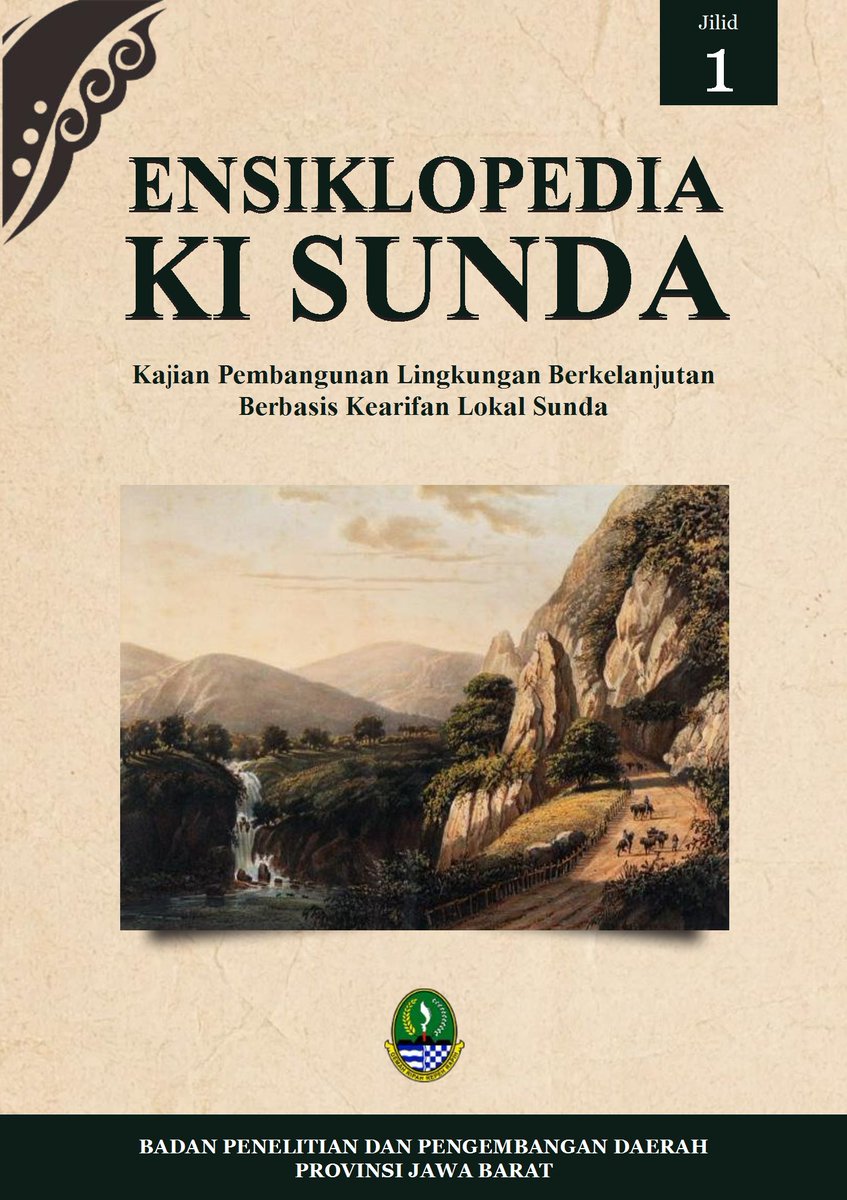
Tiga jilid Ensiklopedia Ki Sunda kini dapat diunduh secara bebas. Dengan total 1.500 halaman, karya ini merupakan sebuah ikhtiar untuk membaca kembali pengetahuan Sunda sebagai suatu sistem pemikiran tentang alam, manusia, ruang, teknologi, tata kehidupan, dan masa depan.
Ditulis oleh bersama dengan Dr Aditia Gunawan, Dr Hazmirullah, Dr Luthfi Adam, Dr Munawar Holil, Dr Gani Ahmad Jaelani, Prof. Dr Jajang A. Rohmana, Dr Adilan Mahdiyasa, Tasya Salsabila, serta para peneliti BP2D Pemprov Jabar lainnya, Ensiklopedia Ki Sunda mempertemukan kajian manuskrip, sejarah, ekologi, dan ilmu pengetahuan.
Warisan pengetahuan tidak semestinya berhenti sebagai obyek seremoni. namun dibaca, diperdebatkan, dan dijadikan cara pandang akan dunia
Read for free here: https://t.co/YZUPLdzvFk
🤯 Gila sih... workflow AI sekarang udah secepat ini.
Ada yang berhasil bikin website animasi sinematik yang biasanya dihargai sekitar $6.000–$35.000, tapi selesai dalam ±50 menit dengan biaya cuma sekitar $27 buat credits. 🚀
Ini alur kerjanya:
📝 0:00 — Brief & konsep scroll (Claude)
Sekitar 4 menit.
Claude ngebaca brief lalu nyusun alur pengalaman pengunjung—apa yang harus mereka rasain di detik ke-3, 15, sampai 40 saat scroll website. 🎬
🎥 0:04 — Hero video & B-roll (Higgsfield)
Sekitar 9 menit.
Visual sinematik dibuat dari puluhan model AI dan disesuaikan sama alur cerita. Biaya utamanya ada di tahap ini, sekitar $27 credits.
💻 0:13 — Build website (Claude Code)
Sekitar 20 menit.
Claude Code ngebangun website lengkap dengan GSAP ScrollTrigger, Lenis, ekstraksi frame, sampai optimasi asset—tanpa perlu bikin keyframe animasi satu-satu secara manual.
✨ 0:33 — Cinematic layer
Sekitar 6 menit.
Efek kayak film grain, partikel, vignette, glass card, sampai color grading langsung ditambahin otomatis.
📱 0:39 — QA, copywriting & mobile optimization
Sekitar 12 menit.
AI ngecek kecepatan loading, breakpoint di berbagai device, alur scrolling, lalu nulis ulang bagian copy yang dirasa kurang pas.
Hasil akhirnya?
⏱️ Total waktu: sekitar 51 menit
💸 Biaya: sekitar $27
👤 Operator: cuma 1 orang
Padahal proyek serupa di studio biasanya melibatkan 4 orang, makan waktu sekitar 3 minggu, dengan biaya mulai $6.000 sampai $35.000. 😳
Yang menarik, Higgsfield juga bisa dihubungkan langsung ke Claude Code lewat MCP (Model Context Protocol). Jadi Claude bisa menghasilkan sekaligus menarik klip video langsung ke workflow tanpa perlu ekspor manual. ⚡
Kalau tools AI terus berkembang kayak gini, yang berubah bukan cuma biaya produksinya...
Tapi juga seberapa cepat sebuah ide bisa berubah jadi produk yang benar-benar jadi. 🔥🚀
https://t.co/guGOlmDCL3
🚨 Stop asking AI to build your entire project from a single prompt.
Don't do this:
> "Build me a SaaS website."
That's how you get spaghetti code, hallucinations, and endless rewrites.
Here's a workflow that consistently produces better results:
Phase 1 — Brainstorm first
Use Context7 MCP before writing a single line of code.
Generate:
→ PRD.md
→ Design.md
Most people misunderstand Design.md.
It's NOT just:
→ Colors
→ Typography
→ Layout
Treat it as the implementation blueprint.
Include things like:
→ UX flows
→ Component behavior
→ State management strategy
→ Edge cases
→ User journeys
→ Accessibility requirements
→ Responsive behavior
→ Interaction patterns
→ Error handling
→ Design constraints
The more context Design.md contains...
The less room the AI has to hallucinate.
---
Phase 2 — Plan the build
Before generating code...
Ask the AI to split the project into development phases.
Example:
Phase 1 → Project setup
Phase 2 → Database & Auth
Phase 3 → API
Phase 4 → Business logic
Phase 5 → Frontend
Phase 6 → Testing
Phase 7 → Deployment
---
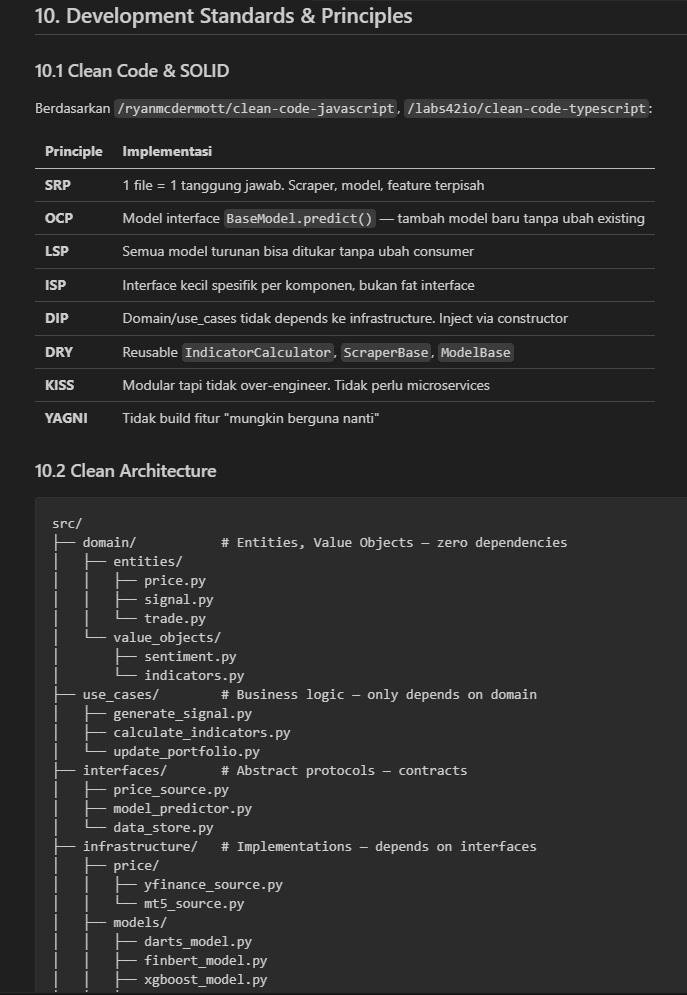
Phase 3 — Apply software engineering principles
Tell the AI to follow proper development principles.
The result is usually:
✅ Clean Architecture
✅ Clean Code
✅ Minimal dead code
✅ No redundant abstractions
✅ Better maintainability
✅ Better performance
---
Phase 4 — Never build everything at once
If your project has:
Frontend + Backend
Don't ask AI to generate both simultaneously.
Build one.
Test it.
Document it.
Only then move to the next layer.
Personally I always do:
Backend
↓
Testing
↓
Documentation
↓
Frontend
↓
Integration
You'll spend less time fixing AI mistakes...
...and more time shipping products. 🚀
INSTEAD OF WATCHING NETFLIX TONIGHT.
Spend 1 hour with this.
Claude AI FULL COURSE that teaches you how to BUILD and AUTOMATE anything.
The people who watch this tonight will wake up tomorrow with a new skill.
Watch it and Bookmark it now
This trader built a Quant bot with Claude and pulled $218,425 in 64 days.
No team. No office. No Bloomberg terminal.
Just Claude + Polymarket API + one repeatable pattern.
The wallet started April 5th.
48,018 predictions executed.
31 trades per hour.
52% win rate.
$304.8K deposited → $372K total.
+71.7% ROI.
Average profit: $3,413 per day.
Most traders try to predict the future.
This bot reads what just happened and moves before the market reprices.
The entire system runs on one logic:
→ News breaks
→ Polymarket odds take 30 to 90 seconds to adjust
→ Bot enters during the lag
→ Exits before repricing completes
No predictions. No chart reading. Pure speed arbitrage.
Biggest wins:
$149 became $13,450
$204 became $8,905
$88 became $8,434
Same setup. Same entry pattern. Repeated 48,000 times.
The edge is not finding one perfect trade.
The edge is finding one mispricing and running it until the window closes.
Claude monitors:
→ Bloomberg feeds
→ Reuters terminal
→ Order book depth
→ Historical lag patterns
Executes through CLOB API.
Zero manual intervention.
The bot wakes up. Scans. Executes. Closes. Repeats.
$3,413 per day for 64 days straight.
You only need Claude + device + 1 hour to build.
Giving this free for 24 hours.
To get it:
1. Comment QUANT
2. Like and retweet this
3. Follow me @codewithimanshu so I can DM you
Save this post. Build the lag arbitrage system this week. Start with $500. Scale on evidence.
this is f*cking gold
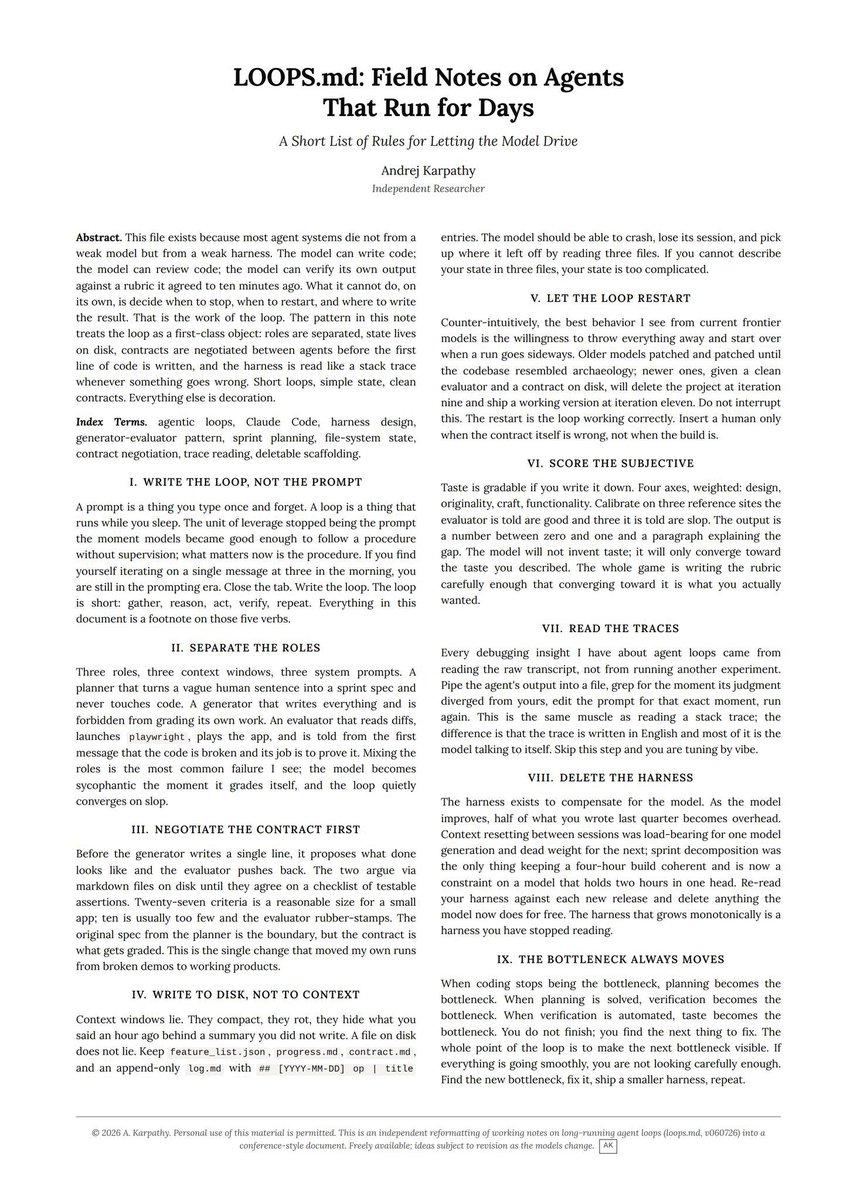
Andrej Karpathy joined Anthropic five weeks ago.
A friend on his team just showed me the exact LOOPS.md file he actually uses.
I dropped it into my setup. The very first response was different.
Not slightly different. Completely different.
Claude stopped giving generic answers and started working exactly the way I think.
You don't talk to the model anymore. You build the system that talks to the model for you.
Bookmark it before it gets lost in your feed.
Read it now, then check the article below.
My girlfriend asked why I was smiling at my phone at 3AM.
I lost my job last week.
Rent due in 4 days.
No backup plan.
Then I found a 33-year-old nerd who turned $1,000 into $946,207 trading Bitcoin with a trick he stole from hurricane forecasts.
No finance degree. No trading desk. Just a method every meteorologist uses and every trader ignores.
The method: meteorologists never forecast tomorrow with a single model. They run 31 and count the votes. He applied that exact framework to Bitcoin.
Built a Claude agent that reads every 5-minute BTC candle and feeds it into MiroFish simulator running 31 parallel prediction paths.
Trade only fires when 28 out of 31 models agree.
Below 26 votes? Trade dies instantly.
The agent moves faster than any human trading desk:
→ Collects market data 24/7 without breaks
→ Runs continuous simulations inside MiroFish engine
→ Operates fully autonomous with zero manual input
→ Every trade executes only when consensus hits threshold
→ Every dollar captured is pure market inefficiency exploit
That is the entire edge.
Not prediction. Consensus.
Position sizing follows Kelly criterion. Signal fires or it does not. Most signals fail the vote count, so the system stays flat most days.
He spent years learning that certainty is a scam and consensus is the only edge that matters.
You only need Claude Fable 5 + device + 1 hour per day.
Giving this free for 24 hours.
To get it:
1. Comment the word Fable
2. Like and retweet this
3. Follow me @expertwith_AI so I can DM you
Save this post. Build the consensus system this week. Start with $200. Scale on evidence.
My friend applied to 200 tech jobs in two years. No PhD. No Stanford.
Last month Anthropic offered him $750,000.
I asked him how he broke in from zero.
He sent me a course that was never supposed to get out. A 3-hour video to build a full LLM from scratch.
A developer teaches you exactly how LLMs like ChatGPT and Claude are actually built.
I watched it last night.
Halfway through, I realized it's embarrassingly simple to break into an AI lab.
Bookmark this and read the article below.
• 00:00 - intro to LLMs
• 05:43 - LLM transformer architecture
• 40:24 - training the LLM
• 1:30:27 - modernizing the LLM
• 2:33:53 - scaling the LLM
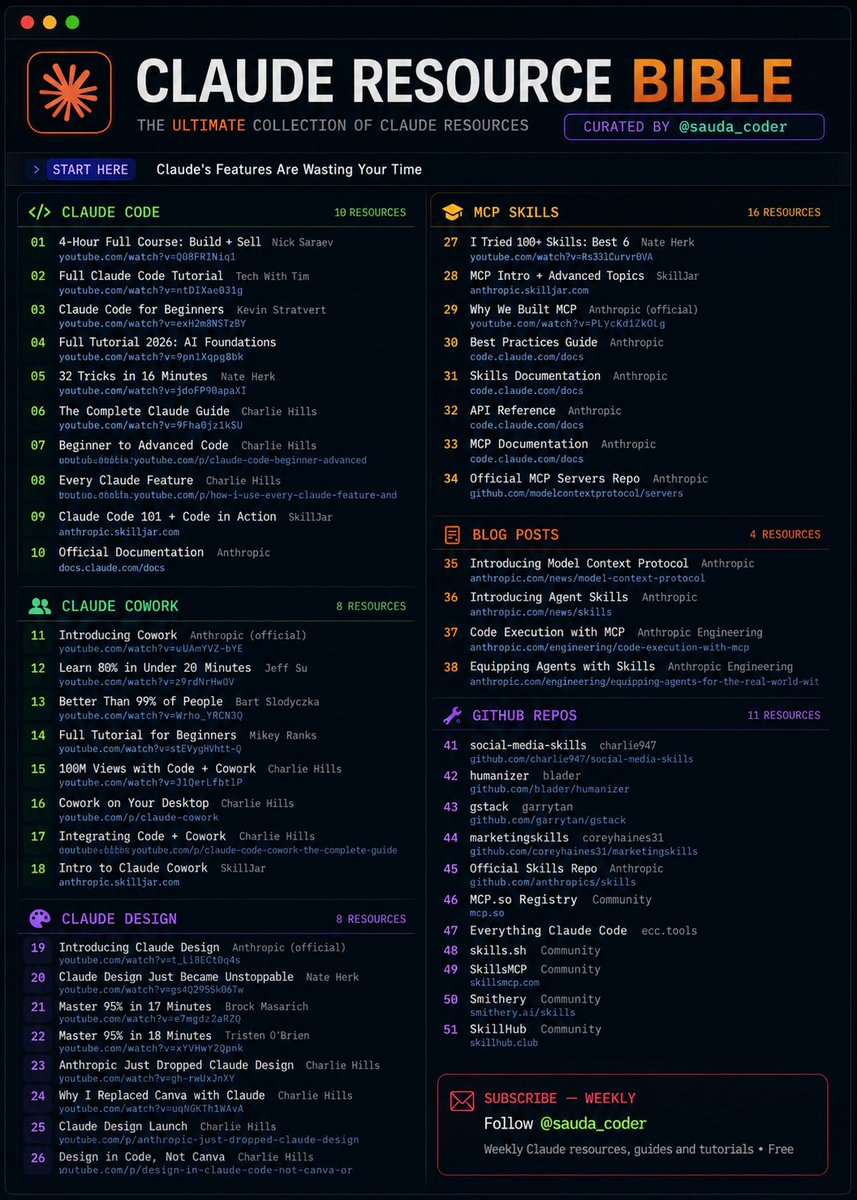
You don't need a $500 Claude course.
52 free resources, sorted into 4 modules:
CLAUDE CODE
1. https://t.co/HBtr5I6KpR 4-hour build + sell course
2. https://t.co/0ccZddC60z full Code tutorial
3. https://t.co/wZFomewX3v Code for beginners
4. https://t.co/5YWVUnA0Cb full 2026 walkthrough
5. https://t.co/PN7igUGnrS 32 tricks in 16 mins
6. https://t.co/YqKlLyQKeJ complete Claude guide
7. https://t.co/veC8mwhQpx beginner to advanced
8. https://t.co/8NLoFpa4t2 Claude features ranked
9. https://t.co/HvkJmMxTkk the official course
10. https://t.co/vPxQftLrbo official documentation
CLAUDE COWORK
11. https://t.co/TC2K7vZzy4 Anthropic's official intro
12. https://t.co/AwaBrEo19Z Cowork in 20 mins
13. https://t.co/85J54TZOLc better than 99% of users
14. https://t.co/iSum2Seddf full beginner walkthrough
15. https://t.co/3DoxEX4Xlm 100M views with Cowork
16. https://t.co/evr48tP8gU Cowork on your desktop
17. https://t.co/Wyx8bdlHhF Code + Cowork combined
18. https://t.co/HvkJmMxTkk official course
CLAUDE DESIGN
19. https://t.co/wGZpgtQauZ Anthropic's official intro
20. https://t.co/yJ05dcnWvS Design got unstoppable
21. https://t.co/P2w2oJlxrZ master 95% in 17 mins
22. https://t.co/2YUypVezCv master 95% in 10 mins
23. https://t.co/L8rNlynXJb launch reaction video
24. https://t.co/9M4ckjtSN8 why I replaced Canva
25. https://t.co/mpKKGLdUlN Design launch breakdown
26. https://t.co/v2DS8WeQG1 design in Code, not Canva
Save this for the next time you want to learn Claude.
Join AI Community : https://t.co/7iTQQSVqqM…
Repost ♻️ to help someone in your network.
If you’d love to see more content like this, don’t forget to follow @sauda_coder for more AI magic.
🤯 Kalau cerita ini benar, ini salah satu kebocoran yang paling menarik buat orang yang suka AI dan knowledge management...
Kabarnya ada lead engineer Anthropic dengan kompensasi sekitar $2,2 juta per tahun yang membagikan tampilan internal Obsidian brain milik perusahaan—dan disebut langsung dipecat pada hari yang sama. 😳
Yang diperlihatkan bukan sekadar kumpulan catatan.
Tapi visualisasi knowledge graph yang hidup dan terus dipakai untuk menghubungkan informasi di dalam perusahaan. 🚀
Beberapa detail yang dibahas:
🧠 Sebuah jaringan neural visual dengan 21 input, lebih dari 10 hidden layer, aktivasi ReLU, dan ribuan koneksi yang terus bekerja saat sistem memproses keputusan.
⚡ Layer pertama berisi 64 neuron, lalu 37, kemudian 22, hingga mencapai output. Digambarkan bukan sebagai ilustrasi statis, tapi representasi bagaimana sistem "berpikir" secara real time.
🌌 Total ada sekitar 8.893 node dan 4.729 link, membentuk knowledge graph yang begitu padat sampai kalau di-zoom out tampilannya mirip galaksi.
📚 Di dalamnya juga disebut ada berbagai struktur seperti:
• Marginalia Collection
• Glossary Backbone
• Master Index dengan 9.000+ dokumen
Masing-masing saling terhubung membentuk klaster pengetahuan yang besar.
Yang paling menarik adalah pesannya...
Perusahaan yang mengembangkan salah satu model AI paling canggih di dunia ternyata juga sangat mengandalkan sistem knowledge management untuk mengelola ide, riset, dan inovasi mereka.
Dan kalau informasi ini memang autentik, berarti sebagian cara kerja internal itu sekarang bisa dipelajari publik. 👀
Kalimat penutupnya juga cukup ngena:
💸 Ada orang yang dibayar sekitar $2,2 juta per tahun untuk memahami sistem seperti ini...
Sekarang konsep dasarnya bisa dipelajari siapa saja secara gratis. 🤯🔥
Catatan: Klaim bahwa seorang lead engineer Anthropic membocorkan sistem internal dan langsung dipecat adalah klaim yang perlu diverifikasi. Sampai ada konfirmasi resmi, anggap bagian tersebut sebagai laporan yang belum dipastikan kebenarannya.
https://t.co/TKbu5vp7FH
🚨Anthropic just showed a 24-minute workshop on how to actually do prompts for Claude.
Taught by the people who built it.
Free. No registration. No paywall.
I've seen $300 courses that don't cover what they teach in the first 8 minutes.
Watch it and bookmark it now!