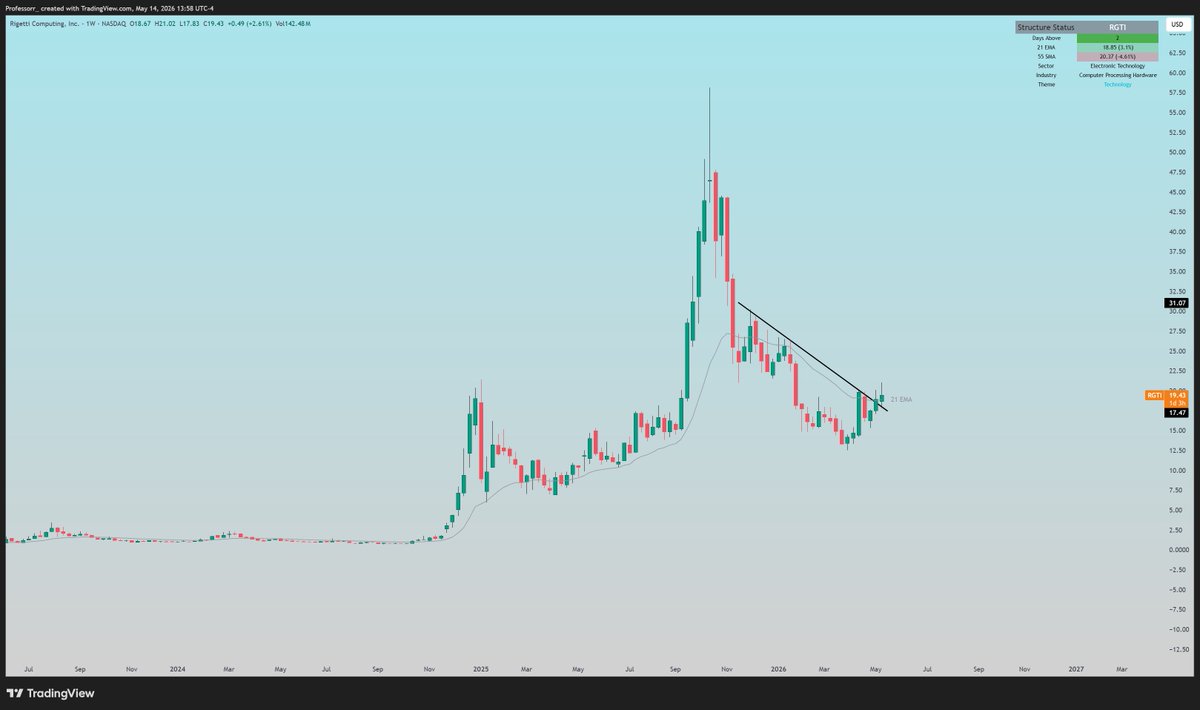
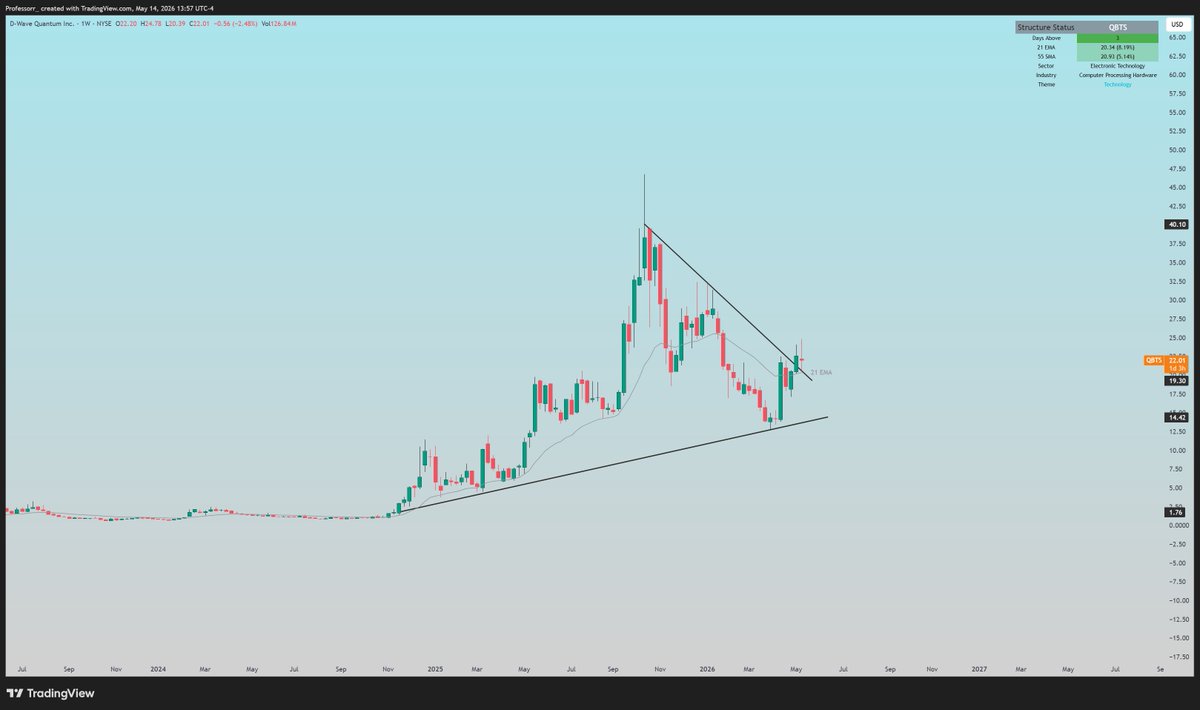
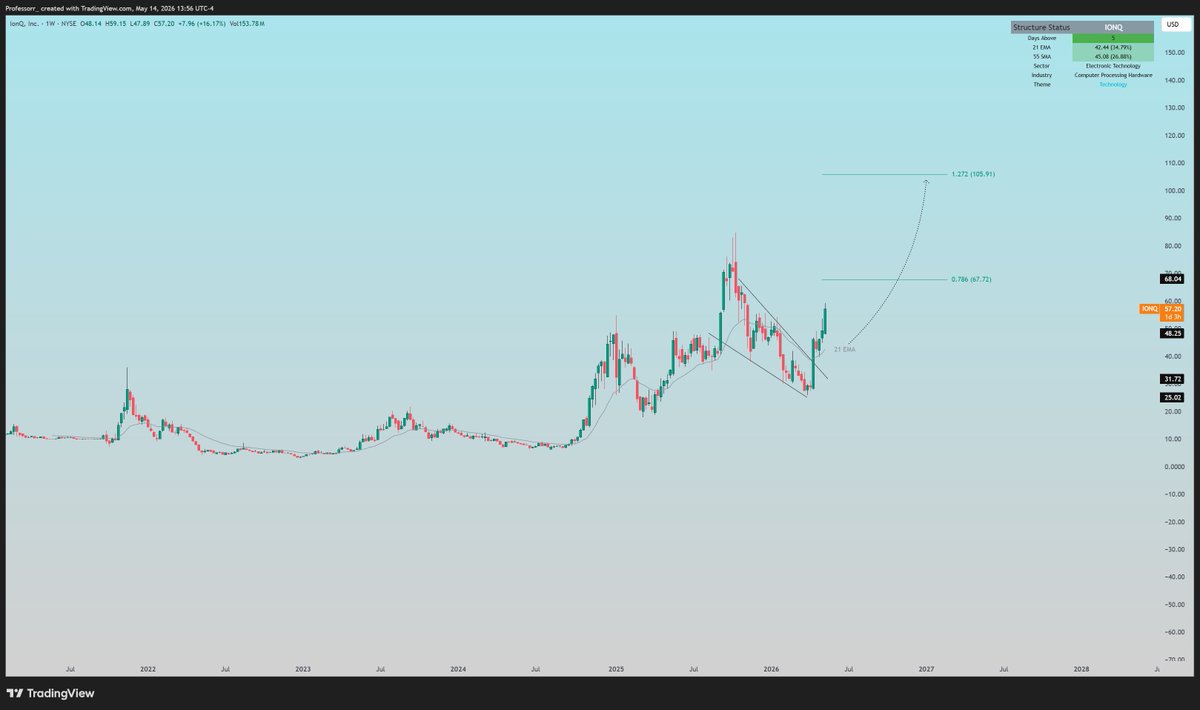
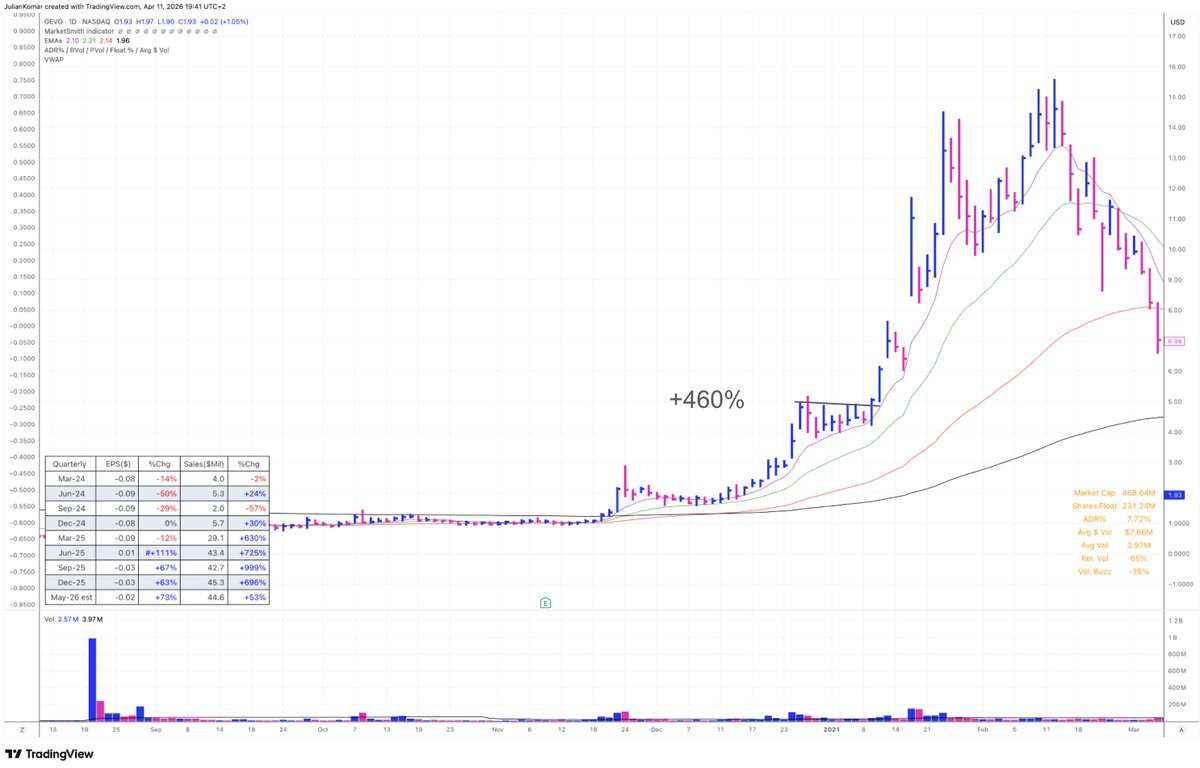
Most traders spend their careers looking for good setups.
I spend mine waiting for exceptional ones. 💎
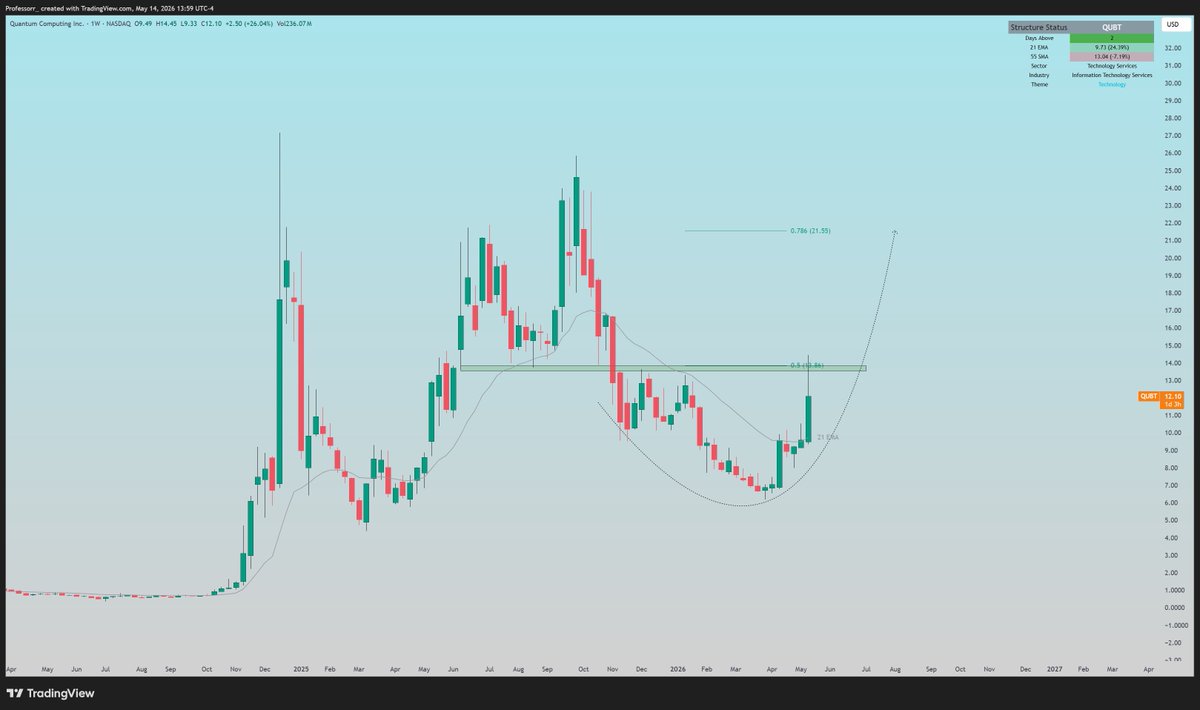
The four charts below come from my Blueprint Model Book. They represent the rare 5-Star setups that can produce the biggest winners in the market.
What makes them so special?
1. They already made a massive move. Most were up 100-500% before they formed a new base.
2. They build an incredibly tight consolidation near the highs, often riding the EMA 8 and EMA 21.
3. Institutions keep accumulating shares. You can often see it in the volume while overhead supply stays low.
This is why I study these charts over and over again.
Your brain learns through repetition. The more great winners you study, the faster you'll recognize them in real time.
You may only find one or two of these opportunities in a normal year.
But you don't need twenty.
One exceptional winner can completely change your year.
That's why patience is such a powerful edge. Don't waste your capital on average setups while waiting for the extraordinary ones.
In my Blueprint Model Book, I've collected around 50 of these exceptional market winners. I also share hundreds of additional historical charts with my members because these patterns repeat.
Learn them.
Study them.
When one appears again, don't hesitate to take it.
4 Entry Types Every Swing Trader Should Know
1. PDH Entry
Price moves above the Previous Day’s High. It shows strength continuing from the last session.
2. Pullback Entry Buying a stock that’s already leading when it dips to an EMA, trendline, or support zone. The pullback should be controlled, not aggressive.
3. Pivot Break Entry
Price breaks a level that has been rejected multiple times. This suggests sellers at that level are finally out of the way. A clean breakout candle usually confirms it.
4. Anticipation Entry
Entering slightly before a breakout, usually inside a tight consolidation on a day where price has gone pretty tight, at EOD. The structure should already be strong so the breakout has a higher chance of happening. Gives better risk–reward.
@vgarafola
I think it's hard to understand for you because you think even you get stopped out twice and it goes in your favor the second time you might as well have just extended your stop to not have gotten stopped the first time.
Yet, if you do the math, tighter risks are rewarded exponentially wiping out that first loss and more than you would have made with no loss and a wider stop
Hope this helps. Good luck.
Whose actions most changed the course of human history.
1. Muhammad
2. Isaac Newton
3. Jesus
4. Gautama Buddha
5. Confucius
6. Paul the Apostle
7. Cai Lun
8. Johannes Gutenberg
9. Christopher Columbus
10. Albert Einstein
11. Louis Pasteur
12. Galileo Galilei
13. Aristotle
14. Euclid
15. Moses
16. Charles Darwin
17. Shih Huang Ti
18. Augustus Caesar
19. Nicolaus Copernicus
20. Antoine Laurent Lavoisier
21. Constantine the Great
22. James Watt
23. Michael Faraday
24. James Clerk Maxwell
25. Martin Luther
26. George Washington
27. Karl Marx
28. Orville Wright and Wilbur Wright
29. Genghis Khan
30. Adam Smith
31. Edward de Vere (better known as
""William Shakespeare"")
32. John Dalton
33. Alexander the Great
34. Napoleon Bonaparte
35. Thomas Edison
36. Antony van Leeuwenhoek
37. William T. G. Morton
38. Guglielmo Marconi
39. Adolf Hitler
40. Plato
41. Oliver Cromwell
42. Alexander Graham Bell
43. Alexander Fleming
44. John Locke
45. LudWig van Beethoven
46. Werner Heisenberg
47. Louis Daguerre
48. Simon Bolivar
49. Rene Descartes
50. Michelangelo
51. Pope V rban II
52. 'Umar ibn al-Khattab
53. Asoka
54. St. Augustine
55. William Harvey
56. Ernest Rutherford
57. John Calvin
58. Gregor Mendel
59. Max Planck
60. Joseph Lister
61. Nikolaus August Otto
62. Francisco Pizarro
63. Hernando Cortes
64. Thomas Jefferson
65. Queen Isabella I
66. Joseph Stalin
67. Julius Caesar
68. William the Conqueror
69. Sigmund Freud
70. Edward Jenner
71. William Conrad Rontgen
72. Johann Sebastian Bach
73. Lao Tzu
74. Voltaire
75. Johannes Kepler
76. Enrico Fermi
77. Leonhard Euler
78. Jean-Jacques Rousseau
79. Niccolo Machiavelli
80. Thomas Malthus
81. John F. Kennedy
82. Gregory Pincus
83. Mani
84. Lenin
85. Sui Wen Ti
86. Vasco da Gama
87. Cyrus the Great
88. Peter the Great
89. Mao Zedong
90. Francis Bacon
91. Henry Ford
92. Mencius
93. Zoroaster
94. Queen Elizabeth I
95. Mikhail Gorbachev
96. Menes
97. Charlemagne
98. Homer
99. Justinian I
100. Mahavira
According to The 100: A Ranking of the Most Influential Persons in History (Book), the American author Michael H. Hart
Note: Hart was not attempting to rank on "greatness" as a criterion, but rather whose actions most changed the course of human history.
Theme is most powerful catalyst. Followed by govt policy change. Third is shortages. Fouth is sales acceleration, new products launch, management change and so on
Strength itself IS a catalyst.
People ask me "what's the catalyst on this one?"...but you gotta understand relative strength IS the catalyst.
It's a flywheel.
Strength/momentum attracts:
- capital $$$
- analyst coverage
- media attention
- options flow
- institutions
- stories + narratives
^relative strength is the match that lights all of these on fire...and once they're lit, the strength compounds on itself fast (+ the stock *usually* RIPS soon after).
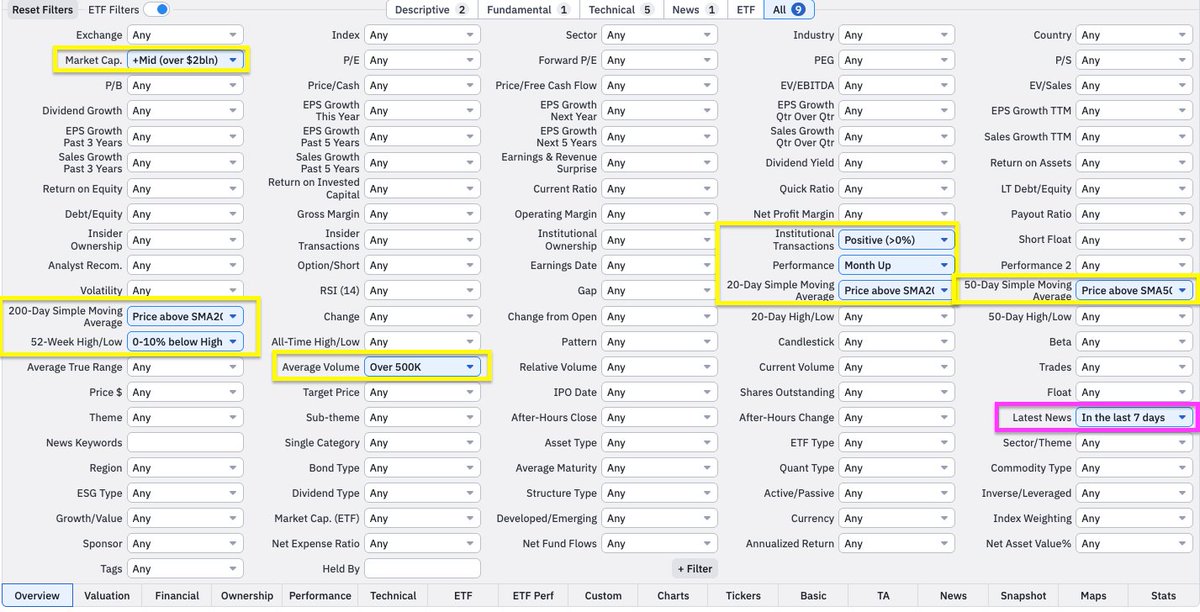
You def don't need 9 filters to monitor relative strength, but here's a setup I keep an eye on (see screenshot)
Couple other ways to find relative strength:
> simply scan for stocks making new 52 week highs while the market chops around...leaders show up fast.
> stocks that refuse to go down on bad news
Luc