"Work to change people’s hearts and minds may only go so far; changing the sticker price consumers see at the grocery store would likely have a much greater impact"--Vox article on my working paper with @zdgroff and Carl Meyer.
https://t.co/7Nq6wy0WY2
🚨New publication in Food Policy!
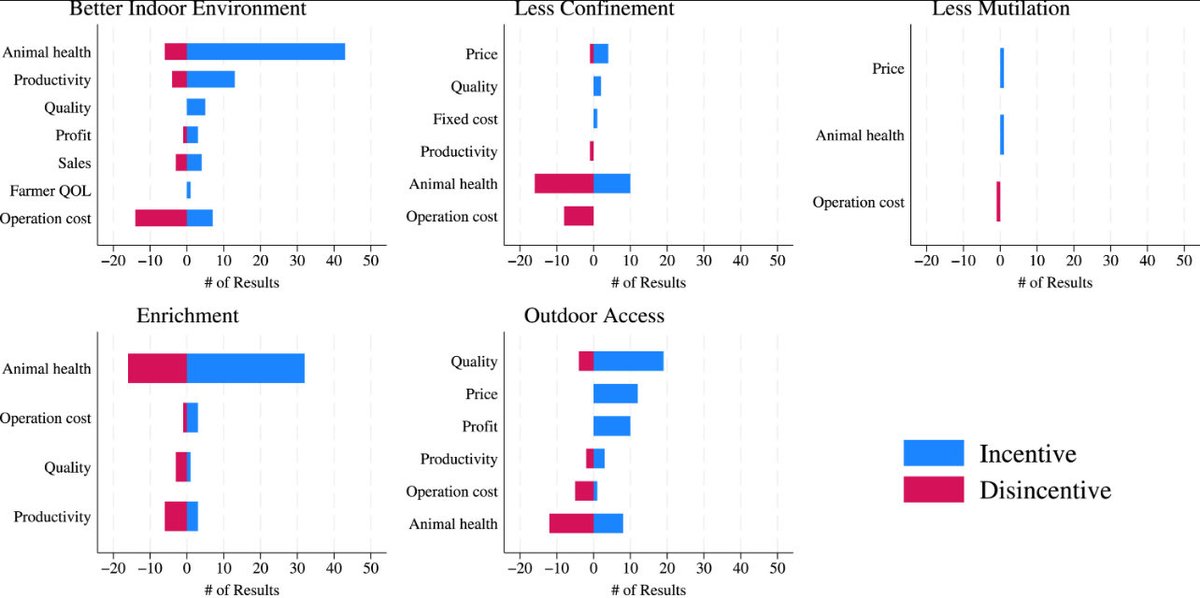
“A Scoping Review of (Dis-)Incentives for Animal Welfare-improving Farming Practices”
Link to full paper: https://t.co/anEfzzLp9L
We use machine learning + a systematic review of 30 years of US research to understand
🧵1/n
Banger quote from @dylanmatt:
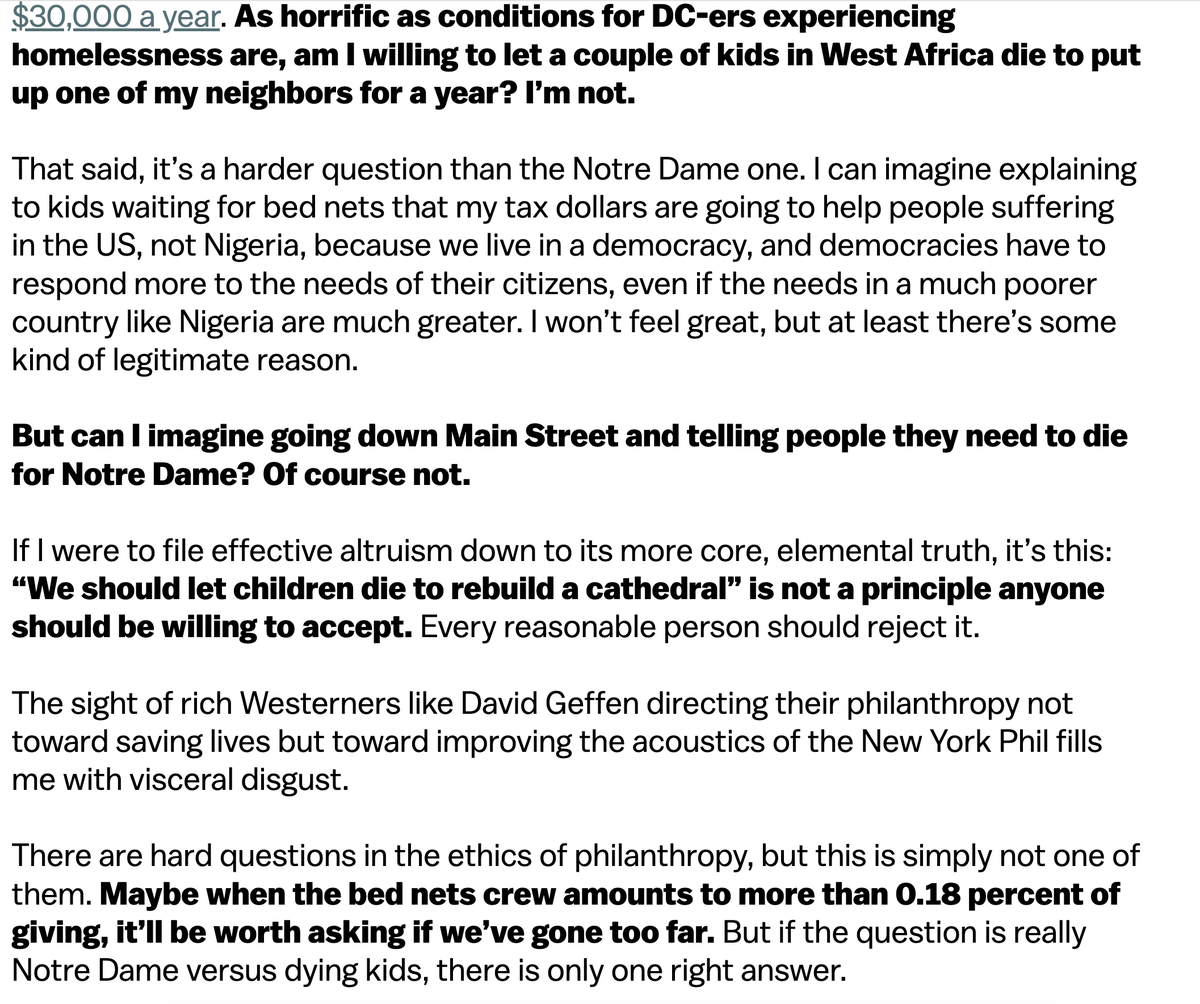
"If I were to file effective altruism down to its more core, elemental truth, it’s this: “We should let children die to rebuild a cathedral” is not a principle anyone should be willing to accept."
@BrianKateman@mbolotnikova Best is [email protected]
I dont know how individual households changed their own consumption over time, but we know that the definition of “10th percentile of meat consumption” increased between 2005 and 2020. More detail than that would require a closer look.
@BrianKateman@mbolotnikova the 10th percentile of meat purchasers still increased their consumption over this time period. It’s possible/probable that some percentile even lower than 10th decreased though!
@BrianKateman@mbolotnikova Hi Brian! I wasn’t able to find an email from you but I’d love to chat in more detail.
Depends on what you mean by “households reducing” meat purchases. We don’t know who is actively trying to reduce their meat consumption. But
@2024dion@mbolotnikova And younger generations do seem to be consuming less meat than older generations even after accounting for prices, so that's good news!
@2024dion@mbolotnikova Our study can't say anything about motives. But I can tell you that a fair chunk of meat avoidance is purely people responding to prices
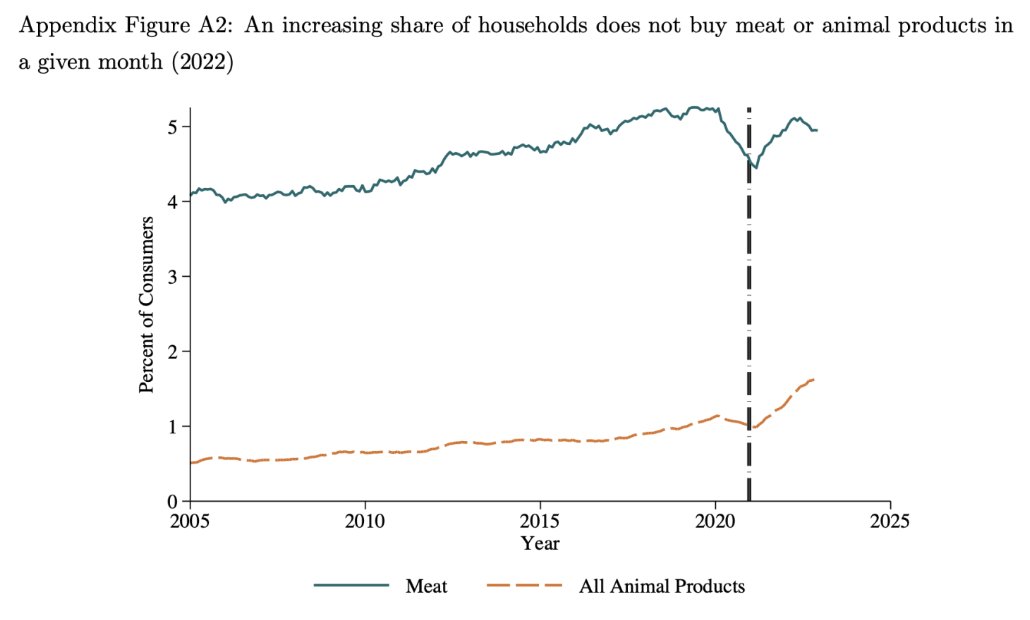
@Lewis_Bollard@zdgroff Yes! But, importantly, meat purchases for almost everyone else is simultaneously rising (15% increase since 2005 on avg). As we highlight in the paper, prices are a key driver of their behavior.
Is veganism rising? Headlines confidently claim yes and no based on rival surveys.
New research, by @zdgroff et al using grocery receipts, offers a more reliable answer...
2X more households aren't buying animal products than in 2005, but it's still only ~1% of households.