I am thrilled to share that my policy brief, recently published by the @CarnegieEndow, is now available. This research examines various periods of China's investment in green energy, highlighting its adaptation to local conditions in Central Asia.
https://t.co/l8m4OQZ10Y
Dostlar Çin Raporları’nın 3. dosyasında Çin’in Yönetim Sistemi’ni ele aldım.
Çin’i kim yönetiyor, sistem nasıl işliyor, karar alma mekanizmaları nasıl, Parti’nin rolü, önemli figürler ve daha birçok mesele.
Çin Yönetim Yapısı’nı ve Çin’i merak eden herkesin okumasını isterim. 24 sayfalık gayet basit bir dille hazırlanmış, gereksiz hiçbir şeye yer verilmeyen bir rapor.
Akademisyen, siyasetçi, gazeteci ve Çin’e merak duyan herkesin çıktısını alıp arada göz atmasını tavsiye ederim. Sürekli konuşulan Çin’le ilgili bir malumatımız olur en azından.
İyi okumalar..
🚨Son yazım🚨
📍"İstanbul Kuzey Demiryolu Geçişi Projesi: Türkiye'nin bağlantısallığı için ne ifade ediyor?"
📌Bu yazıda İstanbul Kuzey Demir Yolu Geçişi Projesi'ni (INRAIL) "koridor savaşları" çerçevesinde ele aldım.
✍️Orta Koridor'un işlevsel bir güce kavuşması Türkiye'yi transit bir aktör olmaktan çıkarıp kuralları belirleyen bir "inşacı aktöre" dönüştürme potansiyeli taşıyor.
Chinese analysts are skeptical that a U.S.-led critical minerals alliance can ever compete with China’s low-cost dominance — warning that rivals face years of losses, higher costs, and uncertain business viability.
https://t.co/2TXvxb8QUH
#China leads the world in automation.
Among the top five countries by robots in operation, 🇨🇳China's share has climbed steadily, reaching 43.5% in 2024—more than 🇯🇵Japan, 🇰🇷S. Korea, the 🇺🇸US, and 🇩🇪Germany combined.
#FactsMatter
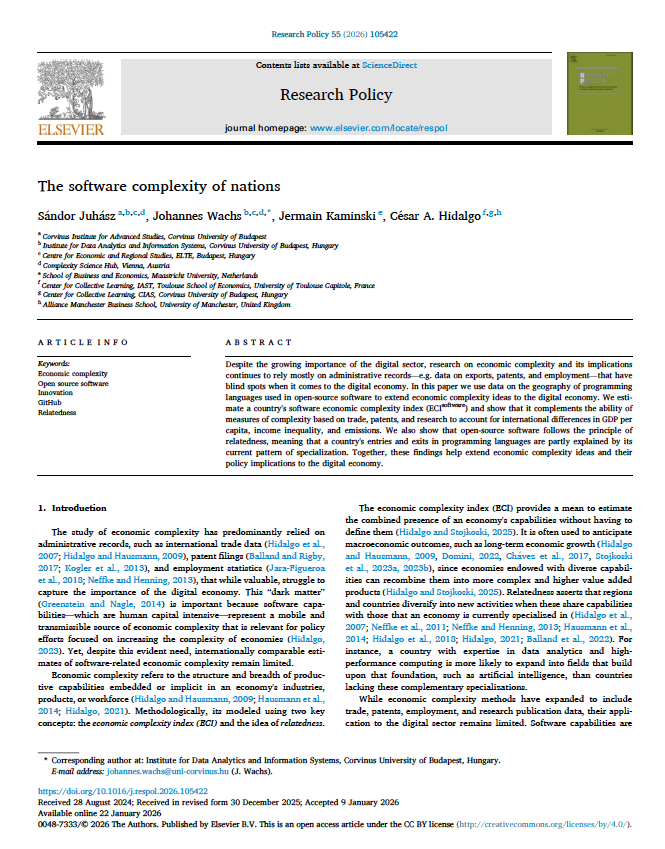
New Paper: The Software Complexity of Nations (Research Policy, 2026)
Most work on economic complexity relies on trade, patents, employment, or publications data. These sources, however, systematically misrepresents software.
Code does not cross borders through customs, service categories are too coarse to capture real digital capabilities, and many important software innovations are not patentable. As a result, a large share of modern productive capabilities remains invisible in multidimensional economic complexity metrics.
In this paper, we use the geography of open-source software to estimate a country’s software economic complexity (ECI software). Using GitHub data, we track where developers contribute code and group programming languages into technology stacks to estimate software specialization matrices from where we derive an Economic Complexity Index for software capabilities.
We find that:
Software captures a real and distinct capability dimension. Countries’ software ECI correlates but is not redundant to complexity measures based on trade, patents, or research. In fact, software complexity comes with a few surprises, like Russia and Indonesia being substantially more sophisticated in Software than in Products (This is also true for India, but I would say that's not surprising).
Software complexity correlates well with macro outcomes. Even after controlling for other complexity dimensions, software ECI is strongly correlated with higher GDP per capita and lower income inequality. It also relates to lower emissions intensity in simpler specifications. Unfortunately, since the time series of software data are rather short, we could not explore whether Software complexity explains future economic growth (but we will be able to do that in the future :-)).
Digital diversification is also path-dependent. This should come to no surprise to anyone familiar with the principle of relatedness, but it is good to know. Countries tend to enter new software stacks that are related to the ones they already have. Software capabilities accumulate much like industrial capabilities.
The broader implication is that software is not just another sector, but a mobile and highly human-capital-intensive source of economic complexity. Software opens new paths for structural transformation, which could be particularly interesting for economies that are geographically isolated.
This was a great collaboration with @johannes_wachs@sandor_juhasz and @jermainkaminski
You can read more at:
https://t.co/D3fg8z9rax
https://t.co/nLwSujWHzw
China said it has reached a deal with the European Union on exports of Chinese made electric vehicles to the bloc. The EU will be issuing guidelines on minimum pricing for Chinese auto exporters, the Commerce Ministry in Beijing said. https://t.co/p6EO3Yisx2
İstihdamda AI etkisi bir senaryo değil. Çoktan başlamış ve ivmelenen bir fenomen.
New York Magazine'de 12 Kasım'da yayımlanan makalede çok ilginç deneyimler var.
Uzun bir makale ama şunları not aldım:
🖇️ Şirketler artık binlerce kişilik ekipleri değil, daha küçük ekip + agent kombinasyonlarını hedefliyor. Bu da giriş seviyesi rollerin ilk dalgada daralması demek. Junior ihtiyacı azalıyor.
🖇️ Sunum + veri toplama + raporlama gibi klasik analist işleri hızla otomasyona gidiyor.
🖇️ AI etkisi henüz tam ölçülemese de şirketler yakında olacak diye işe alımı kısıyor, kadroyu sıkılaştırıyor.
🖇️ Şirketler artık sadece genç ve genel yetkinlikler yerine, teknoloji ve uygulama tarafında işi gerçekten bilen, deneyimli çalışanları tercih ediyor. Somut alan tecrübesi daha kıymetli.
🖇️ AI kullanımı artık artı özellik değil, işe giriş için temel bir gereklilik. Hem adaylar hem şirketler başvurudan mülakata kadar AI’dan yararlanıyor. Şu soru öne çıkıyor: Senin sağladığın katkı, AI'dan hangi noktada ayrışıyor?
🖇️ Tekrarlayan ve çıktısı kolay ölçülen işler en yüksek risk altında olanlar. Kopyala-yapıştır, kontrol, rapor düzenleme, basit kod yazımı ya da içerik varyasyonu gibi görevler tamamen ortadan kalkmasa bile, aynı iş için gereken insan sayısını ciddi biçimde azalacak.
🖇️ AI çıktı üretebiliyor. Ancak problemi doğru tanımlamak, hedefi net koymak, kısıtları yönetmek, kalite ve uyum standartlarını belirlemek ve sonuçtan sorumluluk almak hala bizim işimiz. Kıymetli olan üretmekten çok çerçevelemek.
🖇️ 'AI kullanmayı öğren' klişesi doğru ama eksik. Asıl mesele, işi AI ile yeniden kurgulayıp karar alan bir tool'a dönüştürmek.
🖇️ Aynı meslekte yıllarca kademeli yükselme yerine, alan değişimi (finanstan teknolojiye, içerikten analitiğe) geçişkenlik daha sık olacak.
This years last Chartbook Top Links dives into China’s Xinjiang energy‑data hubs, where vast solar, wind, and coal resources power the “Eastern Data, Western Computing” push reshaping the country’s digital geography.
China apparently has a working prototype of an EUV lithography machine.
- Secret lab in Shenzhen
- Team of former ASML engineers
- Reverse-engineered parts
- Yet to produce working chips
- Deep involvement by Huawei
- Aiming for use by 2028-2030
https://t.co/xZYwQ9Zywe
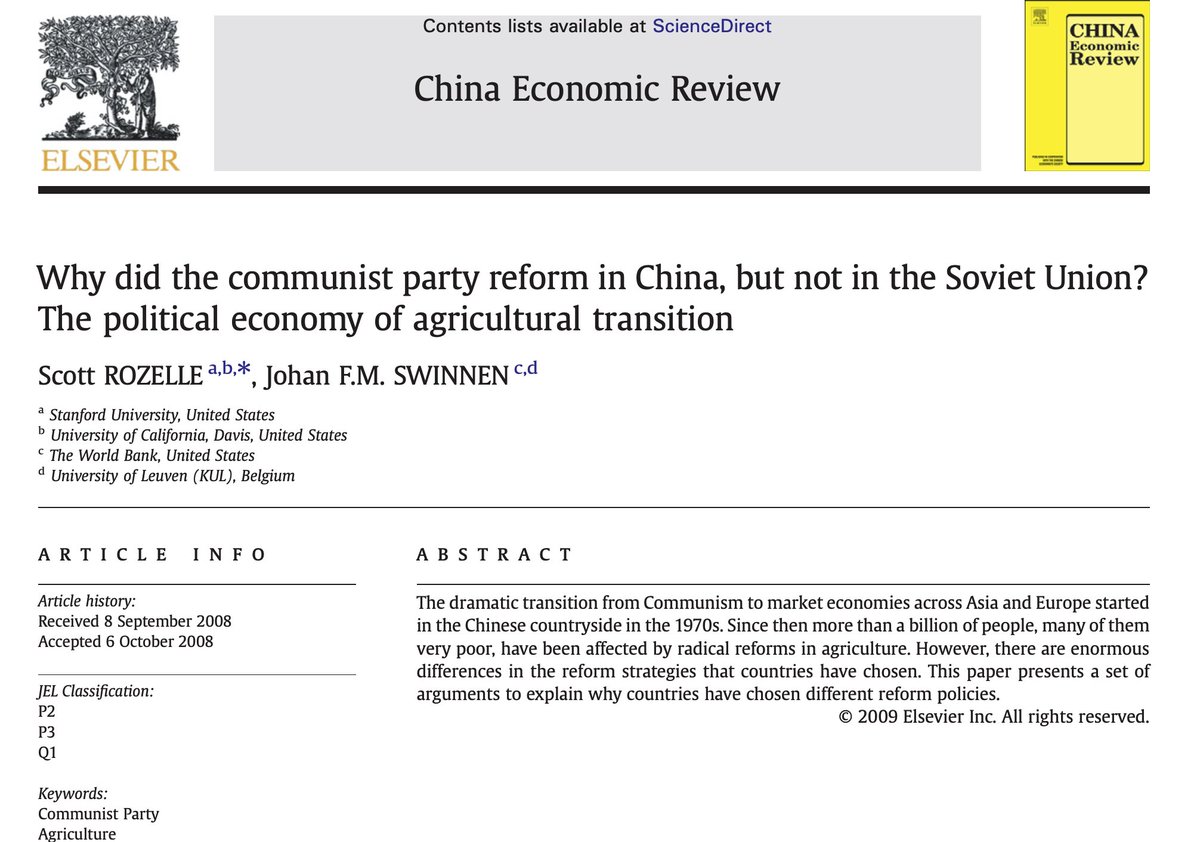
Great summary of political economy of farm sector reform. The real incentives and constraints. Rozelle & Swinnen, “Why Did the Communist Party Reform in China, but Not in the Soviet Union?” (2009)
Much better than recent “entrenched elites would've killed Gorbachev” storybooks.
Interestingly, #AZE's 🇦🇿 Defense Minister Gen. Zakir Hasanov and his deputy attend #DubaiShow and face-to-face meeting with the #CHN 🇨🇳 delegation regarding the new ways of partnership. #China made #Y20 aircraft model spotted on the table as unofficial reports claim that 🇦🇿 is looking after #Y20 large military transport aircraft that was developed by the Xi'an Aircraft Industrial Corporation.
Excited to share my latest article for @JamestownTweets, delving into #Kyrgyzstan's efforts to diversify its electric vehicle ecosystem. The analysis explores the country's objectives and the potential hurdles it may encounter. #China#EV
https://t.co/zoQ3nSnX6U