People think food delivery is a modern app invention.
In 1120 AD, Song Dynasty China already had home takeout—and a clever 900-year-old "thermal warmer" to keep it hot.
Here is how urban fast food evolved across two worlds and nearly a millennium:
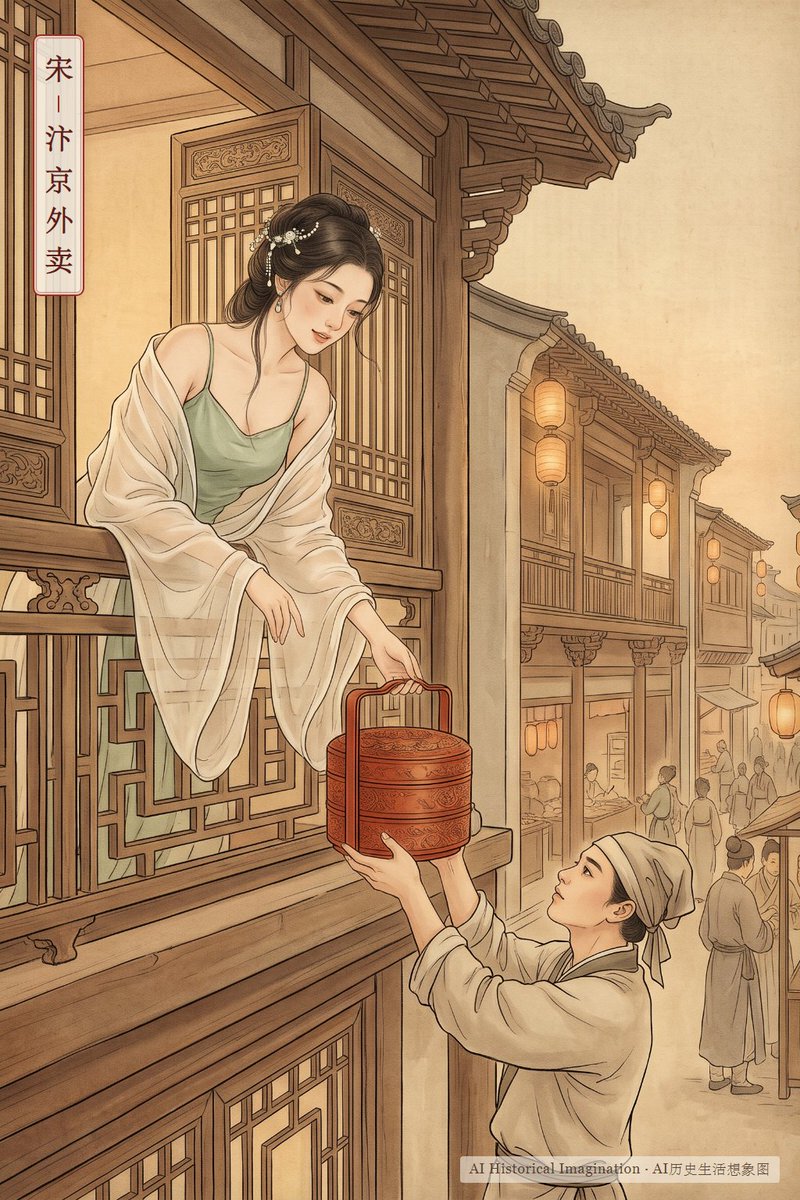
1. 1120 AD Kaifeng — The memoir *Dongjing Menghua Lu* (《东京梦华录》) describes restaurants sending runners door-to-door with tiered lacquer boxes. You can even spot a delivery runner in the famous scroll *Along the River During the Qingming Festival*.
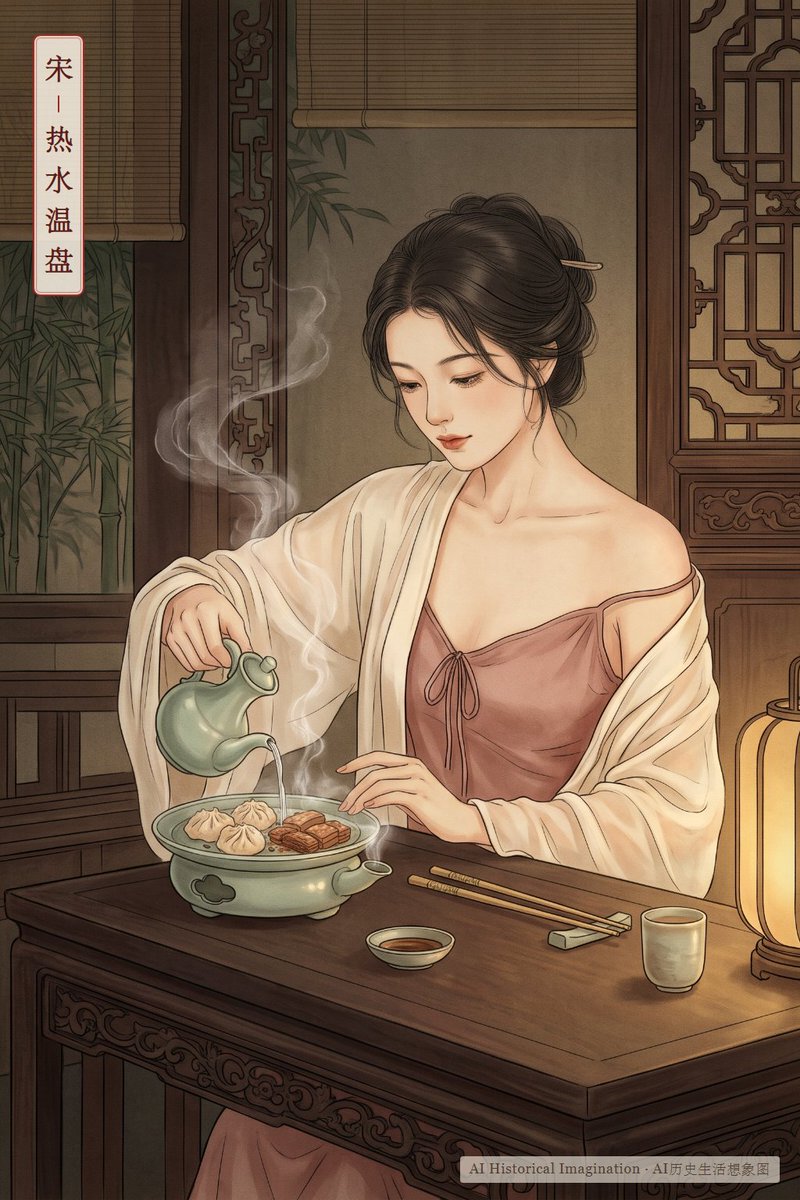
2. The Song "Thermal Box" — Households used double-walled porcelain warming plates (温盘): pour boiling water into a hidden spout underneath, and your dumplings stayed steaming hot all evening.
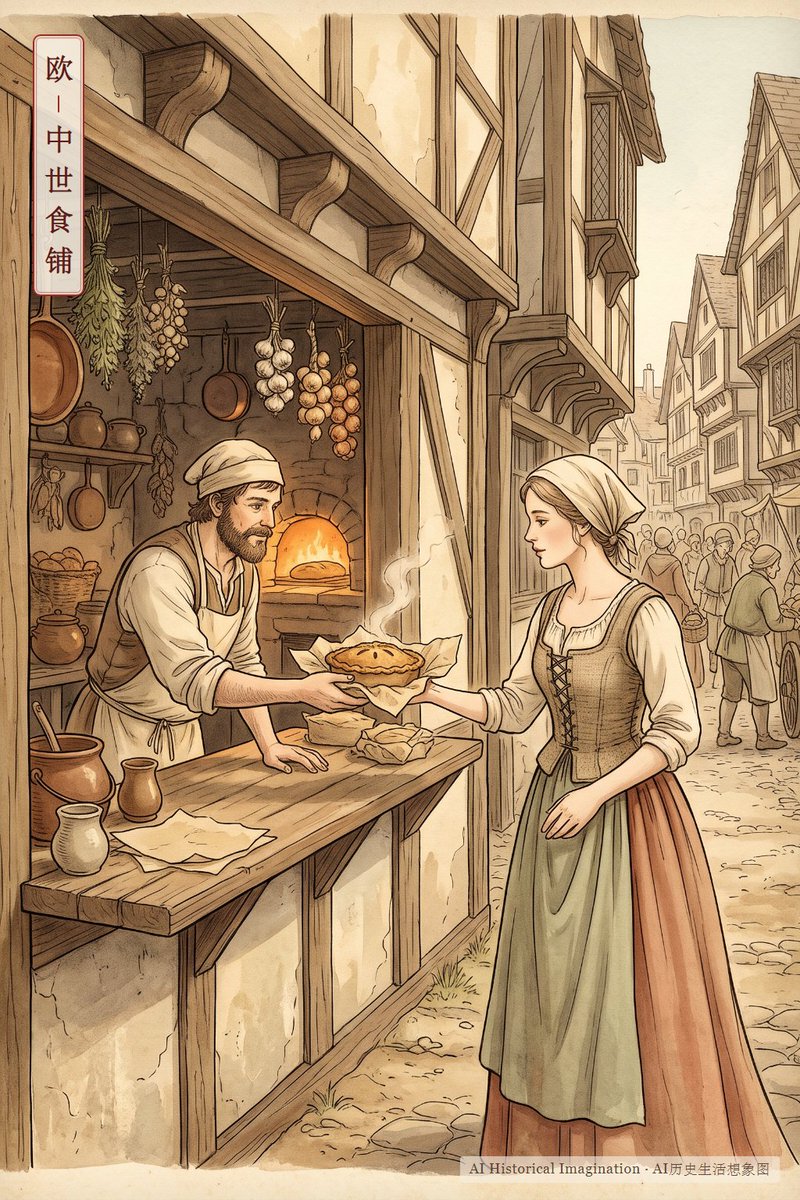
3. 1200 AD Medieval Europe — Across the world in London and Paris, street cookshops thrived for the exact same reason: most urban homes had no kitchens, so people grabbed hot meat pies wrapped in parchment on their way home.
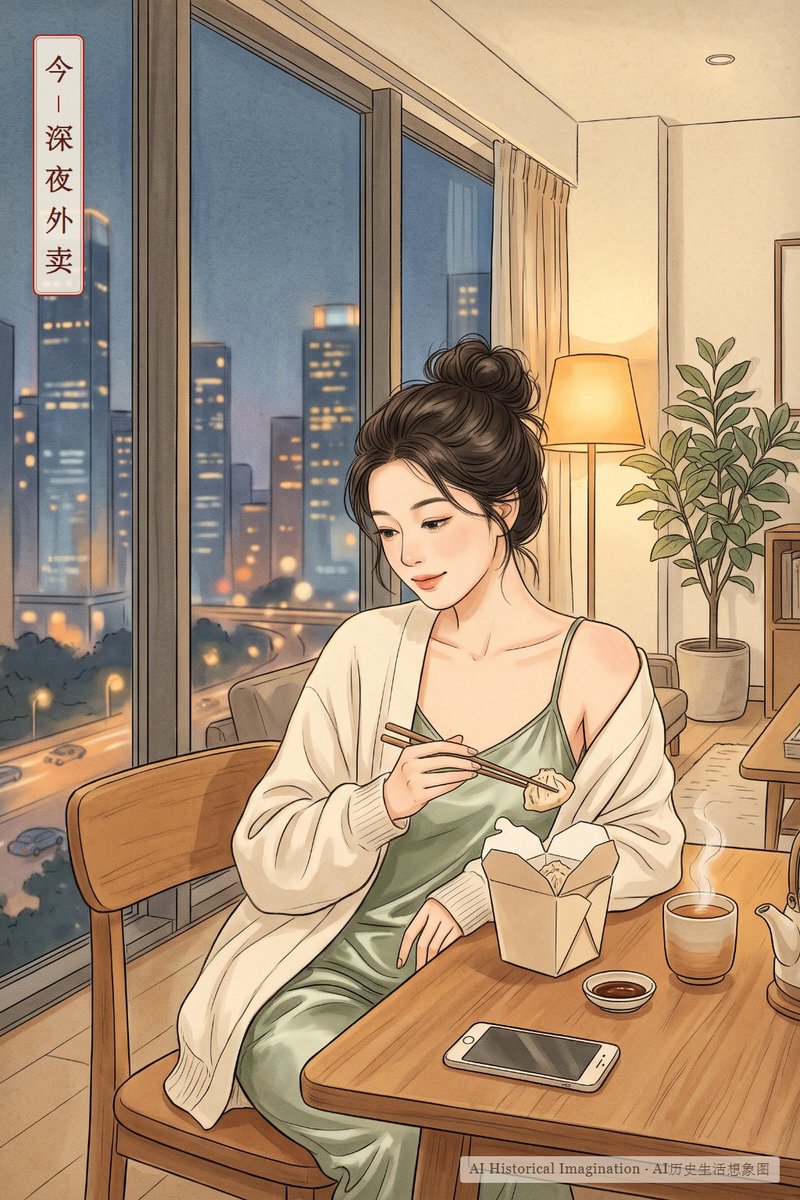
4. Today — Nearly 1,000 years later, opening a steaming box of late-night takeout by a glowing window still feels like the same quiet comfort.
Which era’s street food would you try first? 🥟✨
2,000 years before Sherlock Holmes, ancient China already had a forensic CSI manual.
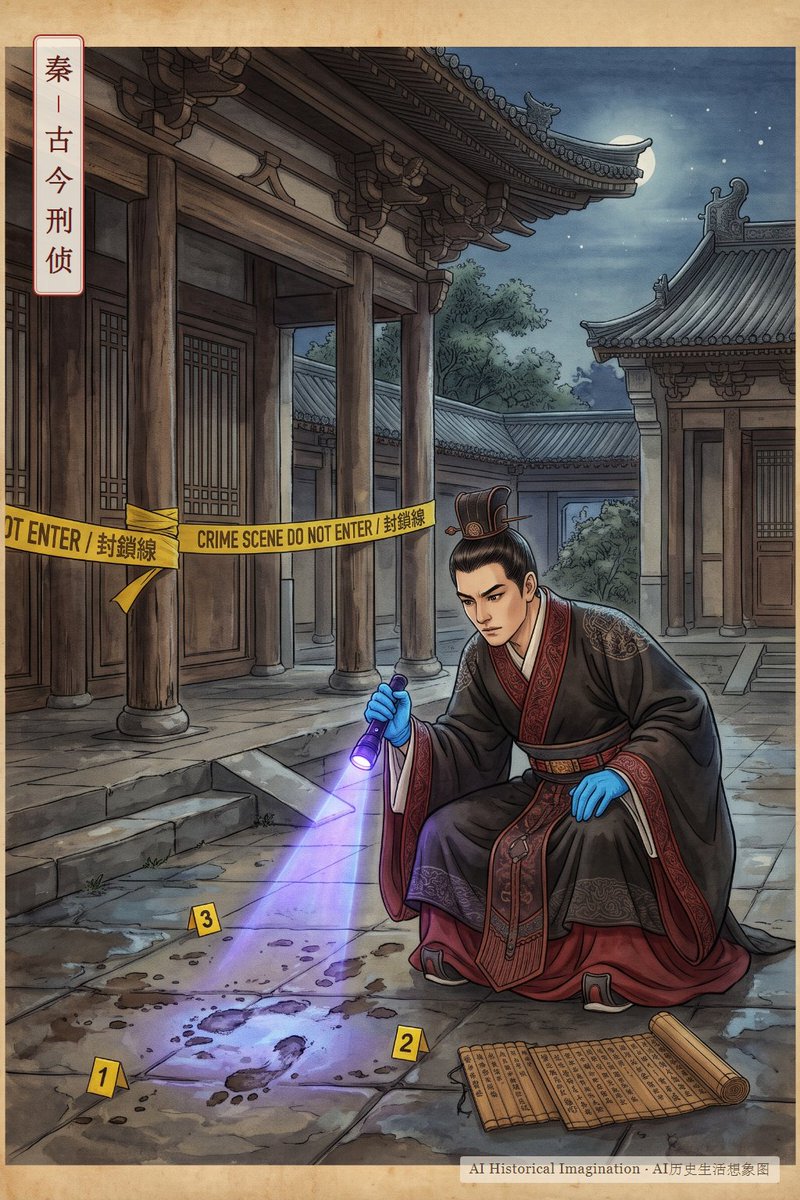
In 1975, archaeologists unearthed bamboo slips from a 217 BC Qin Dynasty tomb in Hubei (Shuihudi). Among the laws was Fengzhen Shi ("Models for Sealing and Investigating")—the world's oldest surviving crime-scene manual.
It instructed ancient investigators to:
• Secure the scene and measure muddy footprints carefully
• Examine ligature marks on the neck to tell real suicide apart from staged murder
• Check a victim’s tongue, teeth, and clothing tears before filing a formal report
Modern forensics didn't start in Victorian London—it started on bamboo slips in 217 BC.
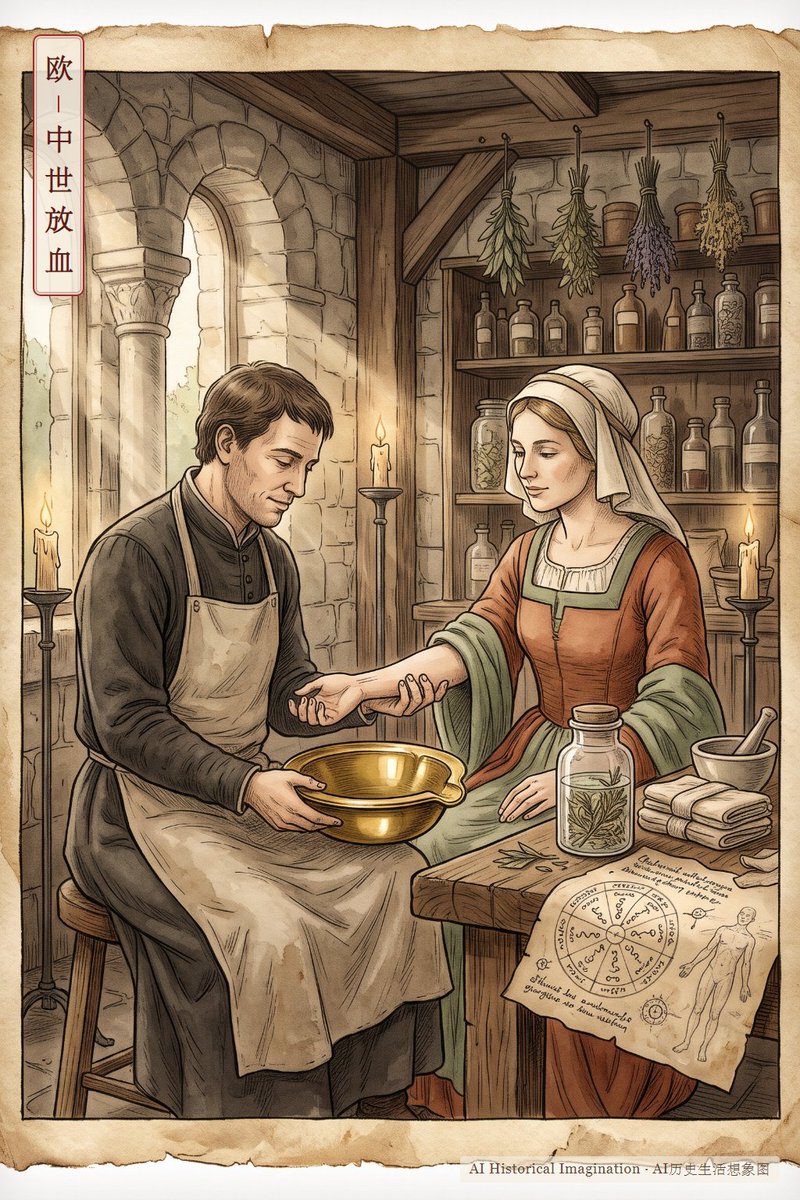
Fun historical twist: bloodletting didn’t vanish in the Middle Ages—it remained mainstream Western medicine well into the 1800s (even George Washington was bled during his final illness in 1799). Meanwhile, Ming Dynasty botanicals like sweet wormwood (Artemisia annua, 青蒿) eventually inspired the Nobel Prize-winning antimalarial drug artemisinin in the 20th century.
Next up: 1000 AD Nightlife — Song Dynasty all-night lantern markets vs. Medieval European curfews. Follow along for the next visual chapter.
What happened if you caught a fever in 1400 AD?
Your treatment looked completely different depending on which side of Eurasia you lived on.
Here is how medicine evolved across two worlds and 600 years:
1. 1400 AD Ming China (Herbal Pharmacy) — Town apothecaries lined their walls with "hundred-drawer cabinets" (百子柜). Pharmacists weighed dried roots, flowers, and bark on delicate bone-and-brass scales, wrapping custom prescriptions in mulberry paper to simmer at home. This tradition culminated in Li Shizhen’s Bencao Gangmu (1,892 ingredients, 11,000+ formulas).
2. Ming Diagnostics — Physicians checked wrist pulses on embroidered silk pillows and taught anatomy using cast bronze meridian figures (针灸铜人) pierced with hundreds of tiny pinpoint holes.
3. 1400 AD Medieval Europe — Guided by the ancient Greek theory of the "Four Humors," barber-surgeons believed fever meant an excess of blood. Their go-to prescription? Brass bleeding bowls and jars of medicinal leeches to restore balance.
4. Today — Six centuries later, evidence-based diagnostics, precision labs, and gentle daily wellness have finally bridged both worlds.
If you had to visit a doctor in 1400 AD, which clinic are you walking into? 🍵🩺
@Rainmaker1973 Humans have always invented wild ways to optimize daily convenience. Even back in 1120 AD Kaifeng, restaurants already sent delivery runners door-to-door with tiered lacquer boxes—documented in *Dongjing Menghua Lu*.
@Rainmaker1973 People have obsessed over food quality and temperature for nearly a millennium. In 1120 AD China, households used double-walled celadon warming plates (温盘)—you poured boiling water into a hidden side spout so dumplings stayed steaming hot all evening.
@PublicDomainRev European visual culture was remarkably good at capturing ordinary daily life—just like 1200s London and Paris street cookshops, where working families grabbed hot meat pies wrapped in parchment because urban apartments had no kitchens.
What fascinates me most about #1 and #3 is how parallel they were: both Song Dynasty Kaifeng and Medieval London had dense urban neighborhoods where cooking at home was expensive and risky because of fire—so street food became everyday survival, not a luxury.
Next up: 1400 AD Medicine — Ming Dynasty herbal prescriptions vs. Medieval European bloodletting. Follow along so you don't miss it.
People think food delivery is a modern app invention.
In 1120 AD, Song Dynasty China already had home takeout—and a clever 900-year-old "thermal warmer" to keep it hot.
Here is how urban fast food evolved across two worlds and nearly a millennium:
1. 1120 AD Kaifeng — The memoir *Dongjing Menghua Lu* (《东京梦华录》) describes restaurants sending runners door-to-door with tiered lacquer boxes. You can even spot a delivery runner in the famous scroll *Along the River During the Qingming Festival*.
2. The Song "Thermal Box" — Households used double-walled porcelain warming plates (温盘): pour boiling water into a hidden spout underneath, and your dumplings stayed steaming hot all evening.
3. 1200 AD Medieval Europe — Across the world in London and Paris, street cookshops thrived for the exact same reason: most urban homes had no kitchens, so people grabbed hot meat pies wrapped in parchment on their way home.
4. Today — Nearly 1,000 years later, opening a steaming box of late-night takeout by a glowing window still feels like the same quiet comfort.
Which era’s street food would you try first? 🥟✨
@Rainmaker1973 Clocks reshaping daily life have a fascinating East-West chapter too: in 1930s Shanghai, the Bund Customs House clock tower set the city's modern rhythm as brass faucets and clawfoot tubs entered homes—yet dipping a hand in first to test the water remained timeless.
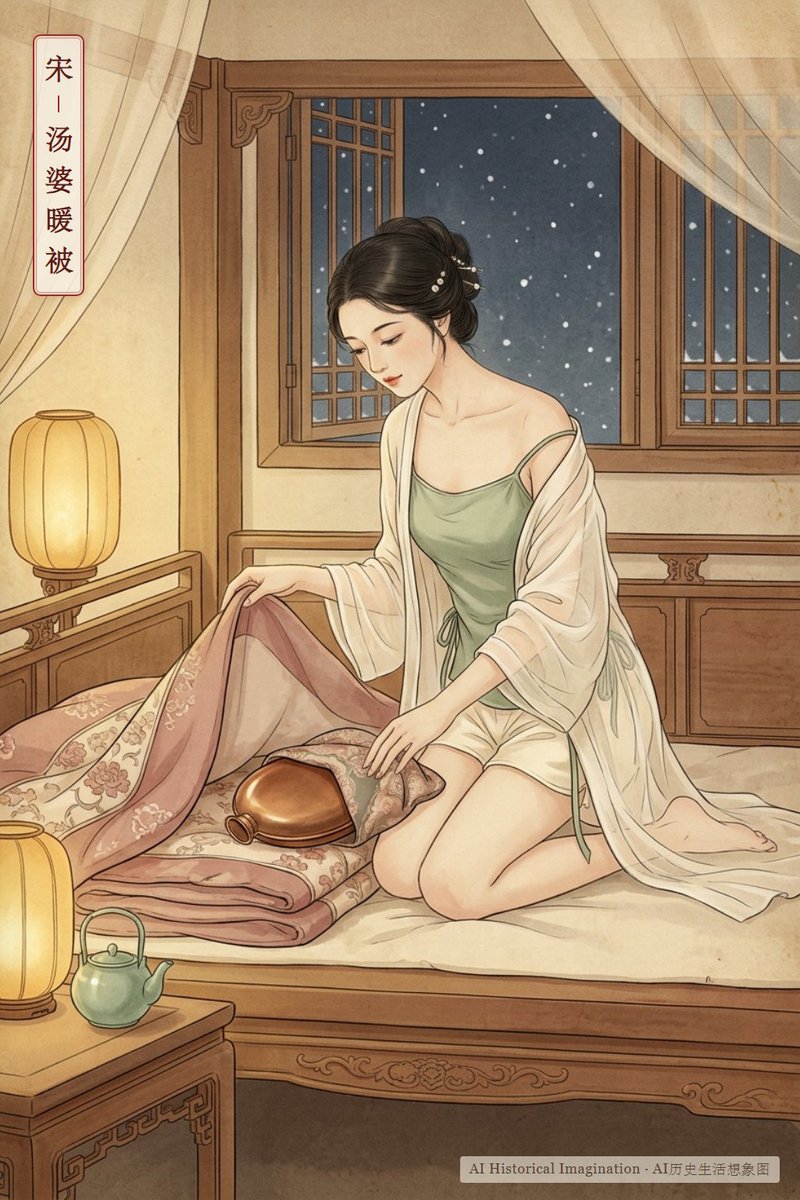
@Rainmaker1973 Thoughtful winter warmth is timeless. In Song Dynasty China—when poet Lu You wrote of staying indoors on snowy days with his cat beside a warm rug—households tucked a smooth copper "Hot-Water Wife" (汤婆子) inside a padded brocade pouch under the quilt.
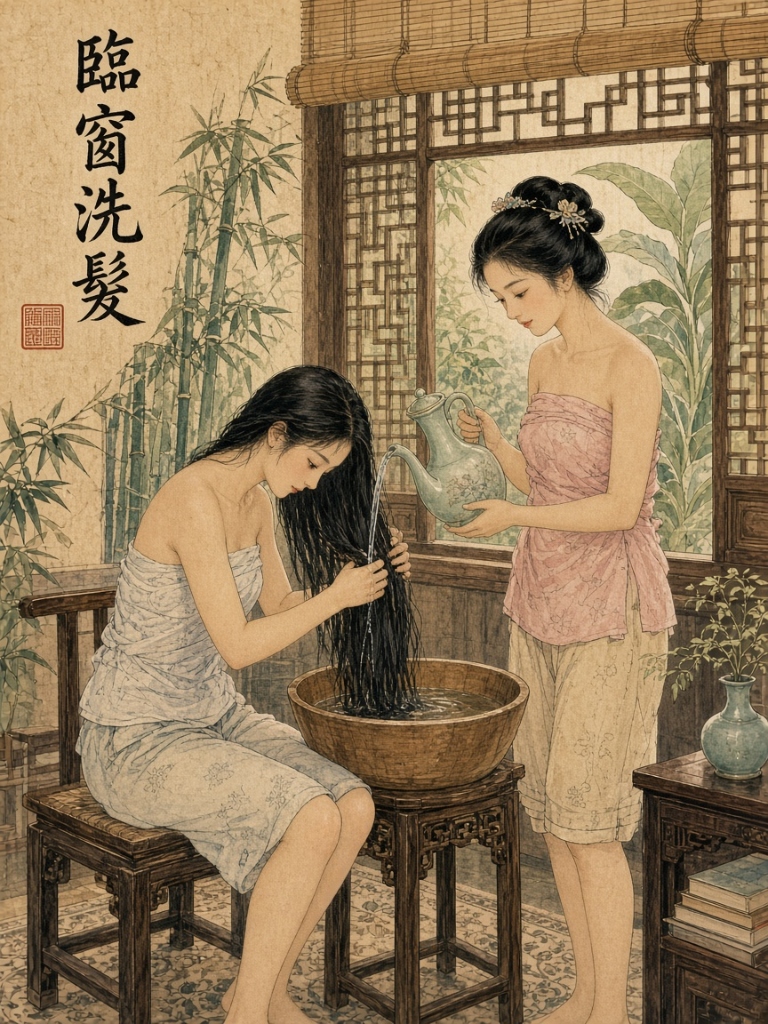
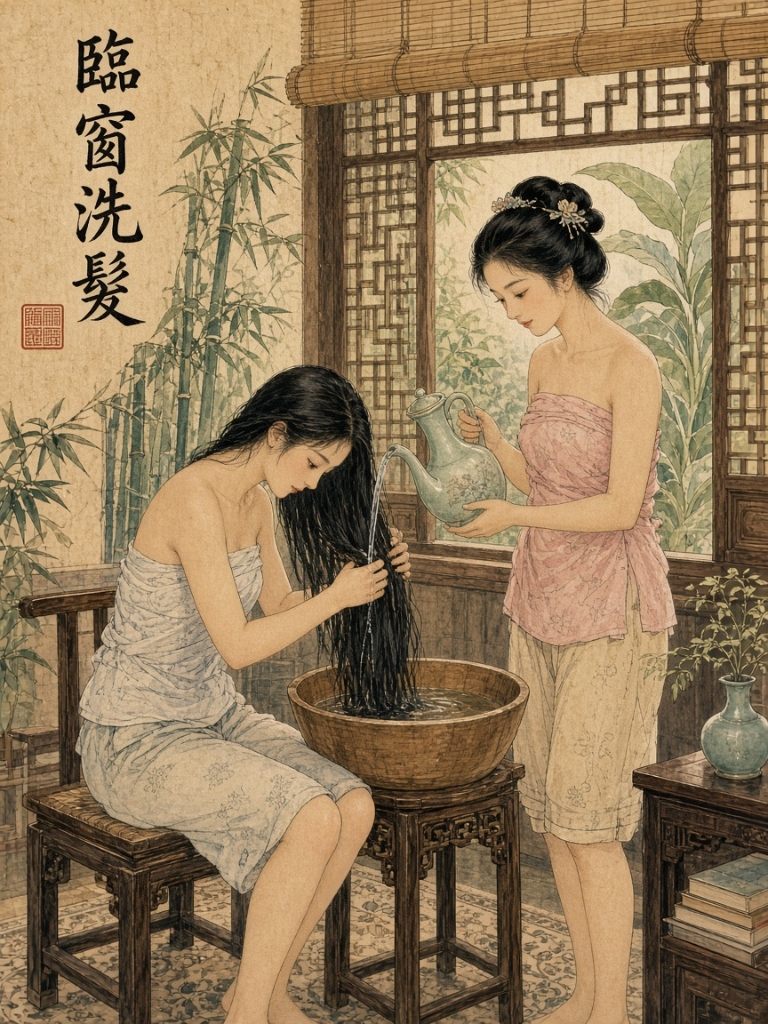
@Rainmaker1973 Long before modern green facades, Song Dynasty homes paired carved wooden lattice windows with dense courtyard bamboo for natural shade, airflow, and privacy. Even everyday routines like washing hair with a celadon pitcher happened right beside that living green screen.
Fun parallel: around 1600 AD, while Chinese households slipped copper "Hot-Water Wives" (汤婆子) under their quilts, European households used long-handled brass bed warmers filled with hot embers.
Next up: 1200 AD — Medieval Europe vs. Song Dynasty China (bathing, fast food delivery, and everyday habits compared side by side). Follow along so you don't miss it.
Before central heating or electric blankets existed, how did Chinese women actually stay warm on freezing winter nights?
In summer, they hugged a hollow woven "Bamboo Wife" (竹夫人) to stay cool.
In winter, they invented its exact opposite: the "Hot-Water Wife" (汤婆子) — a round copper hot-water bottle tucked under the quilt.
Across 1,000 years, winter warmth was an art form:
1. Tang Dynasty — Draping silk nightwear over a domed bamboo brazier (熏笼) to warm and perfume it before bed.
2. Song Dynasty — Slipping a gleaming copper "Hot-Water Wife" (汤婆子) inside a brocade pouch under the blanket.
3. Qing Dynasty — Cradling a miniature pierced-brass hand-warmer (手炉) filled with slow-burning charcoal while watching snow fall on red plum blossoms.
4. 1930s Shanghai — Vintage radiant brass heaters, steaming ginger tea, and satin loungewear on frosty evenings.
Which winter night would you actually curl up in? ❄️🔥
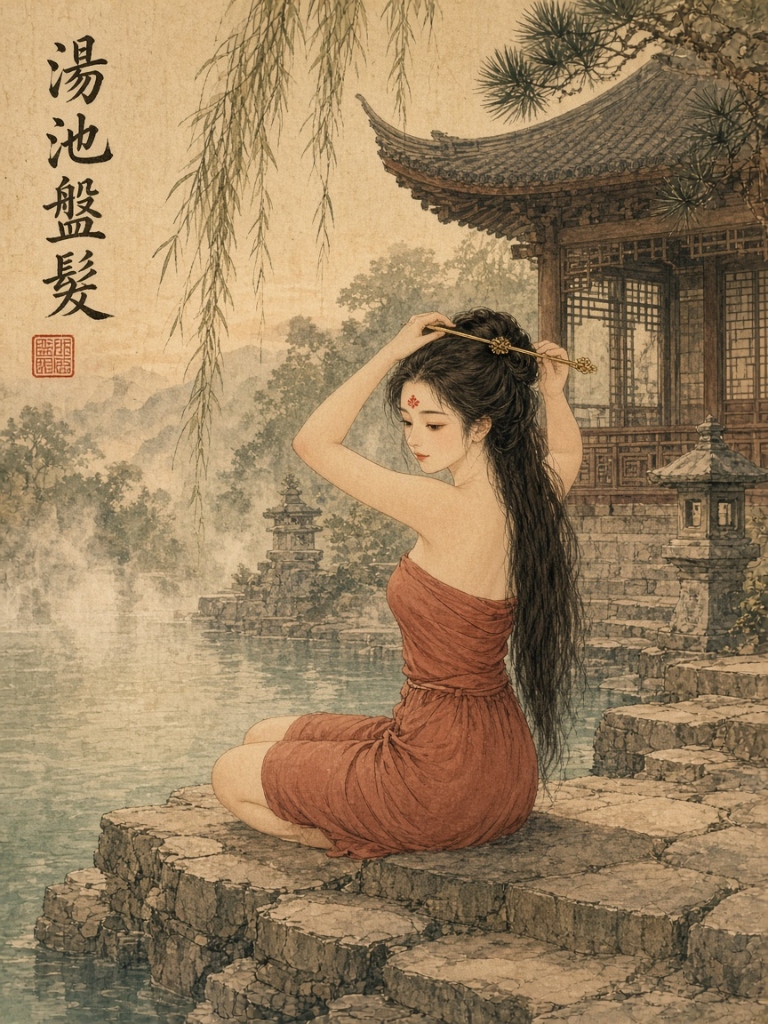
1. Tang: Hot-spring pool (湯池盤髮)
2. Song: "Perfume Guilds" bathhouses & pitcher hair-washing (臨窗洗髮)
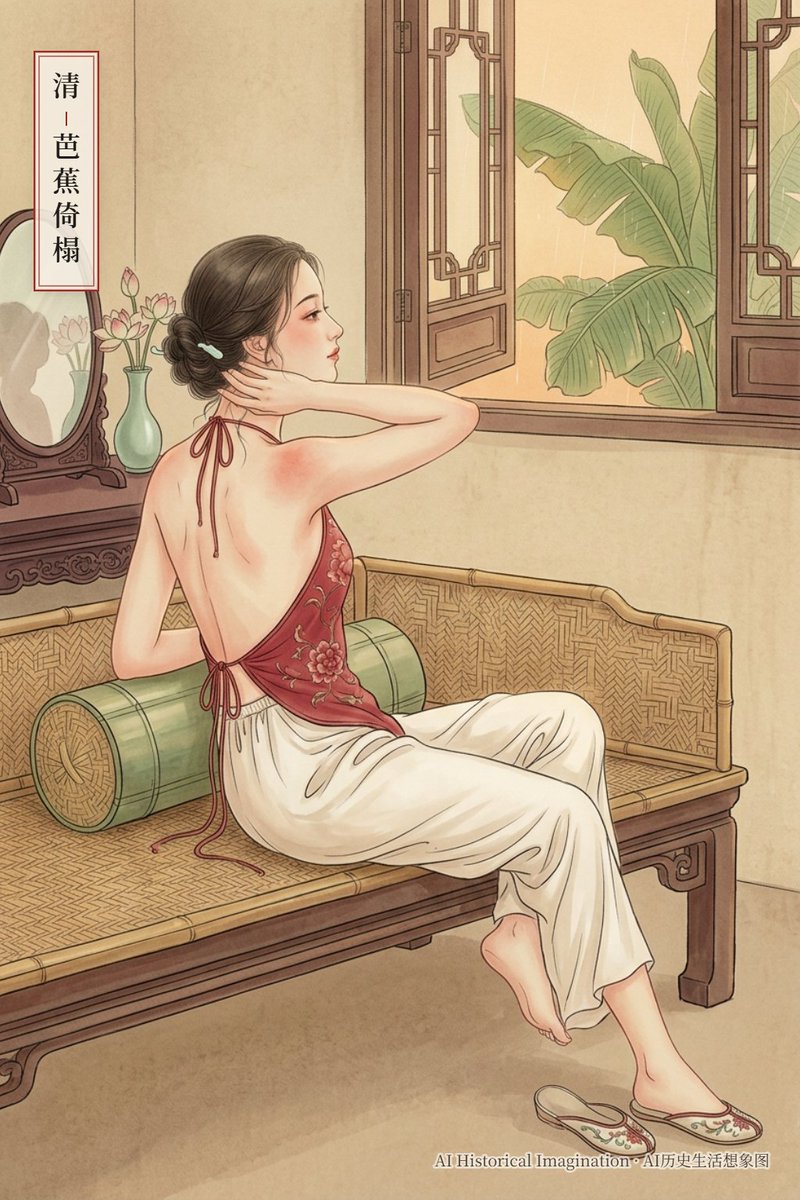
3. Qing: Mirror & linen hair-drying (浴後拭髮)
4. 1936 Shanghai: Clawfoot tub water test (缸邊試水)
Part 3 next: winter bed-warming before heating ❄️🔥
Before plumbing or water heaters existed, how did Chinese women actually take a hot bath?
Across 1,000 years (Tang → Song → Qing → 1936 Shanghai), it was all in the quiet little gestures.
Which era feels the most poetic? 🛁✨
(AI illustrations) #Art
I'm turning 1,000 years of everyday Chinese life — cooling off, bathing, skincare, night markets, and how it all evolved into modern life — into an illustrated series.
Follow along for Part 2 (how ancient people actually took hot baths before plumbing) 🛁✨
Before air conditioning existed, how did Chinese women actually survive 40°C summer nights?
Not by sitting in heavy palace robes.
Across 1,000 years, they mastered the art of staying cool:
#ChineseHistory#Aesthetics#AncientChina#Art
3. Qing Dynasty Embroidered silk dudou, woven bamboo daybeds, and a hollow "Bamboo Wife" bolster to let air circulate.4. 1930s Shanghai Brass electric fans, satin loungewear, and twilight breezes over the city skyline.Which era’s summer night would you actually want to spend? 🌙
1. Tang Dynasty — Bronze ice vessels (冰鉴) filled with winter-harvested ice, releasing cool mist into the room.
2. Song Dynasty — Sheer silk gauze, rolled bamboo blinds, a round fan, and cool tea by the window.
Fun fact about #3:
That woven bamboo bolster is literally called a "Bamboo Wife" (竹夫人) in Chinese — hollowed out so air flows through while you lean or sleep on it during humid nights. Even Song Dynasty poet Su Shi wrote poems about it.