This paper I wrote is open access (and approved!): "Is a DAO a Panopticon? Algorithmic governance as creating and mitigating vulnerabilities in 'Decentralised Autonomous Organisations'" https://t.co/StCj9sUAgL. TLDR: your greatest potential threat may be yourself
In the end, "smart contracts" feels like an imprecise term. Rather, I'd prefer more specific terms such as "on-chain validators" and "off-chain code". I reckon this is a hard one for marketing though...
If anything, "smart-validators" sounds already much better to me 😊
That was 100% painless. #Cardano#Alonzo live. Full eUTxO Smart Contracts live. Awesome job team @InoutOutputHK etc. Making something so complex work seamlessly is no small feat. Truly wonderful piece of engineering.
The latest @InputOutputHK blog post explains a core structural difference between Cardano’s eUTXO ledger model and Ethereum‘s account model, and how that affects dApp architecture: https://t.co/L2Q1DIg5u1
Jeez, catching up on the whole #Cardano Concurrency FUD. A metaphorical tornado in a tea cup. Concurrency and distributed systems are extremely well studied. EUTXO is a highly concurrent settlement layer. In fact it is best understood as mobile processes. Grow up kids👇🏼
IMPORTANT THREAD: Over the past 24 hours we have seen a lot of social media speculation (and let's face it, outright FUD & misinformation) over Cardano’s ledger approach and specifically ‘concurrency’. Let’s clear this up. #Cardano $ADA 1/n
Keep in mind also that Hydra heads are only a first step in the scalability roadmap. It won't stop there and we are already envisioning some nice extensions, so much that at some point, we'll need to chose in which direction we want to steer it :)
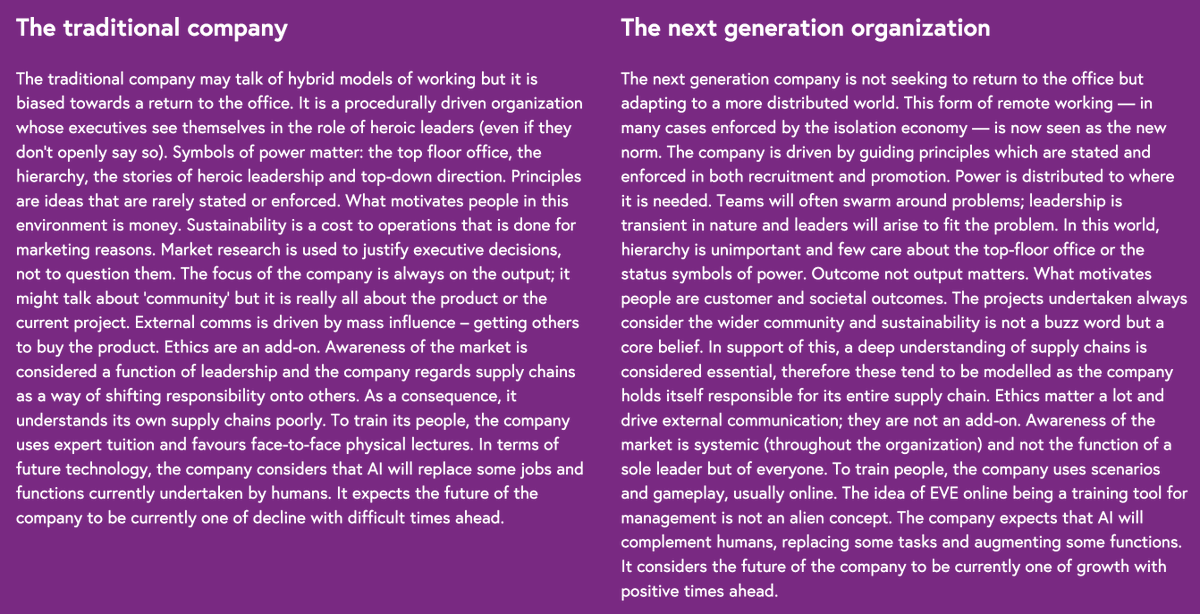
X : What are the new technologies that are likely to change our future?
Me : The real impact to organisational behaviour is never from novel technology but the industrialisation of pre-existing technology. The changes today can be described as follows ...
Another one is up! Ricardian Contract specification. We need a way for people understand and verify the intent of a smart contracts. Help mitigate scams and make contracts human readable. https://t.co/7d5pSeuTM6
While Ethereum is burning part of its transactions fees, Cardano is instead sending part of its fees to a treasury to fund future development 🤔
We have almost $1,000,000,000 USD in the Cardano $ADA treasury -- open for anyone to submit proposals and for all holders to vote
If you are interested in understanding the synergy between blockchains and functional programming and how that is used to power the Plutus smart contract layer of Cardano, check out my ICFP’19 keynote entitled “Blockchains are functional”: https://t.co/HC7kJbMPer
Validating what makes a good smart contract from a bad one Is a lot harder than what most people think.
poorly designed and engineered smart contracts can have many faults that are exploitable. Enabling tokens to be siphoned off and sold by some anonymous person. (1/5)
Use of formal methods, simulation, and testing are all good signs of solid engineering. But in general it is hard to tell if smart-contract are robust. (4/5)