Recently, while exploring @ritualnet testnets, I’ve started to feel that they are moving beyond simple feature demonstrations and experimenting with entirely new forms of digital experiences.
The Ritual Divination testnet I tried today initially looked like a simple fortune-telling application. However, after spending some time with it, it felt more like a glimpse into the kind of user experiences the Ritual ecosystem is exploring and refining.
When the Experience Matters More Than the Result
Ritual Divination is designed so that the journey toward the result becomes part of the experience itself.
A user clicks a button, the Ritual character appears, and the prediction is gradually revealed. This flow creates a level of immersion that feels very different from simply displaying a block of text on the screen.
What matters here is not whether the prediction is accurate.
What matters is how the result is delivered to the user.
Interaction Is Becoming the New Competitive Advantage
The AI industry is gradually shifting from a race focused purely on model performance to one centered on user experience.
More and more projects are realizing that the value users perceive often comes not only from the output itself, but from the way they interact with the system.
Ritual Divination is a good example of this trend.
What users encounter is not merely a generated result, but an interactive experience built around that result.
This approach could become increasingly important in areas such as gaming, digital companions, and interactive AI services.
What Ritual Is Really Experimenting With
Many people may see this testnet as nothing more than a fun fortune-telling app.
From a technical perspective, however, the fortune itself is not the most interesting part.
What Ritual appears to be exploring is how generative interactions can be combined with user experience to create deeper engagement and immersion.
In that sense, Ritual Divination may be a small demo, but it offers an interesting glimpse into how AI-powered interactive applications could evolve in the future.
The next stage of competition may not be about building smarter models alone. It may be about creating more natural, engaging, and immersive ways for people to interact with them.
최근 Ritual 테스트넷들을 살펴보면 단순한 ��능 체험을 넘어 새로운 형태의 디지털 경험을 실험하고 있다는 느낌을 받습니다.
오늘 경험해본 테스트넷 Ritual Divination 역시 처음에는 단순한 운세 서비스처럼 보였지만 조금 더 깊게 들여다보면 Ritual 생태계가 어떤 방향의 사용자 경험을 고민하고 있는지 보여주는 사례에 가까운것 같습니다.
결과보다 경험이 중요해지는 순간
Ritual Divination은 결과가 공개되기까지의 과정을 하나의 경험으로 설계되어있습니다.
사용자가 버튼을 누르고 Ritual 캐릭터가 등장하며 결과가 순차적으로 나타나는 흐름은 단순한 텍스트 출력보다 훨씬 몰입감이 높은 것 같습니다.
여기서 중요한 것은 예측의 정확도가 아닙니다.
중요한 것은 결과가 사용자에게 전달되는 방식인것 같습니다.
인터랙션이 새로운 경쟁력이 된다
최근 AI 산업은 모델 성능 경쟁을 넘어 사용자 경험 경쟁으로 이동하고 있습니다. 결과 자체보다 사용자가 어떤 방식으로 상호작용하는지에 집중하고 있습니다.
Ritual Divination은 이러한 흐름을 잘 보여줍니다.
사용자가 실제로 접하는 것은 단순한 결과물이 아니라 하나의 인터랙티브한 경험입니다.
이러한 접근은 앞으로 게임, 디지털 컴패니언, 인터랙티브 AI 서비스와 같은 영역에서도 중요한 의미를 가질 수 있습니다.
Ritual이 실험하는 것
많은 사람들이 이 테스트넷을 재미있는 운세 서비스 정도로 볼 수 있지만 기술적인 관점에서 보면 핵심은 운세가 아닙니다.
Ritual은 생성형 인터랙션이 사용자 경험과 결합될 때 어떤 몰입감을 만들 수 있는지 실험하고 있습니다.
결국 Ritual Divination은 작은 데모이지만 AI 기반 인터��티브 애플리케이션이 앞으로 어떤 사용자 경험을 제공할 수 있는지 보여주는 흥미로운 사례라고 생각합니다.
앞으로의 경쟁은 더 똑똑한 모델만이 아니라 더 자연스럽고 몰입감 있는 상호작용이 될지도 모릅니다.
@joshsimenhoff @Jez_Cryptoz @niraj @Kash_060
@whitesocks256 @mongdiny7 @ritualnet @ritualfnd
@ritualnet_korea #Ritual
Today’s @RialoHQ Quiz made me rethink one of the biggest assumptions around onchain private credit.
Why hasn’t onchain private credit worked effectively yet?
1️⃣ Lack of users
2️⃣ High fees
✅Compliance verification gap
4️⃣ Low liquidity
Before taking the quiz, I assumed the main challenge was tokenization.
How do we bring loans onchain?
How do we trade them?
How do we improve liquidity?
These seemed like the most important questions.
But today’s quiz pointed to a very different problem.
Tokenization may actually be the easy part.
One of the real challenges is verifying that borrowers continue to comply with loan agreements after issuance.
In traditional finance, this responsibility is often handled by servicers.
They review borrower financial statements, perform covenant testing, and monitor whether contractual obligations are being met.
The problem is that this process still relies heavily on trust.
Servicer incentives are not always perfectly aligned with investors, reporting can be delayed, and covenant interpretations may become more flexible than expected.
The most interesting takeaway from today’s quiz was that the core issue in private credit is often not a lack of rules, but a lack of verifiable enforcement.
Crypto has attempted to address this through tokenization and smart contracts.
However, smart contracts are only as reliable as the data they receive.
They can enforce rules automatically, but they cannot independently determine whether offchain information is accurate.
This shifts the conversation away from tokenization and toward verification.
The challenge for onchain private credit may not simply be representing assets onchain, but building systems that can verify compliance, reduce trust assumptions, and enable more reliable enforcement.
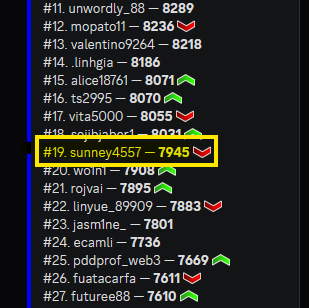
Finished today’s quiz in 19th place.
Not my best result after reaching 9th previously, but it was another valuable opportunity to better understand the infrastructure challenges behind private credit.
@silverwave1000@itachee_x@RialoHQ@RialoKorea
#RialoTH
A Common Pattern Emerging from Today's Builder's Hub @RialoHQ
One of the most interesting things about today's Rialo Builder's Hub wasn't any single project.
It was the pattern that emerged across all three.
On the surface, they look completely different.
One is an onchain time capsule.
One is a payroll and financial management platform.
One is a stablecoin yield management application.
But after listening to the presentations, it felt like all three teams were exploring the same fundamental question
Can financial systems move beyond user triggered actions and become condition-driven systems?
Aeternum Tesseract: Programming Time
Aeternum Tesseract allows users to encrypt messages and files and reveal them at a future date.
At first glance, it looks like a simple onchain time capsule.
What caught my attention, however, was not the storage layer but the execution model behind it.
Data is created and encrypted.
The protocol keeps it locked.
When a predefined condition is met, in this case time itself, the state changes and the content becomes available.
The user does not need to return and trigger the process.
The system reacts automatically once the condition is satisfied.
Today the trigger is time, but the architecture naturally raises a broader question.
What happens when execution can be tied to other conditions such as market prices, blockchain activity, or external events?
Viewed from that perspective, Aeternum Tesseract feels less like a storage application and more like an experiment in condition-based execution.
RialOS: Connecting Financial Workflows
RialOS was presented as a payroll platform, but the more interesting aspect was how it connected multiple financial actions into a single workflow.
Employee onboarding.
Payroll distribution.
Asset allocation.
Automated investing.
Rather than treating these as separate processes, RialOS brings them together into a unified flow.
In traditional finance, payroll systems, banking services, investment platforms, and accounting tools often operate independently.
RialOS appears to be exploring what happens when those actions become part of the same execution layer.
The Auto Invest functionality stood out in particular.
It suggests a future where financial actions do not end when money is transferred.
Instead, the transfer itself becomes the starting point for the next sequence of actions.
That makes RialOS feel less like a payroll application and more like an experiment in programmable financial workflows.
Saving Jar: Simplifying Yield Management
Saving Jar is built around stablecoin deposits and yield generation.
What I found most interesting was not the yield itself, but the way investment decisions are abstracted.
Users can choose between different risk profiles
Treasury Safe
Balanced Growth
Yield Maximizer
After that, the protocol handles allocation and strategy management.
Balanced Growth combines Treasury-backed assets with onchain lending strategies.
Yield Maximizer expands exposure to lending and liquidity provision strategies.
Instead of asking users to actively manage multiple protocols, the system focuses on simplifying the decision-making process.
The Auto Compounding feature reinforces this design philosophy.
The goal is not only to generate yield but also to reduce the operational complexity involved in managing it.
Three Different Projects, One Shared Direction
Although these projects target different use cases, they seem to share a common design principle.
Aeternum Tesseract uses time as an execution condition.
RialOS uses financial actions as execution conditions.
Saving Jar uses portfolio and yield strategies as execution conditions.
The common thread is the shift away from constant user intervention.
A predefined condition is met.
The system responds.
Execution follows.
This is where concepts frequently discussed within the Rialo ecosystem Reactive Transactions, Native Automation, and Event Driven Execution start to feel much more tangible.
A Broader Observation
What stood out most from today's Builder's Hub is that these projects feel less like finished products and more like prototypes for new execution models.
Each team approached a different problem.
One focused on time.
One focused on financial workflows.
One focused on asset allocation.
Yet all three were exploring how real-world conditions can be translated into onchain actions.
The applications themselves were interesting.
But the execution models behind them were even more interesting.
And from that perspective, today's Builder's Hub offered a glimpse into the direction the Rialo ecosystem may be moving toward.
@silverwave1000@itachee_x@RialoHQ@RialoKorea
#RialoTH
I joined the Seismic Poker event today!
I had heard there were a lot of strong players and a huge number of participants, so I was honestly a bit nervous going in.
Still, finishing in 55th place feels like a decent result. Next time, I’ll try not to be intimidated from the start, stay calm, and aim for an even higher ranking.
A project lasts longer when its community is fun and engaging, and that’s exactly why I’m starting to enjoy Seismic more and more.
Looking forward to having even more fun with Seismic! 🚀
세이즈믹 포커에 참여했어요!
여기 고수들도 많고, 참여자도 많다고 들어서
너무 걱정했어요.
그래도 55등이면 어느정도 선방한거 같아요.
다음에는 처음부터 겁먹지 말고 차분하게!
더 높은 순위를 노려보겠습니다.
커뮤니티가 즐거워야 오래가는 프로젝트인데
그런의미에서 슬슬 재미가 붙어가는 것 같습니다.
좀 더 세이즈믹 즐겨보아요~
@SeismicSys #Seismic
Seismic Research Diary EP.2
Is a Fully Transparent Blockchain Always a Good Thing?
One of the greatest strengths of blockchain technology is transparency.
Anyone can verify transactions.
Anyone can trace the movement of funds.
This transparency has enabled trust without relying on centralized institutions and has been one of the key reasons blockchain has grown so rapidly.
But while studying Seismic, I started to wonder
Is it always beneficial for every piece of information to be public?
Individuals and Businesses Face Very Different Challenges
There is a significant difference between an individual trader's transaction history being public and a company's financial activities being visible to everyone.
Businesses sign contracts with partners,
pay employees,
manage treasury operations,
and execute financial strategies.
What happens if all of that information becomes publicly accessible?
Competitors could analyze cash flows and transaction patterns, and in some cases even infer business strategies.
In reality, many companies are more concerned about exposing counterparties, transaction sizes, and fund movement patterns than the transactions themselves.
This is one reason why traditional financial systems do not publicly expose most financial data.
A Growing Challenge for On Chain Finance
So far, much of on chain activity has been centered around investing and trading.
However, the landscape changes as stablecoin adoption grows and real-world payments, settlements, and business transactions begin moving on chain.
A world where corporate payments,
institutional fund movements,
and business networks are fully visible may be difficult for traditional financial participants to embrace.
As on-chain finance continues to evolve, privacy may become an increasingly important component of financial infrastructure.
Why Seismic Caught My Attention
Seismic aims to make privacy a native capability through its Shielded State architecture.
At first, I viewed it simply as a technology for hiding transaction data.
But the more I study it, the more I think the broader goal may be something else.
Not privacy for its own sake,
but creating an environment where financial applications involving Stablecoins, Payments, Banking, and Compliance can be built while preserving appropriate confidentiality.
Perhaps the future of finance is not about making everything public.
Perhaps it is about making the right information visible to the right parties.
To be continued.
Seismic Research Diary EP.3
Seismic Research Diary EP.2
모든 것이 공개되는 블록체인은 정말 좋은 것일까?
블록체인의 가장 큰 장점 중 하나는 투명성입니다.
누구나 거래를 검증할 수 있고,
누구나 자금의 이동 경로를 확인할 수 있습니다.
이러한 투명성은 중앙 기관 없이도 신뢰를 구축할 수 있게 만들었고, 블록체인이 성장할 수 있었던 중요한 이유이기도 합니다.
하지만 최근 Seismic을 공부하면서 한 가지 의문이 생겼습니다.
과연 모든 정보가 공개되는 것이 항상 좋은 것일까요?
개인 투자자와 기업은 전혀 다른 문제를 안고 있다
개인 투자자의 거래 내역이 공개되는 것과 기업의 금융 활동이 공개되는 것은 완전히 다른 이야기입니다.
기업은 거래처와 계약을 맺고,
직원들에게 급여를 지급하고,
자금을 운용하며,
다양한 금융 전략을 실행합니다.
만약 이러한 정보가 모두 공개된다면 어떤 일이 발생할까요?
경쟁사는 기업의 자금 흐름과 거래 패턴을 ���석할 수 있으며, 경우에 따라 사업 전략을 유추할 가능성도 있습니다.
실제로 기업들은 거래 내역 자체보다 거래 상대방, 거래 규모, 자금 이동 패턴이 공개되는 것을 더 민감하게 받아들이는 경우가 많습니다.
기존 금융 시스템이 대부분의 데이터를 공개하지 않는 이유도 여기에 있습니다.
온체인 금융이 성장할수록 중요해지는 문제
지금까지 많은 온체인 활동은 투자와 거래 중심으로 성장해 왔습니다.
하지만 스테이블코인 사용량이 증가하고,
실제 결제와 송금,
기업 간 자금 이동이 블록체인 위에서 이루어지기 시작한다면 상황은 달라질 수 있습니다.
기업의 결제 정보,
기관의 자금 이동,
거래처 네트워크가 모두 공개되는 환경은 현실 금융이 받아들이기 어려울 수 있습니다.
결국 온체인 금융이 성장할수록 프라이버시는 점점 더 중요한 요소가 �� 가능성이 높습니다.
그래서 Seismic이 흥미롭다
Seismic은 Shielded State를 통해 프라이버시를 기본 기능으로 제공하려고 합니다.
처음에는 단순히 거래를 숨기는 기술이라고 생각했습니다.
하지만 공부할수록 이 기술이 향하는 방향은 조금 달라 보입니다.
그 목적은 데이터를 숨기는 것 자체가 아니라,
Stablecoin,
Payments,
Banking,
Compliance와 같은 금융 서비스가 구축될 수 있는 환경을 만드는 것에 더 가까워 보입니다.
어쩌면 미래 금융이 필요로 하는 것은 더 많은 공개가 아니라,
필요한 정보만 공개할 수 있는 구조인지도 모르겠습니다.
다음 글에서는 Seismic의 핵심 기술인
Shielded State는 무엇이며, 왜 중요한가?를 정리해보려고 합니다.
To be continued.
Seismic Research Diary EP.3
@SeismicSys #Seismic
Today was another fun @ritualnet Karaoke Night! 🎤
A lot of people sang Korean songs today, which made the atmosphere even more exciting.
As always, Jenny and Yanul delivered amazing performances.
I'm always cheering for you both!
And Ice Bear singing BIGBANG songs was absolutely incredible.
When he greeted everyone with “Annyeonghaseyo” from the start, I honestly thought he might be Korean! 😆
Ritual Karaoke is always such a fun and energetic community event.
Already looking forward to next week's session! 🎶✨
오늘은 @ritualnet 가라오케가 있는날!
오늘은 많은 사람들이 한국 노래를 불러줘서
더욱 신났더랬죠.
역시나 노래 잘하시는 제니님! 얀을님!
언제나 응원합니다!
아이스베어가 불러주는 빅뱅은 최고최고!
첫인사부터 안녕하세요~ 라고 해서
한국사람인가 했다요!
언제나 즐겁고 신나는 리츄얼 가라오케!
담주도 기대합니다.
@joshsimenhoff@Jez_Cryptoz@niraj@Kash_060@whitesocks256@mongdiny7@ritualnet@ritualfnd@ritualnet_korea #Ritual
Recently, while exploring @ritualnet testnets, I’ve started to feel that they are moving beyond simple feature demonstrations and experimenting with entirely new forms of digital experiences.
The Ritual Divination testnet I tried today initially looked like a simple fortune-telling application. However, after spending some time with it, it felt more like a glimpse into the kind of user experiences the Ritual ecosystem is exploring and refining.
When the Experience Matters More Than the Result
Ritual Divination is designed so that the journey toward the result becomes part of the experience itself.
A user clicks a button, the Ritual character appears, and the prediction is gradually revealed. This flow creates a level of immersion that feels very different from simply displaying a block of text on the screen.
What matters here is not whether the prediction is accurate.
What matters is how the result is delivered to the user.
Interaction Is Becoming the New Competitive Advantage
The AI industry is gradually shifting from a race focused purely on model performance to one centered on user experience.
More and more projects are realizing that the value users perceive often comes not only from the output itself, but from the way they interact with the system.
Ritual Divination is a good example of this trend.
What users encounter is not merely a generated result, but an interactive experience built around that result.
This approach could become increasingly important in areas such as gaming, digital companions, and interactive AI services.
What Ritual Is Really Experimenting With
Many people may see this testnet as nothing more than a fun fortune-telling app.
From a technical perspective, however, the fortune itself is not the most interesting part.
What Ritual appears to be exploring is how generative interactions can be combined with user experience to create deeper engagement and immersion.
In that sense, Ritual Divination may be a small demo, but it offers an interesting glimpse into how AI-powered interactive applications could evolve in the future.
The next stage of competition may not be about building smarter models alone. It may be about creating more natural, engaging, and immersive ways for people to interact with them.
최근 Ritual 테스트넷들을 살펴보면 단순한 기능 체험을 넘어 새로운 형태의 디지털 경험을 실험하고 있다는 느낌을 받습니다.
오늘 경험해본 테스트넷 Ritual Divination 역시 처음에는 ���순한 운세 서비스처럼 보였지만 조금 더 깊게 들여다보면 Ritual 생태계가 어떤 방향의 사용자 경험을 고민하고 있는지 보여주는 사례에 가까운것 같습니다.
결과보다 경험이 중요해지는 순간
Ritual Divination은 결과가 공개되기까지의 ���정을 하나의 경험으로 설계되어있습니다.
사용자가 버튼을 누르고 Ritual 캐릭터가 등장하며 결과가 순차적으로 나타나는 흐름은 단순한 텍스트 출력보다 훨씬 몰입감이 높은 것 같습니다.
여기서 중요한 것은 예측의 정확도가 아닙니다.
중요한 것은 결과가 사용자에게 전달되는 방식인것 같습니다.
인터랙션이 새로운 경쟁력이 된다
최근 AI 산업은 모델 성능 경쟁을 넘어 사용자 경험 경쟁으로 이동하고 있습니다. 결과 자체보다 사용자가 어떤 방식으로 상호작용하는지에 집중하고 있습니다.
Ritual Divination은 이러한 흐름을 잘 보여줍니다.
사용자가 실제로 접하는 것은 단순한 결과물이 아니라 하나의 인터랙티브한 경험입니다.
이러한 접근은 앞으로 게임, 디지털 컴패니언, 인터랙티브 AI 서비스와 같은 영역에서도 중요한 의미를 가질 수 있습니다.
Ritual이 실험하는 것
많은 사람들이 이 테스트넷을 재미있는 운세 서비스 정도로 볼 수 있지만 기술적인 관점에서 보면 핵심은 운세가 아닙니다.
Ritual은 생성형 인터랙션이 사용자 경험과 결합될 때 어떤 몰입감을 만들 수 있는지 실험하고 있습니다.
결국 Ritual Divination은 작은 데모이지만 AI 기반 인터랙티브 애플리���이션이 앞으로 어떤 사용자 경험을 제공할 수 있는지 보여주는 흥미로운 사례라고 생각합니다.
앞으로의 경쟁은 더 똑똑한 모델만이 아니라 더 자연스럽고 몰입감 있는 상호작용이 될지도 모릅니다.
@joshsimenhoff @Jez_Cryptoz @niraj @Kash_060
@whitesocks256 @mongdiny7 @ritualnet @ritualfnd
@ritualnet_korea #Ritual
A Common Pattern Emerging from Today's Builder's Hub @RialoHQ
One of the most interesting things about today's Rialo Builder's Hub wasn't any single project.
It was the pattern that emerged across all three.
On the surface, they look completely different.
One is an onchain time capsule.
One is a payroll and financial management platform.
One is a stablecoin yield management application.
But after listening to the presentations, it felt like all three teams were exploring the same fundamental question
Can financial systems move beyond user triggered actions and become condition-driven systems?
Aeternum Tesseract: Programming Time
Aeternum Tesseract allows users to encrypt messages and files and reveal them at a future date.
At first glance, it looks like a simple onchain time capsule.
What caught my attention, however, was not the storage layer but the execution model behind it.
Data is created and encrypted.
The protocol keeps it locked.
When a predefined condition is met, in this case time itself, the state changes and the content becomes available.
The user does not need to return and trigger the process.
The system reacts automatically once the condition is satisfied.
Today the trigger is time, but the architecture naturally raises a broader question.
What happens when execution can be tied to other conditions such as market prices, blockchain activity, or external events?
Viewed from that perspective, Aeternum Tesseract feels less like a storage application and more like an experiment in condition-based execution.
RialOS: Connecting Financial Workflows
RialOS was presented as a payroll platform, but the more interesting aspect was how it connected multiple financial actions into a single workflow.
Employee onboarding.
Payroll distribution.
Asset allocation.
Automated investing.
Rather than treating these as separate processes, RialOS brings them together into a unified flow.
In traditional finance, payroll systems, banking services, investment platforms, and accounting tools often operate independently.
RialOS appears to be exploring what happens when those actions become part of the same execution layer.
The Auto Invest functionality stood out in particular.
It suggests a future where financial actions do not end when money is transferred.
Instead, the transfer itself becomes the starting point for the next sequence of actions.
That makes RialOS feel less like a payroll application and more like an experiment in programmable financial workflows.
Saving Jar: Simplifying Yield Management
Saving Jar is built around stablecoin deposits and yield generation.
What I found most interesting was not the yield itself, but the way investment decisions are abstracted.
Users can choose between different risk profiles
Treasury Safe
Balanced Growth
Yield Maximizer
After that, the protocol handles allocation and strategy management.
Balanced Growth combines Treasury-backed assets with onchain lending strategies.
Yield Maximizer expands exposure to lending and liquidity provision strategies.
Instead of asking users to actively manage multiple protocols, the system focuses on simplifying the decision-making process.
The Auto Compounding feature reinforces this design philosophy.
The goal is not only to generate yield but also to reduce the operational complexity involved in managing it.
Three Different Projects, One Shared Direction
Although these projects target different use cases, they seem to share a common design principle.
Aeternum Tesseract uses time as an execution condition.
RialOS uses financial actions as execution conditions.
Saving Jar uses portfolio and yield strategies as execution conditions.
The common thread is the shift away from constant user intervention.
A predefined condition is met.
The system responds.
Execution follows.
This is where concepts frequently discussed within the Rialo ecosystem Reactive Transactions, Native Automation, and Event Driven Execution start to feel much more tangible.
A Broader Observation
What stood out most from today's Builder's Hub is that these projects feel less like finished products and more like prototypes for new execution models.
Each team approached a different problem.
One focused on time.
One focused on financial workflows.
One focused on asset allocation.
Yet all three were exploring how real-world conditions can be translated into onchain actions.
The applications themselves were interesting.
But the execution models behind them were even more interesting.
And from that perspective, today's Builder's Hub offered a glimpse into the direction the Rialo ecosystem may be moving toward.
@silverwave1000@itachee_x@RialoHQ@RialoKorea
#RialoTH
The Next Blockchain Competition May Not Be About TPS
One of the most interesting things I’ve noticed while studying Rialo is that the project seems to be focused more on architecture than performance.
For years, blockchain competition has been relatively straightforward.
Who can achieve higher TPS
Who can offer lower fees
Who can provide faster finality
Most new chains have evolved around improving execution efficiency.
But the more I look into Rialo’s technical direction, the more it feels like the underlying question is changing.
Instead of asking how to build a faster blockchain, Rialo appears to be exploring something different
How can real world state changes become part of onchain execution itself?
Execution Matters More Than Data
The blockchain ecosystem already has access to an enormous amount of data.
Oracles provide price feeds.
AI systems analyze information.
External systems continuously generate events.
The challenge is no longer data availability.
The challenge is the distance between data and execution.
A price update does not automatically trigger execution.
A news event does not automatically adjust positions.
Execution still requires separate bots, keepers, automation networks, and coordination across multiple layers.
As a result, data and execution remain fragmented, creating coordination costs and increasingly complex state transition management.
This is where Rialo’s Reactive Transaction concept becomes particularly interesting.
The goal is not simply to react after a user submits a transaction.
Instead, the architecture appears to explore how external state changes themselves can become execution triggers.
From a systems perspective, this feels much closer to an Event-Driven Architecture than a traditional transaction processing model.
Why Native Automation Matters
Today, most DeFi automation depends on external infrastructure.
Liquidation engines
Portfolio rebalancing
Yield optimization systems
Almost all of them rely on multiple independent components.
Oracles provide data.
Keepers trigger execution.
Separate protocols handle settlement.
As systems become more complex, coordination costs continue to rise.
In modern financial systems, the competitive advantage often comes not from receiving information first, but from converting state changes into execution faster and more reliably.
This is why Rialo’s vision of Native Automation stands out.
Rather than treating automation as an application-level feature, it appears to move execution closer to the protocol itself.
If successful, automation could evolve from an application feature into a network-level capability.
That represents more than a UX improvement.
It points toward a redesign of financial infrastructure itself.
A Practical Example from Builder’s Hub
One of the most interesting examples recently showcased at Builder’s Hub was OLPA DEX.
At first glance, it looks like a sports prediction market.
But the deeper story is not about sports.
It is about state transitions.
Goals
Passes
Possession changes
VAR decisions
These events are not simply reference data.
They become inputs that influence market state updates.
Traditional financial systems typically process information first and update markets afterward.
In this model, real world events themselves become part of the state update process.
Markets begin to resemble systems that process event streams rather than simple trading venues.
If this approach expands further, it could eventually support areas such as
Real time RWA markets
Event-based derivatives
Dynamic insurance models
Reactive prediction markets
Ultimately, the challenge becomes how efficiently real-world event streams can be connected to onchain execution layers with minimal latency.
The Direction Rialo Appears To Be Taking
Looking at recent Builder’s Hub discussions and ecosystem developments, Rialo does not feel like a typical general-purpose blockchain.
Several recurring concepts continue to emerge
RISC-V execution environments
Configurable Privacy
Reactive Transactions
Native Automation
Supermodularity
All of these ideas seem to point toward the same objective
Reducing the distance between real-world data and onchain execution.
The recent CBOE Innovation Spotlight recognition can be viewed through the same lens.
Connecting thousands of financial market data feeds is not simply an oracle expansion story.
It appears closer to an effort to bridge traditional financial data infrastructure with blockchain execution environments.
That is why many projects emerging within the Rialo ecosystem no longer resemble traditional dApps.
Instead, they increasingly look like reactive applications, where real-world events themselves become execution conditions.
Even before mainnet, developers continue to gather around Builder’s Hub and Shark Tank initiatives.
If blockchain competition eventually shifts from transaction throughput to execution architecture, Rialo may be remembered as one of the earliest examples of that transition.
@silverwave1000@itachee_x@RialoHQ@RialoKorea
#RialoTH
Prediction Market Series @minara
월드컵은 단순 스포츠 이벤트가 아니라 하나의 확률 시장이 될 수 있을까?
최근 Minara가 흥미로운 소식을 공개했습니다.
바로 World Cup 2026 Prediction Arena입니다.
아직 정식 출시 전이지만, 공개된 화면만 봐도 Minara가 어떤 방향을 그리고 있는지 어느 정도 엿볼 수 있었습니다.
처음에는 단순한 월드컵 승부 예측 이벤트처럼 보였습니다.
어느 팀이 이길지 예측하고,
결과를 맞추고,
리워드를 받는 구조 말입니다.
그런데 공개된 화면에서 눈에 들어온 건 다른 부분이었습니다.
시장이 보는 확률과 AI가 보는 확률
공개된 예시 화면에는
The Crowd
Minara AI Reference
가 함께 표시되고 있었습니다.
예를 들어 시장 참여자들이 평가한 확률과 Minara AI가 분석한 확률이 서로 다르게 나타날 수 있습니다.
개인적으로 흥미로웠던 부분은 바로 이 지점입니다.
Prediction Market의 핵심은 단순히 결과를 맞추는 것이 아니라, 확률을 어떻게 해석하느냐에 있기 때문입니다.
중요한 건 정답보다 확률의 차이
시장이 보는 확률과 AI가 해석하는 확률이 같다면 특별할 것이 없습니다.
하지만 두 확률이 다르게 나타난다면 새로운 관점이 생깁니다.
시장 참여자들의 집단 지성과 AI 기반 분석 결과가 어떤 부분에서 서로 다른 해석을 하고 있는지 확인할 수 있기 때문입니다.
실제 금융시장에서도 많은 투자자들이 가격 자체보다
확률과 기대값(Expected Value), 그리고 시장의 오해(Mispricing)를 찾으려고 노력합니다.
이번 Prediction Arena ��시 그런 개념을 보다 직관적으로 보여주려는 시도로 보였습니다.
Minara가 보여주고 있는 다음 단계
최근 Minara의 흐름을 보면
AI Copilot
Strategy Studio
Prediction Market
Lighter 실행 레이어
각각의 기능이 따로 존재하는 것이 아니라 하나의 의사결정 워크플로우로 연결되고 있다는 느낌을 받습니다.
시장 데이터를 분석하고,
확률을 해석하고,
판단을 돕는 구조입니다.
아직 World Cup 2026 Prediction Arena는 출시 전이지만,
공개된 정보만 봐도 단순 스포츠 이벤트를 넘어 Prediction Market을 누구나 쉽게 경험할 수 있는 형태로 준비하고 있는 것처럼 보였습니다.
정식 출시 후에는 시장의 집단 지성과 AI의 확률 해석이 어떻게 다른지 직접 비교해보는 재미가 있을 것 같습니다.
⚽📊
#MinaraAI
RENAISS가 지금 만들고 있는 것은 카드가 아니라 네트워크일지도 ��른다
최근 RENAISS의 움직임을 보면 단순히 디지털 자산을 발행하는 프로젝트로 보기 어려워지고 있습니다.
많은 프로젝트들은 자산을 만들고 거래를 유도하는 단계에서 멈춥니다.
하지만 RENAISS는 최근 Ambassador 2.0 프로그램을 통해 조금 다른 방향을 보여주고 있습니다.
이번 Round 2에서는 Vietnam, Taiwan, Chinese 지역 후보들이 공개되었고, 각 지역 커뮤니티가 직접 투표를 통해 대표 Ambassador를 선발하고 있습니다.
겉으로 보면 단순한 커뮤니티 이벤트처럼 보일 수도 있습니다. 하지만 조금 더 깊게 보면 흥미로운 구조가 보입니다.
수집 시장은 결국 사람에서 시작된다
RENAISS는 실물 수집품 시장과 디지털 자산 생태계를 연결하려는 RWA 인프라 프로젝트입니다.
많은 사람들이 토큰화와 거래 기능에 집중하지만 실제 수집 시장에서 가장 중요한 것은 기술보다 커뮤니티입니다.
어떤 카드가 가치가 있는지,
어떤 컬렉션이 주목받는지,
어떤 시장이 성장하는지,
결국 시장의 방향은 사람들의 관심과 참여가 결정합니다.
RENAISS가 Ambassador 프로그램에 집중하는 이유도 여기에 있다고 생각합니다.
단순히 사용자를 늘리는 것이 아니라 지역별 커뮤니티 기���을 확장하고 있기 때문입니다.
KCCF 참여가 더욱 의미 있게 보이는 이유
최근 공개된 KCCF 참여 소식도 같은 맥락으로 보입니다.
KCCF는 TCG, 스포츠카드, IP 카드, 컬렉터 시장을 연결하는 국내 최대 규모의 카드 컬처 행사 중 하나입니다.
유희왕, 원피스, 디지몬 등 다양한 카드 IP와 수집가들이 모이는 공간이기도 합니다.
RENAISS는 온라인 커뮤니티를 확장하는 동시에 오프라인 컬렉터 시장과의 접점을 넓혀가고 있습니다.
한쪽에서는 Ambassador 프로그램을 통해 글로벌 커뮤니티를 구축하고, 다른 한쪽에서는 KCCF를 통해 실제 컬렉터 문화와 연결되고 있습니다.
인프라보다 먼저 만들어지는 것
많은 블록체인 프로젝트들은 기술을 먼저 만들고 사용자를 모으려고 합니다.
하지만 최근 RENAISS의 행보를 보면 사용자가 모이는 공간과 네트워크를 먼저 구축하고 있는 것처럼 보입니다.
프로토콜이 성장하려면 거래가 필요하고,
거래가 발생하려면 시장이 필요하며,
시장이 만들어지려면 결국 사람이 필요합니다.
최근 Ambassador 2.0과 KCCF 참여를 보면서 느낀 것은 RENAISS가 단순히 디지털 자산을 발행하는 프로젝트가 아니라 컬렉터와 커뮤니티, 그리고 수집 문화를 연결하는 네트워크를 구축하려 하고 있다는 점입니다.
어쩌면 지금 가장 중요한 자산은 카드가 아니라 사람들 사이의 연결일지도 모르겠습니다.
#RENAISS #KCCF #TCG #BNBChain @renaissxyz @RenaissKrCM
RENAISS가 KCCF에 참여하는 이유가 흥미로운 이유
최근 @renaissxyz 행보를 보면 단순히 디지털 카드를 발행하는 프로젝트가 아니란걸 확신할 수 있습니다.
KCCF(Korea Card Culture Fair)는 TCG, 스포츠카드, IP 카드, 컬렉터 시장을 하나로 연결하는 국내 최대 규모의 카드 컬처 행사 중 하나입니다.
유희왕, 원피스, 디지몬 등 다양한 글로벌 카드 IP와 수집가, 카드샵, 기업, 입문자들이 한자리에 모이는 공간이기도 합니다.
이번 KCCF 참여 소식을 보면 RENAISS가 이런 오프라인 문화의 중심에 들어가고 있다는 걸 증명하는 것 같아요.
카드를 모으고,
교환하고,
전시하고,
희귀성을 이야기하는 문화.
이 문화는 블록체인보다 훨씬 오래전부터 존재했습니다.
그래서 저는 이번 KCCF 참여가 단순한 행사 참가 이상의 의미를 가진다고 생각합니다.
RENAISS는 디지털 컬렉션을 만드는 것을 넘어,
기존 컬렉터 문화와 Web3를 연결하는 접점을 만들어가고 있기 때문입니다.
결국 중요한 것은 NFT인지 실물 카드인지가 아닐지도 모릅니다.
사람들은 왜 수집하는가.
왜 희귀한 것에 가치를 부여하는가.
왜 커뮤니티를 만들어가는가.
RENAISS는 지금 그 질문에 대한 새로운 답을 만들어가고 있는 것처럼 보입니다.
KCCF라는 무대에서 RENAISS가 어떤 방식으로 컬렉터들과 연결될지 기대됩니다.
KCCF 신청> https://t.co/THv9wKYKgR
#RENAISS #KCCF #Tcg