MIT just quietly dropped a free AI curriculum that puts $50,000 university courses to shame.
12 books.
Zero tuition.
From the same institution that produced the people building the models everyone is talking about.
FOUNDATIONS
1. Foundations of Machine Learning — https://t.co/Un6UbjJBMW
2. Understanding Deep Learning — https://t.co/UQxZmyFq2V
3. Machine Learning Systems — https://t.co/YAgrLVH8N1
ADVANCED TECHNIQUES
4. Algorithms for ML — https://t.co/YlBk59oGwX
5. Deep Learning — https://t.co/KMO1uWQ69z
REINFORCEMENT LEARNING
6. RL Basics (Sutton & Barto) — https://t.co/sOZlDXA1Tz
7. Distributional RL — https://t.co/uOkviYj8fF
8. Multi-Agent Systems — https://t.co/Dx9caJW4QL
9. Long Game AI — https://t.co/K9Qm2Tk8FE
ETHICS & PROBABILITY
10. Fairness in ML — https://t.co/MgkLdRvQ2m
11. Probabilistic ML Part 1 — https://t.co/Zz33gQizle
12. Probabilistic ML Part 2 — https://t.co/qBe776ERrO
This is a complete MIT-level AI education.
Not a YouTube playlist.
Not a Twitter thread full of fluff.
Textbooks written by the researchers who built the field.
The people who actually study this will not just understand AI better than their peers.
They will understand it better than most people currently getting paid to work in it.
Most people will bookmark this and never open it.
The ones who open it tonight are the ones who show up in 12 months having built something nobody around them understands yet.
Bookmark this.
Open the first one tonight.
Follow @cyrilXBT for more resources that actually compound.
🚨 Anthropic just showed a 27-minute workshop on how to actually do prompts for Claude.
Taught by the people who built it.
Free. No registration. No paywall.
I've seen $300 courses that don't cover what they teach in the first 8 minutes.
Watch it and bookmark it now.
I've been a backend Engineer for 12+ years. Today, I'm a Principal Engineer at Atlassian.
I've designed systems that handle millions of requests. Sat on both sides of system design interviews.
Reviewed more architecture docs than I can count.
Starting today, I'm breaking down the fundamentals of scaling for the next 25 days.
If you're learning system design bookmark this thread, you're going to get a lot of learning from this.
Every JWT writeup online covers 2–3 attacks and stops.
I got tired of jumping between 40 blog posts, so I wrote the whole thing. All in one place.
https://t.co/iCSzQ4GjcS
#infosec#appsec#bugbounty#websec#jwt
Have you ever seen a CVE and want to turn it into an exploit but don't know how? Check out my latest tutorial where I turn CVE-2018-1160 into a fully functioning exploit!
Video can be found here:
https://t.co/VMtvy4U8ov
i kid you not. i got this message from a program manager:
> try to hack it
i proxy -> login -> tell claude "look at all the req in caido for <host>"
16 minutes later:
15 million users' info leaked LOL
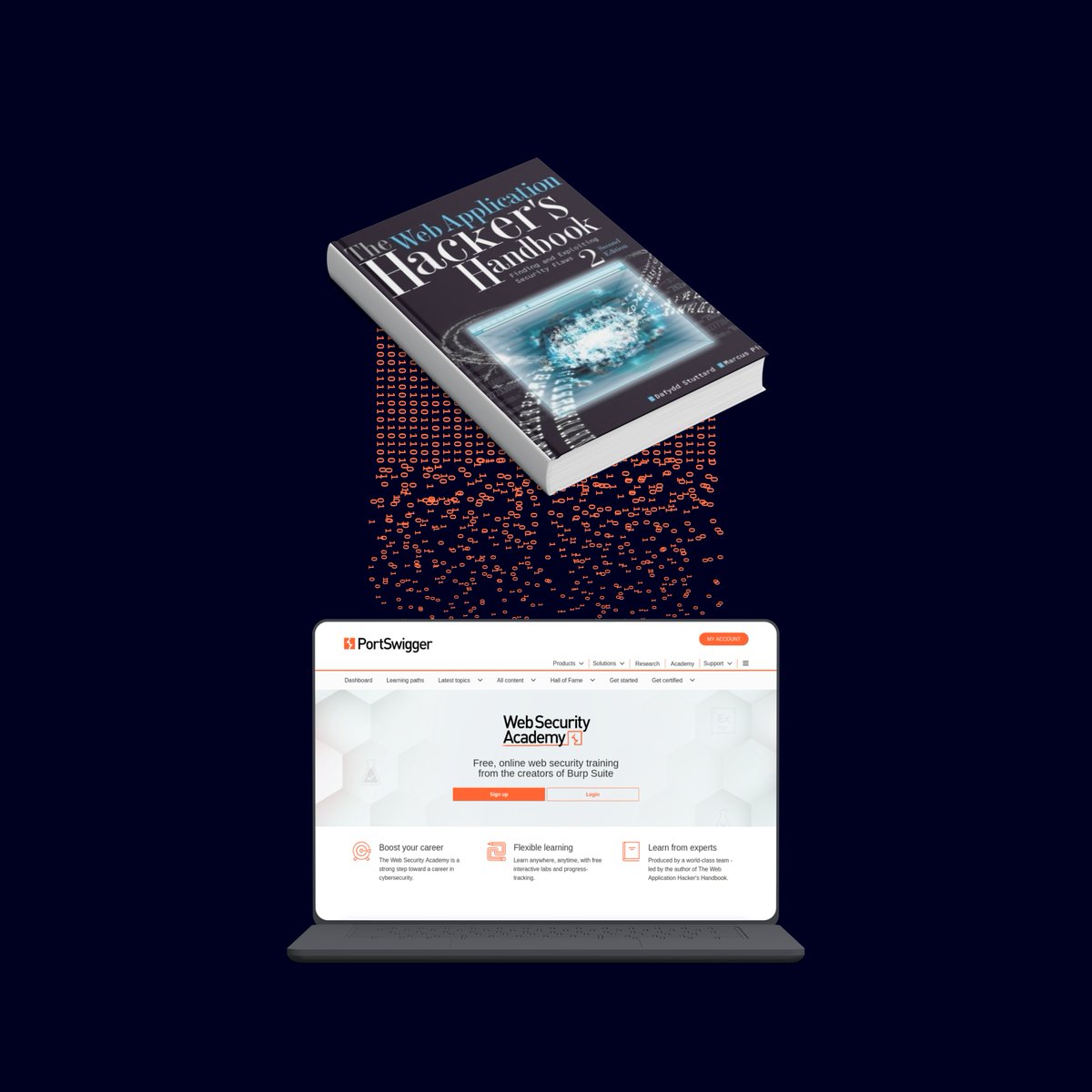
Hackers asked for a third edition of The Web Hacker’s Handbook.
Rather than releasing another book which will quickly get out-dated, we created the Web Security Academy, a living, constantly updated learning hub with hands-on labs and video walk-throughs so you can learn by doing, not just reading.
https://t.co/7YFhICfOrV
🚀 Become a Pro in Linux Server Administration
Gain full command over your IT infrastructure by mastering the core competencies every Linux System Administrator must know
💌 Comment “PDF” if you want a downloadable version of this full guide.
Tip :
GET /api/v1/user/{username} --> 403 Forbidden
DELETE /api/v1/user/{username} --> 200 OK
Check out other request methods; access control might not be properly enforced in them.
Cybersecurity firm Zscaler has disclosed a data breach after attackers gained unauthorized access to its Salesforce instance. The incident comes in the wake of the recent compromise of Salesloft Drift, an AI chat agent integrated with Salesforce, where threat actors stole OAuth and refresh tokens to infiltrate customer Salesforce environments and extract sensitive data.
The exposed information includes:
- Names
- Business email addresses
- Job titles
- Phone numbers
- Regional/location details
- Zscaler product licensing and commercial details
- Content from certain customer support cases
According to Google Threat Intelligence, the activity has been attributed to a threat actor or group known as UNC6395
A recent SSRF in a PDF generator 👇
The server converted my supplied HTML into PDF, so I dropped in a <meta http-equiv="refresh" content="0;url=http://10.20.x.x/"> tag and got the backend to fetch responses from the internal network. I was able to access an API on internal network at 10.20.x.x, but the program team wanted more impact.
With help from @mcipekci , we scanned all ports on 127.0.0.1 and ended up finding an OpenPrinting CUPS server exposed on port 631. Program team finally accepted the report as High severity.
When you land an SSRF, don’t just check the default localhost port. Enumerate all common ports on localhost.
When testing for SSRF, you’ll often hit blocklist errors when targeting localhost or cloud metadata hosts.
Here are some bypass techniques that consistently work for me:
- Use a 303 redirect to an internal host — many apps follow redirects without validation & convert POST → GET
- DNS tricks like https://t.co/pshzbZl7tT (resolves back to localhost)
- Append @blacklistedDomain after a whitelisted URL/domain
- Add # at the end of the domain if the backend appends paths/params when making request.
I just published a Repeater feature to make it easier to explore request smuggling. It repeats your request until the status code changes. It's called "Retry until success" and you can install it via the Extensibility helper bapp.
If you are studying web hacking techniques, don't get overwhelmed and don't assume people know all of the attacks and how they all work. EVERYONE needs to Google or lookup stuff during their bug hunting process, or research papers - we are all still learning on a daily basis.