The Hebrew word for "skirt" is חֲצָאִית (xa-tsa-IT). This noun is actually a feminine adjectival form of the Hebrew word for "half" חֲצִי (xa-TSI) since it was born by clipping the short-lived phrase שִׂמְלָה חֲצָאִית ("half dress").
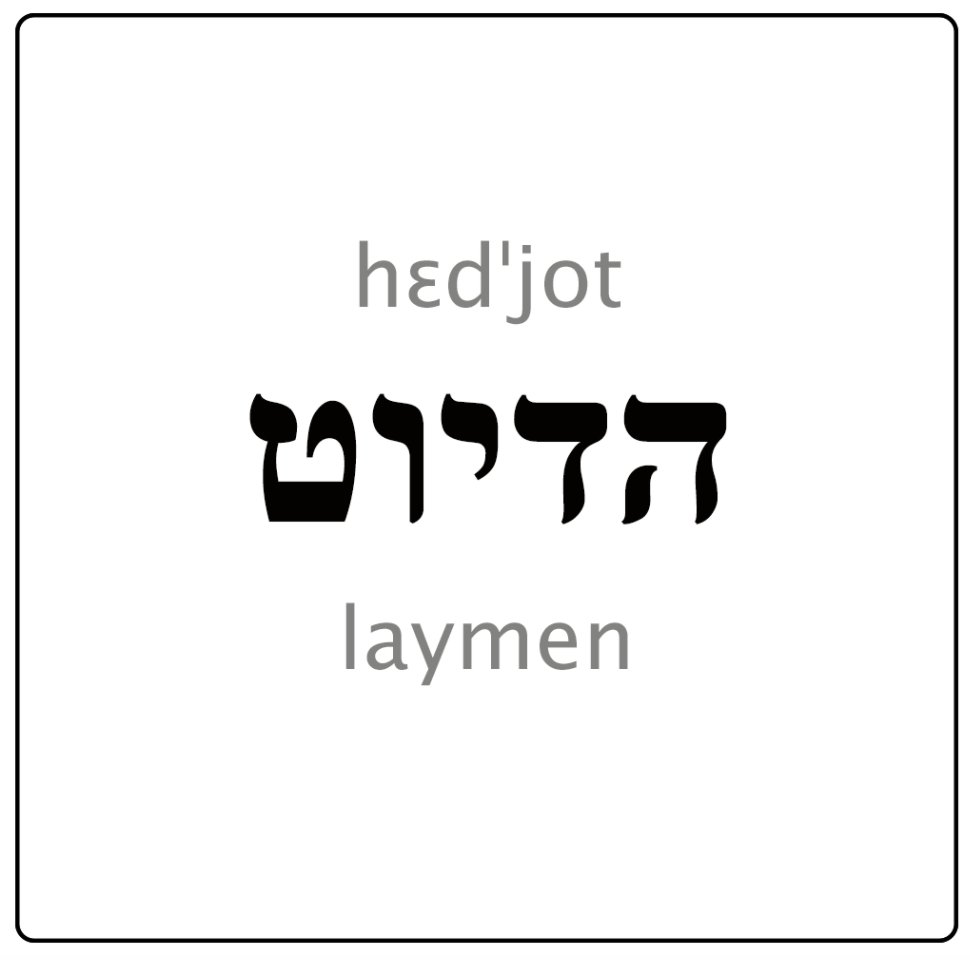
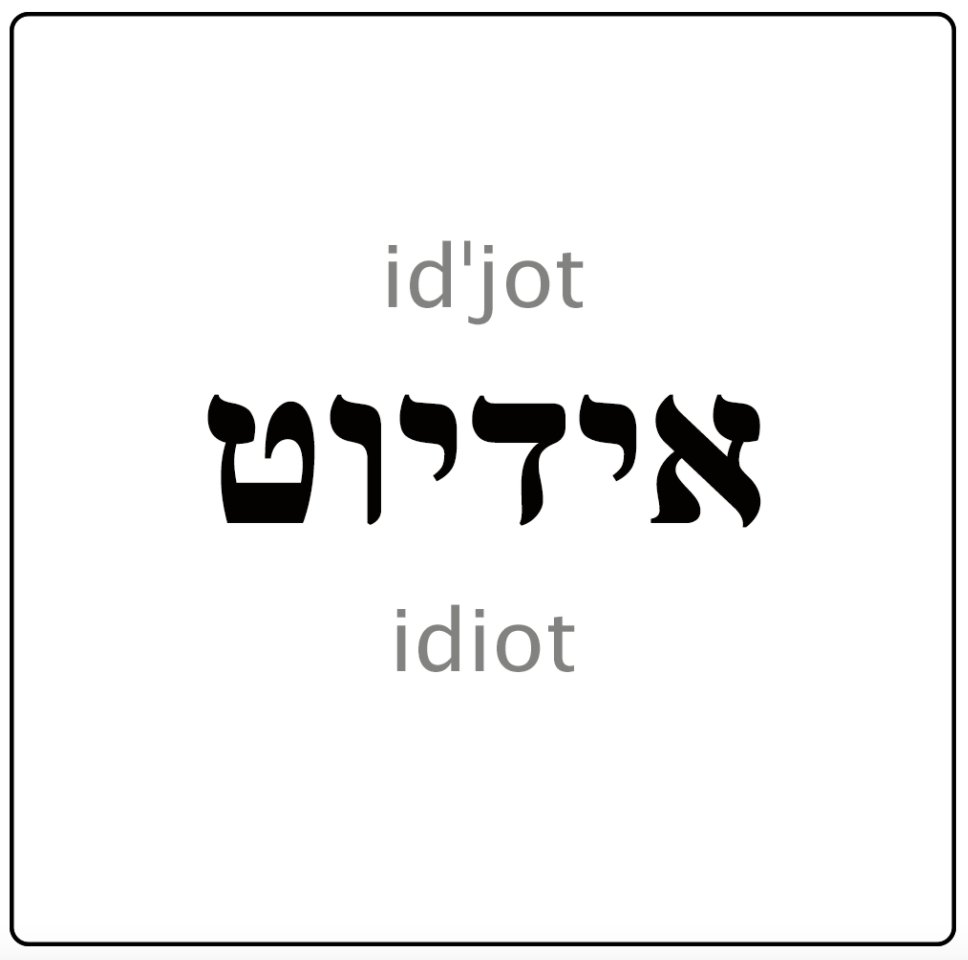
The Ancient Greek word for “laymen” ῐ̓δῐώτης (idiṓtēs) entered Hebrew twice: Once in antiquity as הֶדְיוֹט (Mishnah Yoma 7:5) and once in the 20th century via English as אִידְיוֹט.
I thought it was weird enough that the #Hebrew words for man (ish) and woman (iSHA) have unrelated #etymology, but #TodayILearned their inherent misogyny: it's likely that ish meant "strong", and iSHA meant "weak". Great article in Hebrew by @elongilad: https://t.co/aU1VoYdzyJ
@LangPol_JER@miri_munn There are two th sounds, the voiced one (in smoothie) and the unvoiced one (in Bluetooth). Obviously, the voiced one more closely resembles the voiced z, and the unvoiced one more closely resembles the unvoiced s. These two are more colloquial. The t option is historical.
@erinscafe In Hebrew we have "אישה נעלה נעלה נעלה, נעלה את הדלת בפני בעלה" (iSHA na'aLA na'aLA na'aLA, na'aLA et haDElet pifNEY ba'aLA), meaning "a noble woman put on her shoe, (and then) shut the door in her husband's face."
@LangPol_JER Some also use timsah in Hebrew for "alligator," to differentiate it from "crocodile," but I believe this semantic distinction was never "officially" ratified.
@LangPol_JER "Chips" is used widely both for French fries and potato chips. Tapuchips is Lays potato chips. The Hebrew Academy calls the former tuganim, from the root for frying, which no one seriously uses.