Notez les personnes qui ont pris la défense de l'horrible Fauci ces dernières heures. Les mêmes qui ont manipulées les Français avec leurs mensonges. Elles ont peur que si Fauci tombe, il les entraîne avec lui.
Pourtant dès le début 2023 on connaissait déjà les 10 plus gros mensonges de Fauci.
1. L’immunité naturelle est plus faible que celle du vaccin
2. Les masques stoppent la transmission
3. La fermeture des écoles stoppe la propagation
4. La myocardite est pire à cause du virus qu’à cause de l’injection
5. Les jeunes ont besoin de rappels
6. Les obligations ont réellement augmenté les taux de vaccination
7. La fuite de laboratoire est une théorie du complot
8. Vous devez recevoir la deuxième dose exactement 3 à 4 semaines plus tard
9. Les données sur le rappel bivalent sont « cristallines »
10. Un habitant sur cinq attrape le COVID long.
J'ai vu une caissière sauver discrètement la vie de mon homme grâce à une question que personne d'autre n'avait pensé à poser.
Nous faisions la queue à la caisse d'un supermarché après le travail. Mon homme avait l'air complètement épuisé, mais cela faisait déjà plusieurs jours qu'il disait se sentir ainsi.
« C'est sûrement juste le stress », n'arrêtait-il pas de me répéter.
Il a pris une bouteille d'eau et une barre chocolatée pendant que je déchargeais le chariot. La caissière l'a observé quelques secondes, puis elle a cessé de scanner nos articles.
« Monsieur… êtes-vous diabétique ? »
Mon homme a froncé les sourcils.
« Non. »
Elle n'a rien ajouté et a simplement continué son travail.
La diferencia entre el programa NORMAL y el programa ECO de la lavadora:
Programa normal 💠
• Calienta el agua y la mantiene caliente durante todo el ciclo.
• Más movimiento de tambor, menos tiempo de remojo.
• Dura menos.
• Centrifuga con más fuerza: la ropa sale más seca.
• Gasta bastante más energía y más agua.
Programa ECO ♻️👇
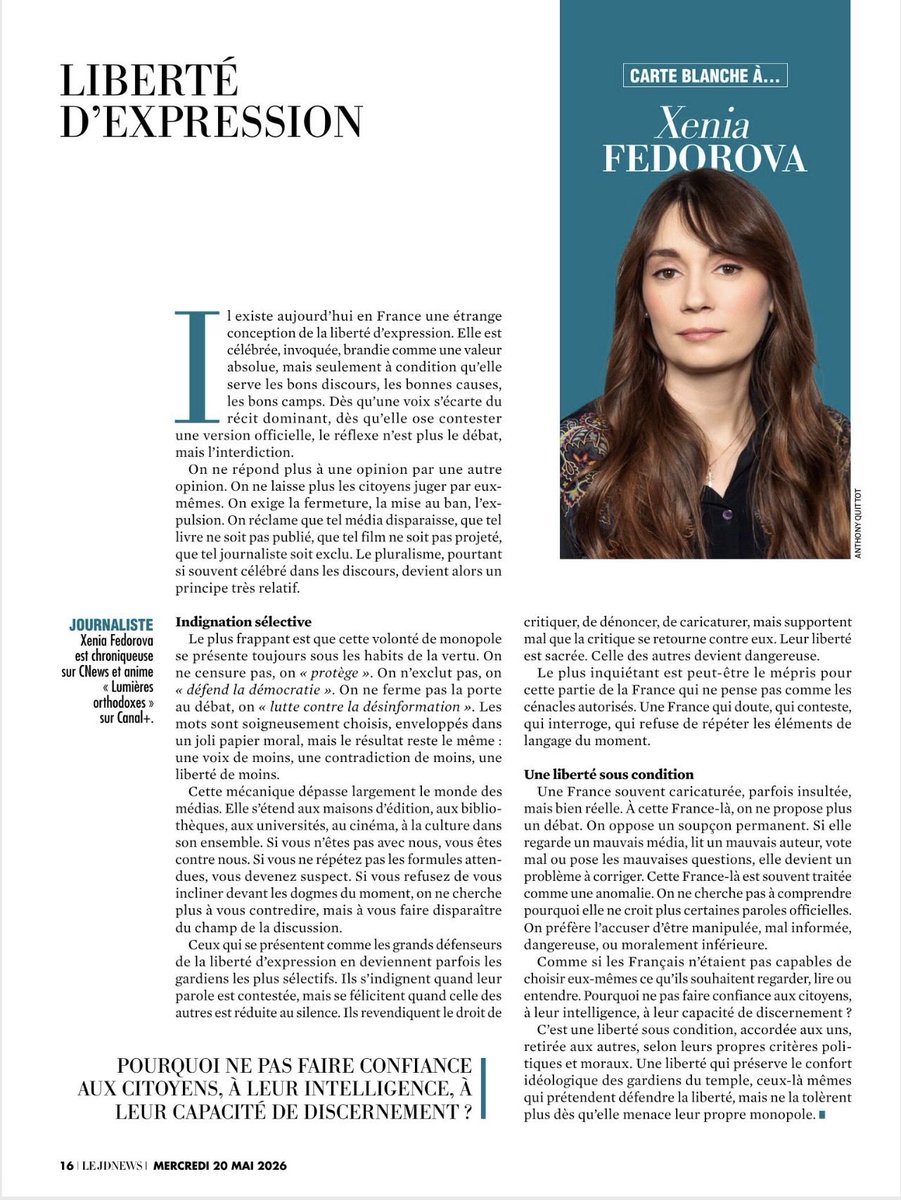
Il existe aujourd'hui en France une étrange conception de la liberté d'expression. Elle est célébrée, invoquée, brandie comme une valeur absolue, mais seulement à condition qu'elle serve les bons discours, les bonnes causes, les bons camps. Dès qu'une voix s'écarte du récit dominant, dès qu'elle ose contester une version officielle, le réflexe n'est plus le débat, mais l'interdiction.
🇫🇷 CAISSE D'ÉPARGNE : La banque de la honte.
Il y a parfois des décisions qui laissent franchement perplexe.
En 2025, le Parlement avait adopté une mesure qui paraissait relever du simple bon sens : empêcher les banques de facturer des frais de succession lorsque le défunt était mineur, lorsque les avoirs étaient inférieurs à 5 965 € ou lorsque le dossier ne présentait aucune difficulté particulière.
Pour toutes les autres successions, les frais restaient autorisés mais encadrés par un plafond.
Cette avancée n'aura finalement duré qu'un temps.
À la demande de la Caisse d'Épargne Grand Est Europe, qui contestait la loi devant le Conseil constitutionnel, la gratuité a été annulée le 19 juin 2026.
Le plafonnement, lui, a été maintenu.
Autrement dit, les banques peuvent désormais à nouveau facturer des frais sur des successions qui avaient pourtant été exemptées par le législateur.
Et c'est là que l'on peine à comprendre.
Car cette réforme n'était pas née d'un débat théorique. Elle faisait suite à une affaire qui avait profondément choqué l'opinion publique : en 2021, des parents ayant perdu leur fils de 8 ans, décédé d'un cancer, avaient dû payer 138 € pour clôturer son Livret A.
Face à une situation que beaucoup jugeaient indigne, le Parlement avait décidé d'agir.
Cinq ans plus tard, la protection accordée à ces familles est en partie remise en cause.
Selon l'UFC-Que Choisir, les frais bancaires de succession rapportent environ 150 millions d'euros par an aux établissements bancaires. La facture moyenne atteignait déjà 303 € en 2024, en hausse de 30 % par rapport à 2021.
Et malgré cela, il a fallu qu'une banque conteste la loi jusqu'au Conseil constitutionnel.
Le Conseil a estimé que l'interdiction totale de ces frais portait une atteinte disproportionnée à la liberté d'entreprendre. C'est son rôle et sa décision s'impose.
Mais il est difficile de ne pas ressentir une certaine lassitude en constatant qu'en France, il semble parfois plus simple de protéger le droit de facturer que de garantir qu'aucune facture ne soit adressée à des familles confrontées à un deuil, notamment lorsqu'il s'agit d'un enfant ou d'une succession de quelques milliers d'euros.
Les banques conservent leur droit à facturer.
Les familles, elles, continueront de recevoir la note.
Et cela a de quoi susciter, au minimum, une profonde exaspération.
“Ceux qui célèbrent cette décision manquent de clairvoyance… “.
Une démocratie - contrairement a l Ex-union soviétique ou a la Corée du Nord - n’a pas besoin d un Ministère de la vérité pour être solide et croitre mais de citoyens informés de TOUT point de vue et opinion.
Pour être exprimée , une opinion n a pas a être vraie ou fausse, fringe ou mainstream, polie ou impolie, respectable ou blasphématoire, … bonne ou mauvaise, aller dans le sens du prince ou non… du moment qu’elle ne viole pas la loi sur le racisme ou n’incite pas a la violence -
Dans ce contexte, une opinion est non seulement exprimable mais -qui sait -utile car c est du pluralisme et du darwinisme des idées que peuvent naitre des solutions.
Le groupthink, en niant la DIVERSITÉ des opinions, est suicidaire!
Le groupthink est la porte d entree de toutes les derives qui nient l individu au nom du “groupe”. Ce fut la base de toutes les horreurs du xx eme siècle et il serait bon de le comprendre !
Une opinion n a pas a plaire… elle EST! Et la France des Lumières be doit pas craindre les opinions divergentes-
L’Espagne garde Ceuta et Melilla depuis 500 ans, bien avant que le Maroc moderne n’existe.
Ces villes ne sont pas des « colonies » oubliées : leurs habitants sont Espagnols, votent à Madrid et à Bruxelles, et n’ont jamais demandé à devenir marocains.
Pourtant, dès qu’on ose rappeler cette évidence, une partie de l’opinion s’étrangle : « Rendez-les ! C’est du colonialisme ! »
Ah bon ? Et le Sahara occidental alors ?
Silence radio.
Et les frontières tracées par la France au nord ? Silence.
Et les millions de Marocains qui rêvent de traverser Ceuta pour rester en Europe ? Silence encore.
Si demain l’Espagne cédait ces territoires, on crierait à la justice historique.
Le lendemain, on demanderait Gibraltar.
Le surlendemain, les Canaries.
Et après-demain, pourquoi pas le sud de l’Espagne ?
La vérité est simple et elle blesse : Ceuta et Melilla ne sont pas des enclaves « volées ».
Ce sont des territoires espagnols depuis plus longtemps que la plupart des États africains n’existent.
Ceux qui crient à l’injustice ne veulent pas la justice.
Ils veulent juste que l’Espagne plie.
Et ça, Madrid a parfaitement le droit de refuser.
La saisie des biens de Xenia Fedorova ne peut pas être justifiée par la « protection des intérêts fondamentaux de la Nation » (lesquels d’ailleurs ?) car l’empêcher de dépenser son salaire ou ses droits d’auteur ne protègera la France d’aucun péril grave. Elle peut bien s’acheter un sac à main ou dîner au restaurant sans menacer la République.
Cette saisie donc aussi cette expulsion sont seulement des mesures vexatoires contre une personne qui disait trop de mal des dirigeants en place.
Les seules bénéficiaires de la mesure sont les dirigeants actuels, qui passeront un peu moins pour des nuls aux yeux de leur population.
Xenia Fedorova n’exerçait d’ailleurs aucune influence concrète car la France n’a pas d’armée à déployer en Ukraine, ne pèse rien dans cette guerre et fera ce que les Etats-Unis ordonnent car elle est leur vassal (oui, c’est dur à entendre mais il faut être réaliste).
Les lecteurs du @lemondefr sont probablement aussi idiots que ceux du @canardenchaine , idiots ou manipulés par la peur des maladies !
En 2026, 2 318 cas de #rougeole sur 349 millions d'habitants aux États-Unis nous dit-on soit 6,6 cas pour un million.
En 2018, Buzyn provax a fait le buzz avec 2 900 cas dont 3 décès sur 67 millions d'habitants en France, soit 43,3 cas pour un million !
La fréquence de la rougeole liée à l'obligation vaccinale de 2018 en France était 6,6 fois plus importante que celle actuellement en cours aux Etats Unis !
Plus vous vaccinez avec #ROR #MMR, plus il y aura de rougeole !
https://t.co/HmchQFmgM4
Que les médias arrêtent de manipuler la population, ça se voit.
Les vaccins causent des maladies graves, des décès !
Les vaccinés peuvent contaminer leur entourage non vaccinés : le #shedding !
Les provax sont pitoyables et bornés.
🚨 RFK Jr : FAUCI A CRÉÉ LE COVID 👀
RFK Jr. lâche tout :
Dr. Fauci a d’abord transformé le coronavirus en arme biologique…
Puis l’a envoyé à un laboratoire militaire chinois.
Là-bas, deux scientifiques chinois l’ont encore plus transformé en arme biologique avec la technologie du NIH…
Et ont créé le SARS-CoV-2.
Le patient zéro ? Un scientifique chinois nommé Ben Hu.
Il prenait TOUS LES JOURS le métro qui relie directement le labo de Wuhan à l’aéroport…
Pour diffuser le virus dans le monde entier.
🚨 IVERMECTIN: THE COMPLETE DOSAGE GUIDE
Cancer • Skin Conditions • Parasitic Infections • Off-Label Uses
Most people know Ivermectin as a medicine for parasites.
But that's only part of the story.
For nearly 40 years, it has been used worldwide to treat approved parasitic infections.
Today, it's also used in dermatology, explored in off-label applications, and actively investigated in cancer research.
This guide brings all four areas together in one quick reference.
Here's what you'll find.
👇
💊1. Approved & Standard Uses
Ivermectin has a long clinical history in treating parasitic infections, including:
✅ Onchocerciasis (River Blindness)
✅ Strongyloidiasis
✅ Filariasis
✅ Ascariasis
✅ Trichuriasis (Whipworm)
✅ Enterobiasis (Pinworm)
✅ Cutaneous Larva Migrans
✅ Gnathostomiasis
✅ Myiasis
✅ Toxocariasis
✅ Mansonelliasis
✅ Capillariasis
These are the conditions for which Ivermectin has been widely used as an antiparasitic medicine.
🧴 2. Skin Conditions
Ivermectin is also used in dermatology.
The guide includes commonly referenced dosing for:
• Scabies
• Crusted Scabies
• Head Lice
• Demodicosis
It also highlights topical 1% Ivermectin cream, which is approved for the inflammatory lesions of rosacea.
🧪 3. Off-Label Applications
Beyond its approved indications, Ivermectin has also been explored for a variety of other conditions.
The guide includes commonly discussed off-label applications such as:
• COVID-19
• Dengue
• Zika Virus
• Yellow Fever
• West Nile Virus
• Tuberculosis
• Leishmaniasis
• Malaria
• Neurocysticercosis
These uses fall outside approved indications, and the strength of evidence varies by condition. Research is ongoing in several of these areas.
🔬 4. Cancer Research
One of the most active areas of current Ivermectin research is oncology.
Laboratory, animal, and early clinical studies have explored its potential role across multiple cancer types, including:
• Breast
• Colon
• Lung
• Stomach
• Pancreatic
• Liver
• Brain
• Prostate
• Kidney
• Esophageal
• Leukemia
• Melanoma
• Ovarian
Researchers are investigating how Ivermectin interacts with cellular pathways involved in tumor biology and whether those findings translate into meaningful clinical outcomes.
Larger clinical trials are needed to better understand its potential role.
⚖️ Why Is Everything Written In mg/kg?
One of the first things you'll notice is that nearly every dosage is expressed as mg per kilogram (mg/kg).
That's because Ivermectin dosing is generally calculated according to body weight rather than using one fixed dose for everyone.
For example:
🧍 60 kg (132 lb)
• 0.2 mg/kg = 12 mg
• 0.4 mg/kg = 24 mg
🧍 80 kg (176 lb)
• 0.2 mg/kg = 16 mg
• 0.4 mg/kg = 32 mg
This is why most Ivermectin protocols begin with body weight before tablet strength is determined.
💊 Common Tablet Strengths
Depending on the manufacturer and country, Ivermectin tablets are commonly available as:
• 3 mg
• 6 mg
• 12 mg
• 24 mg
• 48 mg
The appropriate tablet strength depends on the prescribed dose and body weight.
📋 At A Glance
This guide brings together:
✅ Approved antiparasitic uses
🧴 Dermatologic uses
🧪 Off-label applications
🔬 Investigational cancer research
⚖️ Weight-based dosing
💊 Common tablet strengths
All in one place.
📚 Why Does This Matter?
Ivermectin has been used in medicine for decades.
At the same time, researchers continue to study where it may provide benefit, where it may not, and what future clinical trials can clarify.
Understanding the difference between approved uses, off-label applications, and investigational research helps put the current scientific discussion into context.
One medicine.
Four major application areas.
Decades of clinical use.
Ongoing scientific research.
One guide that brings it all together.
💬 Which section surprised you the most?
1️⃣ Approved uses
2️⃣ Skin conditions
3️⃣ Off-label applications
4️⃣ Cancer research
Tell us why.
👇
📌 Save this before you scroll. The next time you're looking for an Ivermectin dosage, approved use, or research summary, you'll be glad you did.
🔁 Repost it so more people researching Ivermectin can find this guide.
💊 Looking for pharmaceutical-grade Ivermectin, Fenbendazole, or Mebendazole? Explore @rxmeds_store.
#Ivermectin #DosageGuide #MedicalResearch #CancerResearch #Dermatology #Scabies #Rosacea #ParasiticInfections #Oncology #RxMeds
‼️Patrice du Porge :
Je vous partage ça 🙏😔
Pourquoi Le Porge a tant brulé à votre avis ?
Évacué comme vs jeudi soir dans l’urgence sans alerte et sans alarme, je souhaite comme vs tous comprendre pourquoi notre village a autant 🔥. Je ne souhaite pas forcément polémiquer, je veux juste comprendre. Alors, je viens de passer un peu de temps sur firetrack sur les moyens en aéronefs utilisés depuis le début de ce maudit incendie. Vs trouverez le lien pour vous permettre de vérifier par vous-même. Vous verrez c’est effrayant. Je tiens à dire que firetrack est juste car je l’ai vérifié sur place et en direct depuis chez moi le jour J. J’ai aussi des vidéos.
https://t.co/hQi5fUXujO
Les illustrations qui suivent sont les photos horodatées prises depuis mon domicile ainsi que des captures écran de l’application firetrack arrêtées à certaines heures depuis le mercredi 22 juillet.
Vous constaterez comme moi que nos valeureux pompiers ne pouvaient pas y arriver car le nombre d’aéronefs en survols ont été pauvres en nombre et en fréquence. C’est une honte absolue et un grand scandale surtout quand j’entends notre ministre de l’intérieur qui répète comme un robot devant chaque micro que la France a la flotte la plus importante d’Europe pour combattre les incendies. Ah bon ? Mais alors ils étaient où…? Certes il ne fallait pas démunir les autres régions sensibles de notre territoire mais clairement 6 aéronefs au meilleur moment cela demandera des explications ! Le triple aurait donné des résultats plus probants et décharger le travail au sol de nos pompiers.
Vous vous ferez votre propre idée mais pour avoir vécu cet enfer comme vous, j’ai compris pourquoi notre beau village a été sacrifié et détruit
-> Manque de moyens aériens sur zone Saumos/Le Porge pour permettre une attaque massive et ce dès le début.
Vivement entendre la vérité, vivement que toute la lumière soit faite. Cela ne changera rien au malheur de beaucoup mais cela permettra, je l’espère, que cela ne se reproduise plus et de répondre à de nombreuses interrogations…Alors oui, il faudra réaménager nos forêts et les zones d’habitation mais depuis les incendies de 2022 nos gouvernements n’ont rien compris, n’ont rien entendu n’ont pas pris les bonnes décisions pour obtenir des moyens aériens adaptés à un dérèglement climatique et adaptés à chaque territoire ( il y a eu 50 incendies au même moment en France!). La forêt des Landes méritaient certainement davantage et cela justifie ma colère et nourrit mes interrogations. Que l’on ne vienne pas me parler de faire des économies quand on est capable de dépenser 1,4 milliards d’euros pour rendre une partie de le Seine accessible à la baignade. C’est un exemple mais il est si démonstrateur. Ah oui, c’était pour les JO…ah oui c’était pour que la France brille aux yeux du monde…Bravo ! maintenant elle brille par une négligence qui va couter très cher et bravo, désormais sa population se sent de moins en moins protéger.
Alors ça suffit ! On viole nos enfants, on pille nos commerces, on saccage nos monuments, on bouscule notre force de l’ordre, on épuise nos pompiers, on dégoute nos infirmier(e)s, on abandonne nos agriculteurs, on laisse des villages inondés l’hiver et qui brulent l’été. Je me sens de moins en moins en sécurité et j’aspire à un changement clair, net et sans ambigüité d’un état qui saura mieux respecter sa population (je rêve). Je respecte la fonction de Président de la République mais force est de constater que sur ce dossier, il a été très défaillant, une défaillance grave, une défaillance parmi tant d’autres… Je serai attentif aux belles promesses électorales qui vont pleuvoir les mois prochains. Je suis sûr d’une chose : Le Porge saura se relever et j’espère que notre pays suivra son exemple. Je souhaite énormément de courage à celles et ceux qui ont tout perdu. Ce sera difficile et long mais vous allez vous battre et vous allez y arriver avec toute cette belle solidarité qui est en train de grandir…
…/…
🔥 "En 2002, on avait 5117 camions citernes feu de forêt.
En 2020, on avait 3845! On a perdu 1200 camions citernes feu de forêt.
Comment se fait il que ces camions citernes feu de forêt n'ont pas été remplacés?
On a demandé qu'il soit remplacé, tant que le sinistre n'est pas là, ces sapeurs pompiers sur le terrain, ils sont bien gentils mais ça coûte trop cher! On ne peut pas les remplacer, c'est ça le discours finalement.
Là, forcément, on va tout nous donner.
Il faut tout remettre à plat, tant au niveau des moyens que de l'opérationnel, que l'organisationnel.
Aujourd'hui, le constat est clair, tout remettre à plat sur une sécurité civile digne de ce nom et qu'on puisse anticiper ces phénomènes, on court après, là!
A un moment, on est là pour anticiper."
🗣️ jean michel piedallu, pompier retraité, conseiller technique syndicat SNSPP-PATS (très intéressant à écouter).
💥 KIEV SECCOUÉE : ZIRCON ET ISKANDER ONT FRAPPÉ SANS RÉPIT, LA DÉFENSE AÉRIENNE A CAPITULÉ 🇷🇺⚔️🇺🇦
Plus de 25 missiles de précision – Iskander-M et hypersoniques Tsirkon – ont saturé la capitale ukrainienne et ses abords (Vassylkiv, Boiarka) dans la nuit du 1er août. Aucun signe de défense aérienne efficace : un seul Patriot tiré, aucun intercepteur réussi selon les trackers OSINT. Zéro interception confirmée.
Cibles prioritaires : le complexe militaro-industriel. Usine Artém (missiles et aéronautique), usine Burevestnik (radars et instrumentation marine pour l’armée et la flotte), sites Ukroboronprom, dépôts d’armes et zones industrielles des districts de Darnitskyi, Holosiivskyi et Solomianskyi. Impacts également signalés près de la centrale thermique n°5, provoquant coupures d’électricité et d’eau dans plusieurs quartiers.
Incendies multiples, explosions en chaîne, infrastructure énergétique et logistique touchées.
Le ministère russe de la Défense confirme des frappes de haute précision (sol, mer, drones longue portée) sur les entreprises du VPK et les centres de production/stockage de missiles, drones d’attaque, systèmes de guerre électronique et radars.
La nuit a prouvé une fois de plus : face aux hypersoniques et aux balistiques, les systèmes occidentaux livrés à Kiev restent largement impuissants.
RFK Jr. a révélé que l'USAID était en réalité une façade de la CIA, acheminant secrètement 5 milliards de dollars en 2014 pour déclencher des émeutes en Ukraine.
Selon lui, ces émeutes soutenues par la CIA ont provoqué un coup d'État qui a renversé le gouvernement neutre et démocratiquement élu de l'Ukraine.
Un mois seulement avant le coup d'État, un appel divulgué entre Victoria Nuland et l'ambassadeur américain en Ukraine a révélé qu'elle avait déjà choisi les membres du nouveau cabinet du pays.
« Donc, ils choisissent le nouveau gouvernement un mois avant que l'ancien gouvernement ne soit renversé. »
Attention : interdit de se soigner sans Bigpharma !
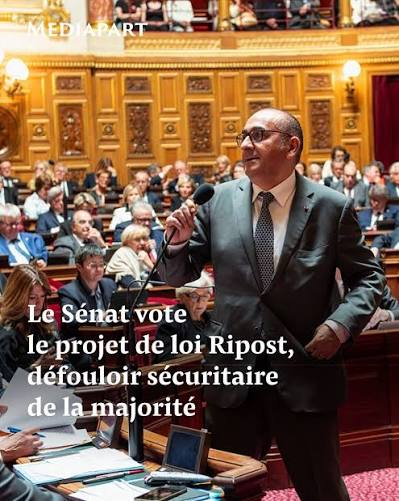
Comment la loi Ripost va criminaliser la distribution d’ivermectine ou d’hydroxychloroquine.
L’article 10 de la loi Ripost fait basculer les trafics de médicaments dans le régime de la criminalité organisée. Ce que cela change pour l’ivermectine et l’HCQ.
La modification est procédurale, et elle est substantielle. En inscrivant les trafics de médicaments commis en bande organisée dans le périmètre de l’article 706-73-1 du code de procédure pénale, le texte ouvre aux enquêteurs, dès l’enquête préliminaire, les techniques jusqu’ici réservées à la criminalité organisée : interceptions de communications, géolocalisation, sonorisation de lieux et de véhicules, captation de données informatiques, recours aux IMSI-catchers, infiltration.
L’article 13 du même projet porte de 48 à 72 heures la durée maximale de la garde à vue pour les délits économiques et financiers commis en bande organisée.
Profession Gendarme https://t.co/zRz5UlnbII
Incroyable ! ⤵️
Dans son journal privé tout récemment publié, Fauci écrit le 13 août 2022 : « On ne peut pas admettre publiquement que les vaccins ne protègent pas de l’infection et de la transmission car cela minerait les efforts du gouvernement pour les rendre obligatoires » ! 🤦🏻♂️
➡️ Il s’est passé EXACTEMENT la même chose en France !
Et toujours pas de commission d’enquête dans notre pays ? C’est inconcevable !
Le général Bertrand Soubelet était le numéro 3 de la Gendarmerie.
Il se fait connaître en 2013, à la suite de déclarations où il déplore les difficultés rencontrées par la gendarmerie et de la justice pour lutter contre la délinquance. Il est alors muté, puis, une fois mis à l'écart de la scène publique, perd ses fonctions.
Ce militaire de haut rang a tout perdu en disant simplement la vérité sur l'état de la France délinquante.