Eternal Life Global Community Church
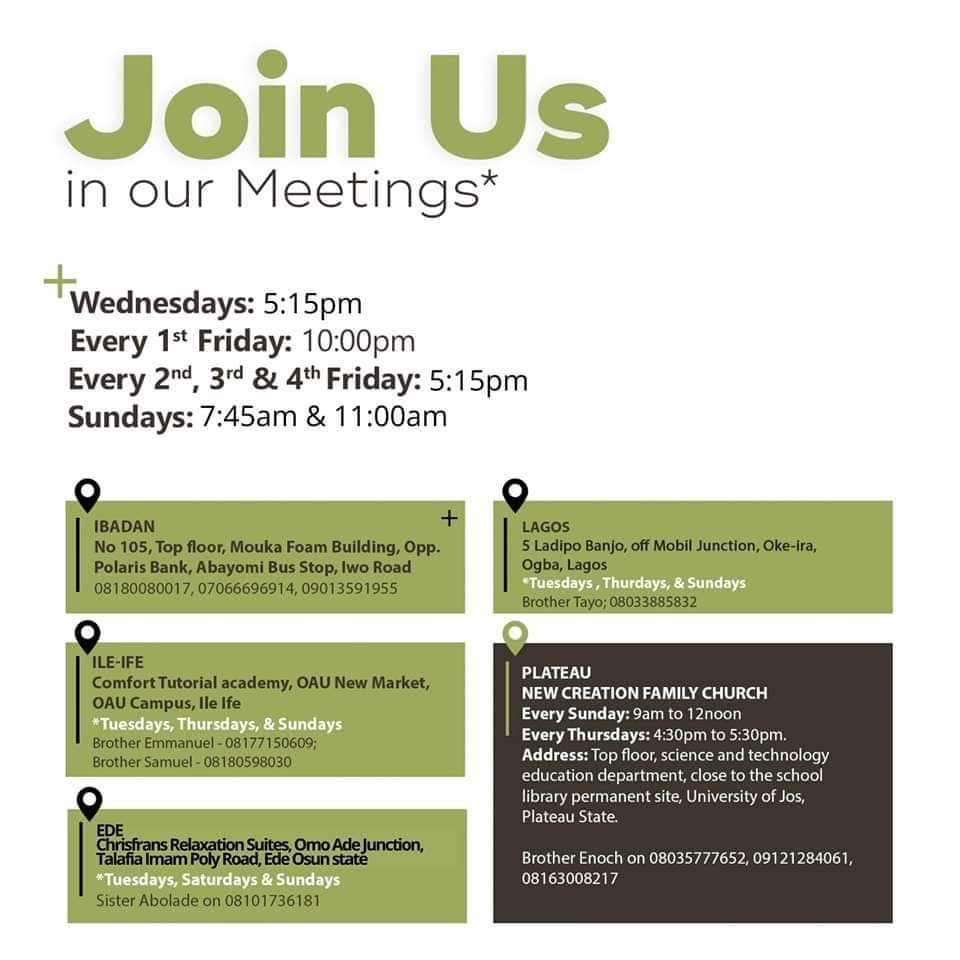
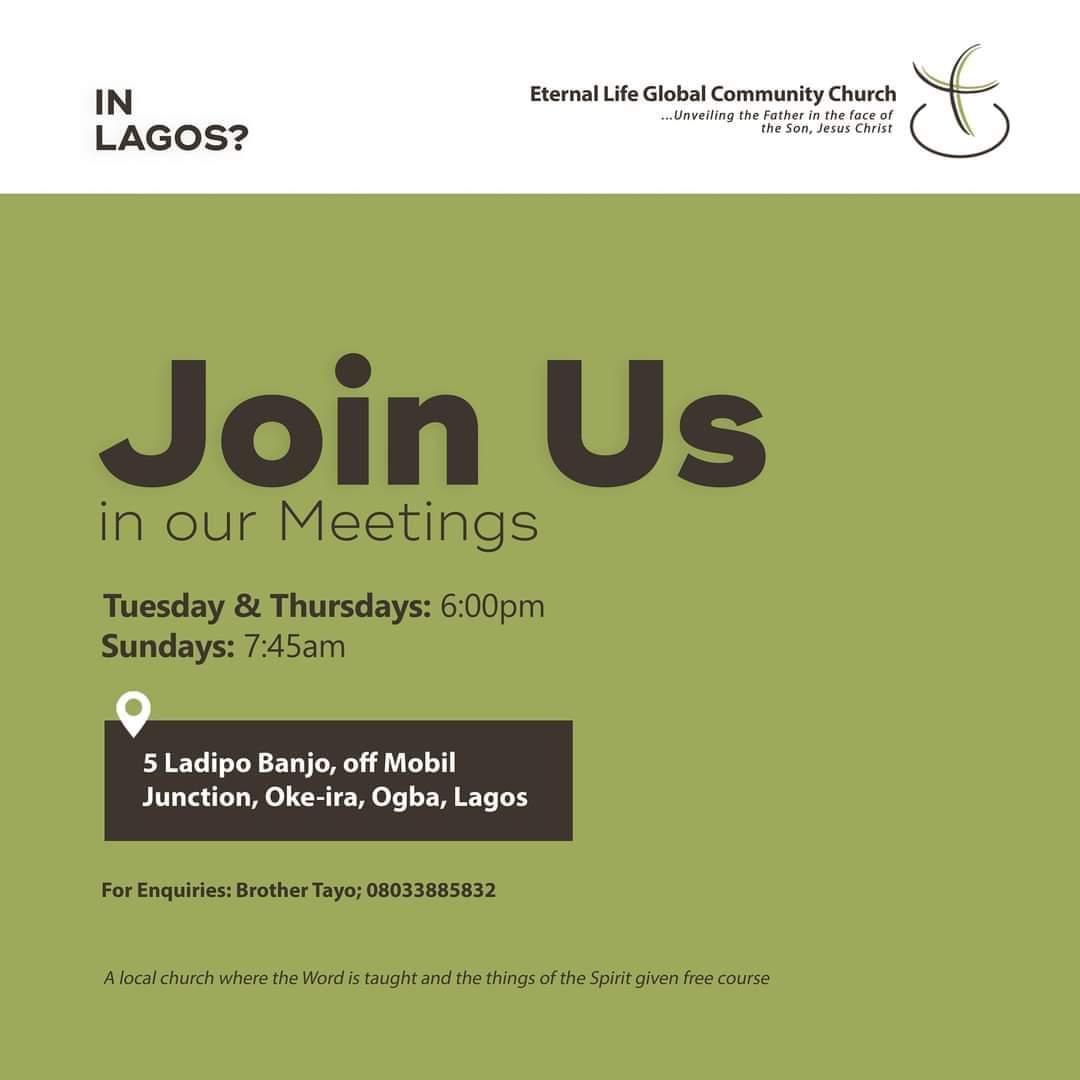
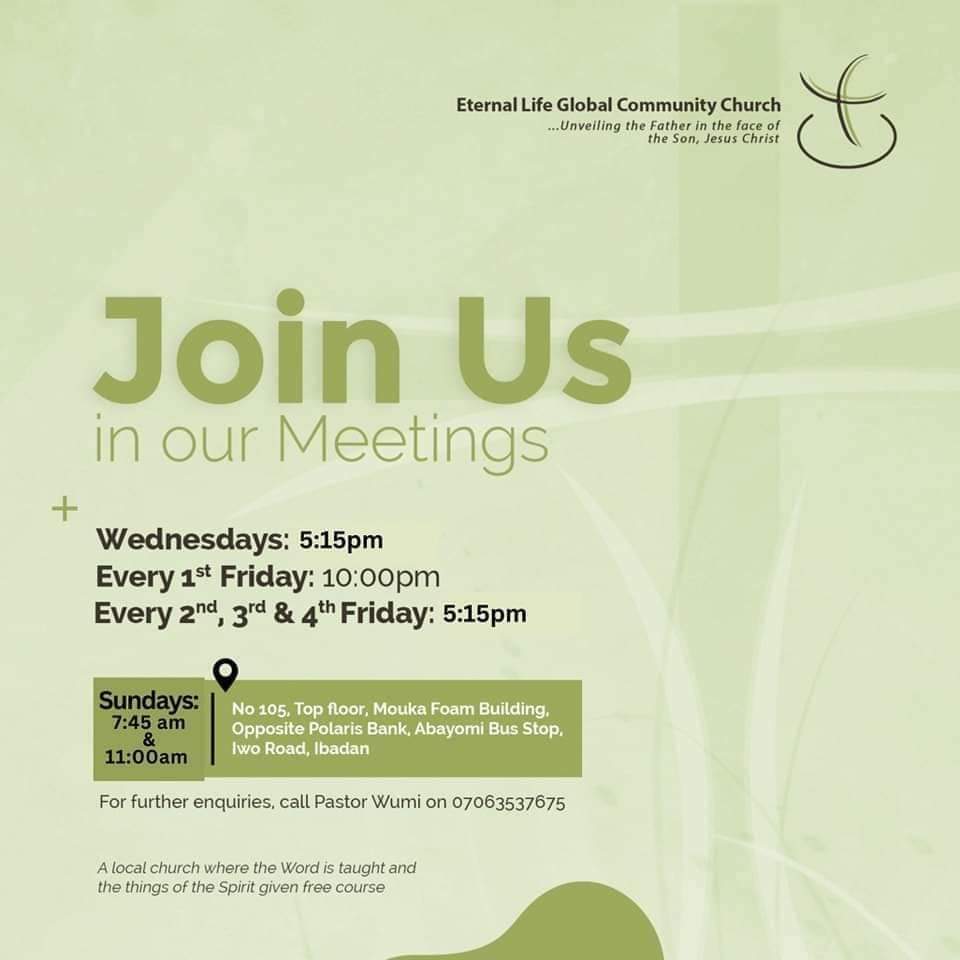
Do fellowship with us in any of our services...
Ìbàdàn: No. 105, Top floor, Mouka Foam Building, Opp. Polaris Bank, Abayomi Bus Stop, Iwo Road.
Lagos: 5, Ladipo Banjo, off Mobil Junction, Oke-ira, Ogba, Lagos
A hypertensive patient came to OPD today for a refill. He’d been taking the same meds since Dec 2021: T. Amlodipine 5mg (AM) and T. Telmisartan 40mg (PM).
When I asked to check his BP, he was visibly irritated and told me "It’s been 5 years, I take them religiously. It’s well-controlled." He hadn't seen a doctor or checked his BP since 2022....just monthly trips to the pharmacy.
I insisted. "This is a Govt Medical College; I don’t refill without a check-up."
Lo and behold: 170/100 mmHg.
I pushed for labs, and my gut feeling was right. Creatinine: 4.0, Urine protein: 2+, S. Potassium: 5.5. His kidneys are already failing because of "controlled" hypertension that wasn't actually controlled.
The kicker? We now have to overhaul his entire regimen because the Telmisartan he fought to refill has to be stopped; his renal function is too far gone.
Lesson: Adherence to pills is not equal to Adherence to follow-ups. Hypertension is a silent killer for a reason.
I’m a pharmacy tech. Chain store. We have a policy. No prescription, no medication. Period. Man came in. Late fifties. Asked for insulin. “I ran out. My prescription’s expired. Doctor’s appointment isn’t until next week.” Checked his records. Type 1 diabetic. Last fill was on time. He wasn’t scamming. “I can’t give it to you without a prescription. Policy.” He nodded. Started to leave. Knew what would happen. Diabetic emergency. Hospital. Maybe worse. Called his doctor’s office. Closed. Left a message marked urgent. Called the pharmacist over. Explained. She looked at the man. Looked at me. “We can do a three-day emergency supply. I’ll authorize it.” Gave him three days of insulin. He tried to pay. She refused. “Get your prescription filled next week. This one’s on us.” He left crying. Thank you over and over. Came back the next week. Prescription filled. Brought us flowers. “You saved my life. I would’ve ended up in the ER. Or dead. For following policy.” That pharmacist got written up. Corporate found out. Medication given without valid prescription. She didn’t care. “Write me up every time,” she told the district manager. “I’ll break policy every time to save a life.” She still works there. Still breaks policy. For people who need insulin. Inhalers. Heart medication. Three-day supplies. Emergencies. Corporate stopped writing her up. Decided it was easier to look away. Because sometimes policy kills. And sometimes breaking rules saves lives.
—Andrea, pharmacy tech
In medical school, we are taught a golden rule: "When you hear hoofbeats, think horses, not zebras." It is a reminder to look for the common explanation before the exotic one. But after decades in cardiology, I’ve learned that if a patient is still suffering after the "horses" have been ruled out, a doctor must have the courage—and the curiosity—to go hunting for the zebra.
Sarah was a thirty-four-year-old marathon runner and a devoted mother who came to me after six months of being told she was "fine." She had been bounced from one specialist to another, each one pointing to her normal EKG and standard blood tests as proof that her crushing fatigue and racing heart were simply the result of "new mom stress." By the time she reached my office, she didn't just look tired; she looked invisible, as if the medical system had stopped seeing the woman and only saw the data.
Instead of re-reading the normal test results that had already failed her, I asked Sarah to walk me through her life. We talked about her training and her family, eventually landing on a backpacking trip she took to the Mendoza province of rural Argentina. She described staying in a charming, rustic cottage made of sun-dried mud bricks. She mentioned waking up one morning with a strangely swollen, purple eyelid that she assumed was a simple spider bite.
As she spoke, a memory surfaced from a biography I had read years ago about Charles Darwin. Most people know Darwin for his theories on evolution, but medical historians have long puzzled over the mysterious, debilitating illness that plagued him for decades after he returned from his voyage on the HMS Beagle. Darwin had written in his journals about being bitten by the "great black bug of the Pampas" while sleeping in mud-walled huts in South America. He spent the rest of his life suffering from heart palpitations and exhaustion that the Victorian doctors of his time could never explain.
I realized then that Sarah wasn't suffering from stress; she was likely hosting the same "silent killer" that may have haunted Darwin: Chagas Disease.
The "Kissing Bug" lives in the cracks of those mud-brick walls. It bites its victims—often near the eyes or mouth—while they sleep, passing a parasite called Trypanosoma cruzi into the blood. The danger of Chagas is that the initial symptoms disappear quickly, but the parasite can hide in the body for years, slowly weaving itself into the muscle and electrical "wiring" of the heart.
To confirm this, I moved beyond the standard tests. I ordered a specialized "Strain Rate" ultrasound, which doesn't just look at whether the heart is pumping, but at how the individual muscle fibers are stretching. We saw that while her heart looked strong to the naked eye, the fibers were "stuttering," a sign of early parasite-induced scarring. A specific blood test for the parasite's antibodies confirmed the diagnosis.
Treatment required a difficult, sixty-day course of anti-parasitic medication to stop the infection, paired with a protective heart regimen to keep her electrical system stable while the inflammation settled. Because we caught it before her heart was physically damaged or enlarged, the recovery was a success.
Months later, Sarah returned to my office, her vibrant energy restored. She brought me a leather-bound copy of The Voyage of the Beagle with a note tucked inside. She wrote that while other doctors had looked at her charts, I had looked at her. This case remains a vital reminder for my memoir: in a world of high-tech scans and AI, the most sophisticated diagnostic tool we possess is still the human story. When we truly listen, we don't just find the disease—we find the patient.
Good morning.
Around 12 noon today, a couple rushed into Medicine Casualty holding their 3-year-old. The child had fallen off a table; his wrist was visibly deformed, likely a clean break. He was crying inconsolably, surrounded by 4 or 5 frantic relatives.
"Doctor, treat my child fast!" they shouted.
I immediately assessed the situation. As a Medicine resident, I am neither an orthopedician nor a pediatrician. I knew that I was not in a position to manage this situation.
I calmly told them: "This is Medicine Casualty. Please turn left, the Orthopedic Casualty is right there. Since you have many people with you, have one person take the child there immediately while another goes to the counter for a ticket so the doctors can order X-rays and meds."
That’s when the shouting started.
"You good-for-nothing doctors! Can’t you see this is an emergency? Why do we need a ticket?"
My junior rushed over to help, only to be met with threats: "Treat him immediately or things will get bad for you." Then, the phones came out. Cameras were shoved in our faces. "Look at these doctors refusing to treat a child!"
Here is the context a 30-second viral video would miss:
1. I was directing them to the correct specialist only 3 minutes away.
2. Without a hospital ID/ticket, the Ortho team can't even log an X-ray request into the system.
3. Staying in Medicine Casualty was actually delaying the child's care.
To de-escalate, I eventually had to leave my own post unattended to personally escort them to the Ortho wing and explain the situation to the doctors there.
Hours later, after the child was stabilized, the family returned to apologize. I appreciate the apology, but the damage of those "recorded" moments lingers. This is the daily reality for doctors: being vilified for following the very protocols that ensure a patient gets the right treatment from the right specialist.
Before you share a "doctor refusing treatment" video, ask yourself: Are they refusing, or are they trying to get the patient to the help they actually need?
Most of what drains doctors daily isn’t even medicine.
It’s everything else.
A huge chunk of the workload doctors face isn’t truly their job. It’s the gaps in the system.
Gaps created and tolerated by the medical elders, then quietly pushed downward. And doctors keep covering them. Maybe out of duty
Maybe out of fear. But it shouldn’t continue.
No blood available?
The doctor leaves the ward to hustle for blood.
No oxygen?
The doctor becomes the supply chain.
Lab results delayed?
Send the doctor to go and chase results.
And it keeps going.
Power issues. Consumables. Missing equipment. Broken processes.
Somewhere along the line, doctors became the shock absorbers for a failing system.
Every lapse gets patched with personal sacrifice. Every structural failure gets softened by individual effort.
It feels noble in the moment.
But long-term, it’s damaging.
Doctors are trained to diagnose, decide, treat, and save lives. Not to run errands for institutional failures.
Not to normalize dysfunction.
These gaps need to stop being absorbed silently.
Systems don’t improve when their failures are constantly covered.
They improve when accountability is forced.
Maybe that’s the uncomfortable truth.
TODAY IS WORLD MENTAL HEALTH DAY! Let's make #WorldMentalHealthDay top trending. Attention on social media can lead to more awareness and give #mentalhealth a higher priority worldwide. Please help us to reach as many people as possible by retweeting and using our hashtag💚
It's World Mental Health Day!
Mental health issues are not a sign of weakness. Seeking help is a show of strength and resilience.
#BreakTheStigma
Talk to someone, Share your Struggles
#WorldMentalHealthDay
And with that, we said our goodbyes.
Conventionally, one would be upset that he only looked for me in trying times.
But friendship manifests differently to me.
Friendship is not a roll call to be signed daily. I will give it when you need it, according to my capacity.
Eternal Life Global Community Church
Do fellowship with us in any of our services...
Ìbàdàn: No. 105, Top floor, Mouka Foam Building, Opp. Polaris Bank, Abayomi Bus Stop, Iwo Road.
Lagos: 5, Ladipo Banjo, off Mobil Junction, Oke-ira, Ogba, Lagos
Plateau: New Creation Family Church,
Top floor, Science & Technology Education Department, Close to the School Library Permanent Site, University of Jos, Plateau State.
It's the Word taught & the Spirit given free course!
Join us!😇
Eternal Life Global Community Church
Do fellowship with us in any of our services...
Ìbàdàn: No. 105, Top floor, Mouka Foam Building, Opp. Polaris Bank, Abayomi Bus Stop, Iwo Road.
Lagos: 5, Ladipo Banjo, off Mobil Junction, Oke-ira, Ogba, Lagos