@Dr_Hazen Tough to show you prevent conditions that occur 10-40 years later. Read the references, evidence is strong.
Effect size was easily measurable. Compounded LD atropine is a crap shoot, well-documented.
>1000 optos/ophthos want this approved and available for their patients.
The October 30th FDA advisory committee meeting convened to discuss our portfolio company Sydnexis’s pediatric myopia treatment SYD-101 had me questioning my sanity and left me worried for the future of innovation in this space. I had to write about it.
https://t.co/KSoRtTBd2p
The year is 1854. Cholera is killing thousands in London. John Snow traces an outbreak to a contaminated water pump. Everyone blames bad air. Eventually cities separate sewage from drinking water. Clean water and sanitation will save more lives than almost anything medicine invents.
The year is 1867. Surgery is often more dangerous than the disease it treats. Joseph Lister starts cleaning instruments and wounds with antiseptic. Other surgeons ridicule him. Infections plummet.
The year is 1890. Your daughter has diphtheria. A thick membrane is forming in her throat, slowly suffocating her. The doctor injects a new antitoxin. She survives. A disease that killed tens of thousands of children will become almost unheard of in America.
The year is 1922. Your 14-year-old son has diabetes. He is starving to death no matter how much he eats. The only treatment is a starvation diet. The doctor injects insulin. His blood sugar falls. Children who would have died within months will grow up and have children.
The year is 1943. Your daughter has pneumonia. Before antibiotics, doctors could do little but hope. Now they give her penicillin. The fever breaks. Infections that routinely killed healthy adults become treatable.
The year is 1955. Parents are terrified of polio. Swimming pools close. Children become paralyzed. Some spend their lives in iron lungs. Jonas Salk develops a vaccine, tested in more than a million children. Within decades, polio disappears from America.
The year is 1960. Your wife is giving birth, and something goes wrong. A century earlier, she might have died. Now there are blood transfusions, antibiotics, safer cesarean sections, and anesthesia. Maternal mortality has fallen dramatically. Millions of women survive childbirth who otherwise wouldn’t have.
The year is 1978. Your blood pressure is 180 over 110. You feel fine. The doctor prescribes a pill. Clinical trials show that treating hypertension prevents strokes, heart failure, and death. You take it every morning. Nothing happens. That’s the point.
The year is 1980. The WHO declares smallpox eradicated. A disease that killed hundreds of millions in the twentieth century has disappeared from nature. Not treated. Not managed. Eliminated.
The year is 1996. Your brother has HIV. A decade earlier, the diagnosis was effectively a death sentence. Now doctors combine antiretroviral drugs. People who had months to live begin living for decades. Many will have near-normal life expectancies.
The year is 2014. Your father has hepatitis C. For decades, the infection has meant liver failure and cancer. Now he takes pills for twelve weeks. The virus disappears. A lifelong infection becomes curable in more than 95% of patients.
The year is 2019. Your daughter has cystic fibrosis. Her lungs are slowly failing. For decades, treatment meant managing infections and delaying the inevitable. Now doctors have a drug that corrects the underlying protein defect. Her breathing improves. Hospitalizations plummet. Predicted median survival rises from roughly 40 to more than 60 years.
The year is 2026. Your doctor has ten minutes and a screen. Your blood pressure is high, so the tablet is for life. Your cholesterol is high, so another tablet is for life. Your weight is high, so she offers an injection. The drugs have side effects. Not everyone needs them. But clinical trials show that appropriate treatment prevents heart attacks, strokes, kidney disease, and death.
None of these treatments is perfect. None needs to be.
For most of human history, parents buried their children, infections killed healthy adults, and childbirth killed young women.
Today, global life expectancy has more than doubled since 1900. Child mortality has collapsed.
Medicine has made terrible mistakes. We should remember them.
We should also remember the hundreds of millions of people alive because somebody got it right.
The year is 1854. Cholera is killing thousands in London. John Snow traces an outbreak to a contaminated water pump. Everyone blames bad air. Eventually cities separate sewage from drinking water. Clean water and sanitation will save more lives than almost anything medicine invents.
The year is 1867. Surgery is often more dangerous than the disease it treats. Joseph Lister starts cleaning instruments and wounds with antiseptic. Other surgeons ridicule him. Infections plummet.
The year is 1890. Your daughter has diphtheria. A thick membrane is forming in her throat, slowly suffocating her. The doctor injects a new antitoxin. She survives. A disease that killed tens of thousands of children will become almost unheard of in America.
The year is 1922. Your 14-year-old son has diabetes. He is starving to death no matter how much he eats. The only treatment is a starvation diet. The doctor injects insulin. His blood sugar falls. Children who would have died within months will grow up and have children.
The year is 1943. Your daughter has pneumonia. Before antibiotics, doctors could do little but hope. Now they give her penicillin. The fever breaks. Infections that routinely killed healthy adults become treatable.
The year is 1955. Parents are terrified of polio. Swimming pools close. Children become paralyzed. Some spend their lives in iron lungs. Jonas Salk develops a vaccine, tested in more than a million children. Within decades, polio disappears from America.
The year is 1960. Your wife is giving birth, and something goes wrong. A century earlier, she might have died. Now there are blood transfusions, antibiotics, safer cesarean sections, and anesthesia. Maternal mortality has fallen dramatically. Millions of women survive childbirth who otherwise wouldn’t have.
The year is 1978. Your blood pressure is 180 over 110. You feel fine. The doctor prescribes a pill. Clinical trials show that treating hypertension prevents strokes, heart failure, and death. You take it every morning. Nothing happens. That’s the point.
The year is 1980. The WHO declares smallpox eradicated. A disease that killed hundreds of millions in the twentieth century has disappeared from nature. Not treated. Not managed. Eliminated.
The year is 1996. Your brother has HIV. A decade earlier, the diagnosis was effectively a death sentence. Now doctors combine antiretroviral drugs. People who had months to live begin living for decades. Many will have near-normal life expectancies.
The year is 2014. Your father has hepatitis C. For decades, the infection has meant liver failure and cancer. Now he takes pills for twelve weeks. The virus disappears. A lifelong infection becomes curable in more than 95% of patients.
The year is 2019. Your daughter has cystic fibrosis. Her lungs are slowly failing. For decades, treatment meant managing infections and delaying the inevitable. Now doctors have a drug that corrects the underlying protein defect. Her breathing improves. Hospitalizations plummet. Predicted median survival rises from roughly 40 to more than 60 years.
The year is 2026. Your doctor has ten minutes and a screen. Your blood pressure is high, so the tablet is for life. Your cholesterol is high, so another tablet is for life. Your weight is high, so she offers an injection. The drugs have side effects. Not everyone needs them. But clinical trials show that appropriate treatment prevents heart attacks, strokes, kidney disease, and death.
None of these treatments is perfect. None needs to be.
For most of human history, parents buried their children, infections killed healthy adults, and childbirth killed young women.
Today, global life expectancy has more than doubled since 1900. Child mortality has collapsed.
Medicine has made terrible mistakes. We should remember them.
We should also remember the hundreds of millions of people alive because somebody got it right.
Whom to blame? What to fix?
When there’s a downturn in development-stage biotech (ie must raise money), some companies feel it as a drop in valuation but some simply can’t raise money on any terms.
Some see that as a problem that needs blame and/or fixing. That some programs aren’t getting funding is unconscionable!
That’s good. I think it good that there are people who feel indignant that a world that funds so much luxury and entertainment can’t spare the money for their program, which they believe with all their heart is worthy. R&D needs its committed champions.
Don’t blame just the life science investors for not getting the value of a program. Blame all the savers of the world. That’s where the money comes from. Only a portion of it is allotted to life science investors.
But before we blame, consider an alternative model. There are essentially 3 sources of capital for development-stage biotech. Pharma, VC, and public markets. There are sub-categories of those but let’s stick with just three for now.
There once was a time when private companies had access to only two of those three: pharma and VC. And before 2010, VC was separate from public market capital. There was virtually no crossover capital. eg. RA Capital was a hedge fund.
So when the public markets crashed, strategics kept doing deals and VCs had their committed capital and would continue to fund private companies. VCs would no doubt look ahead to their probability of getting returns and exits and consider how likely they would be to raise the next fund. And if they were worried, they might slow their roll, making fewer new investments and stretching capital for existing companies. And so there were still entrepreneurs complaining that they couldn’t raise money.
The public funds would focus on public companies. To buy something, they could sell something, so the fittest survived. But their capital wasn’t committed and locked up, so LPs could withdraw money from biotech. Some companies could still access strategic capital.
Seeing lots of derisked companies drop in valuation make public investors less eager for IPOs of new companies. The window would be said to be “closed”. In reality, it just meant that sellers and buyers couldn’t agree on a price and didn’t want to transact. Effect was that privates stayed private and had to survive so harder for new companies to get new capital.
Whatever the macro conditions that caused the public markets to turn down tended to make it hard to raise a new VC fund. The world’s savers hunkered down and biotech had to work with what it had.
Keep in mind… there is and always has been far more life science capital on the public side than in VC funds available to private companies. That’s why as private companies reached later stages of development, they had to go public to access to bigger pools of capital (with very few exceptions, some involving strategic partnerships).
But once crossover investing became common, everything changed for private companies. Public funds could invest in private companies. Suddenly, the vast amounts of public capital could flow into private markets.
More ideas got funded.
But it now meant that the capital could be rapidly withheld when the public markets dropped. As capital flowed to undervalued public companies, money that was previously only withheld from IPO financings could now be withheld from Series A/B/C financings.
That’s painful for companies, but would those companies ever have come into existence if not for the advent of crossover investing?
So when crossover markets taketh away from privates, spare a thought for how much more they had giveth.
We wouldn’t want to go back to pre-crossover era. But current era require adaptability.
Side note: evolution of crossover investing forced a speciation of VC into crossover and formation fund. They had to choose because companies raising their private rounds preferred investors who wouldn’t treat the IPO as an exit.
I think the biggest market pharma will ever tackle will actually be weight gain PREVENTION. And the dynamics of this market are going to be very different from the medicalized weight loss market and require better, more convenient products. The race for that market has only just begun.
We helped to pivot one of our companies, Terrestrial, to work in prevention (as well as weight loss), and their clinical progress now makes me comfortable sharing our thesis for the weight gain prevention space. They have a needle-free, room-temp stable microneedle patch where the microneedles are made of semaglutide. Apply it for a few min, the base of the needles dissolves leaving drug under the skin, and you can then throw away the patch. That’s the weekly dose. No sharps containers. Once drug is under skin, it behaves very similarly to regularly injected semaglutide.
505b2 path to market is derisked by all existing data on sema. But Terrestrial isn’t stopping at just getting approved for all same indications as sema. It’s also gunning to get it OTC and get weight gain prevention on the label, legitimizing what today is a common off-label use (so common that South Park parodied it).
From a societal value, there may not be any single medical breakthrough that rivals what a needle-free, OTC QW GLP-1 can offer to humanity. Excess weight leads to so much disability, disease, cost, lost productivity, and early mortality. Doesn’t make sense for people to have to gain weight to then get help losing it. Makes more sense for them to get help quieting the hunger noise (drive to eat) so they can avoid gaining weight in the first place.
Have doubts? No problem. Read the article and then decide.
The key insight here is that an OTC needle-free GLP-1 is not simply some late comer to a mature category but actually the beginning of an entirely new market that is so large that it would be worth any consumer-focused company to pay attention and for any standard pharma to consider what it would take to pivot into this space.
And if you have never experienced how a GLP-1 can quiet hunger noise, you’ll have a harder time relating. Young people with fast metabolisms will likely miss this. But someday they will say “holy crap, I get it!”.
60% of Americans are overweight or obese… the battle against weight gain is one most people are destined to lose without help. 3B people around the world are overweight/obese. This is a giant global market at even very low unit prices (eg $25/month).
Enjoy the read. Godspeed Terrestial! The RA Capital team is really proud to support you.
Hey Franck, I am actually arguing for the opposite..a more global industry - research, manufacturing and medicines reaching patients. But this requires developed countries to bear their share of the risk adjusted R&D costs for the newest treatments. EU the clear outlier here as the current practices are to delay access for as long as possible, reimburse only a subset of indicated and studied populations and then price reference less developed countries to drive post launch economics as low as possible for inventors. For 2-4% of the health care bill, or .3% of GDP, EU could be back in the game and keep an industry that is now walking out the door.
For all the talk of Anthropic curing all diseases in 5-10 years, they could make an immediate timeline impact beyond anyone’s wildest dreams if they equipped biotech companies, research sites and CROs with their own legal agents that allowed them all to set their own parameters for a clinical trial agreement negotiation.
The gains would compound if they rinsed and repeated for every such bureaucratic hurdle in clinical development.
On @MakingMedPod, @johnbstanford kicks off a new series, How America Makes Medicine. The series celebrates 250 years of American medical innovation, with Episode 1 exploring the most significant milestones in the history of medicine. https://t.co/aTQfVzu8zv
Insurance companies must answer for deaths resulting from denial of coverage. Suicidal husband & father admitted to inpatient psych hospital then forcibly discharged against advice of physician/facility due to non coverage of insurance. He committed suicide shortly after. https://t.co/vyEYX0eHhN @statnews
Pro Waymo, pro data center, pro nuclear, pro solar, pro train, anti zoning, pro housing has to be one of the most correct and unelectable combinations in America
A few people have asked me to comment on this article & the topic of US biotech competitiveness vis-à-vis China. I agree w/ Peter & Tess that expanding the COINS Act to biotech would have negative consequences. Risks handing global leadership & profits to EU competitors while doing little to slow China’s dominance. Also agree that we must protect critical supply chains/manufacturing from a national security perspective.
While COINS for biotech is a bad idea, we need proactive legislation to strengthen US biotech innovators. Targeted measures could include tradable/refundable R&D tax credits (noted in article) & priority review vouchers (@rtnarch), NOL reforms (amending Section 382), enhanced data exclusivity for genuine first-in-class assets & patent reform. These could level the playing field for US innovators without the protectionism & restrictions that would raise costs & slow patient access to new medicines
we call it the Innovation Treadmill in the book. no other industry has to replace all its products every ~15yrs. yes that means the 10% of products that are branded at any one time are expensive to provide incentive for people to innovate, but the net result is for ~$200/month americans get a netflix like subscription to all drugs from the past, present, and future and have scientists running as hard as they can on that treadmill to stay mostly in place. a pretty darn good deal. doesn't mean there isn't also a major affordability crisis. #1 insurance doesn't act like insurance like it used to, exposing too many to those branded prices when you need those medicines. and #2 the other $1100/month of healthcare costs that don't go generic and are rising rapidly with inflation. most americans already can't sustain the insurance premiums that fund that $1100 today.
Every year, I share this video of French caretakers who take sand from Omaha Beach in Normandy, and scrub them into the letters to give them the gold coloring.
They do this for all 9,386 US soldiers who died.
France also gave us this land as American soil. #MemorialDayWeekend
The paradox of biotech protectionism: Why walling off China biotech weakens America
US ban on Chinese biotech/trials would return pharma leadership to Europe, slow US patient access to new meds, & lead to US dependency protectionism claims to prevent.
https://t.co/DJAkWQfd5X
@houmanhemmati Thanks Houman. Agree we need to do better and learn from China biotech/clin dev efficiencies. The goal should be to level up here, ease regulatory burdens, not to punish innovation coming from China, which will only harm US patients. Patients don't care where cures are invented.
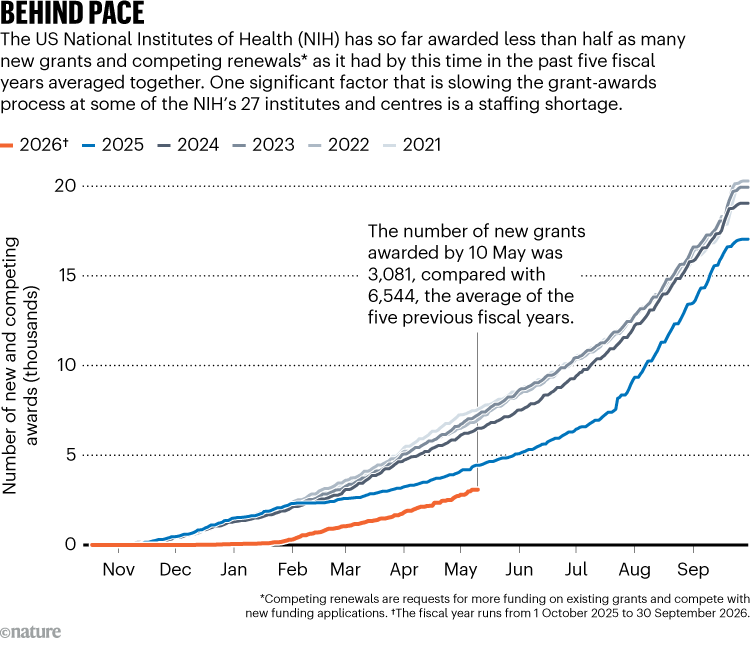
NEW: A serious staffing shortage — of the Trump admin's own making — is delaying the agency's ability to send billions to universities around the US, leaving labs reeling.
“I thought we were at rock bottom”, a senior NIH official said. “We are below rock bottom now.”