Let us settle down Iran-GCC and our state will go full throttle on BLA and TTP. Nothing is being forgotten. Hell’s fury will be unleashed on these bigots. In sha Allah.
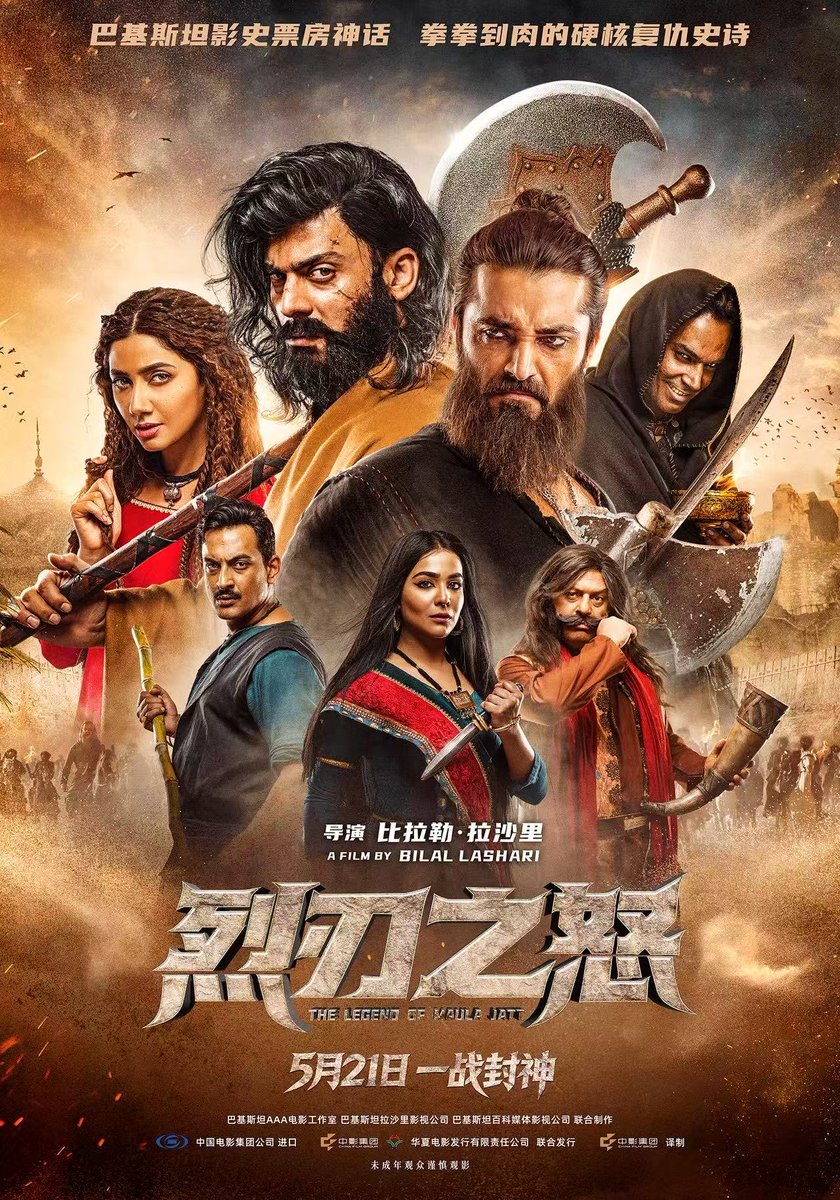
🇵🇰 🇨🇳 ‘The Legend of Maula Jatt’ has broken into one of the most exclusive film quotas in the world — the first Pakistani film ever to do so.
In cinemas across China from May 21, 2026.
A huge moment for Pakistani cinema, and a new door opening for our stories on the world stage.
Lots of people have asked me to give my comments on UAE asking America for a dollar swap. It is not a weakness for UAE, it is rather a very smart move.
These are my thoughts.
Currency Swaps Explained. In Plain English.
Imagine two central banks shaking hands and temporarily swapping currencies to help each other out. That’s a currency swap in a nutshell.
How It Actually Works
Let’s say the United Arab Emirates needs US dollars right now.
The UAE central bank hands over a bunch of its own dirhams to the US Federal Reserve.
In return, it immediately gets US dollars for a fixed period.
Later, they simply swap back at the same exchange rate they agreed on upfront.
It’s not really a loan. There’s no interest in the traditional sense and no new debt is created. It’s more like a short-term liquidity bridge, a safety valve when dollars suddenly feel scarce.
Why Countries Ask for These Swaps
When dollar shortages hit, countries can get desperate. They might start panic-selling US Treasuries or other assets just to get their hands on dollars. That fire sale can shake global markets.
Swaps help prevent that chaos. They keep trade flowing (especially oil and commodities, which are priced in dollars), stop currencies from crashing, and protect local banks from stress. In short, they buy calm during stormy times.
Why the US Says Yes.
From America’s point of view, these swaps aren’t charity, they serve clear interests:
They protect the dollar’s status as the world’s reserve currency.
They keep global financial markets stable (which ultimately benefits the US too).
They strengthen ties with key partners and allies.
In a way, the US is lending its financial “superpower” to prevent bigger problems that could boomerang back home.
What It Means for the Gulf, Pakistan & Others.
For Gulf countries like the UAE and Saudi Arabia, these swaps add an extra layer of insurance. Even with huge reserves, oil prices swing wildly and liquidity can tighten fast. A swap line with the Fed signals strength and deep integration with the US financial system.
For countries like Pakistan (which usually aren’t direct participants in these big Fed swap lines), the benefit is indirect but real:
More stable global dollar markets mean less risk of sudden capital flight.
Oil import bills become a bit more predictable.
Overall global financial calm reduces pressure on emerging economies.
The Bigger Picture
These swaps quietly reinforce dollar dominance. Even nations trying to diversify still turn to the US dollar when real trouble hits. They acted as a financial safety net in 2008 and during COVID, stopping small fires from becoming global infernos.
They’re also a subtle geopolitical signal: getting a swap line often means you’re considered a trusted, systemically important partner.
Bottom Line
Currency swaps aren’t flashy headlines, but they’re powerful tools of financial diplomacy. When Gulf countries line up for them, it’s usually not because of an immediate crisis, it’s smart, forward-looking preparation for a more volatile world.
They show how deeply interconnected global finance is, and how the US dollar remains the ultimate backstop when things get shaky.
یہ ٹرمپ ہر بات کو گھما کر انڈیا کے گرے جہازوں کی طرف لیجاتا ہے
اب کہہ رہا ہے اگر میں پاکستان آیا تو ان پائلٹس سے ضرور ملوں گا جنہوں نے انڈیا کے جہاز گراے
کہاں آبناے ہرمز اور کہاں انڈیا کے گرنے والے جنگی جہاز 😅
Iran's valiant fight has changed the game. In fact, it has rewritten the rulebook.
Militarily:
Asymmetry reinvented.
$10K drones vs $1B systems.
Air superiority challenged by missiles.
Interceptor fatigue exposed.
Mosaic Defense, missile cities = deterrence, redefined.
Age of aircraft carriers = GONE.
Economically:
Economic warfare is no longer the monopoly of US. Strait of Hormuz proved a point: you don’t need always need global dominance to shake the global economy.
Culturally:
Resistance is an identity.
Ideological underpinnings matter. Martyrdom isn’t an end - it multiplies will. Decapitation?
= fiercer resistance.
From songs to memes to LEGO movies = soft power, reimagined
World order:
Alliances strained - NATO, GCC recalibrating.
Security guarantees of the US = exposed.
UN sidelined.
Broker is Islamabad, not Geneva - the exclusivity of 'White Man' as the broker, shattered.
War strategy:
Enter effectiveness of horizontal escalation.
Allies hosting enemy infra = targets.
Airbases = consequential liability.
Scope widens.
Cost of war = increased = lever.
This wasn’t just a conflict.
It was a tectonic shift on multipe fronts.
US/Israel defaced international norms by assassinating Supreme Leader, targeting civilian infra, etc which will have longterm consequences as well.
The sheer grit of Iran, on the backdrop of 47 years of sanctions, has done more to shake the Empire than any other singular entity in the last 30 years.
Breaking 🔥
Chinese Artist Li Wei releases a special legoland song praising Pakistan for playing a role in preventing a global nuclear catastrophe,
From Iran to China, the world remains all praise for Pakistan
The killing of Ali Larijani, like that of Ali Khamenei before him, is best understood as an instance of strategic martyrdom, a dynamic that exposes the fundamental irrationality of Israel’s and the US’ continued reliance on decapitation strategies, especially given their repeated historical failure. The decapitation-attrition-invasion playbook that the US and Israel keep drawing from reveals systems locked into a familiar repertoire of counterproductive violence that have consistently failed to adapt to reality. This failure is so glaring that even Trump acknowledged it, when he recently admitted that the US attacked Iran "out of habit."
The underlying premise is that by removing senior leaders, the system they sustain will weaken and/or fragment. Yet this assumption reflects a narrow instrumentalist rationality in which leadership survival is treated as the paramount strategic objective and the threat of death is presumed to function as an effective form of coercion. But Iran operates from a value-strategic rationality whereby martyrdom itself can perform important political work and generate strategic effects that not merely resist but reverse the intended consequences of assassination.
That Larijani attended the mass rally and made statements openly embracing the possibility of martyrdom before his death only underscores how consciously this logic is adopted by those who bear its consequences, a logic articulated most clearly by Khamenei himself, who declared that “either we are martyred on this path, whose honour is eternal, or we achieve victory; both are victories for us.”
By transforming assassinated figures into sacred symbols of justice and resistance, in the tradition of Imam Hussein at Karbala, martyrdom converts the intended effects of decapitation into a strategy that successfully mobilises collective resolve, legitimises the political order, and regenerates both the system's continuity and its societal resilience.
In short, strategic martyrdom ultimately contributes to deterrence by regeneration, whereby repeated attempts at decapitation are subject to a law of diminishing returns as adversaries discover that killing leaders neither fractures the system nor compels submission but instead contributes to its consolidation.
Orange line subsidy is just 5B. PIA loss was often ten times that. Orange subsidy is for poor or middle class. PIA flew upper middle class elites. Orange train carries 230,000 people a day, over 80 million a year. PIA barely flies 3 million these days. So the subsidy per person is over 300 times less for Orange Train.
Please just stop. Just stop trying to make points where they don’t exist. It’s exhausting seeing the lies you his spout daily. This was the problem with your government too. No action. All lies.
With each passing day, looking at how global tensions are rising (and expected to get worse for another 12 months or so), I get more and more convinced that there could have been no better CoAS for Pakistan than Gen Munir. His entire life trained him to be a war time general.
Strategic foresight and relentless courage — he was chosen for this time.
Footage of the Pakistan Army 🇵🇰 at the CO House, 20 AK, celebrating after hitting the enemy. This is the same place where the Commanding Officer’s son was martyred just 4 days ago due to shelling.
On their shoulders are Irtiza’s younger brother and sister, who also lost their brother in that attack.
My detailed analysis of the Pakistan-India conflict.
What did Pakistan do well and which areas does Pakistan needs to improve upon.
Then a weapon list for Pakistan to increase their existing qualitative edge over India, deterring future aggressions.
1/🧵