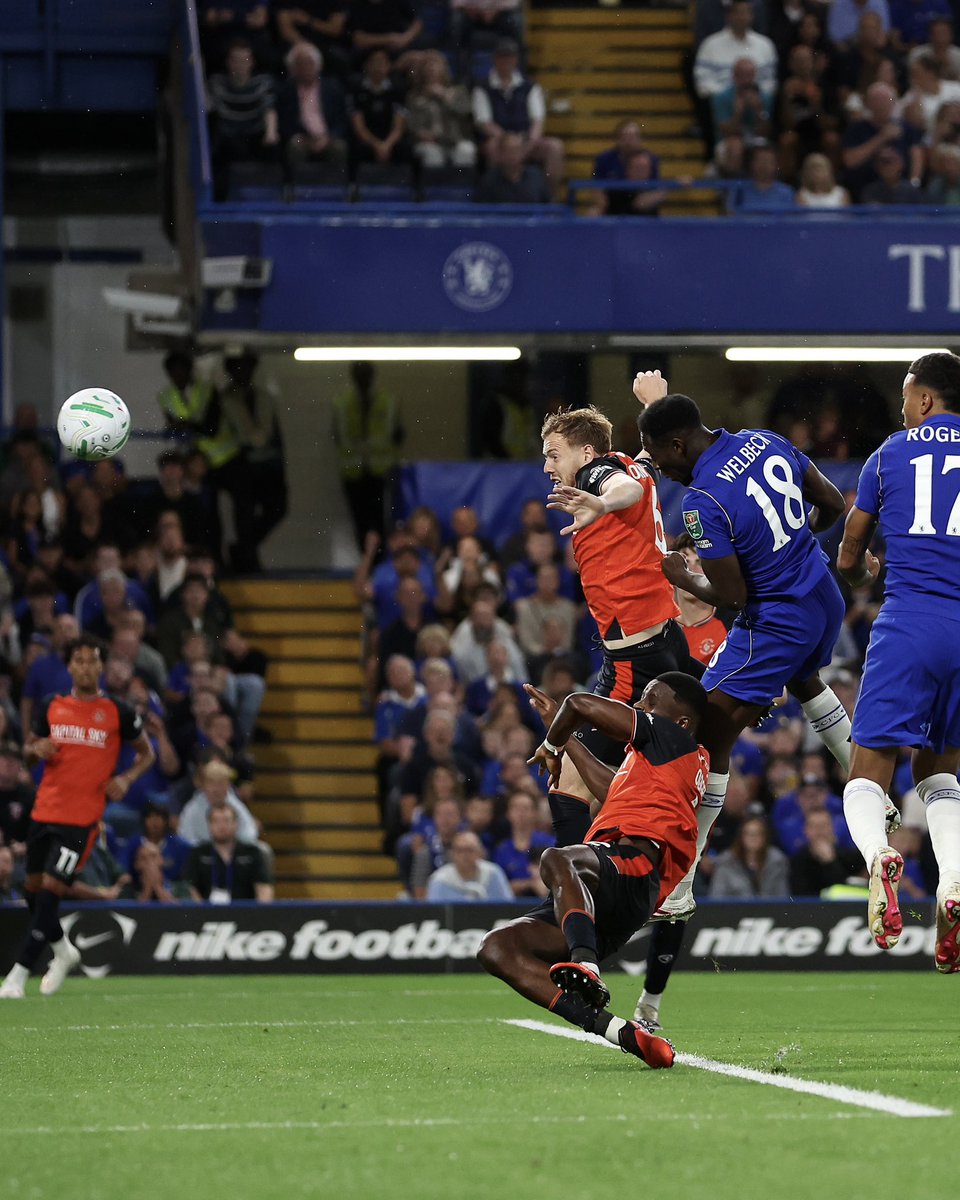
Gary Cahill and David Luiz played with a combined single hamstring and beat a Bayern super team in their own back yard, and David Luiz sent his penalty top bins not into orbit. Grow up.
Teringat ada satu video ni yang menerangkan bahawa the reason kenapa sesetengah ayat dalam Al Quran menggunakan past tense adalah disebabkan konsep waktu yang parrallel. Maksudnya takde masa silam, masa depan. Kerana masa itu adalah makhluk Allah, dan Allah tidak terikat dengan masa.
So kiranya bagi Allah, tiada istilah "menunggu esok hari" atau "hari semalam". Bagi-Nya, garis masa dari awal penciptaan alam sehinggalah ke penghujung hari akhirat berada dalam pengetahuan Nya sekaligus (all at once)
So bila Al-Quran diturunkan kepada manusia, penggunaan past tense untuk masa depan itu menunjukkan bahawa di sisi Allah, takdir masa depan kita semua sebenarnya sudah pun tertulis dan selesai aka Qada' dan Qadar
Sangatlah magnificent
Mintak betulkan kalau saya salah
“Tak selesa dengan istilah ‘kuil haram’... tapi kalau dibina tanpa kelulusan, nak panggil apa?”
Adakah perkataan “haram” itu provokasi atau sekadar menjelaskan status sesuatu yang tidak sah?
Tonton kembali diskusi Brother Firdaus bersama Joseph Prakash mengenai isu ini.
Bila dah berkahwin dan berkeluarga, belajarlah hidup bermasyarakat.
Senyum dah bertegur sapa sesama jiran tetangga. Solat berjemaah di masjid. Sumbang tenaga ketika ada gotong royong di sekitar kawasan rumah/masjid. Join khairat kematian.
Sumbanglah sesuatu kepada masyarakat dan agama dengan skill dan ilmu yang kita ada.
Jangan sombong dengan penduduk kariah kita. Kita takkan mampu nak bergolek masuk kubur sendiri bila mati kelak tanpa pertolongan orang sekeliling kita.
Something that I told my wife otw belanja grocery that I want to document it here.
Masyarakat kita sebenarnya dah tenat dan semakin jauh daripada cara agama mengajar kita melihat kehidupan.
Orang muda nak berkahwin pun ditakut-takutkan.
“Dah cukup duit ke?”
“Kerja dah stable?”
“Rumah dah ada?”
“Macam mana nak survive?”
“Macam mana nak bagi anak bini makan?”
As if marriage only becomes permissible once a man has achieved some arbitrary level of financial certainty.
Sedangkan Allah sendiri berfirman:
“If they are poor, Allah will enrich them from His bounty.”
Surah An-Nur 24:32
Notice what Allah is telling us.
Allah did not say,
“Only marry once you are financially stable.”
Allah explicitly acknowledges poverty as a possibility and then reminds us that poverty is not beyond His ability to remedy.
Kita terlalu yakin dengan financial planning kita, tapi terlalu lemah keyakinan kita kepada Ar-Razzaq.
Selama kita hidup, bukankah selama ini Allah yang cukupkan rezeki kita?
Sebelum kita ada pekerjaan, Allah dah beri makan.
Sebelum kita tahu dari mana duit akan datang, Allah dah tahu apa yang kita perlukan.
Makhluk yang tak mempunyai pekerjaan, bank account, business plan atau financial security pun Allah bagi makan.
Anjing liar pun Allah bagi makan.
Anak yatim yang kehilangan mak ayah pun Allah bagi makan.
Tiba-tiba bila seseorang nak berkahwin, kita pula yang sibuk bertanya:
“Siapa nak bagi mereka makan?”
Who exactly have we been relying on all this time?
Our salary?
Our employer?
Our savings?
Or Allah?
Of course, this does not mean seorang lelaki boleh kahwin secara reckless, malas bekerja, tak mahu belajar, tak mahu merancang, kemudian label semua itu sebagai tawakkul.
That's not tawakkul.
Tawakkul means you take the means and then place your reliance upon Allah, not upon the means themselves.
Jadi ya, lelaki wajib berusaha mencari nafkah, belajar mengurus kewangan, bersedia memikul tanggungjawab dan buat keputusan dengan matang.
Tetapi menjadikan takut miskin or whatever other reasons sebagai alasan untuk menakut-nakutkan orang daripada perkahwinan adalah sesuatu yang sangat berbeza.
And if marriage eventually turns out to be the wrong decision for someone, so what?
Adakah manusia sejak lahir sampai mati tidak pernah membuat keputusan yang salah?
Of course we do.
Human life is literally a sequence of decisions, consequences, corrections, failures, lessons and improvements.
Some decisions turn out beautifully.
Some decisions turn out terribly.
Some decisions look foolish in hindsight.
Some decisions hurt the person who made them.
And sometimes, the consequences are also felt by the people around them.
That's life.
What does a healthy community do when someone makes a bad decision?
If they're wise, they guide, advise, assist and help the person recover.
If they're foolish, they condemn the person as though they themselves have never made a single mistake in their entire life.
Bukankah begitulah manusia belajar?
Bukankah begitu keluarga berfungsi?
Bukankah begitu komuniti membantu anggotanya?
Bukankah sebahagian besar kemajuan manusia sejak awal peradaban datang daripada manusia membuat kesilapan, mengalami consequences, belajar daripada kesilapan itu, kemudian memperbaiki diri?
So why do we suddenly treat marriage as though every possible negative outcome must be eliminated before a person is allowed to take the first step?
And this is where our hypocrisy becomes even more obvious.
Look at how society treats riba.
Kita hidup dalam sebuah masyarakat di mana household debt sangat meluas, lebih 80% isi rumah membedal riba. Kalau kau jalan kat public, 8/10 daripada orang yang kau jumpa bedal riba.
But people will casually discuss:
“Loan mana paling murah?”
“Ambil berapa tahun?”
“Credit card mana paling banyak cashback?”
“Macam mana nak maximise points?”
“Ambil loan dulu, nanti refinance.”
“Macam mana nak build credit score?”
In other words, masyarakat bukan sekadar tolerating riba. Sometimes they actively teach people how to optimise it.
Yet Allah's warning regarding riba is not:
“Be careful, nanti susah sikit.”
Allah says:
“If you do not, then be informed of a war from Allah and His Messenger.”
Surah Al-Baqarah 2:279
That is the severity of the warning.
But somehow, our society is often more terrified of a young man/woman getting married while poor than a person entering a transaction that Allah describes in terms of war against Him and His Messenger.
A young man says:
“Aku nak kahwin, tapi aku ada duit sangat.”
“Jangan! Nanti susah!”
A young man says:
“Aku nak ambil loan.”
“Okay, jom kira interest, tenure, cashback and monthly instalment.”
What happened to our priorities?
Why are we so terrified of the possibility that marriage might lead to temporary financial hardship, but so comfortable normalising a financial system explicitly condemned by Allah?
And here's something even more disturbing, Allah Himself tells us who whispers this fear into our hearts.
“Satan threatens you with poverty and commands you to immorality, while Allah promises you forgiveness from Him and bounty.”
Surah Al-Baqarah 2:268
Syaitan menakutkan kita dengan kemiskinan. Allah menjanjikan kita keampunan dan kurniaan.
Read that again.
So when a society constantly tells young people:
“Don't get married, nanti miskin.”
“Don't have children, nanti tak cukup duit.”
“Wait until you're financially perfect.”
“Wait until everything is guaranteed.”
We should at least ask ourselves:
Are we teaching people wisdom and responsibility or are we inadvertently teaching them the very fear of poverty that Allah attributes to the whispers of Shaytan? Are we trying to become Shaytan?
And why are we so terrified of being poor anyway?
Miskin bukan dosa. Susah bukan kehinaan. Hidup miskin bukan failure.
The Prophet ﷺ himself lived through periods of severe material hardship.
Aisha رضي الله عنها narrated that two months could pass without a fire being lit in the households of the Prophet ﷺ, and their food would be little more than dates and water.
Would the modern “provider police” look at that and say:
“Nabi tak cukup provide.”
“Nabi patut kerja harder.”
“Nabi patut bagi lifestyle yang lebih comfortable.”
Of course not.
Because deep down, we know something our modern riba consumerist mindset keeps trying to make us forget:
Being a good husband is not synonymous with making your wife rich.
Providing does not mean guaranteeing your family a life free from hardship.
A man can fulfil his responsibilities and still be poor.
He can work hard and still struggle.
He can provide what he is capable of while his family lives simply.
And none of that automatically makes him a failure.
The companions رضي الله عنهم likewise included many who lived through poverty, hunger and extraordinary hardship.
Yet they did not measure the worth of a life by how comfortable it was.
Because they believed in something we increasingly struggle to believe which is this dunya is temporary.
We are not promised a life without hardship.
We are promised that hardship has meaning when endured with iman and obedience.
And for the believer, the final calculation is not made at the end of this month.
It's made in the Akhirah.
Imagine reaching Jannah by the mercy of Allah after a lifetime of hardship.
The hunger.
The financial struggles.
The tiny house.
The cheap food.
The difficult years.
The sacrifices.
All of it becomes insignificant compared to what Allah has prepared.
Allah says:
“No soul knows what joy has been hidden for them as a reward for what they used to do.”
Surah As-Sajdah 32:17
And no, this isn't an argument for irresponsible marriage. It is an argument against turning financial uncertainty into a religion of its own.
Plan.
Work.
Save what you can.
Learn.
Take responsibility.
Choose your spouse wisely.
Fulfil your obligations.
But after you've done all that, understand one fundamental reality:
You are not the provider.
You are merely one of the means through which Ar-Razzaq provides.
And perhaps that's the part modern people has forgotten.
We have become so obsessed with making sure we can guarantee tomorrow that we have forgotten:
Tomorrow was never ours to guarantee in the first place.
Jadi jangan sampai kita terlalu takut miskin sehingga kita mula meragui janji Allah.
Because poverty is not the greatest disaster.
The greatest disaster is becoming so afraid of poverty that you lose your trust in Allah, normalise what He has forbidden, and abandon what He has made lawful.