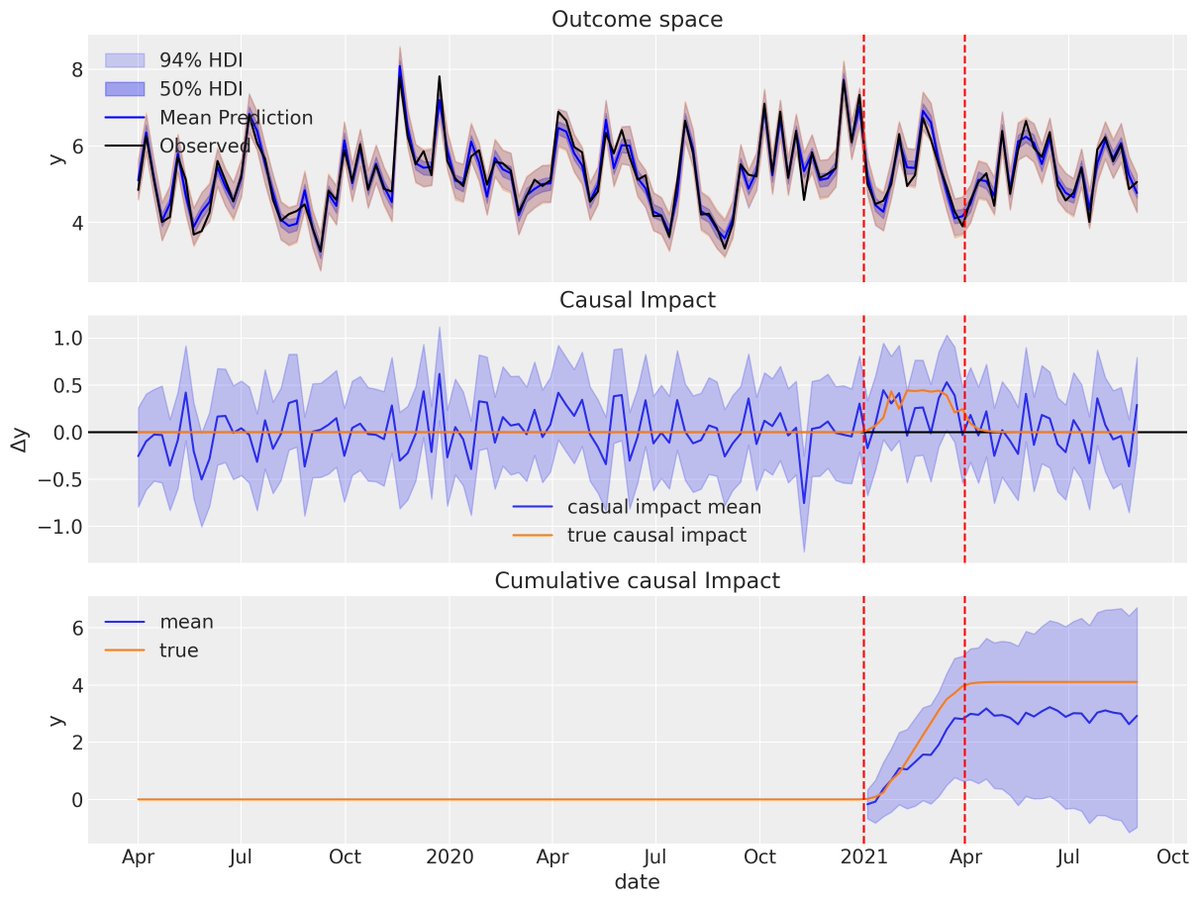
@niall20 Below is a Bayesian causal impact model built in PyMC — recovering an intervention effect from observational time series, with uncertainty on every estimate.
This is our only in-person workshop in London this year. Register now to secure your seat: https://t.co/n3lSsAHh9c
6/6
What priors should I use for my parameters?
How do I fit a Bayesian model when I have so much data?
How do I diagnose and debug what's wrong with my Bayesian model?
1/ 🧵
@niall20 You'll learn how to:
* Use variational inference to massively speed up inference on large datasets,
* Build causal models that quantify true impact, not just correlation,
* Identify when your model is under-specified or over-determined, and how to rewrite it
5/
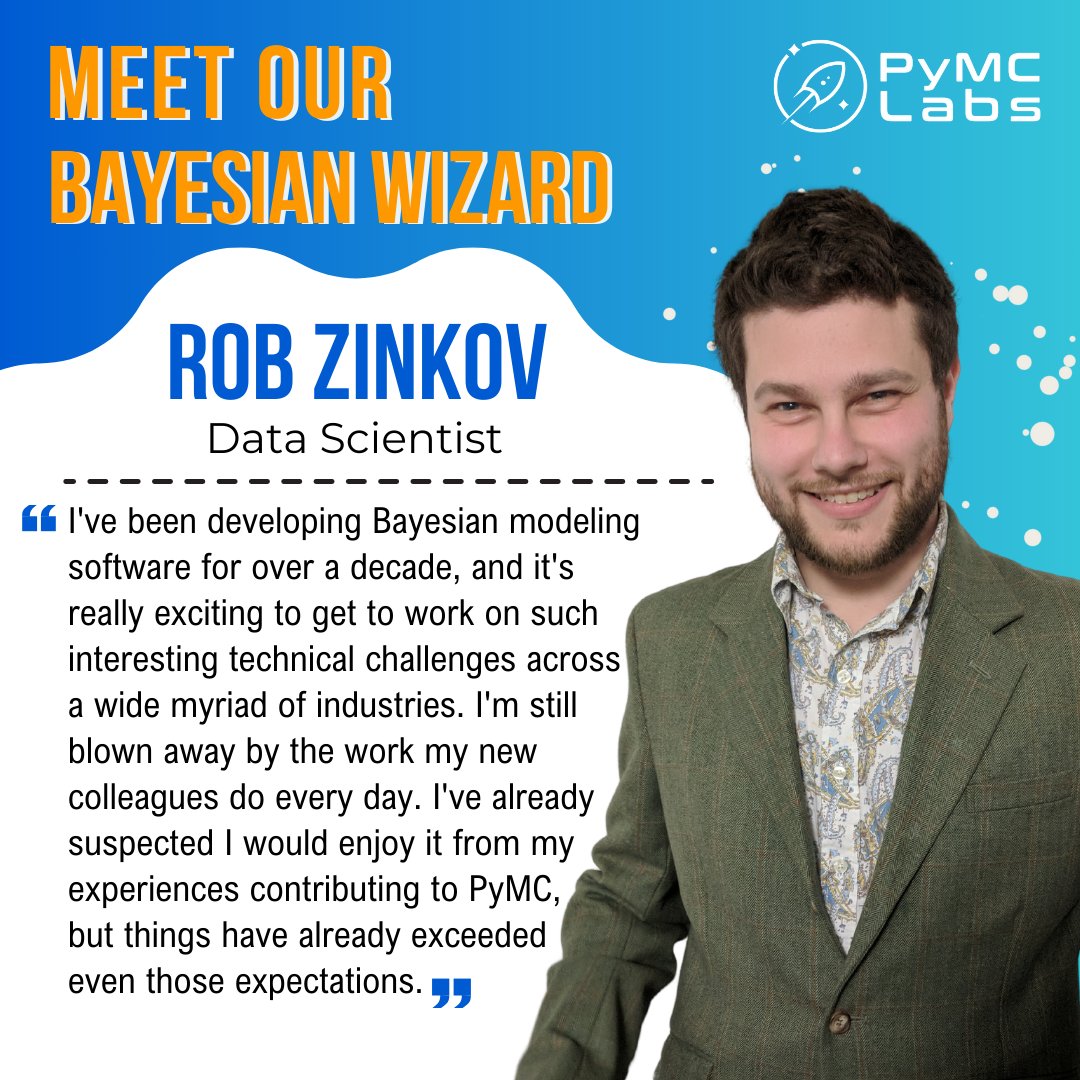
🚀 Thrilled to welcome our new Bayesian Wizard, @zaxtax, as Data Scientist @pymc_labs🧙♂️ With over a decade of expertise in Bayesian modeling & probabilistic programming, he's set to push boundaries on fascinating tech challenges across industries.🔥 Let's do this! #Bayesian#PyMC
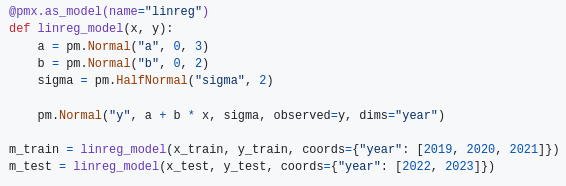
@althonos@twiecki@pymc_devs I don't know if `__set_name__` would work here. Random variables are not assigned as instance variables to a particular class. Could you share a snippet of how the idea would work?
We are excited to announce the Call for Proposals for the PyMCon Web Series! 🚀
We are looking for folks like you to share your knowledge, best practices, or tricks with the wider PyMC community 📣
Send your proposal: https://t.co/LKA6Nc9T3J
When people are amazed by the speed of progress in AI, it's worth highlighting lots of this is enabled by high-quality open-source implementations that make experimentation quick and cheap.