@plushev ладно бы только Wildberries, но НПЗ, а особенно про влияние этих ударов на дальнейшее сотрудничество РФ и Украины, это что-то. Ересь про Верден опроверг��ется десятилетиями конфронтации, выплатой репараций и последующей войной с десятками миллионов жертв
Argentina’s behavioral crisis in the World Cup final has brought to light traits many of us in Latin America have internalized and that we need to come to terms with.
In many countries, emotional self-control and the ability to admit mistakes are seen as virtues. A behavioral problem in parts of Latin America is that there are social circles where the opposite is often celebrated.
This is the idea that someone who remains in control of their emotions is a coward or, depending on the situation, a traitor.
If someone offends you, your family, your team, the reaction that is celebrated in these circles is not restraint but flipping the table. The more berserk you go, the more you show that you care. That is a harmful value to hold, and also, one that many of us once shared. I certainly had it internalized when I left Chile 20+ years ago. In fact, I’ve spent much of my adult life trying to unlearn what I grew up believing was the socially acceptable behavior.
The second trait is an unwillingness to admit mistakes. You can always find an excuse, move the goalposts, or, once again, start a fight instead of publicly accepting that you’ve made a mistake. Admitting fault is a sign of weakness. Defending a losing position is a symbol of courage or, in sports, a test of loyalty.
Together, these two traits are behavioral dynamite. People explode because they cannot admit fault, and double down. Instead of learning from their mistakes, they become prisoners of them.
I grew up watching football with my father. When I was 10 or so, I was learning what was right and wrong from the way he interpreted the game. This included behavior both on and off the field. Only later in life did I realize that every penalty he called for, or contested, had little to do with the play itself. Whether a call was fair depended entirely on which team benefited. He was happy if his team received a nonexistent penalty or an opposing player got an undeserved red card.
These traits are among the things that pushed me away from the continent. They are certainly not exclusive to Latin America or the Southern Cone. I’ve encountered them in people all over the world. In an important sense, these are behaviors that all of us exhibit as children. What strikes me as unusual from the place I am from is having been part of social circles where these behaviors were not seen as flaws of character but as virtues to be admired, celebrated, and enforced.
These excessive forms of pride are not conducive to learning. They make it psychologically difficult to update one’s beliefs, accept responsibility, or improve. Although they become particularly visible in sports, they are by no means confined to them.
Something I am proud to have learned is to apologize quickly and often. Not because it is too difficult, but because it was like learning a new language at old age. That doesn’t mean becoming a pushover. But I’ve learned that a man who never apologizes cannot be a man of integrity, because we all make mistakes.
Argentina’s behavior on and off the field during the World Cup final was, to me, a particularly blatant expression of values that many people continue to defend. In some circles, these attitudes have become intertwined with ideas of national identity and loyalty. Yet they are shackles that ultimately limit our development, not because they make us lose a football match, but because they make it harder for us to learn from our mistakes.
The right thing to do now is the least likely: offer an honest apology. If my interpretation is even partially correct, we are more likely to see the opposite. Never back down. Never apologize. Never control your emotions. There is such a thing as having the wrong values. I hope that one day we can do better.
@vesstnik@chich_8 Уважаемый? Вы уважаете человека, который делает вид, что не понимает - удары по нпз и хранилищам приводят к закрытию скважин, открыть которые потом не рентабельно? К чему это приведет тоже разжевывать?
@chich_8 Чичваркин у Плющева - бомбить НПЗ и ВБ плохо, это может помешать будущим отношениям между РФ и Украиной, а Путину не помешает 🤮. Оче��едной белопальтошник вскрылся
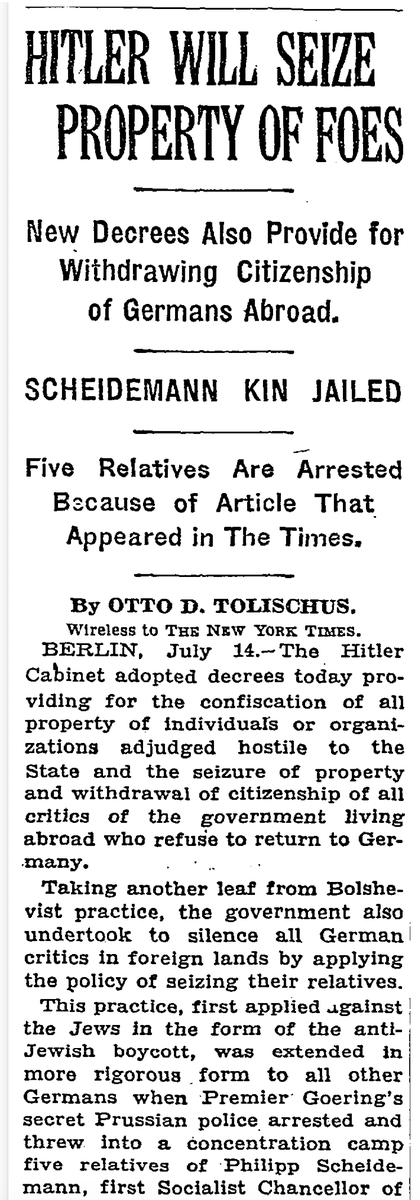
⏳ 14 июля 1933 года, Берлин. Кабинет Гитлера принимает декреты: конфискация всего имущества лиц и организаций, "враждебных государству и народу", плюс лишение гражданства и изъятие собственности у тех, кто критикует власть из-за рубежа и отказывается вернуться. Отдельно — аресты родственников как способ давления. Формулировка максимально широкая: достаточно, чтобы министр внутр��нних дел назвал человека "марксистом" или просто "враждебным".
Ровно 93 года спустя российские власти проходят почти тот же маршрут. Сначала — уже подписанный Путиным закон от 10 июня 2026 года. С 1 сентября суды смогут арестовывать любое имущество (деньги на счетах, квартиры, машины) у россиян, находящихся за границей, по целому пакету административных статей: "дискредитация" армии, призывы к санкциям, нарушение режима иноагента, участие в "нежелательных" организациях и т.д. Сумма ареста не ограничена размером штрафа. Можно заморозить квартиру за штраф в несколько десятков тысяч.
Теперь — следующий пакет, который Госдума готовит ко второму чтению 22 июля. Речь уже не просто об аресте под штраф. Планируется полная экономическая и гражданская изоляция "скрывающихся за рубежом": блокировка любых операций с недвижимостью, запрет онлайн-банкинга, взыскание средств с замороженных счет��в, отказ в консульских услугах (включая замену паспорта). Всё это — для тех, кого заочно преследуют по политическим и антивоенным составам.
Схема один в один.
В 1933-м критик режима Гитлера, уехавший за границу, теряет имущество, гражданство и зачастую свободу своих родственников.
В 2026-м — критик режима Путина теряет имущество, доступ к своим деньгам и недвижимости, возможность оформить документы. Механика та же: сделать пребывание за рубежом экономически и бытово невыносимым, чтобы критика обходилась максимально дорого. Только вместо "врагов государства и народа" теперь "уклоняющиеся от ответственности» и "дискредитирующие".
История, как известно, не повторяется. Она просто берет старый сценарий и ставит спектакль с новыми актерами.