Why is trading so hard?
Human nature has trouble accepting losses quickly & keeping them small, and letting a winning trade run with the trend a making it big.
BREAKING: JPMorgan and Jefferies are lining up trips to Caracas as investor demand for Venezuela exposure heats up.
Clients want a firsthand look at the country’s attempt to revive its oil-rich economy and restructure its debt after years of isolation.
The visits would be among the first known trips by major U.S. banks, which still have to navigate sanctions, internal approvals, and a very delicate compliance backdrop.
@HolySmokas Only bitter people who didn't take advantage of the 15 nonstop years of bull market say that... hah, let them be happy with their consumptive joy...
Important life lessons I wish I knew years ago:
1 lost money can be found; lost time is lost forever
2 to learn, unlearn, relearn and then change yourself is a superpower
3 you are not your job
4 networking is about giving
5 the best teacher is your last mistake
6 good manners is as important as good education
7 do not take your good health for granted
8 be a better friend and value relationships
9 if you are waiting for a title to lead, you are not ready to lead
10 a work sponsor is more important than a mentor
11 a good story is data with a soul
12 stop worrying about what others think of you
13 if you want an easier life, work on harder problems
14 best teachers are life long students
15 imposter syndrome is real, and a good thing
16 fight against a sense of entitlement
17 half the battle is showing up
18 love and cherish your parents by giving them your time
19 success is not accidental
20 the best views are there for those who love the climb
21 lucky people work harder
22 takers may end up with more, but givers sleep better at night
23 memorizing is not learning
24 it is okay to look back, just don’t stare
25 knowing is not acting - I can > IQ
26 straight roads do not make great drivers
27 good listeners hear the unsaid (listen with your eyes)
28 be the person that you want to follow
29 do not limit your contribution to a job description 30 take care of your parents - the best gift that you can give yourself
31 customer service is not a department
32 in the long run, the optimists create the future
33 never ruin an apology with excuses
34 salary is for expenses. equity is wealth - do not rent your time
35 do not take a caring boss, joyful work or steady income for granted
36 as you get older, you love your parents more
37 challenge assumptions, starting with your own
38 we learn more from disagreements
39 best gift you can give yourself is quality time with parents
40 the older you get the less you care about what others think of you
41 be a good person but do not waste time trying to prove it
42 be comfortable with saying ‘I don’t know’ - there are no experts of tomorrow
43 being self-aware is a key to learning and growth; know yourself
44 first, invest in yourself, then help others win
45 if the answer is no, do not say maybe or yes
46 Don’t just translate, write something new and original; write for yourself - writing improves your thinking
47 It’s more important to do the right thing than to win an argument
48 do not buy your children what you never had, teach them what you never knew
49 begin with the end in mind
50 to make progress on your to-do list, you must also keep a to-don’t list
51 leave everything and everyone better than you found them
52 be kind and polite to everyone
53 Here’s how luck finds you:
—Work harder than expected
—Stay teachable
—Give without expecting a get
—Read and write more
—Show up on time
—Focus on your customers
—Develop good manners
—Be humble
—Be kind and generous
—Surround yourself with smarter people
54 bosses we remember:
—provided us a safe space to grow
—opened career doors
—defended us when we needed it
—recognized and rewarded us
—developed us as leaders
—inspired us to stretch higher
—led by example
—told us our work mattered
—forgave us when we made mistakes
55 The older you get, the more quiet you become. Life humbles you so deeply as you age. You realize how much nonsense you’ve wasted time on.
56 Hire based on high rate of learning and good judgment
57 straight lines do not make great drivers
58 stand in the middle of the road for too long and you may get hit from both sides -be decisive
59 if you do not know the answer, it is okay to say 'I don't know, but I will find out'
60 do not follow or admire mean people -be the person that you would want to follow
61 decisions you made 5-10 years ago shaped where you are today; decisions you make now will shape where you’ll be in 5-10 years
Sos lo que hagas tus próximos 5 años👇🏽
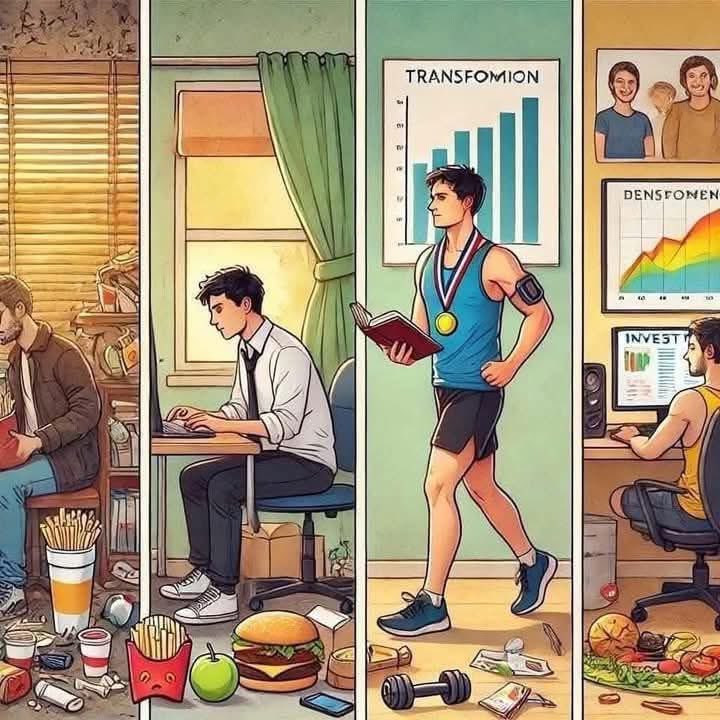
Había una vez un joven llamado Andrés, quien, en su cumpleaños número 25, se encontraba insatisfecho con su vida. Aunque tenía sueños grandes, sus días se escapaban entre distracciones y malos hábitos. Un día, su abuelo, un hombre sabio y respetado, le dio un consejo sencillo pero poderoso:
"Quién serás dentro de cinco años depende de los libros que lees, la comida que comes, los hábitos que construyes, las personas con las que pasas el rato, la actividad física que practicas, el dinero que inviertes y los sacrificios que haces".
Intrigado, Andrés decidió tomar estas palabras en serio y cambiar su vida, construyendo un futuro que valiera la pena.
Los libros que lees
Andrés comenzó a dedicar tiempo a la lectura cada noche. Pasó de leer novelas ligeras a libros que le enseñaban sobre liderazgo, finanzas y desarrollo personal. En uno de esos libros, aprendió que "la vida mejora cuando mejoras tus decisiones". Inspirado, tomó notas y aplicó lo aprendido, cultivando su mente con nuevas ideas.
Resultado: Al cabo de un año, su forma de pensar era más estratégica, y sus decisiones comenzaron a reflejar sus nuevos conocimientos.
La comida que comes
Dejó atrás las comidas rápidas y optó por aprender a cocinar recetas saludables. Investigó sobre nutrición y entendió que su cuerpo era su herramienta más importante. Incorporó frutas, vegetales y proteínas en su dieta, notando rápidamente un aumento en su energía y bienestar.
Resultado: Su mente estaba más clara, y ya no se sentía fatigado a mitad del día.
Los hábitos que construyes
Al principio, construir hábitos fue difícil, pero Andrés empezó con pasos pequeños: levantarse temprano, escribir sus objetivos del día y practicar gratitud cada mañana. Al repetir estas acciones, se convirtieron en parte de su rutina diaria.
Resultado: Andrés se volvió más disciplinado y productivo, logrando avanzar en proyectos que antes parecía imposible terminar.
Las personas con las que pasas el rato
Andrés evaluó sus relaciones y se dio cuenta de que algunas personas en su círculo no compartían sus valores. Aunque fue difícil, decidió rodearse de amigos que lo motivaban y que también trabajaban en sus metas.
Resultado: Su nuevo círculo lo inspiraba a crecer, y juntos se desafiaban a alcanzar nuevos logros.
La actividad física que practicas
Un día, un amigo lo invitó a correr. Al principio, no podía completar ni un kilómetro, pero persistió. Más tarde, se inscribió en un gimnasio y encontró en el ejercicio una forma de liberar el estrés y fortalecer su cuerpo.
Resultado: Andrés no solo mejoró físicamente, sino que también adquirió una mayor confianza en sí mismo.
El dinero que inviertes
Inspirado por sus lecturas, Andrés aprendió sobre inversiones. Comenzó ahorrando un pequeño porcentaje de su salario y luego invirtió en un fondo indexado. También tomó un curso para aprender a gestionar mejor sus finanzas.
Resultado: En cinco años, había acumulado un ahorro sólido y generado ingresos pasivos, lo que le permitió cumplir metas como viajar y estudiar.
Los sacrificios que haces
Andrés entendió que el éxito requiere dejar de lado algunas cosas. Renunció a noches de fiesta sin sentido, redujo el tiempo que pasaba en redes sociales y se enfocó en actividades que sumaban valor a su vida.
Resultado: Aunque los sacrificios eran incómodos al principio, se sintió más satisfecho al ver los resultados.
El Andrés de 5 años después
A los 30 años, Andrés casi no reconocía al joven que era cinco años atrás. Ahora tenía una vida plena: estaba rodeado de personas que lo apoyaban, se sentía fuerte y saludable, tenía un negocio que le apasionaba y un futuro financiero sólido.
En una reunión familiar, su abuelo le preguntó: "¿Qué hiciste para llegar hasta aquí?"
*Andrés sonrió y respondió: "Seguí tus palabras. Leí, comí mejor, construí buenos hábitos, cuidé a quién dejé entrar en mi vida, me mantuve activo, invertí en mi futuro y tuve el coraje de hacer sacrificio.”